



Scandium is a multidimensional market albeit with a small universe of active players. The integration of scandium into 3D printing and additive manufacturing could bolster global market growth as demand for high-performance aluminium-scandium alloys surges.
The industrial manufacturing landscape is also witnessing a transformative shift, partly driven by technological advancement and companies from all types of global markets increasingly integrating 3D printing into their production processes.
Scandium oxide can be used in a range of applications outside of 3D printing. It’s used to improve the performance of solid oxide fuel cells, which are used as a power source for data centres and hospitals, as well as in niche products such as lasers and lighting for stadiums or studios.
The burgeoning 3D printing market appears to be somewhat attractive for the small universe of mining companies seeking to become producers of the silvery-white metal.
Also known as additive or advance manufacturing, 3D printing is the construction of a three-dimensional object from a computer-aided design model or a digital 3D model. It can be done in a variety of processes in which material such as plastics, liquids or powder is deposited, joined or solidified under computer control and fused together, typically layer by layer.
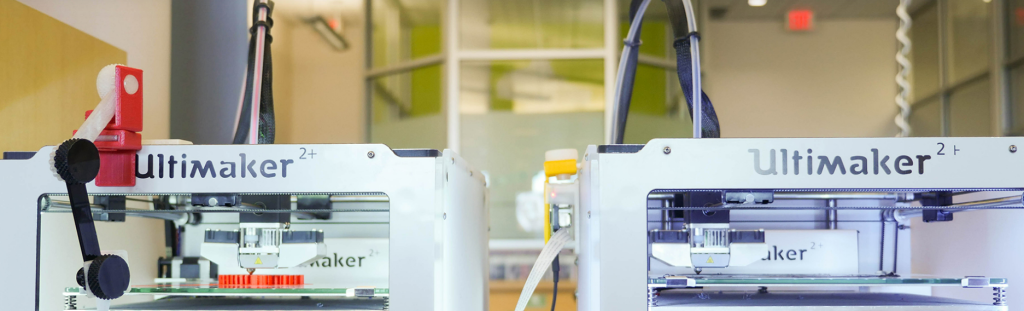
Scandium Canada (TSX-V:SCD) is one such company focusing on the US$20 billion ($29.77 billion) 3D printing market. The company has also identified using aluminium scandium alloys in different industries – one is the aluminium channels in the frames of solar panels.
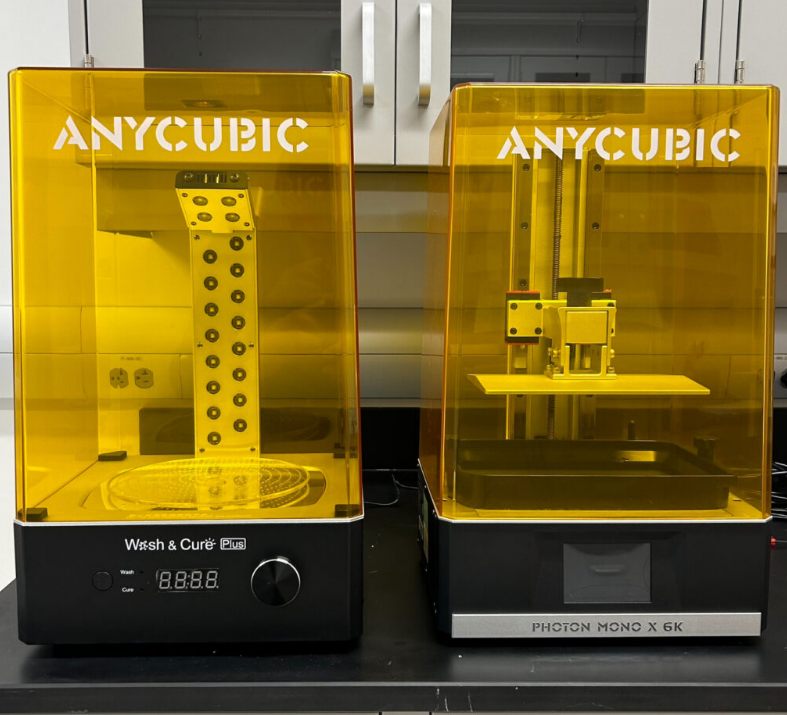
Though since 2021, Scandium Canada has been working with McMaster University in Ontario to develop aluminium-scandium powders for advance manufacturing to produce parts that are otherwise difficult or impossible to produce using traditional manufacturing methods.
As reported by Mining.com.au, Scandium Canada has moved to patent its two Al-Sc alloys and their powders designed specifically for 3D printing applications – titled “Aluminium alloy powders for additive manufacturing. Methods of producing the same and uses thereof”.
The move comes two years after Scandium Canada completed a Preliminary Economic Assessment (PEA) for its Crater Lake Project in Québec with a Prefeasibility Study expected to be delivered in H2 2025.
Chef de la direction (CEO) Guy Bourassa says this latest development for the company confirms its objective to be recognised as a leader in scandium markets.
“Scandium is the metal of the future, and we are deeply engaged in its development and market growth,” the CEO says.
Over the next few months, Scandium Canada will explore options with commercial and research partners in Canada and abroad to monetise its 100% owned intellectual property to generate revenues and offtake agreements separate from its mining activities.
When Bourassa spoke to Mining.com.au in August, he highlighted that the TSX Venture Exchange listed company is developing one of the largest primary scandium projects in the world.
With a 43-101 compliant mineral resource estimate, Crater Lake has an after-tax net present value of C$1.72 billion ($1.87 billion) (at a 10% discount rate) over a life of mine of 25 years. Total initial capex is expected to be C$870.9 million.
Bourassa does not see much competition in the scandium marketplace – “we only see the need for new production capacity to be developed globally” – there are other players developing scandium assets and targeting similar end-user markets.
Multidimensional market
Scandium is not rare in nature but it’s rarely discovered in significant concentration nor as the main mineral like that found at Scandium Canada’s Crater Lake Project – a significant advantage for the Canadian explorer.
This concentration of scandium at Crater Lake makes it attractive from both a mining and investment perspective, as well as from a competitive view. Scandium Canada is now making significant inroads in developing its project and engaging the downstream 3D printing market.
Yet Anglo-Australian mining giant Rio Tinto (ASX:RIO) has been the first to launch into the space and dominate the expanding universe of scandium players.
In March 2021, Rio Tinto signed an agreement to provide a first commercial batch of high-performance aluminium-scandium alloy billets to metal additive manufacturing company Amaero. These billets are now being processed by Amaero into powder for 3D printing.
In May the following year, the mining giant produced a first batch of high-purity scandium oxide at its commercial scale demonstration plant in Sorel-Tracy, becoming the first North American producer of the critical mineral.

The Rio Tinto Fer et Titane’s (RTFT) plant uses an innovative process developed to extract high-purity scandium oxide from the waste streams of titanium dioxide production, without the need for any additional mining.
RTFT proved the process at pilot scale to extract high-purity scandium oxide from the waste streams of titanium dioxide production, without the need for any additional mining at its ilmenite mine in Québec.
Rio Tinto’s scandium interest continued in mid-2023 with the acquisition of the Owendale scandium deposit in New South Wales and the establishment of its dedicated scandium business unit Element North 21.
In August 2023, a wholly owned subsidiary of Rio Tinto paid US$8 million in cash to Platina Resources (ASX:PGM) to buy its Platina Scandium Project.
The project, near Condobolin in central New South Wales, comprises a long life, ‘high-grade’ scalable resource that could produce up to 40 tonnes per annum of scandium oxide, for an estimated period of 30 years.
Rio Tinto’s focus is firmly on its scandium projects in New South Wales – a region that hosts 11 out of Australia’s known 38 active scandium properties. This bodes well for Scandium Canada, which remains confident of taking charge of the North American market.
Deposits in New South Wales reportedly have high enough grades to be developed as pure-play scandium projects, which is a rarity globally as most of the world’s scandium comes from byproduct waste streams of metals including cobalt, nickel, uranium, and titanium. Hence the attraction for Rio Tinto.
West Cobar Metals (ASX:WC1) believes these moves by the Anglo-Australian company over the years could be perceived as a strong indication there is growing strategic interest in the metal.
The junior explorer in March 2024 unearthed ‘high-grade’ scandium from aircore work at its Salazar Rare Earth Element Project in Western Australia. It substantially increased the total rare earths resource estimate for Salazar following an aircore drilling program conducted in June 2024, as reported by Mining.com.au yesterday (9 October).
Managing Director Matt Szwedzicki says Salazar contains substantial mineral resources of high-value critical minerals, including rare earths, titanium dioxide, scandium, and alumina in clays near surface.
A company presentation of potential end-user markets suggests West Cobar Metals could target large-scale additive manufacturing (3D printing) with the critical minerals produced at Salazar.
Scandium Canada does not view the moves by Rio Tinto or the developments of scandium as a threat. Rather, as the CEO explained to Mining.com.au in August, the company welcomes as much exploration and development as is feasible and “we definitely welcome Rio Tinto’s development in Québec”.
“Because if Rio Tinto is putting money into the development of that metallurgy for a recovery of their tailings, it means that somebody somewhere has the same vision as us, saying there is a market to develop,” Bourassa said at the time.
Global growth or narrow universe?
Australia has long been a global leader in scandium drilling activity, which hit a record high in 2022, according to S&P Global Commodity Insights data. The country hosts about 50% of the world’s 10 largest projects by scandium contained in reserves and resources.
Globally, while multidimensional, the market is small with production reaching just 40 tonnes of scandium oxide – coming from China (75%), Russia, and several former Soviet Union states.
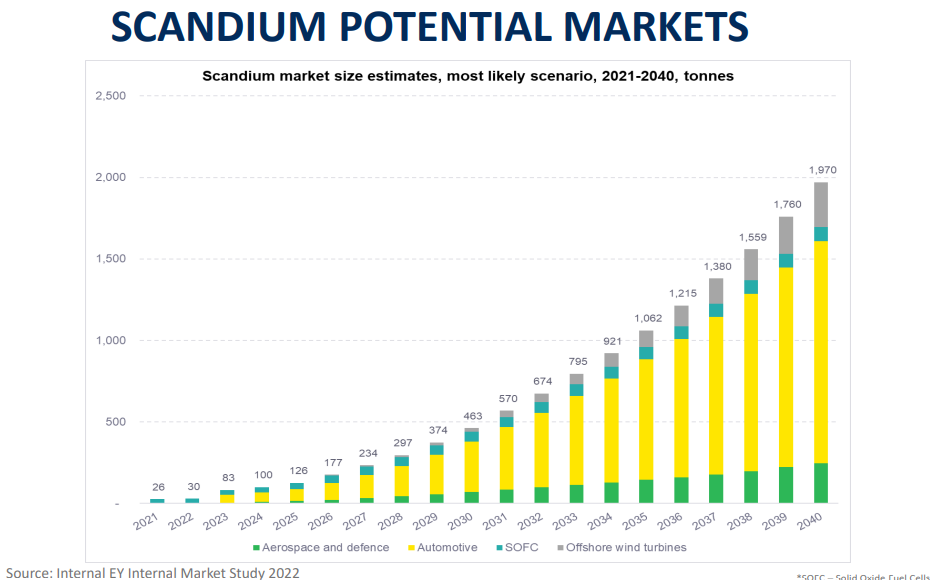
Analysts forecast demand could grow close to 2,000 tonnes per annum by 2040 – if and when further supply is added. Scandium Canada plans to be a major contributor to that production growth.
As Scandium Canada Chief Science Officer Luc Duchesne notes, the commercial emergence of aluminium powders in 3D printing represents a significant advancement in additive manufacturing technology.
Governments of various countries including Canada, the US, and UK are implementing national programs for university level 3D printing research, promoting technological development, and are funding various research organisations to bring further innovations in 3D printing technology.
With the filing of patents such as the one by Scandium Canada, Duchesne says the potential for using aluminium alloy powders for 3D printing applications using aluminium scandium alloys has increased.
In turn, it creates new possibilities for manufacturing lightweight, high-strength components, particularly in aerospace, automotive, and maritime industries.
Write to Adam Orlando at Mining.com.au
Images: Scandium Canada & McMaster University


