


This article is a sponsored feature from Mining.com.au partner Scandium Canada Limited. It is not financial advice. Talk to a registered financial expert before making investment decisions.
This is this first in a two-part feature series.
“Scandium is a metal of the future. At Scandium Canada, the future is now!“
With that comment, Scandium Canada (TSX-V:SCD) Chef de la direction (CEO) Guy Bourassa describes how the TSX Venture Exchange listed company is developing one of the largest primary scandium projects in the world.
Speaking to Mining.com.au from his North American office, Bourassa outlines in part one of this two-part feature series, a vision to contribute to society’s goal of reducing carbon emissions to net zero.
The focus of that vision – the Crater Lake Project in Québec.
“The vision of how we will finance and develop the mine and build it, is it with partners that would be joint venture partners or co-owners of a certain portion of the mining operation, or would it be through offtake agreements?” Bourassa explains.
“We will likely need to release a detailed Prefeasibility Study (PFS) before inking any agreements. I come from a lithium market background and I’ve been involved in the development of a lithium project over 10 years – I signed six offtake agreements. Unlike lithium, I think with scandium, it will be possible to get joint venture partners with some ease.”
The C$11 million market capitalisation company completed a Preliminary Economic Assessment (PEA) in 2022 for Crater Lake with a Prefeasibility Study (PFS) expected to be delivered in H2 2025.
With a 43-101 compliant mineral resource estimate (MRE), the PEA shows Crater Lake has an after-tax net present value (NPV) of $1.72 billion (at 10% discount rate) over a life of mine of 25 years. Total initial capex is expected to be C$870.9 million.

Amid the pathway towards production, Scandium Canada is considering all options for development. These include offering co-ownership of the mine, exclusive rights for offtake to strategic partners – potentially via multiple agreements – or it could pursue a different approach altogether.
As the Chef de la direction tells Mining.com.au, the company is already gaining attention. Scandium is not rare in nature but it’s rarely found in significant concentration and as the main mineral, like that seen at Crater Lake.
There is no large-scale commercial mining of scandium-bearing minerals – it is primarily mined as a byproduct, making it difficult to produce in large quantities. According to Coherent Market Insights, this inconsistency in supply has been a major restraint for growth.
Scandium Canada is now changing that landscape.
Piloting the way towards primary production
The pathway towards emerging as the only primary producer “puts you in a position of power”, the CEO explains. With this in mind, Scandium Canada could be free carried as part of a potential partner locking in Crater Lake supply – knowing how rare these mines are to come online.
“It’s a pretty unique position that very few junior exploration companies are in,” Bourassa adds.
Since 2021, the company has been working with McMaster University for the development of Al-Sc powders for 3D printing (advance manufacturing) for the production of parts that are otherwise difficult or impossible to produce using traditional manufacturing methods. The composition of these powders are proprietary to Scandium Canada. The company is also filing a patent application for these aluminium-scandium powders
In the coming months, Scandium Canada will release the results of the metallurgical piloting currently in progress confirming the flow sheet to produce scandium oxide. It will be releasing results of the recently completed diamond drilling campaign, which will lead to an updated MRE by the end of the year and that will be the basis of the PFS.
“Finally, we should be able to formalise discussions with these end users and strategic partners to develop the project,” the Chef de la direction adds.
Scandium Canada has formed a Strategic Advisory Committee, which is charged with helping it make strategic decisions. These include identifying and locking in potential end users and interested parties requiring its scandium oxide and Al-Sc (2%) master alloy.
The increasing adoption of scandium in 3D printing is poised to bolster the global scandium metal market growth. In March 2021, Rio Tinto (ASX:RIO) signed an agreement to provide a first commercial batch of high-performance aluminium-scandium alloy billets to metal additive manufacturing company Amaero. These billets will be processed by Amaero into powder for 3D printing.

Overcoming scarcity and scepticism
Considered a critical mineral by countries including the US, Canada, and Australia, scandium is a rare, versatile, and useful metal. As mentioned, it’s historically been extracted as a minor byproduct from mining nickel, cobalt, titanium, and niobium mines, among others.
Scandium is in the emerging stages lithium was 15 years ago when scepticism about the battery metal was rife.
Bourassa is no stranger to lithium. He was the founder and CEO of Nemaska Lithium from January 2008 to February 2020. Dating back to 1988, Bourassa has held executive roles at a range of companies including with Radisson Mining Resources, Dufresnoy Industrial Minerals, Mazarin, Monarques Resources, and Nouveau Monde Graphite.

According to the Chef de la direction, in 2009-10 many people struggled to believe there was a market for lithium. In those days as CEO of Nemaska Lithium, Bourassa took an educational approach with lithium and the drivers of the battery metal’s growth such as the emergence of electric vehicles (EVs).
In 2024, a similar strategy is being applied for scandium. The difference between lithium and scandium – there’s not much of the latter around.
“Now, we have to sell the benefit of scandium and that there is a very large potential market there,” Bourassa says.
Weight of the market
Currently, world scandium production is roughly 40 tonnes of scandium oxide – coming from China (75%), Russia, and several former Soviet Union states. About 35% of the scandium oxide produced is used in the making of solid oxide fuel cells.
The balance is mainly used in making alloys. When combined with aluminium, scandium creates different alloys that hold unique properties.
Being a byproduct has implications in terms of supply consistency, security, and the ability to respond to market demand. As such, scandium is the metal of the future and the reasons are simple.
“It allows you to significantly reduce the weight of different parts of planes, boats, or cars – everything that needs strong material, like titanium or steel, can be obtained by melting aluminium with a very small quantity of scandium,” Bourassa explains.
‘It allows you to significantly reduce the weight of different parts of planes, boats, or cars – everything that needs strong material, like titanium or steel, can be obtained by melting aluminium with a very small quantity of scandium‘
“You can imagine the weight reduction of a plane by 10%, 15%, or 20% – the direct impact it has on emissions, reducing the fuel amount that is needed is huge. Same thing with the electric cars. If you reduce the weight, you won’t need to add extra batteries to have a range that is acceptable to the market because you’re going to be reducing the weight it carries.
“So that’s why it’s the metal of the future. The main issue is – and the main users know about it – but currently 100% of your production capacity comes from China and Russia. Therefore, the Western world needs supply. But in addition, as we said 100% of the production comes as a byproduct therefore, you easily can understand that the actual supply cannot be increased to match new demand.”
Scandium belongs to the transition metals group of the periodic table – it has a density similar to aluminium. Mixed in small quantities with aluminium, scandium creates alloys that produce lightweight, high-strength, and corrosion resistant material.
The rare metal is the perfect material for high-tech applications, such as aluminium scandium alloys utilised in the manufacturing of high-performance components for aerospace, aircraft, missiles, and satellites.
Scandium Canada has identified using aluminium scandium alloys in different industries – one is the aluminium channels in the frames of solar panels. As the solar panel industry experiences rapid growth, there’s a pressing need to reduce its carbon footprint.
Adopting aluminium scandium alloys in solar panels not only reduces overall weight of the frames but also improves their durability. To this end, Scandium Canada is designing alloys to extrude complex profiles of solar panel frames to be tested by a major solar panel manufacturer.
According to Coherent Market Insights, emerging applications of scandium in high-power solid-state lasers present a major growth opportunity for the global scandium metal market players. Scandium’s exceptional ability to stabilise aluminium alloys at high temperatures makes it well-suited for laser applications that require highly heat-resistant optics and other components.
The rapid expansion of the global automotive industry is another key driver for growth of the scandium market. Aluminium scandium wires could replace copper in the wiring of electric motors therefore significantly reducing its weight.
As automakers are focusing on developing lighter and more fuel-efficient electric vehicles, the demand for these alloys is increasing as they are highly suitable for automobile body panels, chassis components, and other structural parts of EVs.
The silvery-white metal is a good conductor of electricity and heat. Other uses include in solid oxide fuel cells (SOFCs) and electronics like metal-halide lamps, as well as for wind turbine parts. It has wide usage in manufacturing Light Emitting Diodes (LEDs), semiconductors, and advanced memory chips which are core components of all consumer electronics.
Starting from zero
Scandium Canada is well advanced to bolster global supply as these markets expand and require more of the metal.
While global production stands at just 30-35 tonnes per year (scandium oxide), with no primary production, market analysts forecast demand could grow close to 2,000 tonnes per annum by 2040 – if and when supply is added.
“With the current scandium supply being dominated by jurisdictions not necessarily friendly to North America, and considering its status as a critical mineral, it is key that new capacity is developed in North America and Scandium Canada is the answer,” Bourassa tells Mining.com.au.
“Starting from zero, in the next 20 years if there was a source or sources available, (Scandium Canada) the market could increase from 40 tonnes the actual demand to 2,000 tonnes – so 50 times what’s out in the market.
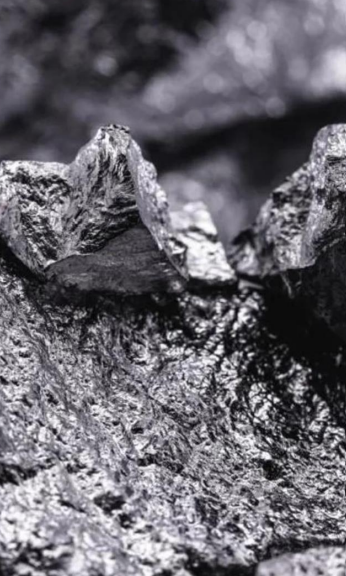
“People tell me, ‘Guy, you have a PEA that talks about producing 82 tonnes per year of scandium oxide, the market total is 40 tonnes, so you’re going to completely break the price’. I say, ‘No, forget about the 40 tonnes it’s already supplied. The reality is that you’re starting from zero … go to 2,000 – we only come in with 82 tonnes’.”
Is it enough?
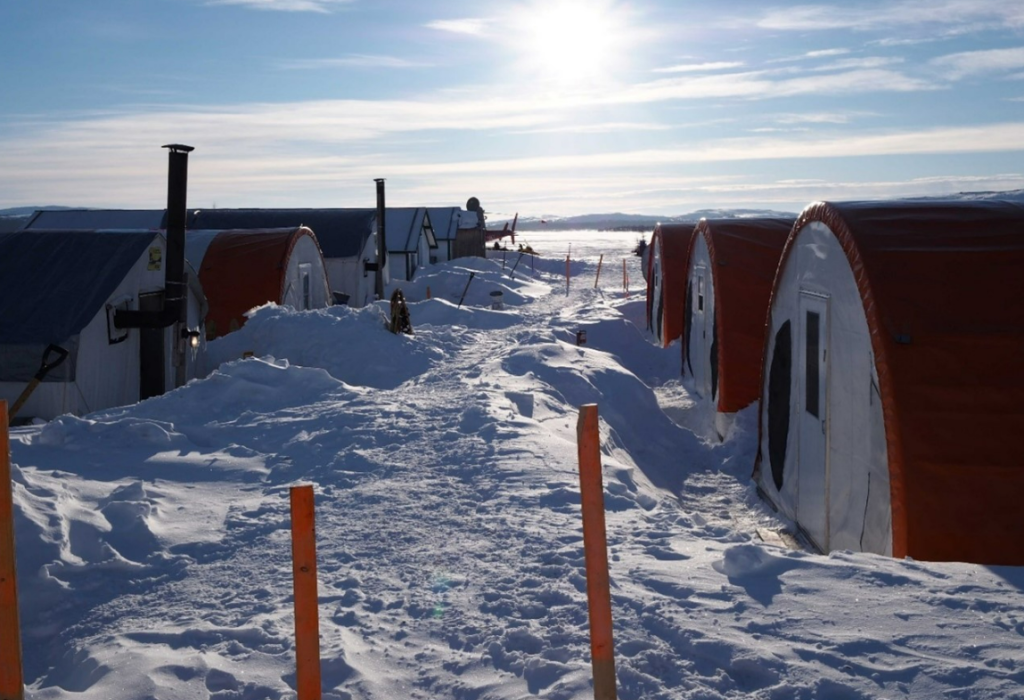
At the Crater Lake property, Scandium Canada owns 96 mining claims covering 4,705 hectares. The property has a large surface scandium deposit near Québec’s aluminium metal production/value-added products.
The 2022 Preliminary Economic Assessment (PEA) finds the project’s total metal production over a minimum 25-year mining life is expected to be 110 tonnes Sc2O3, 57,298t of ScAl master alloy, and 23,578t of REE hydroxide concentrate.
Total initial capex for the project is just under C$871 million.
Since the 2022 PEA, an updated 43-101 MRE was released following additional drilling, increasing the resource. It’s the size of the actual known resource and the “extremely large potential of being a dominant player in the next century” that differentiates Scandium Canada in the market, Bourassa notes.
“Because one has to understand, the Crater Lake Project as a whole covers over 47km2 and we have found over a strike of 14km, six different zones demonstrated by surface sampling and/or drilling in three separate zones.
“The PEA is strictly on one of these zones, and it’s only restricted to about 300 metres long. A strike of 300 metres by 200 metres deep, open in all directions, and that’s a 25-year initial mine life. We just completed the drilling campaign this summer.”
Work is being done on developing a mine on one of these zones – called the TG zone. Within the TG zone the resources identified could provide the market for decades to come. The zone is open in all directions and its full potential remains to be confirmed. It will be mined as an open pit with an average of about 4m of overburden and a dip of close to 90o.
“So, I don’t know how it’s going to finish. I know that we have other zones that could be spun out, or we could do a specific deal with somebody but for the main TG zone that we’re working on, it’s too early. Like I said to everybody that we talk to – we’re going to want to be protected but we’re open-minded,” the CEO adds.
In part two of this special feature series, Scandium Canada Chef de la direction (CEO) Guy Bourassa describes how the company is doing all this with no direct competition as far as primary production is concerned.
He outlines how apart from being the only active primary scandium project globally, Crater Lake is an attractive proposition from both a mining and investment perspective for other reasons.
Write to Adam Orlando at Mining.com.au
Images: Rochelle Padua & Scandium Canada