
MDF Global MDF Global
Apple’s iPhone boom highlights critical minerals powering smartphones•Presenting a united front for Queensland’s copper sector•Thailand seeks Myanmar mine access amid arsenic pollution•Egypt to set up state-backed company to license artisanal gold miners, free detainees•Brixton closes $7.4 million raise for Thorn, Langis projects•Heliostar banks record $78.7 million for Ana Paula push•Mining giants bet billions on 2030 supply crunch•Gunnison Copper reports Q3 output, revenue surge•Triumph Gold targets $15.46 million for Yukon push•African Rainbow Minerals faces a jobs dispute at Nkomati mine•Angola seeks 10% stake in De Beers under Anglo’s proposed exit•Gold price rebounds but heads for biggest weekly loss since June•Teck copper strike reaches BC port as operator sues union•Copper benchmark rocked by miner-smelter tug-of-war•Zimbabwe mining bill targets community, environmental safeguards•Mount Isa critical minerals hub secures Feasibility Study funding•Eramet initiates $814.5 million capital raise to reduce debt•Richemont backs natural gemstones, declines De Beers comment•‘Tis the season for administration as Comlek falls a second time•OceanaGold Philippines trials wireless blasting at Didipio mine Apple’s iPhone boom highlights critical minerals powering smartphones•Presenting a united front for Queensland’s copper sector•Thailand seeks Myanmar mine access amid arsenic pollution•Egypt to set up state-backed company to license artisanal gold miners, free detainees•Brixton closes $7.4 million raise for Thorn, Langis projects•Heliostar banks record $78.7 million for Ana Paula push•Mining giants bet billions on 2030 supply crunch•Gunnison Copper reports Q3 output, revenue surge•Triumph Gold targets $15.46 million for Yukon push•African Rainbow Minerals faces a jobs dispute at Nkomati mine•Angola seeks 10% stake in De Beers under Anglo’s proposed exit•Gold price rebounds but heads for biggest weekly loss since June•Teck copper strike reaches BC port as operator sues union•Copper benchmark rocked by miner-smelter tug-of-war•Zimbabwe mining bill targets community, environmental safeguards•Mount Isa critical minerals hub secures Feasibility Study funding•Eramet initiates $814.5 million capital raise to reduce debt•Richemont backs natural gemstones, declines De Beers comment•‘Tis the season for administration as Comlek falls a second time•OceanaGold Philippines trials wireless blasting at Didipio mine
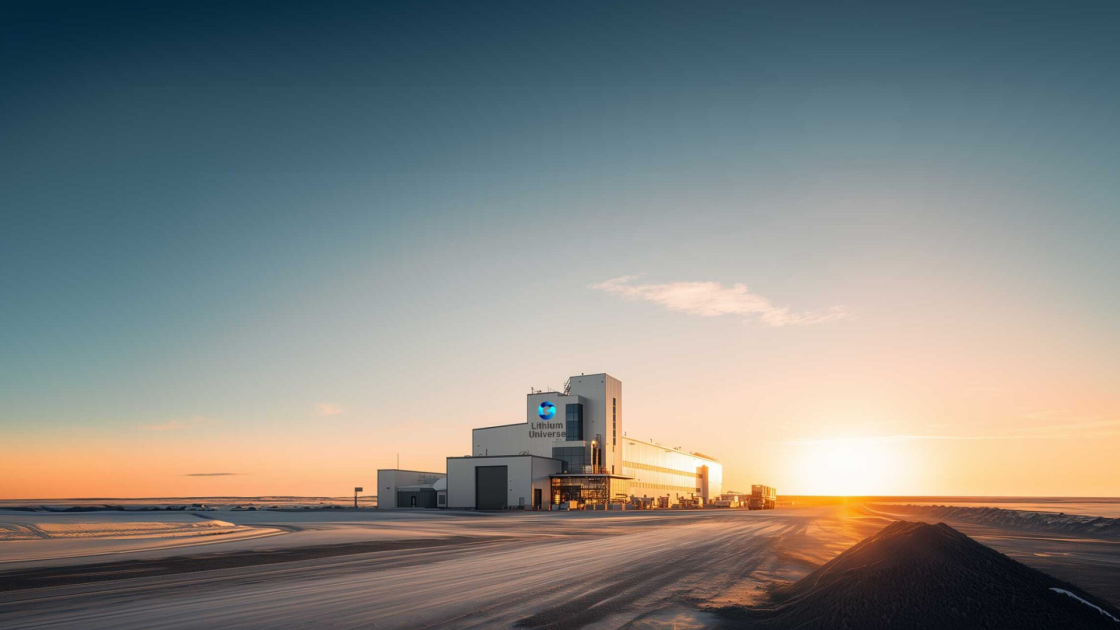
Lithium University hero image

Lithium Universe recovers gallium and platinum from e-waste

Lithium Universe (ASX:LU7) has successfully extracted critical metals gallium and platinum using its licensed diamide technology, with laboratory recoveries exceeding 99%.

The company’s partner, the University of Edinburgh, has demonstrated that the tertiary diamide ligand technology can selectively recover gallium and platinum from electronic waste under specific laboratory conditions.

The technology achieved greater than 99% gallium recovery and approximately 99–100% platinum recovery.

Gallium is essential to advanced semiconductors and modern electronics, with applications across integrated circuits, LEDs, telecommunications, power electronics, aerospace, and defence. Platinum is a high‑value critical metal used in catalysts, electronics, chemical processing, and emerging hydrogen technologies.

Laboratory testwork investigated how process conditions can be tuned to selectively recover different high‑value metals from e‑waste.

The results provide a foundation for expanding the diamide technology into a broader critical‑metals recovery platform, though further development and commercial evaluation will be required.

The process begins by dissolving metals from e‑waste into a hydrochloric acid solution. Under stronger acidic conditions, the diamide achieved greater than 99% precipitation of gallium. When platinum was present as Pt(IV), the diamide captured it, with complete Pt(IV) uptake achieved under selected laboratory conditions.

CEO Iggy Tan says the technology’s ability to selectively target different metals by changing conditions presents significant opportunities.

“Under one set of conditions, it strongly prefers gold. Under stronger acidic conditions, our research shows it can also precipitate gallium and platinum,” Tan notes.

The work remains at the laboratory stage, and further testwork, process development, and scale‑up would be required to determine whether this chemistry can ultimately form part of a commercially viable e‑waste recovery process.

Lithium Universe is a diversified critical metals company advancing lithium carbonate refineries in Québec, Canada, and Texas, US, alongside e‑waste recycling technologies for gold, silver, and copper recovery.

Write to JC Villarba at Mining.com.au

Images: Lithium Universe

Add to Watch List:
Author Image
Written By JC Villarba
JC is an editor with a decade of experience shaping digital content for worldwide audiences. He has spent time embedded in the construction industry, producing content for some of Australia's leading construction and equipment platforms. A Political Science graduate, he has developed a long-standing habit of following global affairs too closely. Outside of work, JC can be found behind a camera, hunting for a good meal, or deep in a book about film or history.