

This article is a sponsored feature from Mining.com.au partner Scandium Canada. It is not financial advice. Talk to a registered financial expert before making investment decisions.
Scandium Canada (TSX-V:SCD) is working on a two-pronged approach to progress, as it develops the only known primary source of hard rock scandium in the world and pioneers ‘game-changing’ aluminium-scandium alloys for industrial applications.
Guy Bourassa, CEO and Chairman of Scandium Canada explains to Mining.com.au that scandium is “the metal of the future”, with its unique industrial qualities, potential growth in market demand, and the lack of other major sources of supply.
Scandium Canada came across the Crater Lake Project in the 2010s when they were actually out looking for rare earth assets but came across this large, scandium-primary asset in northeast Québec.
The market potential is significant. Bourassa explains that all current scandium producers are obtaining it as a byproduct of another mineral being mined, which limits the total output based on external market conditions — not those related specifically to scandium.
A preliminary economic assessment (PEA) was done in 2022 to assess whether Crater Lake was worth moving into development. At that time, the PEA returned a value of C$1.7 billion after tax on the initial 25-year mine life of the asset.
Bourassa says that the company has “continued drilling and we’ve now updated the resource to a roughly 50-year mine life and are now moving onto the Prefeasibility Study (PFS) in June or July this year”.
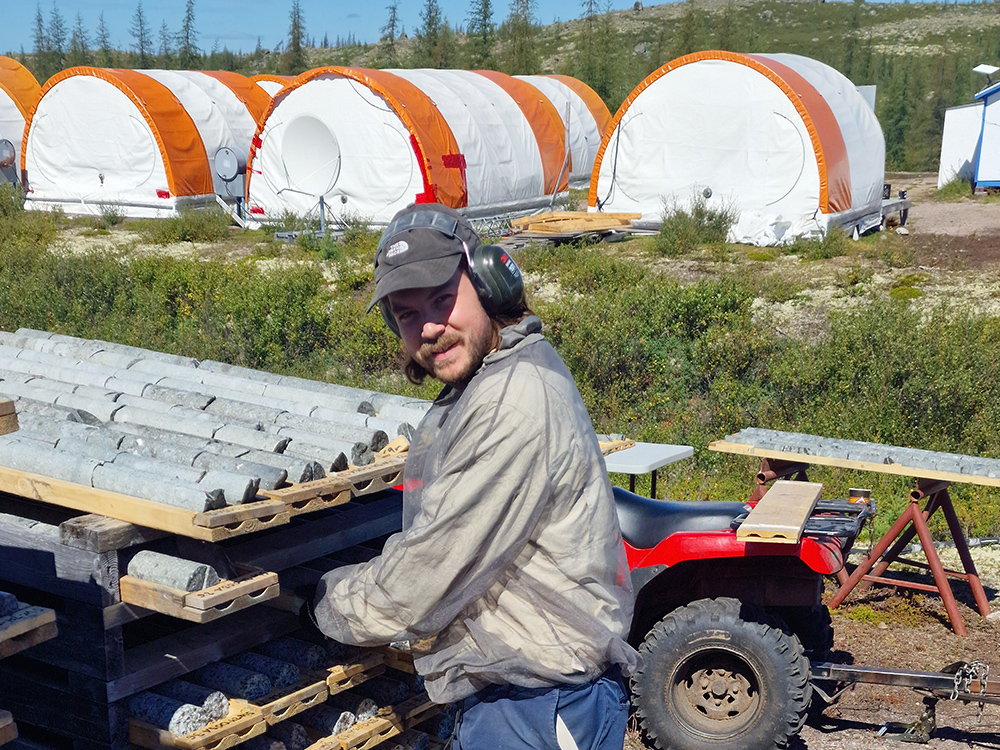
Crater Lake: Building a world class scandium mine
Scandium Canada wholly owns the 47km2 of mining rights of the Crater Lake Project. Early work conducted at the site has identified at least five key targets bearing scandium minerals.
Bourassa explains that in 2022, Scandium Canada decided to focus on one zone, the TG Zone, which is what the PEA in 2022 was based on and where the company has continued drilling to increase the resource estimate.
“We currently have a new resource estimate, dated May 2025, which is going to be the basis for the reserves to be built under the PFS that is expected by the end of summer 2026,” Bourassa says.
The company has conducted metallurgical testing and needs to be very careful about the methodology used. Bourassa notes that “there’s no other hard rock scandium project in the world. You cannot take the metallurgy of a laterite nickel deposit and try to apply it here. So, we developed the methodology, firmed up the flowsheet with a 500kg metallurgical test at SGS in Lakefield, Ontario over 14 months”.
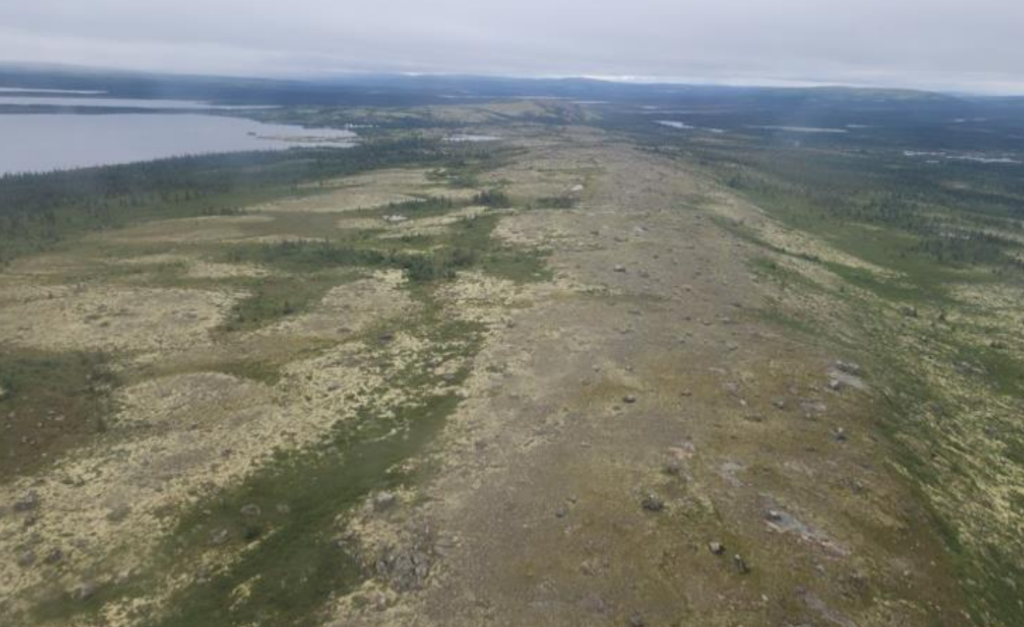
The Crater Lake Project is remote, Bourassa notes. There is no road access or electricity, and it is approximately 200km from the closest town, Schefferville, in Northern Québec, near the border with Labrador.
The company is currently in advanced discussions with the Naskapi Nation of Kawawachikamach to team up to decide how to build an access road on the territory, giving the company access from Schefferville to the project.
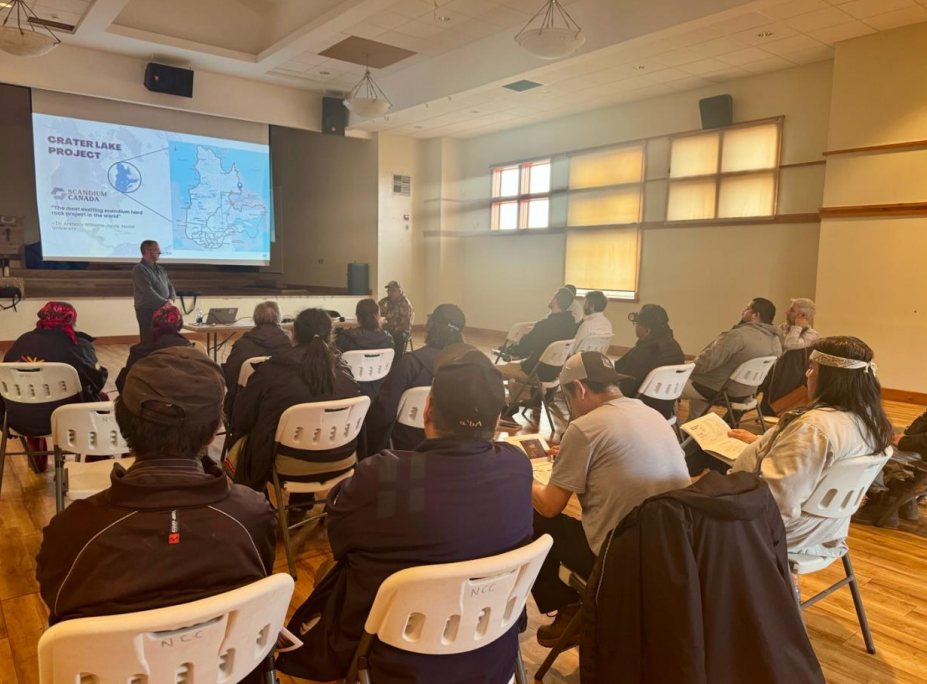
Partnering with the Naskapi Nation for shared growth
Scandium Canada has a close relationship with the Naskapi Nation of Kawawachikamach, the First Nations community whose territory includes Crater Lake. Bourassa explains how, when he joined the company in January 2024, one of his first tasks as CEO was to complete the negotiations for a pre-development agreement with the Naskapi Nation.
The agreement respects the viewpoints and desires of both parties and really outlines how they will work together in advancing the Crater Lake project, while making sure that the community is well informed, is part of the decision-making around land use, and that the natural environment and wildlife are respected.
The relationship is strong, so much so that the Naskapi Nation decided to invest in the company. In July 2025, the company closed a non-brokered private placement of C$334,000 subscribed by the Taasipitaakin Trust, a trust controlled by the Naskapi Nation of Kawawachikamach, resulting in the acquisition of 5% of the company.
Bourassa notes that the relationship and investment from the Naskapi Nation is an important milestone for Scandium Canada. The two parties are working together to decide where the much-needed access road can be built, how both parties will coordinate decision-making on this, and on the management of the road once built.
Bourassa explains how “the Naskapi Nation currently does not have a road to access their own territory. They have to go by snowmobile or by float plane to access their fishing and hunting grounds”.
“The idea of opening up and having them control the access to their territory is a positive both for them and for us,” Bourassa says.
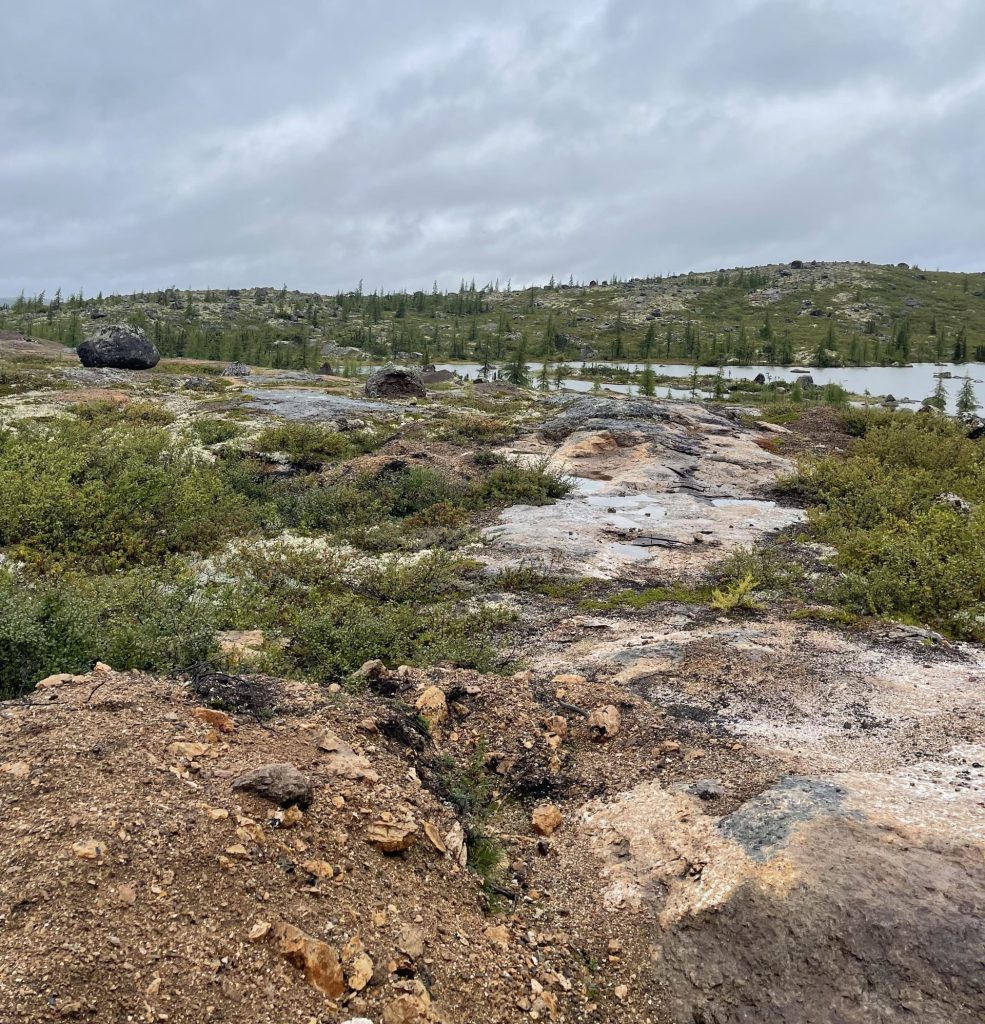
Pilot test success: Cutting costs, boosting recovery
The 500kg metallurgical test completed with SGS in 2025 provided the company with new data that hadn’t been included in the PEA, with regards to recovery.
In the previous PEA that was conducted in 2022, the company was mining 426,000 tonnes of ore to get 216,000 tonnes of concentrate. Bourassa explains that “that concentrate then needs to be transported for 350km to a hydrometallurgical plant for conversion. At the end of the conversion, in the PEA, the result was 86 tonnes of finished product”.
The pilot test used a 500kg ore sample from Crater Lake and results confirmed a significant reduction in concentrate needed to be transported to and processed at the company’s hydrometallurgical site, resulting in a reduction in overall capital and operating costs.
“With the new results of 500kg, we’re now talking about 196,000 tonnes of concentrate, so we’re able to significantly reduce the number of tonnes to be transported, which is obviously going to have an impact on the transport costs, an impact on the size of the hydrometallurgical plant, and obviously the number of tonnes to be transformed. And, at the end, instead of having 86 tonnes of finished product, we had 91 tonnes. So, we gained on all aspects as compared to the PEA,” Bourassa explains.
“After receiving the summer 2025 results of the SGS methodological test, we commissioned KM Laboratory in Québec to continue to optimise the concentration portion of the flowsheet so that it can result in less material to be transported to the plant”
“After receiving the summer 2025 results of the SGS methodological test, we commissioned KM Laboratory in Québec to continue to optimise the concentration portion of the flowsheet so that it can result in less material to be transported to the plant.”
Scandium Canada is working to find ways to further increase the recovery through their work with KM Laboratories. Bourassa explains that they want to move from transporting 196,000 tonnes to maybe 50-60% of that which “would be very significant in the cost of transport and the cost of transformation at the other end”.
The results of the work by KM Laboratories will be positively transferred into the overall cost structure of the Crater Lake Project.

Scandium+: Pioneering alloys for tomorrow’s industries
In parallel to the Crater Lake Project, Scandium Canada is advancing another division of the company, Scandium+, targeted at developing proprietary aluminum-scandium alloys for future commercialisation and to unlock the full potential of scandium products.
Within three years from launching, Scandium+ has developed two new aluminum-scandium alloys, and their powders, to be used in additive manufacturing (3D printing) applications.
Bourassa explains that the challenge in this process is to be able to print laser bed fusion printing without creating micro cracks in the finished products as these can make an alloy structurally unsound. If you consider the primary structure of something like an aircraft – it has specific requirements including being lightweight, but efficient and stable.
And Scandium+ was able to achieve this. “By coming up with an aluminum-scandium alloy that does not generate micro cracks when it melts during the laser bed fusion is a complete game changer,” Bourassa says.
The company filed patent applications in September 2024, and a PCT filing followed in September 2025, which will provide them with more global coverage in their patent. Scandium Canada expects to have confirmations on these patents within a year.
Scandium+ is looking at a path to commercialisation for these alloys. The company has commissioned an engineering firm to undertake a study to look at industry parts and applications that could benefit from these specific alloys, specifically looking at welding wires.
Bourassa explains that this engineering firm, based out of Québec, has been commissioned to generate welding wires using Scandium+’s recipes for the alloys. “We expect to have that completed by the end of March 2026, and then submitted for tests by third parties to confirm that it works for their specifications,” Bourassa says.
“This alone could generate a demand that we estimate to be about 30 tonnes per year of scandium oxide for that market. And it’s not a market that we’re trying to steal someone else’s portion of. The market simply does not currently exist. It’s a big game changer for the industry.”
The creation of Scandium+ is really a strategic move by Scandium Canada as a path to commercialisation for a new product, but also to bring in new investors to the company. Bourassa explains how Scandium+ is targeting “industrial investors who may not be interested in a large capex and long construction that a mining project requires, but are interested in the rapid development and commercialisation of the alloys”.
Québec’s critical minerals push
Québec is the largest producer of aluminum in Canada, so there’s a significant ecosystem already developed there in terms of the aluminum industry, universities, training institutes, etc. for the sector.
Québec is also an established mining jurisdiction, focused on growing its role in the critical minerals space. In 2020, the government put in place a five-year plan to help the development of strategic and critical minerals. In mid-January 2026, it was announced that this plan would be renewed for another five years, providing grants and subsidies to help accelerate the infrastructure development and other needs relating to critical and strategic minerals projects.
It’s not just the Québec government, but the government of Canada as well who are playing a role in the development of critical and strategic minerals, of which scandium is included. Bourassa says that “the federal government put in place a C$3 billion critical minerals infrastructure fund for five years whose purpose is to provide grants to accelerate the construction of infrastructure required to get projects to shovel-ready”.
Scandium Canada’s Crater Lake Project is not the only remote project in the country. The ability for the federal government to help support the cost of the infrastructure needed to get to the mining stage is critical, and ensures that companies can accelerate their development.
Securing supply: Scandium’s strategic importance
Bourassa notes the strategic qualities of scandium and why it is considered a critical mineral. “There is only one source that can potentially provide a long-term supply. If you require scandium for production and you require a reliable source of supply, you need a mine with a large resource where scandium is the main product.”
He explains that you can look at an end-user, such as an aircraft manufacturer. They need to ensure the security of supply if they want to use an aluminum-scandium alloy. They need to be sure that they are able to receive the material needed and “you just can’t rely on that from a byproduct mine,” Bourassa says.
This is why the company is accelerating their path towards a PFS. Bourassa says that “we need to be able to firm up discussions with large potential end-users so that they’re comfortable that they can invest in the development of their products, based on a reliable, politically stable, long-term supply”.
A transformative year for Scandium Canada
Bourassa makes the case for a busy and exciting year ahead for Scandium Canada as they accelerate their business across multiple pathways.
In the near-term, Scandium+ continues to test its alloys, with the commissioned firm out of Québec expected to complete its testing in March. It will also continue to work with end users on specific applications (such as Gränges Powder Metallurgy as reported in its 6 November 2025 press release).
Confirmation on the construction and design of the access road on the Naskapi Nation territory is still under consideration, so once confirmed, this will have a direct impact on the PFS.
The PFS on Crater Lake will be delivered between June and July this year. Meanwhile, the company continues to do ground work and site preparation through the summer and fall of 2026.
Images: iStock, Scandium Canada & Mining.com.au