

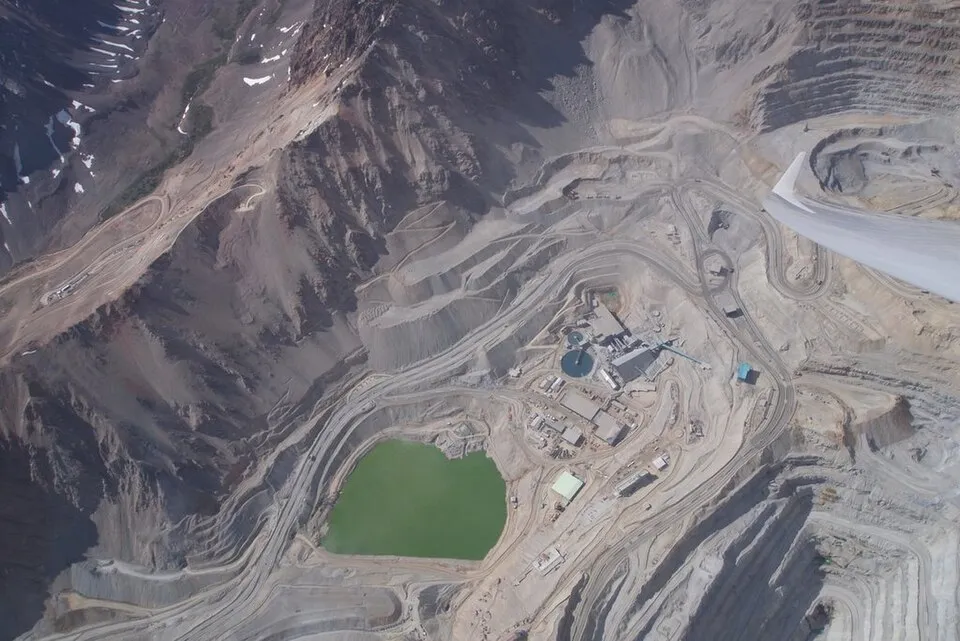
From open-pit ore to finished cathode.
Context and background
Copper doesn’t arrive at a manufacturing plant as a shiny metal ready to use. Between the rock in the ground and the copper cathode that gets shipped to a wire mill or smelter, there are several distinct stages of mining, processing, and refining — each with its own costs, equipment requirements, and technical challenges.
Understanding this process gives useful context for reading mining company announcements, interpreting production cost disclosures, and making sense of why different copper projects have different economic profiles.
Mining the ore
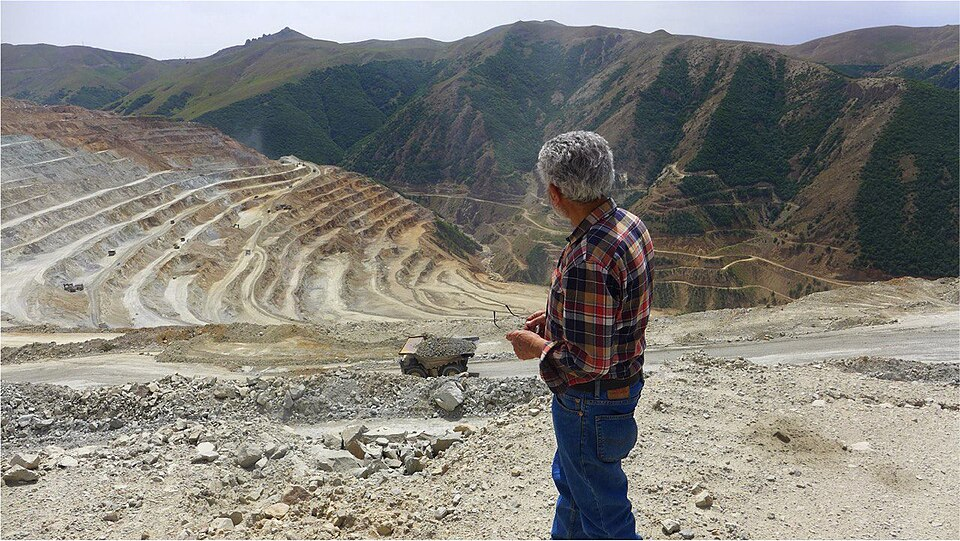
The vast majority of copper mining today is done by open-pit methods. Open-pit mining suits the large, low-grade porphyry deposits that dominate global copper supply because the ore bodies are extensive and relatively near the surface, making it practical to move enormous volumes of rock efficiently. Excavators and large haul trucks work in a series of descending terraces or benches, removing both ore and waste rock in a carefully sequenced operation.
The ore grades involved are often modest — frequently less than 1% copper by weight, sometimes considerably lower. This means that for every tonne of copper ultimately produced, hundreds of tonnes of rock may need to be mined and processed. The economics depend on doing this at sufficient scale to keep unit costs low, which is why the world’s major copper mines are among the largest industrial operations anywhere.
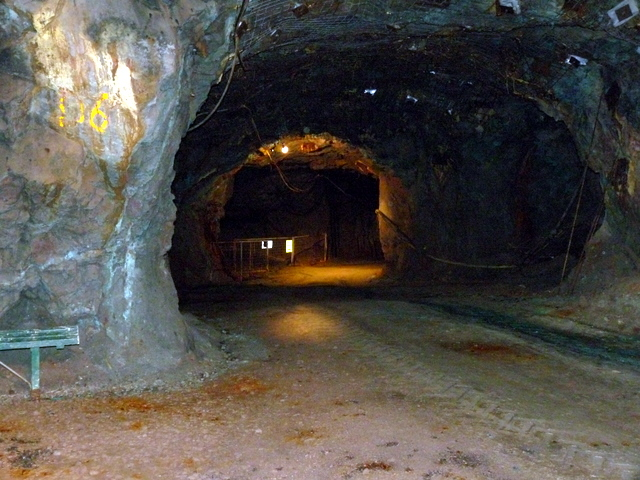
Underground mining is used where ore bodies are too deep for open-pit methods to be economic, or where high-grade mineralisation is concentrated in a narrower zone that doesn’t justify the expense of stripping large volumes of surrounding rock. Underground copper mines use a range of extraction methods depending on ore body geometry and ground conditions, including block caving — a large-scale technique in which ore is progressively collapsed and drawn from below — and cut-and-fill methods for more selective extraction of higher-grade zones.
Crushing and grinding
Once ore is mined, it needs to be broken down to liberate the copper minerals from the surrounding rock. This begins with primary crushing, where large chunks of ore are reduced to more manageable sizes by jaw or gyratory crushers, then continues through secondary and tertiary crushing stages.
After crushing, the ore is ground in large rotating mills — typically ball mills or SAG (semi-autogenous grinding) mills — using steel balls or the ore itself as the grinding medium. The objective is to reduce the particle size to the point where copper minerals are effectively separated from the waste rock they are bound up with. Grinding is one of the most energy-intensive steps in the entire process, and managing energy consumption in the mill circuit is a significant focus for mine operators trying to control operating costs.
Concentrating the ore
For sulphide ores, which make up the majority of copper deposits, the next step after grinding is froth flotation. Ground ore is mixed with water and chemical reagents in large flotation tanks. Air is bubbled through the slurry, and the reagents cause copper sulphide minerals to attach to the air bubbles and float to the surface as a froth, while waste minerals sink to the bottom. The copper-rich froth is skimmed off and processed further, while the waste material — called tailings — is pumped to a tailings storage facility.
The result of flotation is a copper concentrate, typically containing 25–35% copper alongside iron sulphides, gold, silver, and other trace elements. This is still a long way from finished metal, but it’s a substantial improvement on the raw ore grade and a product that can be economically transported to a smelter for further processing.
Smelting and refining
Copper concentrate is fed into a smelter, where it undergoes high-temperature pyrometallurgical processing. In the smelting stage, concentrate is melted in a furnace at temperatures above 1,000 degrees Celsius. The iron sulphide component combines with added silica flux and separates as a slag, while the copper sulphide material concentrates into a molten intermediate product called matte, typically containing 50–75% copper.
The matte is then processed in a converter, where air or oxygen is blown through it to remove remaining sulphur and iron. The product at this stage is blister copper, so named for the bubbled surface that forms as dissolved gases escape during cooling. Blister copper is typically 98.5–99.5% pure — close, but not yet at the standard required for most industrial applications.
Fire refining in an anode furnace removes remaining impurities, and the copper is cast into large flat slabs called anodes at roughly 99.5% purity. These anodes are then placed in an electrolytic refining tank alongside thin copper starter sheets acting as cathodes, and an electrical current is passed through a copper sulphate and sulphuric acid solution. Pure copper dissolves from the anode and deposits onto the cathode, while impurities fall to the bottom of the tank as anode slime — which often contains recoverable gold, silver, and other precious metals.
The finished product is an electrolytic tough pitch (ETP) copper cathode at 99.99% purity. This is the internationally traded standard form of refined copper, and it’s the material that manufacturers use to produce wire, tube, sheet, and the thousands of other copper products that end up in buildings, vehicles, and electronics.
The SX-EW alternative
Not all copper follows the concentrate-smelt-refine route. For oxide ores and some low-grade sulphide ores, a hydrometallurgical process called solvent extraction-electrowinning (SX-EW) offers a more direct and lower-cost path to finished cathode.
In the SX-EW process, ore is stacked in large heaps on lined pads and irrigated with a dilute sulphuric acid solution. The acid percolates through the heap, dissolving copper from the ore and producing a copper-bearing solution called pregnant leach solution (PLS). This solution is then processed through solvent extraction, where an organic solvent selectively strips copper ions from the solution, concentrating them and separating them from impurities. The copper-rich organic phase is then stripped back into a purified aqueous solution, which feeds the electrowinning stage — essentially the same electroplating process used in conventional electrolytic refining.
The result is copper cathode at 99.99% purity, produced without the intermediate concentrate and smelting steps. SX-EW accounts for around 20% of global copper production and is particularly prevalent in Chile and the United States, where oxide ore deposits suited to acid leaching are more common.
The trade-off is applicability: SX-EW works well for oxide ores but is less effective for the sulphide ores that make up the majority of large copper deposits globally. As the world’s high-grade oxide deposits are progressively worked out, the industry is increasingly reliant on concentrating and smelting sulphide ores, with SX-EW remaining an important but not dominant part of the production mix.
What this means for project economics
The processing route a copper project uses has a significant bearing on its capital and operating cost profile. A conventional sulphide concentrator requires substantial upfront capital — grinding mills, flotation circuits, tailings infrastructure — but produces a concentrate that can be sold to third-party smelters without the mine owner needing to build refining capacity. An SX-EW operation requires less capital for the processing plant but does need suitable oxide ore and access to sulphuric acid, which is typically a by-product of nearby smelters or produced on site.
Processing recovery rates — the percentage of copper in the ore that actually ends up in the final product — vary across deposit types, ore mineralogy, and processing conditions. A project reporting 90% recovery in its Feasibility Study would generally indicate strong processing performance, while recoveries in the 70% range may raise questions about whether the processing design has been optimised or whether the ore is more difficult to treat than assumed. Recovery assumptions are worth checking in Feasibility Study disclosures since they directly affect how much copper a mine produces from a given quantity of ore.
Conclusion
Turning copper ore into finished cathode involves a sequence of physical and chemical steps, each adding value and each carrying costs. Open-pit or underground mining extracts the ore; crushing and grinding liberate the copper minerals; flotation concentrates them; and smelting and electrolytic refining produce finished metal at 99.99% purity. SX-EW offers a more direct route for oxide ores, accounting for around a fifth of global production. Understanding this process helps investors interpret production cost disclosures, assess processing risk in feasibility studies, and make sense of the differences between copper projects at similar stages of development.
Write to Tyler Jefferson at Mining.com.au
Main image: Wikimedia Commons