


Tungsten’s hardness, density, and strategic supply tension.
Context and background
Tungsten sits quietly in the background of modern industrial and military life, rarely mentioned in investment news until a supply disruption brings it to the surface.
In February 2025, China placed tungsten products under export controls, citing national security concerns. This measure included tungsten-related products such as ammonium paratungstate (APT), tungsten oxides, tungsten carbide, and certain solid tungsten products.
For a metal that was already subject to extreme supply concentration, the move sharpened an uncomfortable reality that Western governments had been aware of for years.
Understanding what tungsten is, why its physical properties make it difficult to substitute, and why China’s dominance of its supply chain creates strategic vulnerabilities helps explain why this largely unheralded metal has ended up on critical minerals lists across multiple continents.
What is tungsten?
Tungsten is a chemical element with the symbol W and atomic number 74. Its symbol comes from the German name for the metal: wolfram. In its pure form, tungsten is a steel-grey metal with a set of physical properties that sit at the extreme end of what any element can offer.
Its melting point of 3,422°C is the highest of any pure metal — nearly twice that of steel, and more than six times that of aluminium. Its density is approximately 19.3 grams per cubic centimetre, comparable to gold and nearly twice that of lead. It has the lowest coefficient of thermal expansion of any metal, meaning it expands and contracts very little as temperatures change. And in the form of tungsten carbide, a compound of tungsten and carbon, it approaches diamond in hardness while remaining far more manufacturable than diamond at industrial scale.
These properties don’t occur together in any other material at comparable cost. That combination is why tungsten is described as virtually unsubstitutable in its key applications, and why controlling its supply confers meaningful strategic leverage.
Industrial uses
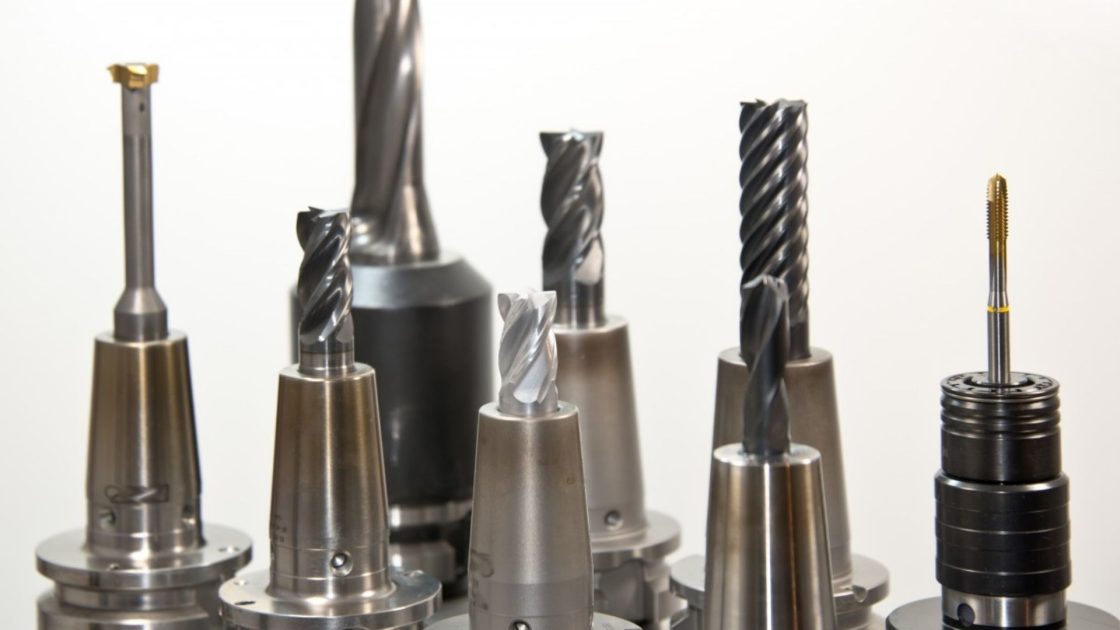
The largest single use of tungsten globally, accounting for over 60% of total consumption, is tungsten carbide for cutting tools, drilling equipment, and wear-resistant components. Tungsten carbide inserts tip the drill bits and cutting edges used in machining metal, mining rock, and cutting concrete. The hardness and heat resistance of the material allow cutting tools to operate at speeds and temperatures that would destroy steel tooling. This directly affects the productivity and economics of manufacturing, mining, and construction.
Beyond cutting tools, tungsten appears in a range of other industrial applications. Electrical contacts and electrodes rely on its resistance to arc erosion at high temperatures. Heating elements in high-temperature furnaces are commonly made from tungsten because few other materials survive sustained exposure above 2,000°C. Tungsten wire remains the filament material in incandescent and halogen lighting, where its high melting point allows it to operate at the temperatures required for visible light emission without failing. In electronics, tungsten is used for interconnects in semiconductor devices, where its low thermal expansion and high melting point make it compatible with the thermal stresses of semiconductor manufacturing. The aerospace industry uses tungsten alloys for counterweights, gyroscope rotors, and components in turbine engines where thermal stability is critical.
Why it’s a military metal
Tungsten’s density is particularly important for defence applications. When a projectile needs to penetrate armour — whether a tank’s steel plate, reinforced concrete, or composite armour — density is a primary driver of penetrating performance. A denser penetrator carries more kinetic energy for a given volume and cross-section, driving deeper into the target before stopping.
Tungsten heavy alloys, typically tungsten combined with small percentages of nickel, iron, or cobalt, are the dominant material for kinetic energy penetrators: the long, dense rod at the core of armour-piercing ammunition. These penetrators are used in anti-tank rounds fired from tank guns and aircraft cannon, where they rely entirely on velocity and density rather than explosive force to defeat armour. Modern APFSDS (armour-piercing fin-stabilised discarding sabot) rounds use tungsten alloy penetrators as the primary armour-defeating element. This includes Germany’s Rheinmetall KE2020Neo, designed for the Leopard 2 and Challenger 3 tanks.
The comparison with depleted uranium (DU) is worth understanding. DU alloys have historically outperformed tungsten in penetration tests because of their self-sharpening behaviour during impact. DU undergoes adiabatic shear in a way that maintains a sharp penetrating tip, while tungsten tends to mushroom. This performance gap has driven sustained research into tungsten alloy compositions and microstructures that replicate the self-sharpening effect.
Germany uses tungsten rather than DU due to legal restrictions; most NATO allies continue to assess both materials for different applications. Either way, tungsten is one of only two viable materials for kinetic energy penetrators at scale, and DU’s environmental and political complications mean tungsten demand for defence applications is likely to grow, not diminish.
Beyond penetrators, tungsten appears in radiation shielding for nuclear applications, counterweights in precision munitions, and components in missile guidance systems where dimensional stability under thermal stress is required. Ongoing conflict in Ukraine and the Middle East, combined with China’s export controls, came at a time when Western ammunition stockpiles were already under pressure. This made supply chain exposure to tungsten particularly acute.

Where tungsten comes from
Global tungsten mine production reached approximately 85,000 tonnes in 2025. China accounted for around 79% of that total, producing approximately 67,000 tonnes. Vietnam was the second-largest producer at around 3,000 tonnes. Russia, Kazakhstan, Bolivia, and Australia make up most of the remainder. Production outside China has been increasing at the margin, with two new operations coming online in Australia in 2024. However, non-Chinese production remained around 20% of global output that year.
The supply concentration problem extends beyond mining into processing. Tungsten ore is typically converted into APT as an intermediate chemical product before being further refined into metal powder, tungsten carbide, or oxide. China dominates APT production even more completely than it dominates mining, controlling an estimated 85% of global APT conversion capacity. This means that even tungsten ore mined outside China frequently ends up being processed there before reaching Western end users. This creates a processing chokepoint that sits downstream of the mining stage.
China’s February 2025 export controls placed APT and finished tungsten products directly under a licensing regime, targeting the processing stage where the country has the greatest control. The result was a bifurcated market: Chinese-origin tungsten subject to export licensing uncertainty, and a premium market for non-Chinese origin material where buyers pay significantly more for supply chain assurance. A price gap of around US$2,000 ($2,847) per metric tonne unit between Chinese and non-Chinese APT emerged by mid-2025. This reflected the value Western buyers were placing on secure, traceable origin.
Projects working to diversify supply
Meaningful diversification is underway, though the scale of China’s dominance means it will take years to materially shift the balance.
The most significant single development outside China in decades has been the restart of the Sangdong tungsten mine in South Korea, operated by Almonty Industries (NASDAQ:ALM).
Sangdong is one of the world’s historically largest tungsten deposits, dormant for more than three decades before Almonty restarted operations. At full production, the mine is expected to supply approximately 40% of tungsten demand outside China. This will be a meaningful contribution to Western supply chain security, particularly given South Korea’s position as a US ally and key manufacturing partner.
Several operations in Australia have commenced or expanded, contributing to the increase in non-Chinese output noted in the 2024 US Geological Survey (USGS) data. In Austria, Wolfram Bergbau operates the Mittersill scheelite deposit in Salzburg, one of Europe’s only significant tungsten mines and a domestic source for the EU. Meanwhile, earlier-stage tungsten projects in Canada, Portugal, and Spain are in various stages of development.
The processing gap is harder to close than the mining gap. Building new APT conversion capacity outside China requires substantial capital investment and a reliable ore concentrate supply to feed it. The output must also be qualified by end users whose supply chains are accustomed to Chinese-origin material. The challenge mirrors the one described in the antimony article in this series: mining diversification alone is insufficient if the refining chokepoint remains in the same dominant jurisdiction.

Why tungsten is on critical minerals lists
Tungsten appears on the critical minerals lists of the US, EU, Australia, UK, Canada, and Japan. The designation reflects the standard critical minerals criteria: strategic importance in defence and advanced manufacturing; extreme supply concentration in a geopolitically sensitive jurisdiction; and limited practical substitutability in its primary applications.
The US produces virtually no tungsten domestically. Europe’s production, anchored by the Mittersill mine in Austria, covers a fraction of European industrial demand. Both are deeply dependent on imports, with Chinese-origin material having been the dominant source for most of the past two decades.
Conclusion
Tungsten’s physical properties — extreme melting point, exceptional density, and hardness approaching diamond in carbide form — make it essential in cutting tools, high-temperature industrial processes, electronics, and defence applications where no practical substitute exists.
China controls approximately 80% of global mine production and 85% of APT refining capacity. This gives it structural leverage over supply, which its February 2025 export controls demonstrated it can exercise. Projects in South Korea, Australia, Austria, and elsewhere are beginning to add non-Chinese supply. However, the processing bottleneck at the APT conversion stage means diversification will take years to achieve at the scale Western governments require.
For investors following critical minerals, tungsten offers a clear case study in what strategic supply concentration looks like when the dominant producer is also a geopolitical counterpart.
Write to Tyler Jefferson at Mining.com.au
Main image: PxHere


