


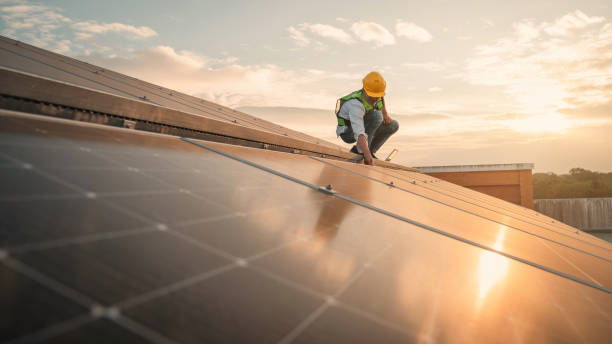
The UK’s International Climate Finance is supporting Bangladesh to sustain clean, affordable electricity for millions of people in rural and off-grid communities.
Through the Carbon Initiative for Development (Ci-Dev) program, the UK is helping clean energy projects earn income by selling carbon credits, which represent reductions in greenhouse gas (GHG) emissions.
Carbon credits are tradable permits or certificates that represent the removal, reduction, or avoidance of one tonne of carbon dioxide or its equivalent in GHG.
The UK Government says this is building the foundations to help projects attract investment, remain financially viable, and continue providing clean electricity over the longer term.
“By valuing solutions that prioritise long-term, environmentally friendly actions, this program drives the action needed to mitigate climate change,” the government says.
Around 3.3 million solar home systems have been supported in Bangladesh to date as part of the Ci-Dev program.
The UK’s support has helped more than 10 million people gain improved access to clean energy and installed more than 340 megawatts of clean energy capacity. It has also reduced more than 1 million tonnes (Mt) of GHG emissions — equivalent to 4% of London’s total emissions annually.
Bangladesh emitted 220.8Mt of GHG in 2024, measured in carbon dioxide equivalent, accounting for roughly 0.42% of global emissions.
By helping countries such as Bangladesh develop the capability and systems needed to unlock new sources of finance through carbon markets, the UK Government supports sustainable development. It also helps ensure that clean energy projects continue delivering affordable electricity to communities.
Write to Aaliyah Rogan at Mining.com.au
Main image: iStock


