


China’s dominance and the projects trying to diversify supply.
Context and background
The previous article in this series explained what antimony is and why it matters. We discussed its role in flame retardants, semiconductors, and defence applications. This article focuses on the supply side: where antimony actually comes from, why production is so heavily concentrated, and what is being done right now to change that.
The short answer is that antimony supply is structurally tight in ways that go beyond Chinese export controls, and diversifying that supply is proving harder than it looks.
How antimony is produced
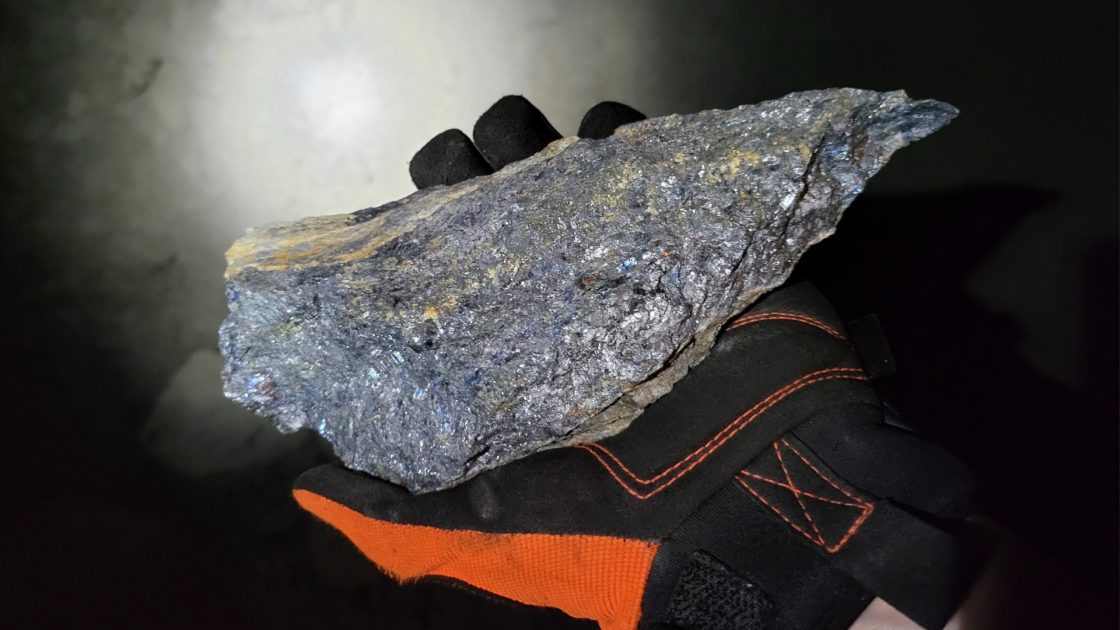
Antimony isn’t often mined as a primary product. Most production comes as a byproduct of mining for gold, silver, lead, or copper, with stibnite being the principal antimony-bearing ore mineral. This matters for supply dynamics because production volumes are partly dependent on the economics of whatever metal is being mined primarily. A stibnite-bearing gold deposit may or may not be developed depending on the gold price, with antimony output essentially following along.
Global antimony mine production reached approximately 110,000 tonnes in 2025, down from around 153,000 tonnes just five years earlier. That declining output trend, which began before China’s export controls entered the picture, reflects a combination of resource depletion at older Chinese mines, tightening environmental regulations within China, and a decade of underinvestment in new production capacity globally.

China’s position
China has been the world’s dominant antimony producer for decades. Its global share of mine production has gradually contracted from over 90% in 2009 to around 60% in 2024, reflecting some diversification elsewhere. But 60% of any commodity market is still an extraordinary degree of concentration for a single country.
China’s position is reinforced by its role as the dominant processor and refiner of antimony products. Even antimony that is mined in other countries often ends up being processed in China before it reaches end users. China remains a major source of global output, imports concentrate from Tajikistan and elsewhere for additional processing, and exports refined antimony products to buyers around the world. This dual role as the world’s largest miner and its dominant refiner gives China structural leverage over supply that extends well beyond its share of mine production alone.
The world’s largest antimony operation is the Xikuangshan mine in Hunan Province of China. Xikuangshan is one of the richest antimony deposits ever discovered and has been in continuous operation for over a century. Chinese domestic antimony reserves of 830,000 tonnes are the largest national reserve base in the world.

The other producers
Russia and Tajikistan together account for most of the non-Chinese supply. Russia produced approximately 32,000 tonnes in 2025. Tajikistan’s output is largely channelled through joint ventures with Chinese partners and has become the primary alternative source of antimony ore concentrate feeding China’s processing industry. Bolivia, Myanmar, Türkiye, Australia, and several smaller producers account for most of the remainder of global antimony supply.
The concentration problem becomes clearest when you look at the full picture: China, Russia, and Tajikistan together account for over 90% of global mine production. Russia is subject to Western sanctions. Tajikistan’s production flows primarily to China. The effective supply available to Western buyers under normal conditions has been heavily dependent on Chinese willingness to export.
Why the refining bottleneck matters
The challenge of diversifying antimony supply is frequently discussed in terms of mining: finding and developing deposits outside China. The refining picture is just as important, but considerably less discussed.
Antimony ore concentrate is of relatively little use until it has been processed into the refined products that end users actually need: antimony trioxide, antimony metal, or antimony trisulfide for defence applications. That processing requires specialist smelters and refining facilities, most of which are located in China.
Outside China and Russia, meaningful processing capacity is limited. Oman Strategic and Precious Metals Processing (SPMP) has a smelter designed to process 40,000 tonnes annually. However, SPMP suspended operations in 2024 due to inadequate ore supply to feed it. This is a stark illustration of how new smelting capacity without corresponding ore supply solves only half the problem.
Current analysis suggests that even if every proposed ex-Chinese smelter project is completed by 2030, total capacity outside China and Russia would reach only around 68,000 tonnes per year. That compares with projected ex-China demand of approximately 93,000 tonnes, leaving a structural processing deficit of around 27%.
Building new mining capacity and new refining capacity simultaneously, in countries that haven’t had meaningful antimony industries for decades, is the actual challenge facing Western governments trying to reduce dependence on Chinese supply.
Projects trying to change the picture
The past two years have seen meaningful government funding flow toward antimony projects in allied-nation jurisdictions, and several significant developments have occurred.
Larvotto Resources’ Hillgrove Gold-Antimony Project, New South Wales
A significant recent development in global antimony supply is the commencement of production at Larvotto Resources’ (ASX:LRV) Hillgrove mine in NSW in August 2026, as reported. This operation is the most substantial new Western source of antimony to come online amid the current supply crisis. Hillgrove is Australia’s largest antimony deposit and the eighth largest globally.
The project reached its final investment decision in July 2025, fully funded through a US$105 million ($145.5 million) senior secured bond issue and a $70 million equity raising. At full production, Hillgrove is expected to produce approximately 4,900 tonnes of antimony per year — roughly 7% of current global antimony demand — alongside around 45,000 ounces of gold annually over an initial eight-year mine life.
The scale of the operation highlights both the opportunity for new Western supply and the depth of the existing global supply gap.
Perpetua Resources’ Stibnite Gold Project, Idaho, US
Perpetua Resources’ (NASDAQ:PPTA) Stibnite Gold Project in central Idaho is the US’s most advanced domestic antimony development. The company says it is also the only known domestic reserve of antimony that can meet US defence requirements for munitions and missile systems. The project received its final federal approvals in 2025 and advanced to early works construction.
Since 2022, Perpetua has received more than US$87 million in US Government funding, including over US$59 million under the Defense Production Act Title III and awards from the Department of Defense. In May 2026, Perpetua secured a US$2.9 billion loan from the US Export-Import (EXIM) Bank, the largest loan under EXIM’s Make More in America initiative and its fourth-largest loan on record. The loan will fund full construction of the mine.
At full production, the project is expected to supply approximately 35% of US antimony demand within its first six years.
Perpetua also opened a pilot processing plant in July 2026, operated in partnership with the Idaho National Laboratory and the US Army, to demonstrate military-grade antimony trisulfide production from Stibnite ore ahead of full-scale operation.

Other projects
Beyond Hillgrove and Stibnite, a range of earlier-stage projects are advancing across Australia, Canada, and Europe. Southern Cross Gold’s (ASX:SX2) Sunday Creek Project in Victoria is targeting a maiden resource estimate. In Canada and the US, several junior exploration companies are advancing antimony-bearing properties. The EU has funded supply chain diversification programs under its Critical Raw Materials Act and the Horizon Europe research framework, reflecting the bloc’s own exposure to supply concentration risk.
What the analysis shows, however, is that all projects currently under development outside China fall well short of closing the structural supply gap by 2030, even on optimistic assumptions about project timelines and capital availability.
The price correction and what it means
Antimony prices surged dramatically after China’s August 2024 export controls took effect, reaching approximately US$57,000–63,000 per tonne by mid-2025 — roughly 10 times the five-year average. Prices have since declined from their peak as some licensed Chinese supply resumed under the whitelist system established for 2026 and 2027. Elevated prices also suppressed some downstream demand, particularly from photovoltaic glass and flame retardant manufacturers, which delayed purchases in anticipation of lower prices.
The price correction doesn’t indicate that the structural supply problem has been resolved. It reflects the partial and conditional resumption of Chinese exports under a licensing regime that China controls and can tighten again. The US-China trade truce suspended export restrictions on rare earths and other critical materials to the US and is due to expire in November 2026. At that point, the restrictions can be reinstated. Western buyers and governments are acutely aware of this.
The structural challenge in plain terms
Antimony’s supply problem is a combination of factors that don’t resolve quickly. Global mine production has been declining for five years. The world’s largest producer has demonstrated its willingness to use export controls as leverage. Refining capacity outside China is insufficient even if new ore supply could be found. And the lead times for developing new mining and processing capacity, measured in years rather than months, mean that the supply picture will remain tight well into the second half of the decade regardless of how much capital is committed today.
Larvotto Resources’ Hillgrove and Perpetua Resources’ Stibnite represent genuine progress on the Western supply chain, and the government funding flowing into both reflects a serious policy response. But they are just two projects in a market with structural vulnerabilities that took decades to develop. Diversifying supply at the scale required is a long-term undertaking.
Conclusion
Antimony supply is concentrated in a small number of countries in ways that have taken decades to develop and will take years to materially change. China’s position as both the largest miner and dominant processor gives it structural leverage that extends beyond export controls alone. Projects in Australia and the US are beginning to add meaningful Western supply. However, the gap between available supply outside China and projected Western demand remains large, and the refining bottleneck is at least as challenging as the mining one. For investors following critical minerals, antimony offers a clear case study in what supply concentration risk actually looks like when it is activated.
Write to Tyler Jefferson at Mining.com.au
Main image: Larvotto Resources


