

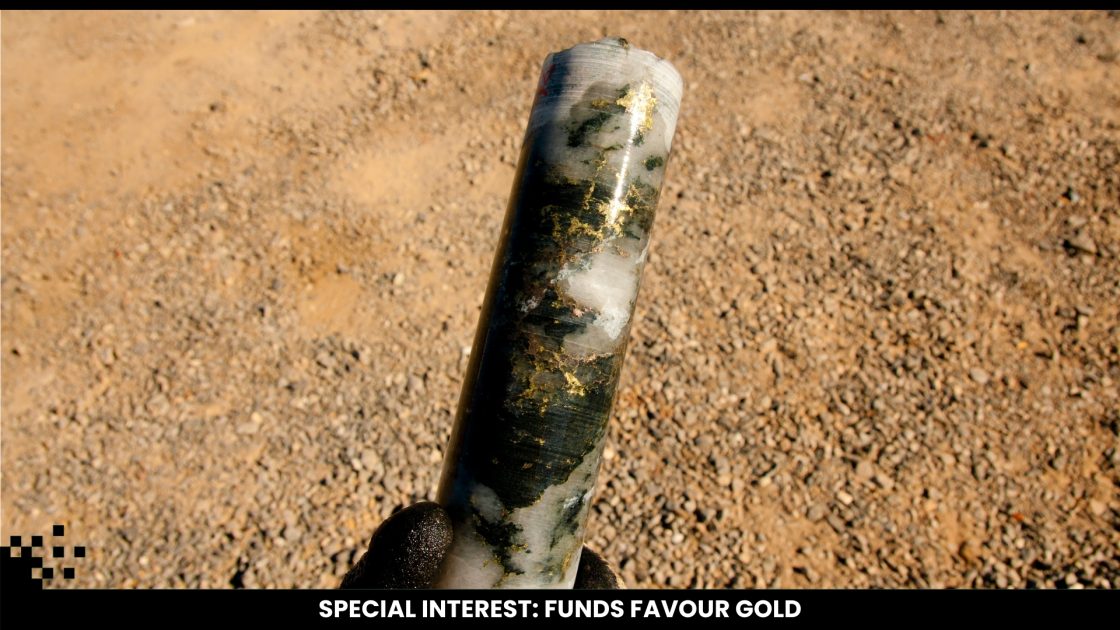
Institutional investors and funds are starting to take a more serious look at the small cap gold explorers and developers.
Canaccord Genuity Mining Analyst Tim McCormack tells Mining.com.au a new thematic is emerging of institutional money starting to flow down to the earlier stage companies.
“There’s not a management premium embedded in them or anything like that, that’s just a genuine stock that looks good and is now attracting institutional money,” he says.
“That certainly changed a lot from six or 12 months ago. All of a sudden you’re playing around in investments that could go up three or four times instead of buying a Northern Star and trying to make 20%.”
In mid-May, Medallion Metals (ASX:MM8) revealed it had received firm commitments to raise $27.5 million via an institutional placement.
The company said at the time a select group of “high quality” Australian, European and US-domiciled resource-focused institutions participated in the placement.
Prior to that, in February, Lion Selection Group (ASX:LSX) committed to injecting $1 million into Medallion as part of a $6.5 million capital raising.
Lion Selection Managing Director Hedley Widdup tells Mining.com.au that over the last decade or so, the owners of processing facilities have been getting shorter and shorter of gold ore.
Widdup says this opens up the potential for mergers and acquisitions, ore sales, or established plant acquisition as potential commercialisation pathways where the undeveloped junior is proximal enough to an established plant.
“These pathways can result in a short cutting of permit processes, reduced cost and certainly less capex to get into business which is why we were keen to filter for gold plays that could take advantage of alternatives to outright greenfields project development,” he says.
Lion Selection was a previous shareholder in Tectonic, which owned the Ravensthorpe Gold Project before Medallion.
“We have known about this project for a long time. In our view, the project financial metrics made great sense for a development, but what stood in the way – for both Medallion and predecessor Tectonic – was a small market cap to raise funds off the back of to fund development,” Widdup says.
He adds that Medallion broke that nexus in early 2024 when the company established a potential deal to acquire the existing Cosmic Boy nickel processing facility from IGO (ASX:IGO).
“This deal achieves a number of things – reduces the overall capital required to get into production, and reduces the permitting burden (and size of surface disturbance) to establish a project at Ravensthorpe,” Widdup says.
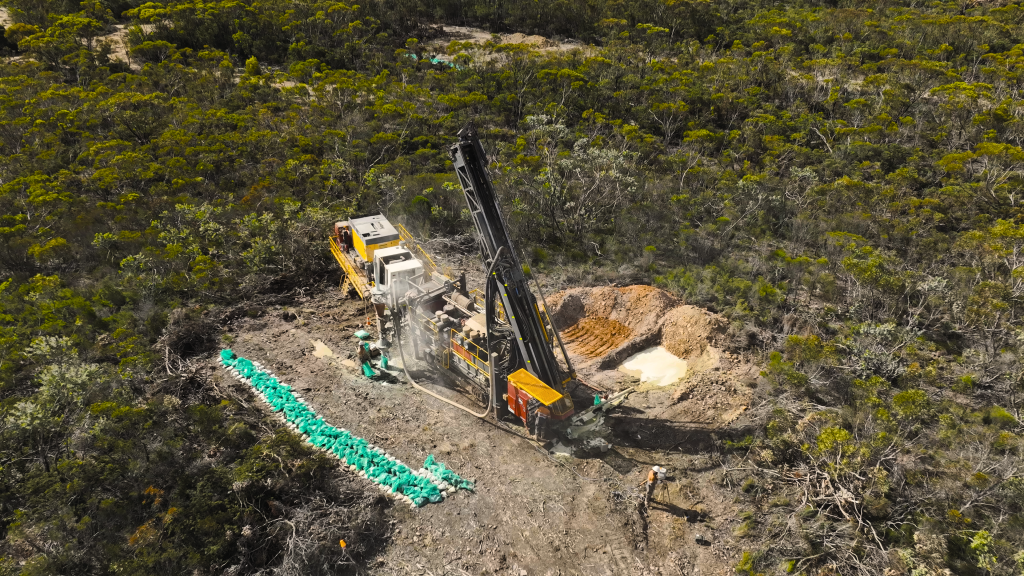
“For us this almost overnight catalysed Medallion from very interesting to highly investable because their pathway to production, whereby they should become more valuable, had so much risk taken out of it.”
Lion Selection is also a backer of Antipa Minerals (ASX:AZY), which the firm bought into early because of its attractive large existing inventory at the Minyari Dome Project in Western Australia that now hosts 2.5 million ounces of gold, 84,000 tonnes of copper, 666,000 ounces of silver and 13,000 tonnes of cobalt.
A Scoping Study update released in October 2024 outlined an initial 10-year operation with a throughput of 3 million tonnes each year, which would yield a pre-tax net present value of $834 million and internal rate of return of 52% at a gold price assumption of $3,000 an ounce.
The Minyari Dome Project surrounds Greatland Gold’s (LSE:GGP) Telfer gold-copper operation, which includes a 20-million-tonne-per-annum processing plant.
“We reasoned that Telfer was a bona fide process facility for Minyari ore so it ticked the box of having dual commercialisation pathways,” Widdup says.
“Initially we were probably slow to enter because we didn’t know the key people at all but we got through that and rate them very highly both in terms of the technical strengths within the company but also their commercial approach.”
Developers break capital raising ceiling
While the trend of 2024 was an influx of investment into producers and the even lower-risk royalty companies, 2025 is seeing more of the cash flow down to the developers.
“I think we can see institutional money moving into the developers. Explorers have seen more market interest, but it still seems highly selective (the explorers that are getting rewarded) and a narrowed investor field – not all the instos that look to be coming to gold are equally favouring developers and explorers,” Widdup notes.
Another sign the tide is turning for explorers and developers is the increasing positive market reaction to announcements.
“I think until about six months ago, because it had been a pretty long and lonely period in junior gold land, good announcements were often just looked at as liquidity events, and often – notwithstanding that they were positive, could actually see the share price go down,” Canaccord’s McCormack says.
“That’s definitely changed in the past six or 12 months as well, where you’re putting out good news and your share price is going up on the back of it and up on good volume.”
Gold stocks now account for between 20% and 40% of Canaccord’s daily trading turnover, according to McCormack.
Campbell Olsen, executive director of junior explorer North Stawell Minerals (ASX:NSM), tells Mining.com.au institutional investors have been underweight gold stocks for many years and now have to play catch up to ensure their portfolios are at least matching the index they are measured against.
“Smaller funds are looking at small gold stocks for the alpha potential they can bring to a portfolio value,” Olsen says.
“North Stawell Minerals has received enquiry from Asian-based institutions especially, who have a more traditional acceptance of gold as an investment class.”
North Stawell has consolidated a 504km2 landholding in the Stawell Corridor of western Victoria along strike of the operational Stawell Gold Mine which historically produced 5.3 million ounces of gold.
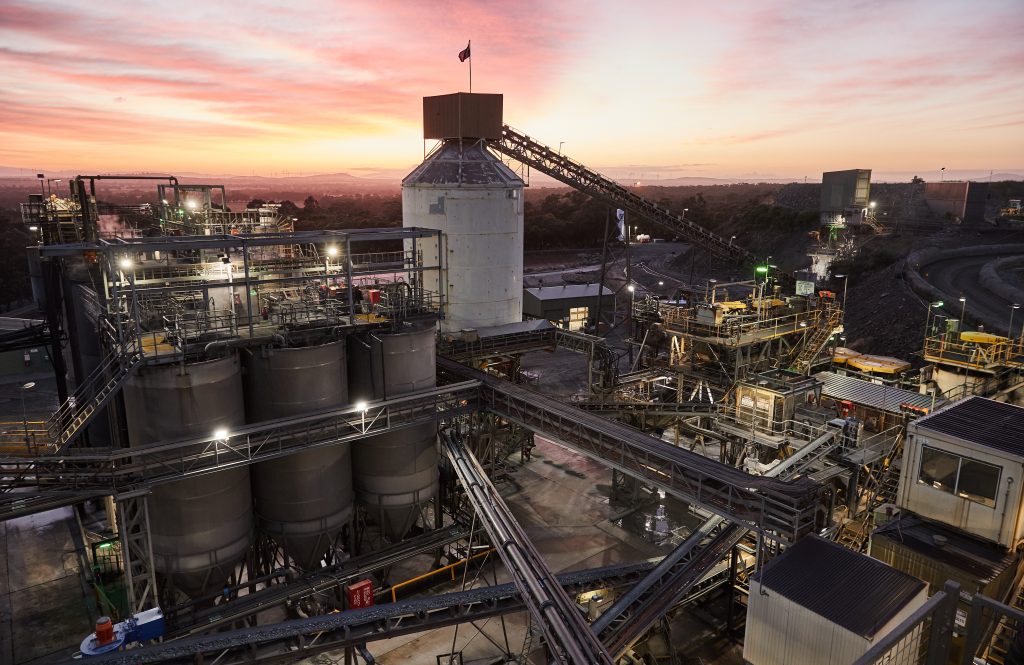
Olsen agrees that the juniors are starting to see a more positive response from investors, especially when announcing good results.
“Within NSM’s peer-group, we see positive response from some institutionals to high-grade results from junior explorers,” he says.
“Investment funds move first to the producers and their values rise, then developers are next with the promise of future production, then explorers are next, and we are seeing these investment flows because a good gold discovery is worth almost twice what it was a few years ago – this is dream maker territory.”
In mid-May, North Stawell revealed it had uncovered a new Stawell-type of mineralisation at its Darlington West target. This followed a high-grade intercept in April of 2.3m @ 29.2 grams per tonne and multiple occurrences of visible gold from diamond drilling at the same target.
North Stawell said at the time that high-grade gold intercepts and significant visible gold in the Stawell Corridor were not typical and that the intercept showed strong similarities to the historic Mariners Lodes at the Stawell Gold Mine.
“With new, high-grade targets at NSM we see an opportunity to get ‘on the radar’ of some of the locally active institutional investors,” Olsen says.
Institutions hunting strong financial upside
In May, New York-headquartered investment bank Goldman Sachs took a 6.587% stake in gold developer Toubani Resources (ASX:TRE).
Goldman Sachs is the second largest investment bank globally by revenue, which is about US$108.4 billion ($166.3 billion) – ranking it 35th on the US Fortune 500 list.
The investment bank predicts gold will rise to US$3,700 an ounce by the end of 2025 and hit US$4,000 an ounce by mid-2026.
Toubani is advancing its 2.2-million-ounce Kobada Gold Project in Mali to a final investment decision in the second half of the year to place it on the path to production in 2026.
Managing Director Phil Russo sees gold prices remaining elevated over an extended time frame.
“We are looking to accelerate development of Kobada as soon as possible given current prices will see significant economic returns for our shareholders,” he tells this news service.
“We see an increasing appetite for gold projects on an accelerated path to near term cash flow.
“We’ve been opportunistic already with bolstering our capital position but also our story speaks for itself – a simple, near-term development project is the quintessential play for outsized returns on capital.”
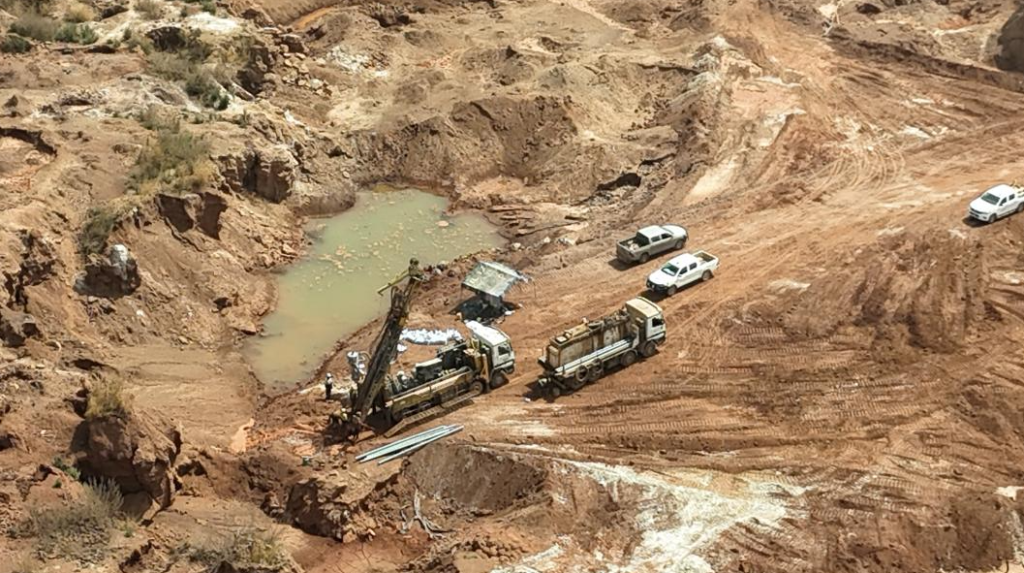
Ian Prentice, Managing Director of Cosmo Metals (ASX:CMO), says that while there appears to be the early stages of the trickle down of investor interest into explorers, it has not yet reached the levels that could be expected in a fully fledged bull market.
“Given the state of the global economy and a likely longer term currency reset this would appear to support a longer term sustainable reallocation into gold and gold equities,” he says.
“Cosmo hasn’t experienced any direct unsolicited inquiries at this stage – as a micro-cap early stage explorer it is possibly a little early for the institutional investors, however there has been an increased preparedness for institutional investors to meet with Cosmo to ensure that they are aware of the future exploration plans.
“For Cosmo this is generally the resource specialist funds, although there is a sense that some of the nimbler generalist funds are showing greater interest in the sector, particularly in gold-focused companies.”
Cosmo recently expanded its project portfolio to include gold, antimony and copper projects in a section of the New England Orogen on the New South Wales side of the New South Wales-Queensland border.
The newly acquired Bingara and Nundle projects span 743km2 and host several “highly prospective” targets that have either been underexplored or completely untested with modern systematic exploration.
The New England Orogen hosts major deposits such as the Mt Morgan Gold-Copper Project – which historically produced 7.7 million ounces of gold and 361,000 tonnes of copper – and is now being developed by Heritage Minerals as a tailings processing and rehabilitation project.
Other major operations hosted within the New England Orogen include the Ravenswood Gold Mine, considered to be Queensland’s largest gold mine.
Write to Angela East at Mining.com.au
Images: iStock, Medallion Metals, North Stawell Minerals & Toubani Resources