


This article is a sponsored feature from Mining.com.au partner Cosmo Metals Ltd. It is not financial advice. Talk to a registered financial expert before making investment decisions.
The New England Orogen has been around for hundreds of millions of years, but it is only very recently that the prospectivity of the southern part of this mineral-rich geological structure has attracted a rise in exploration interest.
The New England Orogen stretches from north of Newcastle in New South Wales all the way up the Queensland coast towards Townsville.
This structure hosts major deposits such as the Mt Morgan Gold-Copper Project – which historically produced 7.7 million ounces of gold and 361,000 tonnes of copper – and is now being developed by Heritage Minerals as a tailings processing and rehabilitation project.
Other major operations hosted within the New England Orogen include the Ravenswood Gold Mine, considered to be Queensland’s largest gold mine, Evolution Mining’s (ASX:EVN) Mt Rawdon, which produced 68,645 ounces of gold in the 2024 financial year, and Aeris Resources’ (ASX:AIS) 600,000-tonne-per-annum Cracow underground gold mine.
Larvotto Resources’ (ASX:LRV) development-stage Hillgrove Gold-Antimony Project, which has a resource of 1.7 million ounces of gold equivalent, is also located in the belt.
It is believed some 35 million ounces of gold has been produced from the New England Orogen.
Ian Prentice, Managing Director of explorer Cosmo Metals’ (ASX:CMO), says the vast majority of that production has come from north of the New South Wales and Queensland border – with the exception of the Hillgrove deposit.
“Now with a heightened awareness of the prospectivity of the southern part of the New England Orogen for antimony – a critical/strategic mineral – exploration activity is really starting to step up in that part of the world,” he tells Mining.com.au.
In April, Cosmo expanded its portfolio to include gold, antimony and copper projects in the New England Orogen.
The newly acquired Bingara and Nundle projects span 743km2 and host several “highly prospective” targets that have either been underexplored or completely untested with modern systematic exploration.
Blank canvas in proven region
Prentice says early observations are the consistent presence of historical gold and copper workings and evidence of surface mineralisation but the almost complete lack of modern exploration.
“There has been no meaningful drilling since the 1980s and there has been no modern systematic exploration across these large project areas,” Prentice notes.
“Bingara covers an area of 484km2 and Nundle covers an area of 259km2 – both held as one consolidated package for the first time in what is thought to have been a very long time.
“This presents a tremendous opportunity for Cosmo to conduct well thought out modern systematic exploration in highly prospective camp-scale projects with widespread evidence of gold, antimony and copper mineralisation.”
While modern day explorers are only just starting to realise the antimony potential of the area, the prospectivity was identified about a decade earlier by the NSW Geological Survey.
Prentice says the government-led organisation undertook a mineral prospectivity mapping exercise across the southern New England Orogen almost 10 years ago that highlighted some areas of very high prospectivity for gold-antimony in the region.
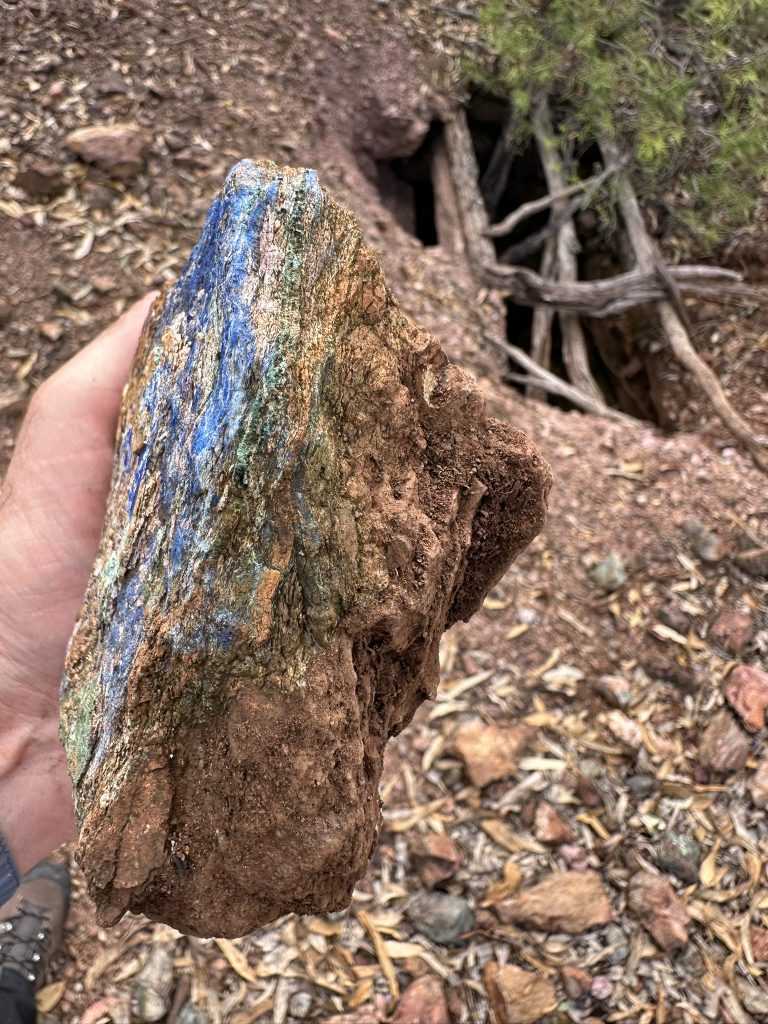
“The standout early stage gold-antimony targets generated from this work are covered by our new project areas,” he says.
“This work by the NSW Geological Survey also served to highlight the broader prospectivity of the region, attracting a range of explorers and making it one of the more active exploration jurisdictions in Australia.”
The historic Nundle goldfield reportedly produced over 150,000 ounces of gold from alluvial and hard rock mining from 1849 through to the 1940s, a figure Prentice notes is “likely to be materially underreported”.
Meanwhile, the Bingara goldfield was mined for gold and antimony during the 1850s and 1860s.
The broader district also hosts the Webbs and Conrad multi-million-ounce silver deposits, the Taronga tin deposit and the Cangai copper-gold deposit.
Cosmo is mapping out its strategic approach to finally subject the Bingara and Nundle projects for the first time to systematic modern exploration.
“Gold (+antimony) will be an early priority given the status of some of the target areas identified to date, however the systematic exploration approach will also ensure an appropriate measured focus is maintained on the copper targets,” Prentice tells this news service.
Southern New England steps into spotlight
Cosmo’s review of the historical production and limited exploration completed so far supports targeting for large-scale, high-grade orogenic gold-antimony mineralisation similar to that at Hillgrove.
It also shows potential for high-grade orogenic gold only mineralisation, as well as island arc intrusion related Mt Morgan-style porphyry copper-gold mineralisation.
Hillgrove sits around 120-130km east of Cosmo’s projects and is being advanced towards a restart of antimony and gold production in 2026.
Larvotto says the operation is poised to become Australia’s largest producer of antimony, expected to supply 7% of global demand.
The proposed open pit and underground operation is estimated to produce an average of 85,000 ounces gold equivalent each year.
A Definitive Feasibility Study completed in May this year places the post-tax net present value (NPV) at $280 million, using an 8% discount rate, and the internal rate of return (IRR) at 48% at a gold price of US$2,400 an ounce and antimony price of US$25,000 per tonne. The NPV jumps up to $1.269 billion and IRR up to 153% at spot commodity prices.
Late last year, China banned exports of various critical minerals including antimony, which drove the price to a record US$50,000 ($76,711) a tonne earlier this year.
Antimony is a key component in various applications across the defence, manufacturing and renewable energy sectors including flame retardants, solar panels, wind turbines, semiconductors and advanced defence systems.
Industry watchers expect prices to remain elevated for the next few years, with demand rising at the same time production is declining and China and the US are implementing restrictions and tariffs to secure their own supplies.
Blue Ocean Equities Senior Resources Analyst Carlos Crowley Vazquez says in a January 2025 sector update that the relatively inelastic supply, depleted stockpiles and strong demand growth point to a persistent high price environment.
Prentice says Larvotto’s growth and positive progress in the redevelopment of the Hillgrove mine helps shine a spotlight on not just the prospectivity of the NSW section of the New England Orogen, but also what can be achieved from a project development point of view in the region.
“This, along with the activity of a number of other explorers in the region, elevates market awareness of the district,” he says.
While Cosmo is at an early stage of exploration at its New England Orogen projects, the company has identified some targets that Prentice says “could well attract the attention of larger players” once Cosmo has had the opportunity to further unlock the potential.
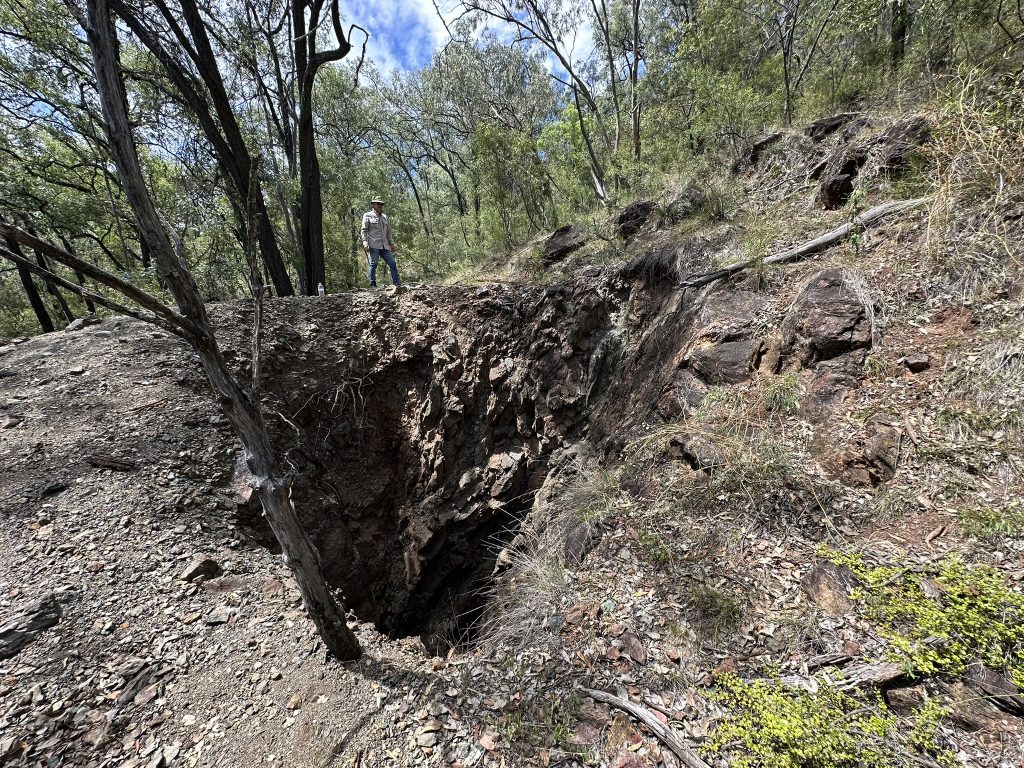
“The demonstration of the potential of the projects to host the type of multi-million-ounce deposits seen elsewhere in the New England Orogen would be likely to attract this heightened level of interest,” he says.
Cosmo is keen to hit the ground in NSW, but is also busy advancing its gold project in Western Australia.
The company’s Kanowna Gold Project sits adjacent to Northern Star Resources’ (ASX:NST) Kanowna Belle Gold Mine, which produced 166,000 ounces of gold in the 2024 financial year and still has over 7 million ounces in resources, including 1.5 million ounces of reserves.
Cosmo’s exploration over its ground near Kalgoorlie, has identified widespread gold anomalism across the project area, along with some ore-grade intersections from historical drilling.
Prentice says geological, geochemical and structural work completed to date confirms that the project has the hallmarks of a major gold mineralised system prospective for structural and/or sediment-hosted gold deposits.
The company is now working to define high-priority follow-up drill targets.
Write to Angela East at Mining.com.au
Images: Mining.com.au & Cosmo Metals