


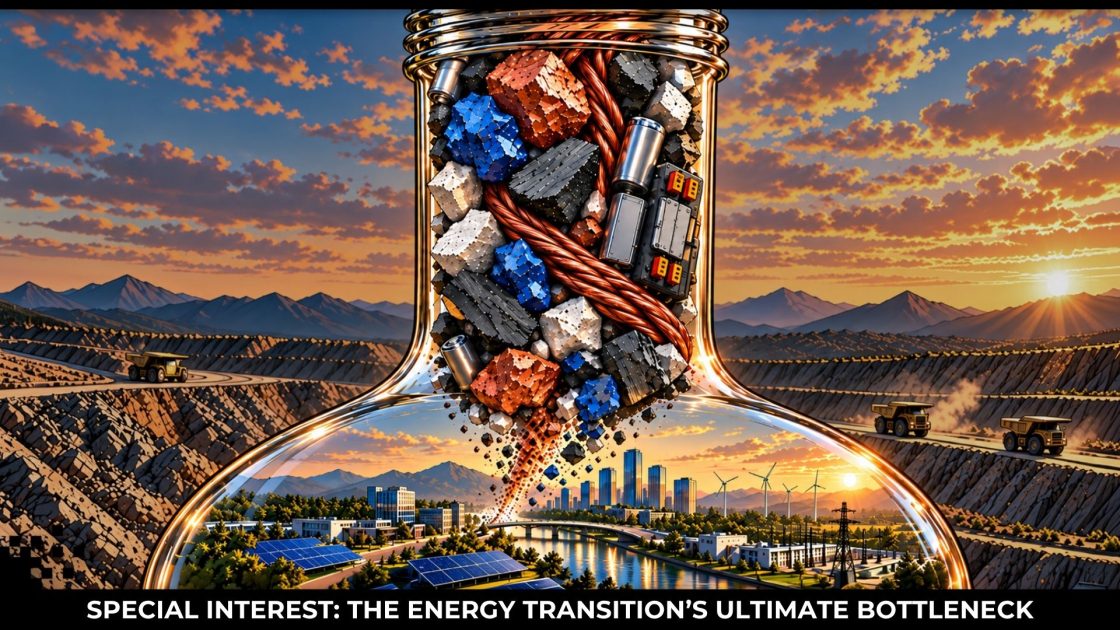
The biggest mineral challenge facing the energy transition may not be the one attracting the most market attention.
While lithium has dominated critical minerals discussions amid surging demand for electric vehicle (EV) batteries and energy storage, a new analysis from GEM Mining Consulting points to copper as the metal most likely to constrain the energy transition by 2035.
The report, Which metal will be the real bottleneck of the energy transition toward 2035, argues that copper’s importance extends beyond a single technology or market.
Its widespread use across electricity networks, renewable energy infrastructure, and electrification means supply constraints could have consequences across multiple industries.
Compounding the challenge, developing new mines can take years, limiting the industry’s ability to respond quickly to rising demand.
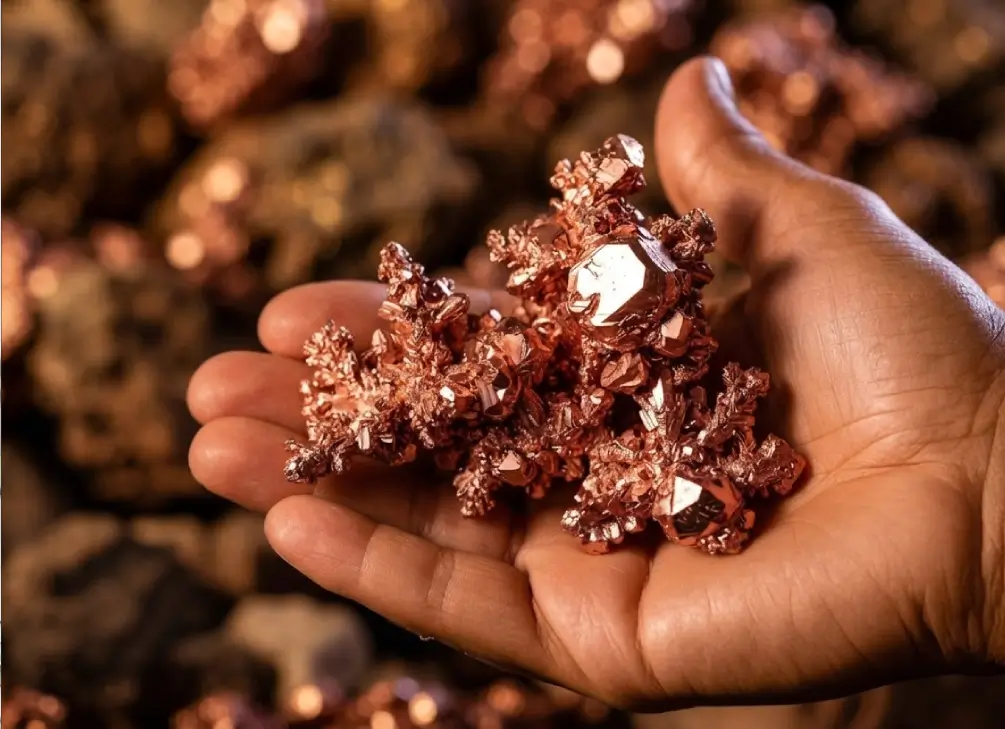
To identify the minerals most likely to constrain the transition, GEM Mining assessed six critical minerals, including copper, lithium, nickel, cobalt, graphite, and magnetic rare earths.
Rather than examining supply and demand alone, the consulting firm evaluated four factors. These include volume pressure, technological breadth, mitigation rigidity, and supply-chain fragility.
These were combined into its proprietary Systemic Bottleneck Index (SBI), scored from zero to 100.
GEM Mining’s findings highlight an important distinction — the mineral facing the largest relative supply shortfall is not always the one posing the greatest systemic risk.
Copper is the systemic bottleneck
GEM Mining reports that copper ranks first, scoring 72.8 points on the SBI. Its ranking reflects a substantial projected supply shortfall and widespread use across electricity grids, renewable energy, EVs, buildings, industry, and data centres.
“A constraint on copper can propagate widely because the metal is not tied to a single technology,” GEM Mining says.
Copper is used in transmission lines and cables, substations, transformers, generators, inverters, buildings, industrial infrastructure, vehicles and charging infrastructure, pumps, motors, and more.
Across these applications, copper’s role as an electrical conductor is difficult to replace without redesigning systems, oversizing components, or accepting additional efficiency losses.
Copper’s use is not only broad but also massive in scale. GEM Mining reports that its refined market is measured in tens of millions of tonnes annually.
“A percentage gap similar to that of a niche metal therefore implies a much greater requirement for projects, capital, infrastructure, and permitting,” the consulting firm notes.
The challenge is not finding more copper. The industry must discover economically viable deposits, secure investment, obtain approvals, and develop the infrastructure needed to bring additional supply online.
Shrinking discoveries raise supply concerns
The scale of copper demand would be challenging enough without a slowdown in new discoveries.
According to MinEx Consulting Managing Director Richard Schodde, the rate of new copper deposit discoveries has halved over the past decade. This follows a 60% decline in funding for grassroots exploration, as previously reported.
JP Morgan’s model paints an even tighter picture, projecting a 330,000-tonne deficit.
Although the forecasts differ, both point to the pressure facing the market as demand grows and new supply struggles to keep pace.
For explorers, this creates an opportunity to help replenish the project pipeline. However, identifying prospective ground is only the first step in addressing a potential structural shortage.
Exploration could replenish copper supply
Despite the slowdown in discoveries highlighted by Schodde, exploration opportunities remain across established mineral provinces and less-explored regions.
In Western Australia, Buxton Resources (ASX:BUX) is advancing two projects with copper and gold exploration potential, namely the Lateron and Madman projects.
Lateron represents a greenfield exploration opportunity, with a 7km² area of remnant magnetised mafic-ultramafic intrusions that suggest mineralisation.
In Q2 2026, the company defined high-priority copper and gold drill targets. Petrological analysis of core fragments from historical drilling confirmed the presence of host rocks supporting favourable copper-gold prospectivity.
Buxton also owns the Madman Project in Western Australia, which the company says is an “exciting new exploration opportunity with the potential to uncover valuable gold and copper deposits”.
The project is considered promising due to its location in an area with known mineralisation, supported by geological and geophysical data, strategic access to infrastructure, and cost-effective exploration.
Recent diamond drilling at Madman is targeting an electromagnetic conductor associated with the interpreted hydrothermal system, which the company describes as a ‘compelling’ target.
Meanwhile, CGN Resources (ASX:CGR) is exploring for copper and other minerals through its Webb and Broadhurst projects in Western Australia.
Webb is considered highly prospective for iron-oxide copper-gold (IOCG)-style mineralisation and nickel sulphide. The company has already shown the potential for diamondiferous kimberlites, discovering the largest kimberlite field in Australia.
Broadhurst is a copper exploration asset under application in the Paterson Province, a metallogenic province that hosts several copper-gold deposits.
Modern data has identified multiple priority targets beneath shallow cover, where structural complexity, favourable lithologies, and geophysical signatures coincide.
While these projects represent potential additions to the exploration pipeline, their significance depends on whether exploration can translate into discoveries and, eventually, economically viable production.
Copper, however, is only one part of the critical minerals equation.
Lithium faces the largest relative supply gap
GEM Mining’s analysis identifies lithium as a different kind of challenge, with a larger relative supply gap but a more developed range of potential supply responses.
Lithium ranked second in GEM Mining’s SBI assessment, scoring 60.8, and represents the largest volumetric bottleneck in the report’s base case.
Its potential constraints are particularly relevant to electric mobility and energy storage sectors, where lithium-ion batteries remain a key technology.
Under the report’s baseline assumptions, existing operations and committed projects cover just 68% of lithium’s primary requirements by 2035.

However, lithium has a broader project pipeline and more possible supply routes than copper, giving the industry more opportunities to respond.
Global lithium production has grown from 9,485 tonnes in 1995 to more than 292,300 tonnes in 2025, according to Our World in Data.
That growth demonstrates the industry’s capacity to expand production, although the projected gap suggests further development will be required to meet future demand.
Among the companies advancing potential new supply are TG Metals (ASX:TG6) and Global Lithium Resources (ASX:GL1), both developing in Western Australia.
Developers target future supply
TG Metals’ Burmeister lithium deposit lies within the Lake Johnston Greenstone Belt, which hosts defined lithium-caesium-tantalum pegmatites — a source of about one-fourth of the world’s lithium production.
The company has submitted a mining lease application for the deposit and has begun diamond drilling to produce spodumene-rich samples for potential direct shipping ore (DSO) customers.
CEO David Selfe says Burmeister has potential to be “the largest DSO open pit lithium development in Australia”.
Burmeister has a resource of 6.7 million tonnes (Mt) @ 1.2% lithium oxide (Li2O), which TG Metals says makes the deposit materially suitable for the DSO market.
Meanwhile, Global Lithium’s Manna Lithium Project is considered the third-largest resource in the Kalgoorlie lithium province.
A Definitive Feasibility Study outlines a post-tax net present value (NPV) of $472 million and an internal rate of return (IRR) of 25.7% for the project. Manna contains a resource of 51.6Mt @ 1% Li2O and a maiden ore reserve of 19.4Mt @ 0.91% Li2O.
In late September, the company entered into a binding scheme implementation deed with Titan Lithium’s Australian subsidiary to be acquired for $333 million.
Global Lithium Managing Director Dianmin Chen says the board has “weighed the certain and immediate value” on offer against the funding requirements and execution risk involved in constructing the Manna project amid continued lithium market volatility.
“In our view, the offer fairly recognises the value and quality of the Manna Lithium Project and the work our team has done to advance the project, and allows shareholders to realise that value in cash today,” Chen says.
To ensure project development continues uninterrupted, Titan will provide a loan facility of up to $120 million across four tranches.
The contrasting positions of these developers illustrate how companies are navigating the lithium market.
Some are progressing towards production, while others are weighing the capital requirements and execution risks of development against opportunities to realise value.
Exposing the processing bottleneck
Graphite and rare earth elements (REEs) can appear adequately supplied at the mining stage.
However, these minerals remain vulnerable further down the supply chain.
According to GEM Mining, graphite has aggregate coverage of 96% when natural flake graphite and synthetic graphite are considered together. Meanwhile, magnetic REEs have 107% coverage at the upstream stage.
“An interpretation based solely on these aggregate balances might suggest that the problem has been resolved,” GEM Mining says.
However, the high concentration of downstream processing stages means that apparently sufficient supply coverage can coexist with a high degree of dependence on the parts of the value chain that convert the material into a usable product.
GEM Mining notes that China’s share of graphite and rare earth refining exceeds 90%, highlighting the concentration of processing capacity.
For magnetic rare earths, the report estimates that committed projects outside the dominant refining country could provide around 50,000 tonnes of mining capacity by 2035. However, those projects would provide less than 40,000 tonnes of separation capacity and 18,000 tonnes of capacity for metals, alloys, and magnets.
This disparity highlights a critical vulnerability. More mined material does not automatically mean more usable material.
For graphite, the bottleneck may emerge in purification, spheronisation, and coating of anode active material. For magnetic REEs, it may lie in separation, metallisation, alloy production, and magnetic manufacturing.
GEM Mining says the response required for both these minerals is not the same as copper. Copper needs accelerated mine development and associated processing capacity. Graphite and rare earths, by contrast, require investment across the midstream stages of the value chain to establish a more complete industrial ecosystem outside China.
Targeting Tasmania’s rare earths
ABx Group (ASX:ABX) is among the companies seeking to develop rare earths resources in Australia.
The company was the first to discover rare earths in Tasmania and has reported a JORC-compliant resource of 89Mt at its Deep Leads REE Project. The resource contains 36 parts per million (ppm) dysprosium-terbium, the highest of any clay-hosted rare earths resource in Australia.
The company intends to sell a high-value, pure mixed rare earth carbonate (MREC), rich in heavy rare earths.
ABx recently secured binding commitments to raise $4.1 million to advance the Deep Leads Project and construct its ALCORE pilot plant. Around 67.7 million shares will be issued at $0.031 per share, representing an 18% discount to the 15-day volume-weighted average price of $0.0378.
Managing Director Mark Cooksey says the funding provides additional financial capacity to accelerate key development priorities across rare earths and ALCORE.
“We have important work programs underway across both businesses, from advancing Deep Leads and our rare earths commercialisation strategy to progressing ALCORE’s continuous pilot plant at Bell Bay. This funding puts us in a stronger position to maintain that momentum,” Cooksey says.
ABx’s plans highlight the importance of progressing beyond resource definition towards processing and commercialisation — a key step in addressing the downstream vulnerabilities identified by GEM Mining.
Advancing a domestic supply chain
A similar focus on building processing capacity is evident in the graphite market, where Graphite One (TSX-V:GPH) is advancing the US’s largest natural graphite deposit to help secure the domestic supply chain.
The company’s Graphite Creek deposit in Alaska has a 20-year mine life, with a pre-tax NPV of US$6.4 billion ($9.2 billion) and an IRR of 30%.
At full capacity, the deposit’s secondary treatment plant aims to process 175,000 tonnes of natural graphite and produce 256,000 tonnes of manufactured graphite products annually.
The company is also considering a co-located facility to recycle graphite and other battery materials as part of a proposed circular supply chain.
Graphite One has received support from Alaska Governor Mike Dunleavy, who has highlighted the Graphite Creek Project’s potential role in US critical mineral security.
In an opinion piece published on 31 August 2026, Dunleavy said Alaska hosts known resources of 57 of the 60 minerals designated as critical by the US Government’s critical minerals list. He also described graphite as essential to the country’s security under its Defense Production Act.
Dunleavy singles out Graphite Creek, located north of Nome, as a potentially significant domestic source.
“New estimates suggest that this one reserve alone could provide enough graphite to meet the entire nation’s needs for a century,” Dunleavy writes.
Graphite One’s proposed development highlights the broader strategic push to establish domestic sources of critical minerals and the processing infrastructure required to reduce reliance on concentrated overseas supply chains.
Concentration and policy risks
Cobalt’s supply risks are closely tied to the concentration of mining production and the way the metal is produced.
According to GEM Mining’s report, the Democratic Republic of the Congo accounted for 73% of global cobalt mine production in 2025.
Cobalt supply is also complicated by its status as a by-product of copper and nickel mining. This means higher cobalt prices do not necessarily trigger an independent increase in production.
At the same time, changes in battery technology are reducing cobalt intensity.
The adoption of lithium iron phosphate (LFP) batteries also reduces cobalt demand, while nickel-manganese-cobalt (NMC) formulations have reduced the amount of cobalt required per unit of energy.
GEM Mining says the result is a dual risk: a physical supply gap and a fragile supply chain, but a lower capacity to propagate constraints across the system as a whole.
Cobalt’s position reinforces the report’s broader argument that critical minerals cannot be assessed through supply shortfalls alone. The location of production, the flexibility of supply, the availability of substitutes, and the breadth of end uses all influence how severely a mineral shortage could disrupt the transition.

Risk concentrated in geography
GEM Mining reports that nickel is becoming increasingly concentrated in Indonesia and China.
The mining consulting firm found that nickel has a more comfortable aggregate balance, but rising concentrations. The battery metal has a 92% baseline supply coverage, meaning that physical supply pressure is lower.
On GEM Mining’s SBI scorecard, nickel ranks second to last, scoring 34.5. This reflects lower physical supply pressure, alongside risks associated with geographic concentration, supply routes, and battery specifications.
GEM Mining’s analysis suggests the critical minerals challenge is not a single race to produce more tonnes, but a series of interconnected supply risks requiring different responses.
Copper specifically stands out due to its scale, its widespread use across electrification, and the lengthy process of bringing new production online.
As the world seeks to electrify economies and strengthen critical minerals security, the challenge will be to build supply chains that can deliver the right material, in the right form, at the right time.
Write to Aaliyah Rogan at Mining.com.au
Main image: Mining.com.au


