



The global race for critical minerals is reshaping more than just supply chains. From Washington to Canberra and Ottawa, governments are opening their wallets to support explorers and developers as resource security becomes a strategic priority alongside defence, energy, and industrial policy.
Major headlines are coming out of the US, whose government is mobilising billions of dollars in funding to support junior miners looking to deliver the next-generation supply of critical minerals.
The focus rests on securing domestic supply chains as a measure of national security, with an increasing emphasis on defence, energy security, and advanced manufacturing.
According to the White House, the spending will not only ensure a strengthened domestic critical minerals supply chain — it will also revitalise the economy, bringing essential industries back onshore.
Since January 2025, US President Donald Trump has signed or approved 160 deals totalling nearly US$40 billion ($57 billion). The deals focus on the metals and minerals value chain.
The Trump administration is deploying capital through the Department of War (DOW), the Department of Energy (DOE), the Export-Import Bank (EXIM), and more. It is also introducing initiatives like Project Vault, which seeks to build a strategic stockpile of critical minerals.
Project Vault was first announced on 2 February 2026. It was created together with EXIM, who approved a direct loan of up to US$10 billion for the initiative — more than double the largest financing in the bank’s history.
In the ensuing months, EXIM has issued US$14.8 billion in letters of interest (LOI) for critical mineral projects. The amount includes US$455 million for rare earths development and processing, US$400 million for lithium extraction in Arkansas, US$350 million for cobalt and nickel production in Australia, and US$215 million for tin extraction in the UK and Australia.
The DOE has also channeled billions into loan programs for projects spanning lithium, nickel, cobalt, manganese, graphite, and potash. Meanwhile, the DOW has committed equity financing into projects in Alaska, North Carolina, Indiana, Tennessee, Louisiana, Jamaica, South Korea, and Australia.
This past week, we saw the DOW deliver conditional debt financing of up to US$400 million to Sunrise Energy Metals (ASX:SRL). The company is targeting scandium production in H2 2028 at the Syerston Scandium Project in New South Wales following the approval of a final investment decision (FID), as previously reported.
Chairman Robert Friedland says the funding demonstrates the DOW’s acknowledgement of the strategic importance of scandium and the absence of reliable, scalable supply.
“Syerston has the potential to fundamentally change that dynamic by delivering a secure, long-term, and primary source of high-purity scandium to global markets,” Friedland says.
The debt facility gives the DOW the right of first offer on output from Syerston, delivering priority to US companies within the defence industrial base.
To complement this alignment and broaden its institutional investor reach, Sunrise plans to pursue a secondary US listing while maintaining its primary listing on the ASX.
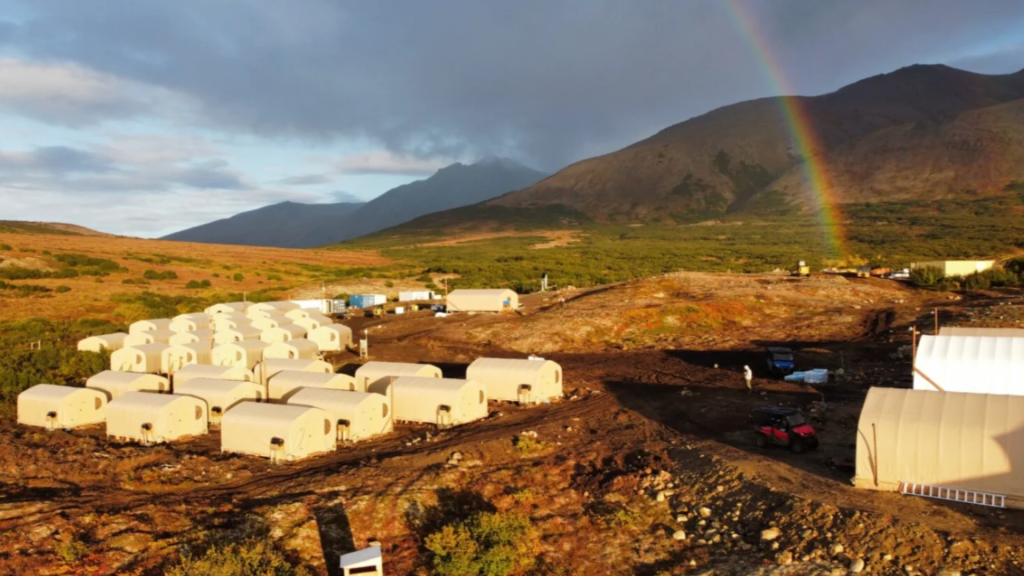
Washington’s graphite bet takes shape in Alaska and Ohio
Graphite One (TSX-V:GPH) has secured significant backing from both state and federal government organisations as it advances Graphite Creek, the largest-known US graphite deposit.
Graphite Creek was the first Alaskan mining project listed on the Federal Permitting Improvement Steering Council’s FAST-41 dashboard in June 2025.
FAST-41 seeks to improve permitting timelines for exploration projects. Alaska Governor Mike Dunleavy remarked that the addition of Graphite Creek to FAST-41 “sends a strong signal that Alaska is key to US critical minerals development.”
Similarly, Senator Lisa Murkowski noted that the listing of Graphite Creek indicates the project’s relevance as “a national priority of strategic importance”.
Senator Dan Sullivan added that the project could help end US dependence on China for graphite used in energy and defence technologies.
EXIM has provided LOIs for potential debt financing, with US$670 million going towards Graphite Creek and US$1.4 billion earmarked for the company’s advanced graphite materials manufacturing plant planned in northeastern Ohio.
The EXIM financing considers the full value chain of graphite that Graphite One is building, which aligns fully with Trump’s goal to onshore the manufacturing capacity as well.
Graphite One is focused on delivering the full graphite ecosystem, with both synthetic and natural graphite used as feedstock for its advanced anode active materials (AAM) facilities in Ohio.
The company’s vertically integrated strategy spans mining, processing, and manufacturing, with the aim of becoming the first US company to commercially produce both synthetic and natural graphite AAM domestically.
By linking Graphite Creek with downstream processing and manufacturing assets, Graphite One is positioning itself as a cornerstone of the US effort to build a secure, end-to-end graphite supply chain.
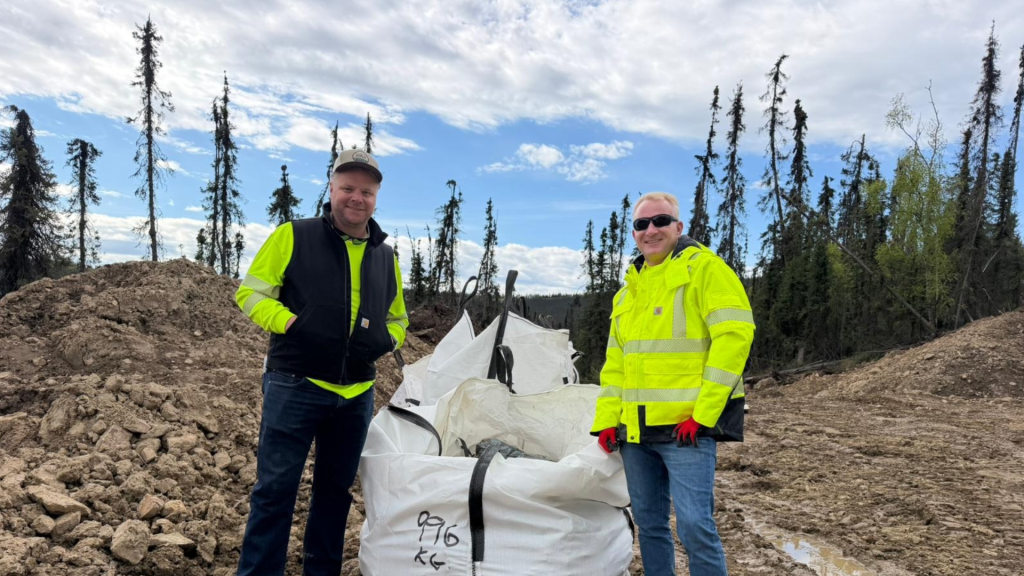
Building a domestic antimony supply chain
In August 2026, Felix Gold (ASX:FXG) was selected by the US DOE for up to US$18 million in federal funding for its Treasure Creek Antimony Pilot Processing Facility in Alaska.
The award is part of a broader scheme to invest US$162 million into nine projects that focus on the recovery of critical minerals, materials, and other byproducts from industrial feedstocks, as previously reported.
Executive Director Joe Webb said that the funding recognises the company’s ore-to-metal strategy, with the company’s Treasure Creek Project extracting direct-shipped, military-grade antimony ore.
“Downstream, test work, pilot plant engineering, and site selection are all well advanced, targeting a US smelter by end-2027,” Webb said.
“That work sits in Frontier Antimony Refinery — a Delaware company, wholly owned by Felix Gold, built deliberately as a US vehicle for US Government programs and US capital markets.”
Formed in June 2026, Frontier Antimony Refinery holds a commercial offtake agreement with Felix to process Treasure Creek ore into commercial antimony metal.
Canada backs critical minerals from mine to market
While US funding commitments often dominate the headlines, Canada is also stepping up support for critical minerals projects. Its government has launched a mix of federal and provincial financing programs, tax incentives, and strategic investment initiatives.
The Canada Critical Minerals Accelerator (CCMA) is a key project, delivering loans, equity, and supply agreements to help de-risk projects and help them reach final investment decisions.
Near- to medium-term projects with the potential to increase supply and advance Canada’s national stockpile of critical minerals are a key priority in this scheme.
The First and Last Mile Fund (FLMF) is also a key strategic initiative by the Canadian Government, which provides up to C$1.5 billion ($1.53 billion) for mining and infrastructure projects.
Importantly, the FLMF has a strategic mandate to support the upstream and midstream segments, which are typically underserviced. The FLMF also enables Indigenous communities to gain strategic entry into these projects.
For junior explorers, the Critical Minerals Exploration Tax Credit (CMETC) continues to incentivise greenfield discovery by offering a 30% non-refundable tax credit on eligible exploration expenditures.
To date, one of the largest funding blocks to come out of the Canadian Government is the C$50 million conditional support for Fortune Minerals (TSX:FT) under the FLMF. The funding covers up to 75% of the capital cost to construct the 51km NICO Project access road (NPAR).
The NPAR will connect the NICO cobalt-gold-bismuth-copper mine to the Northwest Territories highway system near the community of Whatì. It will also be used for mine construction and operations, as well as the transport of metal concentrates to a dedicated hydrometallurgical facility in Alberta.
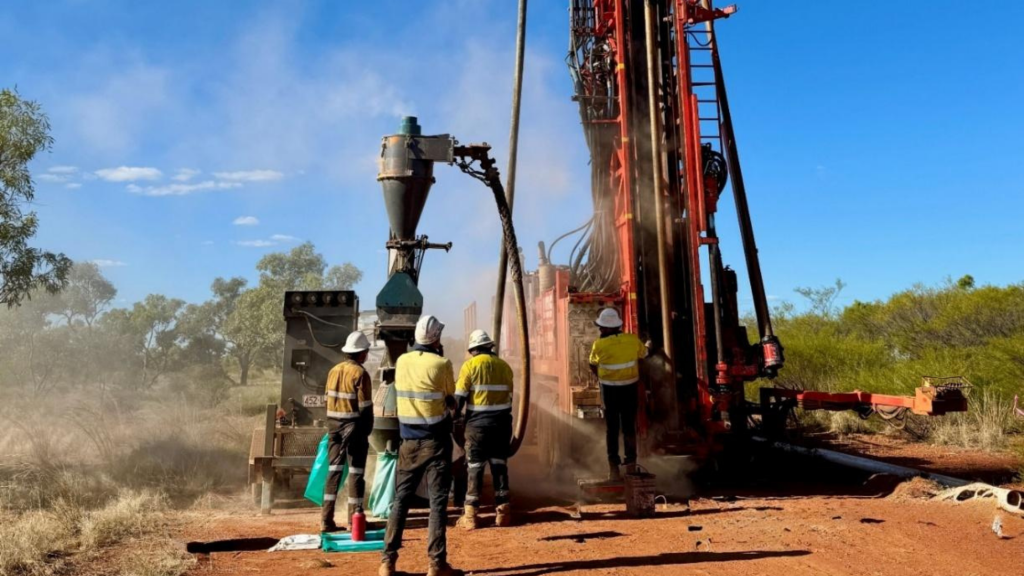
Australian federal and state funding fuels critical minerals growth
Australia’s support for the critical minerals sector is streamed through a $5 billion Critical Minerals Facility managed by Export Finance Australia.
The facility focuses on growing the country’s critical minerals sector and expanding downstream processing in order to meet future global demand.
Export Finance Australia has also created a Critical Minerals Strategic Reserve of $1.2 billion for companies involved in the extraction, processing, and supply of antimony, gallium, and rare earth elements in particular.
Across the country, state and territory governments are likewise dedicating funding across exploration and processing in order to drive the industry forward.
New South Wales created the NSW Critical Minerals and High-tech Metals Strategy, while Western Australia is advancing projects through its Exploration Incentive Scheme (EIS).
Queensland also launched a strategic plan named Delivering Queensland’s Critical Minerals Future 2026-30 and the Northern Territory introduced its Resourcing the Territory scheme.
In March 2026, Basin Energy (ASX:BSN) received two Collaborative Exploration Initiative (CEI) grants from the Queensland Government totalling $349,065 for its Sybella-Barkly Project in Northwest Queensland.
The company said the funding will be used for reverse circulation (RC) drilling to explore heavy rare earth enrichment (HREE). It also planned to deploy the majority of the funds to obtain critical airborne electromagnetic data to be used for further targeting work.
Basin Energy recently kicked off its RC drilling at the Rochedale HREE prospect, which is supported by the CEI funding. Assay results are expected in December 2026.
Meanwhile, QMines (ASX:QML) is progressing a Definitive Feasibility Study (DFS) at its Mt Chalmers Copper-Gold Project in Queensland.
The DFS is wholly funded by a $15 million investment from the Queensland Investment Corporation (QIC).
As previously reported, the Queensland Government-owned QIC is in charge of the $250 million Queensland Critical Minerals Fund (QCMF). The fund is earmarked for critical mineral project investments within Queensland, focusing on accelerating development pathways across all stages.
Funding follows strategic value
While governments around the world are increasingly aligned on the need to secure critical minerals supply, their approaches reveal different strategic priorities.
In the US, funding is increasingly targeting the full value chain, from extraction and processing through to refining, manufacturing, and strategic stockpiles. Its view is to reduce dependence on foreign supply and rebuild domestic industrial capacity.
Australia, meanwhile, continues to leverage its strengths as a resource powerhouse, directing support towards exploration, mine development, and the production of raw materials, while gradually expanding downstream capabilities.
Canada sits somewhere in the middle, supporting both mine development and the infrastructure, financing, and processing capacity needed to bring projects into production.
Together, these initiatives highlight how critical minerals have moved beyond a mining issue to become a key pillar of economic security, industrial policy, and geopolitical strategy.
For junior miners, the common thread is a growing preference for projects that can demonstrate strategic relevance beyond the resource itself. Governments are looking for assets that strengthen domestic supply chains, support downstream processing, improve resource security, or help to address shortages.
As recent funding decisions show, it’s not simply the size of the resource that matters, but how a project fits into a country’s long-term critical minerals strategy.
Write to Amy Rotman at Mining.com.au
Main image: Mining.com.au


