



If the first challenge facing copper is how to produce enough of it, the next is where the market goes from here.
After years of warnings about looming supply deficits, copper is entering a critical period. Demand for electrification, renewable energy infrastructure, artificial intelligence data centres, and electric vehicles continues to accelerate, while new mine developments struggle to keep pace.
At the same time, producers are being asked to lower emissions, improve environmental performance, and navigate increasingly complex geopolitical and trade dynamics.
The result is a market balancing two competing forces: the urgent need for more copper and the growing pressure to produce it more sustainably.
In the final part of this three-part series, this news service examines the outlook for the copper market, exploring whether supply can keep up with demand, how the energy transition is reshaping investment decisions, and what the next decade could hold for one of the world’s most strategically important metals.
Not a resource shortage
MinEx Consulting Managing Director Richard Schodde reports that over the last decade, the rate of finding new copper deposits has halved, due to a 60% fall in funding grassroots exploration.
The slowdown has fuelled concerns about a looming copper shortage. The International Copper Study Group forecasts a 150,000-tonne deficit for 2026, pointing to the market’s first structural shortage since 2009. JP Morgan’s model pushes the anticipated shortfall even further, projecting a 330,000-tonne deficit.
Demand growth is increasingly being driven by sectors that barely featured in copper forecasts a decade ago. JP Morgan estimates data centres will consume 475,000 tonnes of copper this year.
As Mining.com.au reported earlier this year, installed capacity for all data centres could reach 550 gigawatts by 2040, while global defence spending could double to US$6 trillion ($8.5 trillion) by 2040. Together, these sectors are anticipated to triple by 2040, representing a combined 4 million tonnes of additional copper demand.
Ready to stay ahead of the market?
Get stories like this, delivered direct to your inbox.
Yet Schodde believes that the industry’s challenge is not a lack of copper in the ground.
While grassroots discoveries have slowed, over the last 15 years between 2010-2024 exploration at existing mines and projects undergoing prefeasibility and feasibility studies delivered four times as much copper as greenfield discoveries.
After accounting for 296 million tonnes of mined production, total global copper resources still increased by 946 million tonnes.
“So, the world is not running out of copper,” Schodde says.
To date, roughly 700 million tonnes of copper has been produced globally, according to the US Geological Survey. Identified deposits contain an estimated 2.1 billion tonnes of additional copper, bringing the total amount of discovered copper to 2.8 billion tonnes.
The challenge, therefore, is not finding copper, but developing it fast enough.
Explorers stepping up
With billions of tonnes of copper already identified and demand forecasts continuing to rise, explorers across the world are racing to uncover the next generation of projects.
Australia remains at the forefront of that effort, as South Australia recently exceeded its total copper export record by reaching $5.2 billion in the 12 months leading up to April 2026.
Copper exports comprised $3.35 billion from copper and copper products, as well as $1.85 billion from ores and concentrates. For refined copper, the $3.35 billion figure exceeded the prior 12-month period by $542.6 million.
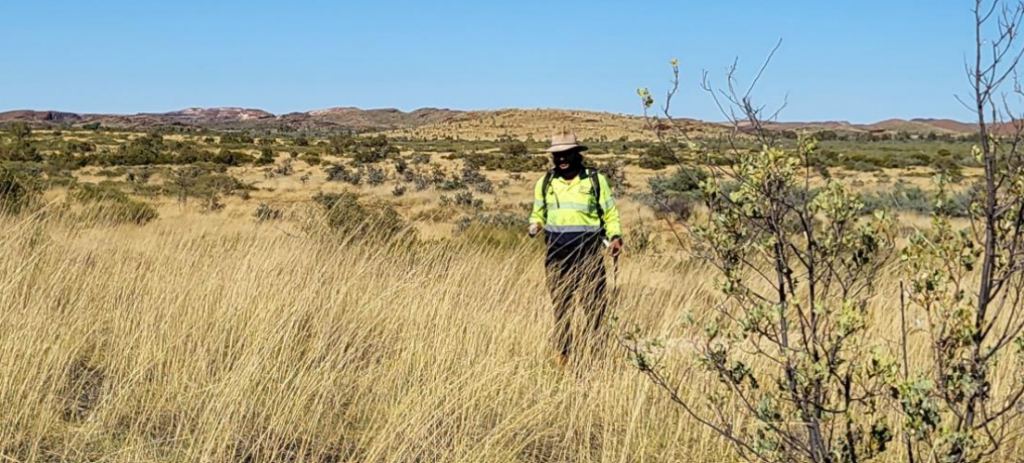
In Western Australia, Anax Metals (ASX:ANX) is preparing to implement a ‘high-impact’ drilling campaign at the Whim Creek Copper Project since raising $6 million via a placement.
Diamond drilling is set to begin this month, with initial exploration focusing on untested extensions and the Mons Cupri and Whim Creek deposits.
“Our primary element is copper, but we also have zinc, lead, silver, and gold, and all of those in payable quantities, with pretty significant quantities of zinc and silver,” Managing Director Geoff Laing previously told this news service.
As a fully permitted mine, the company aims to bring Whim Creek into production within 18 months of a final investment decision. Whim Creek includes four volcanic massive sulphide-style deposits of varying forms, with the future plan to mine two of them as open pits and the others as underground assets.
Whim Creek has a 10-year mine life, supported by 4.6 million tonnes of reserves grading 1.36% copper, 2.31% zinc, 0.67% lead, 30 grams per tonne silver, and 0.27g/t gold.
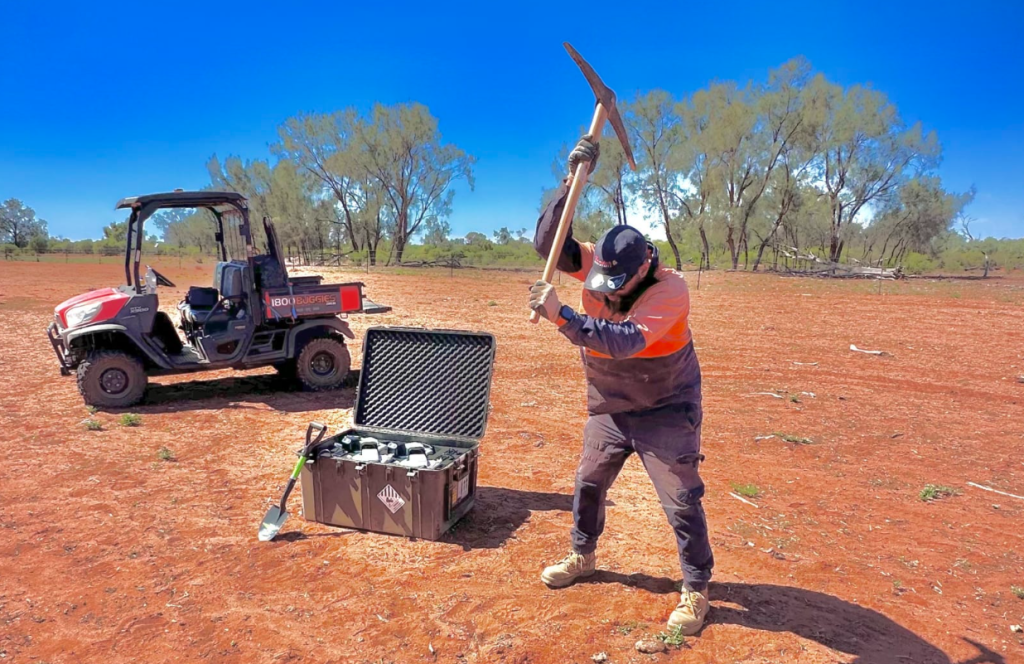
Meanwhile, Legacy Minerals (ASX:LGM) recently began a diamond drilling program at the Emu copper-gold prospect, as part of the broader Mt Carrington Project in New South Wales.
CEO Christopher Byrne says copper is the primary target at Emu, where historically it was one of the largest producing copper mines in the Mt Carrington district.
“While known for its gold and silver endowment, the substantial untested copper potential of the broader project is underlined by historical drilling at the Mt Carrington prospect, which returned 18.9m @ 5.8% copper and 10.1m @ 7.26% copper,” Byrne says.
“This drilling forms part of our dual-track strategy of discovery and development, with both Emu and Mascotte offering clear opportunities to grow the existing mineral resource through new discoveries.”
Global hunt for copper
The search for new copper supply extends well beyond Australia, as Lodestar Minerals (ASX:LSR) confirmed the Chile-based Three Saints Project’s potential to host iron oxide copper-gold (IOCG) mineralisation.
A diamond drill program at the project identified multiple mineralisation events within the assemblage, including IOCG-style structures, metasomatic events, and late-stage veins.
Results include grades of up to 0.77% copper, 0.38g/t gold, 449 parts per million (ppm) cobalt, and 190ppm molybdenum.
CEO Coraline Blaud says the results provide increased confidence in the exploration potential of Three Saints and support ongoing efforts to refine the geological model.
“Our next steps will focus on reviewing and reinterpreting the available geophysical datasets against the new drill hole derived geological information, with the objective of better defining the controls on mineralisation and targeting the core of the system for the next drilling campaign,” Blaud says.
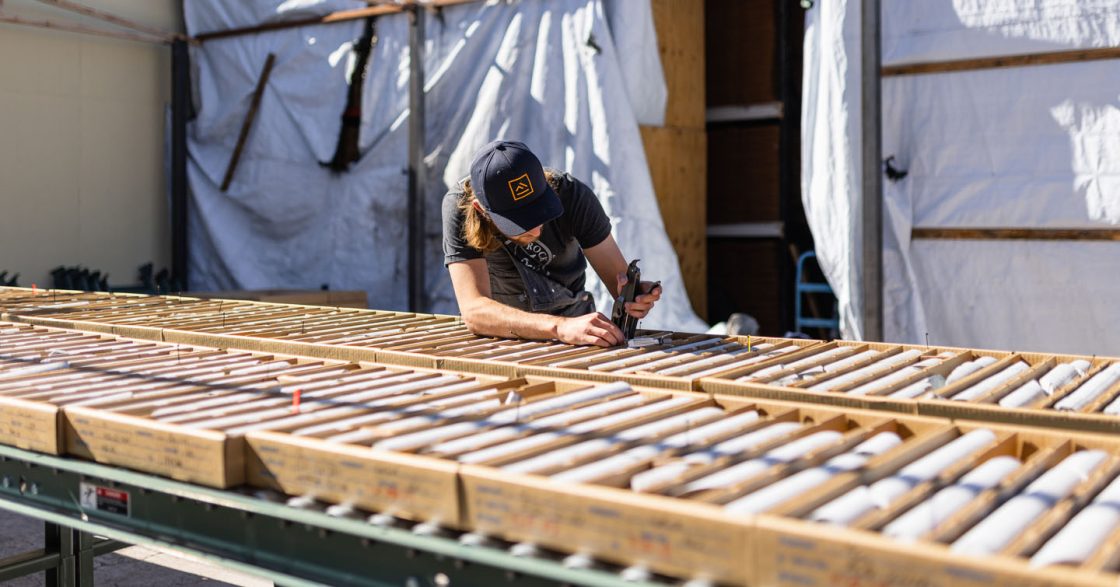
Northwest of Chile lies Arizona, where Faraday Copper (TSX:FDY) eyes the opportunity for initial cathode production at the Copper Creek Project.
This news comes after phase four drill results demonstrated the presence of additional copper oxide and secondary sulphide material near surface and adjacent to previously defined breccia-hosted mineralisation.
These projects may not solve the copper deficit overnight, but they highlight the scale of exploration activity underway as miners attempt to secure future supply.
Bullish price outlook
The increasingly tight supply-demand balance has translated into growing optimism among market analysts.
At the time of writing, copper futures held around US$6.5 per pound (17 June), hovering near record highs as risk appetite improved following reports that the US and Iran reached an agreement to end the conflict and reopen the Strait of Hormuz.
Looking further ahead, analysts see room for prices to move substantially higher.
According to deVere Group, copper prices are forecast to reach US$15,000 a tonne within the next 12 months. This news comes after Citi analysts upgraded their copper price predictions with an increasingly supportive outlook.
Strategists at Citi believe copper prices could rise 10% from the current price. This comes, deVere Group notes, after Goldman Sachs upgraded its year-end copper price forecast to US$13,735 per tonne, up from the April forecast of US$12,465.
Trading Economics reports that elevated copper prices are expected to persist for longer than previously projected, pointing to an average annual supply deficit of 491,000 tonnes through 2030.
Compounding the issue are operational disruptions at major producing assets. Indonesia’s Grasberg Mine, the world’s second-largest copper operation, is still recovering from a fatal 2025 mudslide and is not expected to return to full production until early 2028.
Meanwhile, Anglo American (LSE:AAL) recently reduced its production guidance for its Chilean operations, highlighting how difficult it has become for the industry to replace lost output even as Chile maintains annual production of around 5.5 million tonnes.
Copper futures appear to be defined by a paradox. The world contains more than enough copper resources to support the energy transition yet bringing those resources into production is becoming more difficult, expensive, and time-consuming.
That reality links directly to the themes explored throughout this series. Producing copper requires vast amounts of energy, and the industry is simultaneously working to reduce its environmental footprint while expanding output.
The copper market is not running out of metal. It is running out of time to develop the mines needed to meet the next wave of demand.
Write to Aaliyah Rogan at Mining.com.au
Images: Mining.com.au, Anax Metals, Legacy Minerals & Faraday Copper


