There’s a strange paradox at the heart of cobalt. It’s the metal everyone wants — the cornerstone of the lithium-ion cathodes that power electric vehicles (EVs), smartphones, and grid-scale storage. Yet it doesn’t really have a mine of its own. Almost every tonne mined this year will come out of the ground as a by-product of copper in the Democratic Republic of the Congo (DRC), nickel in Indonesia and Russia, or laterite ore in Madagascar and Australia.
That structural quirk has made cobalt one of the most concentrated commodity markets on the planet. The DRC alone accounts for roughly 70% of mined supply, and a handful of operations in its Katanga belt produce more cobalt than the rest of the world combined. After an eight-month export ban, the DRC introduced a quota system in October 2025, capping cobalt exports at 96,600 tonnes a year for 2026 and 2027— less than half the country’s 2024 output. Cobalt prices have rallied close to 170% from their January 2025 lows. The question of which mines actually supply the world’s cobalt matters more than it has in a decade.
Methodology: Rankings are based on a combination of current production capacity, recent output, and strategic significance using the latest publicly available company disclosures. Because producers report production, guidance, and capacity on different timelines, rankings should be viewed as an assessment of current mine scale rather than a strict comparison of a single reporting year’s production.
What follows is a snapshot of the 10 largest cobalt mines by current scale, production profile, and strategic significance, drawn from operator reports, the Cobalt Institute‘s 2024 Market Report, US Geological Survey data, and Mining.com.au’s own coverage. Figures move quarter to quarter; treat them as snapshots, not gospel.
1. Kisanfu — DRC
Operator: CMOC Group (SSE:603993 | HKEX:03993) with a Contemporary Amperex Technology (SZSE:300750 | HKEX:3750) minority interest
Type: Copper-cobalt sulphide
Kisanfu Mining (KFM) — known inside the industry as the Boss Mine — produces roughly 25,500 tonnes of cobalt a year and is widely regarded as the world’s largest cobalt mine by installed cobalt capacity. CMOC bought it from Freeport-McMoRan (NYSE:FCX) in 2020 and brought it into production quickly, with Contemporary Amperex Technology taking a 25% stake to lock in long-dated supply. CMOC’s 2026 export allocation under the DRC quota system is 31,200 tonnes — well below productive capacity — which may create challenges for offtakers.
2. Tenke Fungurume — DRC
Operator: CMOC at 80% and La Générale des Carrières et des Mines (Gécamines) at 20%
Type: Copper-cobalt sulphide and oxide
Tenke Fungurume (TFM) is the elder of CMOC’s two flagships, acquired from Freeport in 2016. Annual cobalt output runs at around 22,500 tonnes alongside substantial copper. Between TFM and Kisanfu, CMOC reported 114,165 tonnes of mined cobalt in 2024 — a single company supplying more than half the world’s.
3. Kamoto Copper Company — DRC
Operator: Glencore (LSE:GLEN) at 70%, Gécamines at 25%, and DRC at 5%
Type: Copper-cobalt, conventional and tailings
Kamoto Copper Company (KCC) is Glencore’s anchor cobalt asset and produced around 27,000 tonnes of cobalt in 2024. Sitting in the Katanga Copperbelt near Kolwezi, it is one of the most strategically important orebodies in the global EV supply chain. Glencore’s 2026 DRC export allocation of around 22,800 tonnes underwrites a meaningful share of global supply.
4. Mutanda — DRC
Operator: Glencore
Type: Copper-cobalt heap leach and solvent extraction and electrowinning
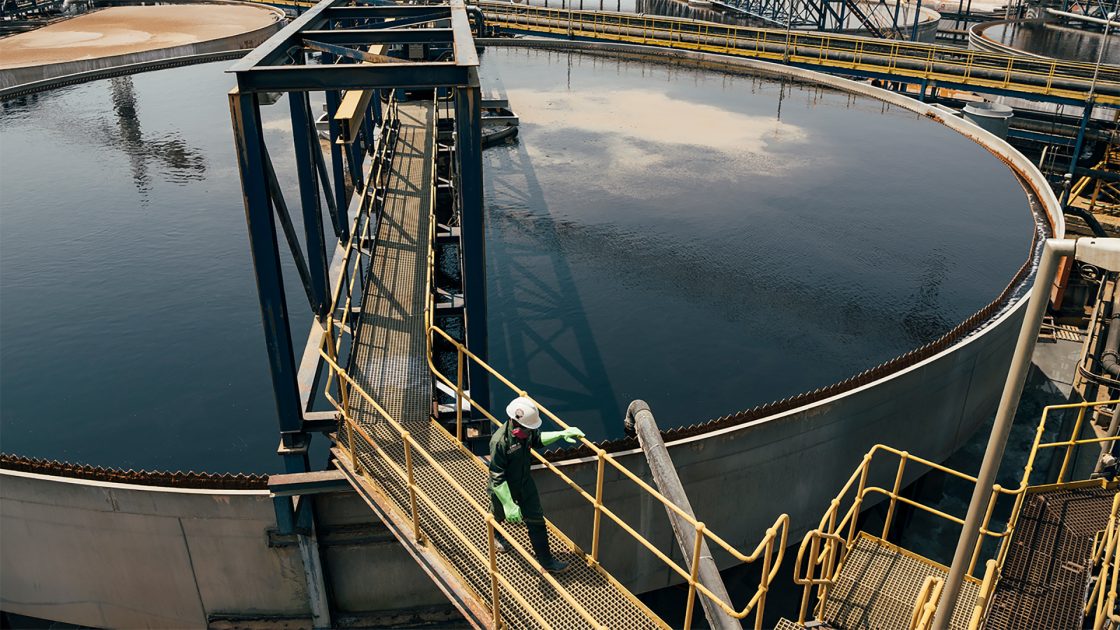
Mutanda Mining has had one of the most discussed lifecycles of any cobalt mine. Glencore mothballed it in late 2019 when prices collapsed, restarted in 2022, and ran ~8,000 tonnes through 2024. Group guidance calls for a combined KCC-Mutanda output of 40,000–45,000 tonnes in 2025 and 45,000 tonnes in 2026, putting Mutanda firmly back in the top tier.
5. Metalkol Roan Tailings Reclamation (RTR) — DRC
Operator: Eurasian Resources Group
Type: Tailings reclamation
Metalkol RTR is the odd one out — instead of mining fresh ore, it reprocesses historic tailings near Kolwezi to recover cobalt and copper. The economics are unusual — lower grades than primary mines, but lower mining costs and a smaller environmental footprint. Eurasian Resources Group was allocated 2,125 tonnes under the DRC’s late-2025 quota and continues to occupy an important role, particularly for offtakers seeking material with a smaller environmental footprint.
6. Ruashi — DRC
Operator: Jinchuan Group International Resources (HKEX:2362)
Type: Open-pit copper-cobalt with onsite SX-EW
Ruashi Mining sits on the outskirts of Lubumbashi and is the largest Chinese-controlled cobalt producer in the DRC outside CMOC. Annual cobalt output is in the low single-digit thousands of tonnes — a useful reminder that the “CMOC versus Glencore” framing leaves out a long tail of smaller Chinese-controlled operations whose combined output is significant.
7. Norilsk-Talnakh — Russia
Operator: Nornickel (MOEX:GMKN)
Type: Nickel-copper-platinum group metals sulphide; cobalt as byproduct
The Norilsk-Talnakh district in Russia’s Arctic north is one of the largest base-metal mining complexes in the world, producing nickel, copper, palladium, and cobalt from polymetallic sulphide orebodies. Russia produced 8,700 tonnes of cobalt in 2024 — almost all of it from Nornickel. Sanctions and Western trade restrictions continue to shape how this material reaches end-users.
8. Ambatovy — Madagascar
Operator: Sumitomo Corporation (TSE:8053) and Korea Mine Rehabilitation and Mineral Resources
Type: Nickel-cobalt laterite, high-pressure acid leaching (HPAL)
Ambatovy is Madagascar’s flagship nickel-cobalt operation and historically one of the largest cobalt-producing HPAL projects outside the DRC. Output has been bumpy; Madagascar’s cobalt production fell to 2,600 tonnes in 2024, down 53% on 2023, as operational issues and the broader nickel downturn weighed on the asset. Ambatovy’s next chapter depends on its ability to ramp consistently as battery demand recovers.
9. Voisey’s Bay — Canada
Operator: Vale Base Metals (NYSE:VALE | B3:VALE3)
Type: Nickel-copper-cobalt sulphide
Voisey’s Bay in Newfoundland and Labrador is one of the largest individual contributors to Canada’s cobalt output, which totalled around 4,500 tonnes in 2024. Following Vale’s underground transition project, the asset shifted from open-pit to underground mining, feeding cobalt into Vale’s Long Harbour processing plant. Canada’s positioning as a Western-aligned, traceable cobalt source has made Voisey’s Bay a strategic asset in North American battery supply-chain discussions.
10. Murrin Murrin — Australia
Operator: Glencore
Type: Nickel-cobalt laterite, HPAL
Murrin Murrin in Western Australia’s north-eastern Goldfields region is the country’s largest cobalt producer and one of the few HPAL operations in the world to have run continuously through the 2024 nickel-price collapse. It produces both Class 1 nickel briquettes and cobalt sulphate, feeding battery-grade material into Western cathode supply chains. For Australia’s broader story in critical minerals, Murrin Murrin sits in a small but strategically valuable category — a Western-owned operation producing material sought by EV manufacturers looking to diversify supply away from the DRC and Indonesia. See our coverage of Australian nickel and cobalt operations.
Honourable mentions and the Indonesian wild card
Two factors stop this list being neat. The first is Indonesia: the country’s explosion of nickel HPAL projects, mostly on Sulawesi and several backed by Chinese capital, is generating large volumes of cobalt as a byproduct of mixed hydroxide precipitate (MHP). Indonesia’s MHP output is forecast to nearly double in 2026. None of the individual HPAL plants has yet displaced a DRC giant on a single-mine basis, but collectively Indonesia is now the world’s number-two cobalt producer. The second is the long tail of smaller DRC operations — Shituru, Kambove, Pumpi, and others — whose combined output is significant and which sit just outside the top 10 by individual mine size.
What this concentration means for the cobalt supply chain
The pattern is hard to miss. Six of the top ten are in the DRC — two are byproducts of nickel sulphide complexes in Russia and Canada, one is laterite in Madagascar, one in Australia. That is the world’s commercial cobalt supply, in a sentence. For automakers and Western governments building resilient EV supply chains, the lesson is straightforward: cobalt is the most concentrated of the major battery metals, and any change in DRC policy is felt globally within weeks. Further investment in critical minerals projects across Indonesia, Australia, and Canada is likely, alongside steady growth in recycling aimed at reducing dependence on primary supply.
Frequently asked questions
1. Which country produces the most cobalt?
The Democratic Republic of Congo. The DRC produces roughly 70% of the world’s mined cobalt, mostly as a byproduct of copper mining in the Katanga (Copperbelt) region. Indonesia is the second-largest producer, with cobalt coming as a byproduct of its rapidly growing nickel-HPAL industry.
2. What is the world’s largest cobalt mine?
Kisanfu, known as the Boss Mine, operated by CMOC in the DRC, is widely regarded as the world’s largest cobalt mine by output, producing around 25,500 tonnes a year. CMOC’s Tenke Fungurume and Glencore’s KCC and Mutanda operations round out the top of the list.
3. How does the DRC cobalt export quota system work?
After an eight-month export ban, the DRC introduced a quota system in October 2025 capping national cobalt exports at 96,600 tonnes per year for 2026 and 2027 — less than half the country’s 2024 output. Quotas are allocated to producers in proportion to historical exports. Glencore received around 22,800 tonnes for 2026; CMOC, the largest producer, received 31,200 tonnes.
4. Is cobalt mined in Australia?
Yes, but mostly as a byproduct. Glencore’s Murrin Murrin operation in Western Australia is the country’s largest producer of cobalt sulphate, recovered alongside Class 1 nickel from laterite ore using a high-pressure acid leach circuit. Several other Australian projects produce or have produced cobalt as a byproduct of nickel sulphide mining.
5. Why are cobalt prices recovering in 2026?
Cobalt prices rebounded sharply in 2025–26 after the DRC’s export ban and subsequent quota system removed a significant portion of supply from the global market. Prices rallied roughly 170% from their January 2025 lows and 92% from their March 2025 lows. The structural recovery depends on whether EV cathode demand and supply policy stay aligned.
Image Credit: mutandamining.com