Five years ago, this story would have been a victory lap. Australia was the world’s fifth-largest nickel producer. Mt Keith and Leinster were household names in the WA Goldfields, and BHP Group (ASX:BHP) was investing heavily in a ‘Class 1’ nickel pipeline aimed squarely at the electric vehicle (EV) battery boom. Then Indonesia happened.
Between 2023 and 2025, a flood of cheap nickel pig iron (NPI) and mixed hydroxide precipitate (MHP) — most of it from Chinese-backed laterite operations in Sulawesi — pushed global nickel prices to multiyear lows. By the end of 2024, most of Western Australia’s flagship nickel operations had been paused, placed on care and maintenance, or curtailed entirely. So, when readers ask which are the ‘five largest nickel mines operating in Australia’ in 2026, the honest answer needs an asterisk next to it.
What follows is a snapshot of the five biggest nickel operations that remain part of Australia’s operating fleet — with the current status of each made unmistakably clear. Some are still producing. Some are paused but could restart. Pretending otherwise would be doing readers a disservice. Production data and operating status are drawn from operator quarterly reports, Geoscience Australia, and the US Geological Survey’s Mineral Commodity Summaries.
1. Murrin Murrin — Western Australia · Operating
Operator: Glencore (LON:GLEN)
Type: Nickel-cobalt laterite, processed via high-pressure acid leach (HPAL)
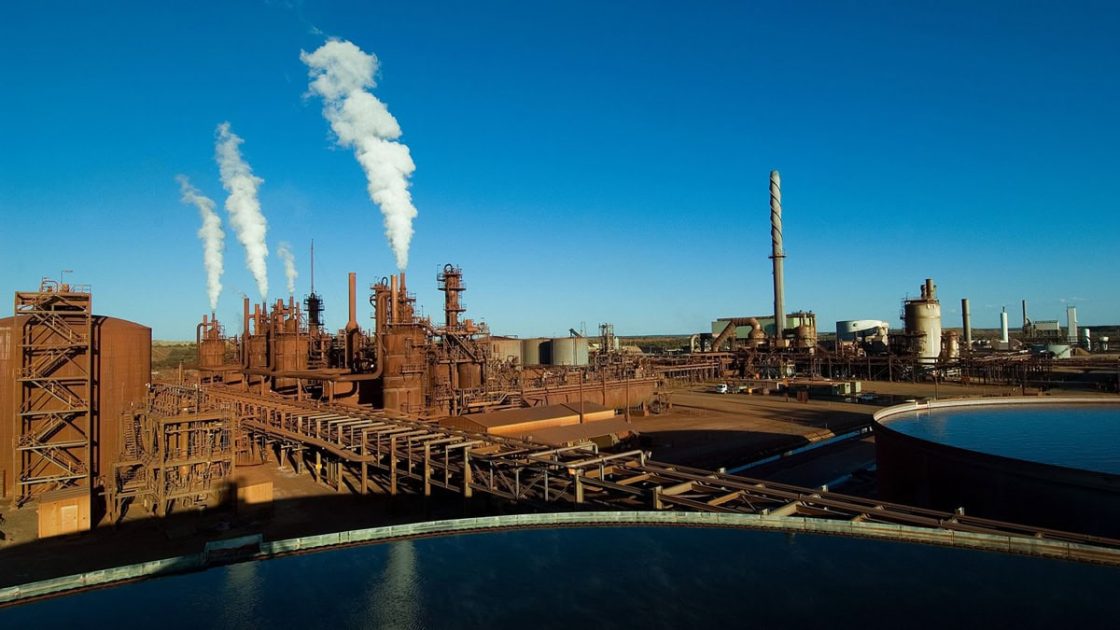
If there’s a survivor story in Australian nickel right now, it’s Murrin Murrin. Tucked into WA’s northeastern Goldfields about 60km east of Leonora, the integrated mine and refinery turn laterite ore into LME-grade Class 1 nickel briquettes and cobalt-sulphate intermediates — products that flow into stainless-steel mills and battery-cathode supply chains alike.
Output dipped slightly in 2025 because of planned maintenance, but Murrin Murrin has kept its lights on through a price downturn that flattened most of its rivals. That alone makes it the largest actively producing nickel mine on the continent today.
2. Mt Keith — Western Australia · Temporary suspension
Operator: BHP Group’s Nickel West
Type: Open-pit nickel sulphide
The Mt Keith Mine, roughly 470km north of Kalgoorlie, was for years one of Australia’s largest producers of nickel-in-concentrate. Then in October 2024, BHP pulled the handbrake on the entire Nickel West portfolio — Mt Keith, Leinster, the Kambalda concentrator, and the Kwinana refinery — in a single decision that took the local industry by surprise even though the price signal had been brewing for months.
The orebody itself is still there, still rich, and still strategically valuable. Whether it comes back online depends on a review BHP has flagged for February 2027 and on where the LME nickel price sits when that review lands.
3. Leinster — Western Australia · Temporary suspension
Operator: BHP Group’s Nickel West
Type: Combined open-pit and underground nickel sulphide
Leinster sat alongside Mt Keith as the second leg of BHP’s sulphide flowsheet, feeding the Kambalda concentrator and the Kalgoorlie smelter. It entered the same October 2024 suspension and remains under care and maintenance, pending the broader portfolio review. Between them, Mt Keith and Leinster used to underpin most of Australia’s Class 1 nickel-in-concentrate capacity — so whichever way BHP jumps in early 2027 will define the next chapter for WA nickel.
4. Nova — Western Australia · Operating (end of life 2026)
Operator: IGO (ASX:IGO)
Type: Underground nickel-copper-cobalt sulphide
Nova has had one of the more interesting lives in modern Australian mining. Discovered by Sirius Resources in 2012 in the Fraser Range — at the time, a region no one was paying much attention to — it was developed quickly and later folded into IGO’s portfolio. In FY25 it delivered 16,371 tonnes of nickel, 7,324 tonnes of copper, and 581 tonnes of cobalt. Decent numbers in a brutal price environment.
The catch is that the orebody is now nearing the end of its mine life, with IGO guiding to wind down through late 2026. Exploration across the broader Fraser Range continues, and ‘the next Nova’ remains one of the more talked about hunts in Australian nickel.
5. Ravensthorpe — Western Australia · Care and maintenance
Operator: First Quantum Minerals (TSE:FM)
Type: Nickel-cobalt laterite, HPAL
Ravensthorpe sits on WA’s south coast, around 530km southeast of Perth, and has had a famously bumpy ride — built, mothballed, rebuilt, and now mothballed again after First Quantum placed it on care and maintenance in May 2024.
The 2026 guidance from First Quantum Minerals does not include any Ravensthorpe contribution, and there is no firm restart date on the table. That said, the plant itself remains a genuinely important piece of global laterite-nickel capacity, and the company has been open about exploring offtake or partnership conversations that could change the picture.
Other notable nickel operations
A few names that didn’t quite crack the top five are worth flagging, because together they tell the rest of the story. Wyloo Metals — Andrew Forrest’s nickel vehicle — placed its Kambalda assets (Cassini and Northern Operations, picked up via the Mincor takeover in 2023) on care and maintenance in mid-2024, drawing the curtain on nearly six unbroken decades of nickel mining at Kambalda.
IGO’s Forrestania operation is on track to close by the end of 2026. Panoramic Resources’ (ASX:PAN) Savannah mine up in the Kimberley tipped into administration in 2024. The Western Australian Government has stepped in with interest-free loans aimed at supporting potential restarts, but it’s a recovery in critical minerals demand and pricing — not policy alone — that will decide which of these projects come back.
Why Australia’s nickel industry has contracted
You don’t need a long story to explain this one. Indonesian NPI and MHP supply, most of it produced with cheap thermal coal power and lateritic ore from Sulawesi, more than doubled global nickel output between 2020 and 2024. Australian sulphide and HPAL operations — which had been pitching themselves on a premium for low-carbon, Western-aligned Class 1 nickel — couldn’t make the maths work at sub-US$18,000 ($25,543) per tonne LME prices.
The next question, and it’s a live one in the boardrooms of every Australian nickel operator, is whether automakers and battery makers will eventually pay that premium to break their dependence on a single dominant source. Until then, Australian nickel sits in waiting.
Frequently asked questions
1. What is the largest operating nickel mine in Australia in 2026?
Glencore’s Murrin Murrin in WA’s northeastern Goldfields. With BHP’s Mt Keith and Leinster operations suspended since late 2024, Murrin Murrin is the largest nickel mine still producing on a commercial scale.
2. Is BHP’s Nickel West still operating?
No. BHP placed its Nickel West operations — Mt Keith, Leinster, the Kambalda concentrator, and the Kwinana refinery — into temporary suspension in October 2024, with a review of the decision flagged for February 2027.
3. Why have so many Australian nickel mines closed?
Low-cost Indonesian NPI and MHP pushed global nickel prices to multiyear lows in 2023–24, and higher-cost Australian sulphide and laterite operations couldn’t compete. BHP, IGO, First Quantum, and Wyloo all paused or curtailed at least one Australian nickel operation in 2024.
4. Does Australia still produce nickel for EV batteries?
Yes — but at sharply reduced volumes. IGO’s Nova continues to ship nickel concentrate, and Glencore’s Murrin Murrin produces Class 1 nickel briquettes suitable for battery-cathode supply chains.
5. Will Mt Keith and Leinster restart?
BHP hasn’t committed either way. The decision will depend on global nickel prices and the long-term outlook for Class 1 nickel demand. A formal portfolio review is scheduled for February 2027.
Related reading on Mining.com.au
- Battery metals coverage
- Critical minerals coverage
- The world’s 10 largest lithium mines
- The world’s five most expensive metals and where they are found
About this article
Operating status, production figures, and corporate decisions are drawn from operator quarterly reports, ASX and SEC disclosures, BHP and Glencore’s investor communications, IGO’s FY25 report, First Quantum Minerals’ January 2026 guidance, and Geoscience Australia‘s nickel resource review.
Operating status can change quickly in a downturn — readers are encouraged to consult primary company disclosures for the most current information. The content here is general in nature and is not investment, financial, or procurement advice. Consult a licensed financial adviser before making investment decisions.
Image Credit: markhamglobal.com