



While gold, copper, and lithium often appear as the star on the Christmas tree, this two-part series shows that there is an entire suite of other metals that are steadily gaining prominence.
From kaolin, to platinum group metals, scandium, titanium and zinc, these enhancers are essential to everything from construction and aerospace to clean energy, health care and sustainable manufacturing.
As the mining and resources industry winds down for the year and the festive season settles in, Mining.com.au is unwrapping a 12-day Christmas series unwrapping the forces shaping the sector.
Much like the classic carol, each day builds on the last. On the tenth day of Christmas, this news service rounds out the metals enhancing two-parter – spotlighting the quiet commodities that underpin modern life and the global energy transition.
If day nine starts the naughty or nice list, day ten completes it, with the materials performing long after the Christmas decorations from the aircraft industry to the infrastructure sector.
Light as snow
Among the five other metals enhancing the industry, titanium stands tall, or stands light, thanks to its strength-to-weight ratio and high resistance to corrosion – making it vital for the aerospace, medical and chemical industries.
Now listed as a critical mineral by major economies, including Australia, the US, European Union, Japan, India and South Korea, titanium has a high strength to weight ratio that is 45% lighter than steel but is three to five times stronger than stainless steel. This makes it ideal for use in aeronautics, medical implants, defence, sporting goods and high-tech componentry.
While about 90% of titanium products are sold as titanium dioxide to bring the bright, white look to paint, plastic, paper and fibre, it is also in increasing demand for its lightweight but strengthening properties.
In 2022, the titanium market was worth US$28.6 billion ($44 billion) and by 2030 is projected to reach US$52 billion.

Speaking to Mining.com.au, McLaren Minerals (ASX:MML) Managing Director Simon Finnis says titanium is very important for the pigment industry which supplies paint, plastics, paper, and other manufacturers.
In the plastics industry, pigments are used to colour products and improve their aesthetic appeal. It also contributes to the durability and weather resistance of plastic materials.
In textiles, pigments are widely used in textile dying and printing, while in cosmetics, pigments provide colour to products such as makeup and skincare – making it essential within everyone’s Christmas gifts.
According to the US Geological Survey, 90% of the world’s titanium is used in the pigment sector, primarily as titanium dioxide, making it the dominant use for the element.
This global market for titanium dioxide pigments is a multi-billion dollar industry and projected to continue growing.
Finnis believes that the broader titanium market is growing at 3.5% year-to-date, “with some segments growing more quickly than others”.
Holding the sleigh together
The second metal enhancing – kaolin – is a vital component in the built environment, making it an industrial necessity.
“Its value is not in rarity like gold and silver but in its irreplaceable versatility across multiple industries,” Zeotech (ASX:ZEO) CEO James Marsh tells this news service.

“It is the industrial mineral which is the hidden ingredient behind a myriad of products that you use everyday but don’t realise. As industries move toward sustainability and advanced manufacturing, kaolin is becoming a strategic resource.
“Gold is the celebrity mineral but kaolin is the quiet foundation mineral and the unsung engineer that helps keep our world running.”
Kaolin has a variety of uses such as paper manufacturer, filler in paints, rubbers and plastics, and in ceramics and refractory clays.
The global kaolin market was estimated to be worth US$4.24 billion in 2021 and is forecast to grow at a compound annual growth rate of 3.7% from 2022 to 2030.
According to WA Kaolin, the US is among the largest producers of kaolin in the world. According to the US Geological Survey, production of kaolin continuously decreased from 2017 to 2020. Production volumes declined by 9.7% against 2019 due to the impact of the covid pandemic.
The Asia-Pacific kaolin market accounted for 50% of the global volume share in 2021 due to strong economic and increasing industrialisation.
Zeotech’s kaolin has a high natural in-ground purity worldwide which gives its AusPozz™ product three very significant unique selling points when used in concrete which are, higher performance, lower cost, and reduced embodied carbon.
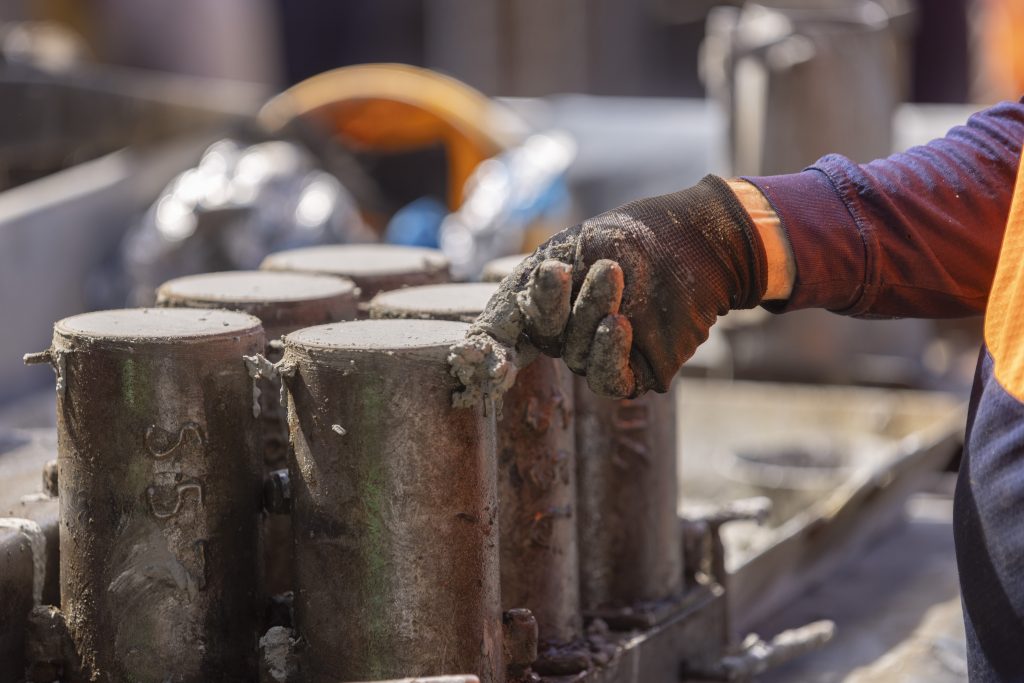
AusPozz is produced from Zeotech’s ‘high-purity’ Toondoon kaolin deposit in Queensland and designed to give excellent pozzolanic reactivity when used with Portland Cement and Geopolymers. It can reduce the carbon footprint of concrete and other cementitious products while providing a range of performance advantages.
Independent carbon footprint evaluation of AusPozz confirmed about 204kg per tonne, which is 79% less than Ordinary Portland Cement binder.
Metakaolin is a semi-calcined kaolin (produced typically at temperatures between 650°C and 750°C). Pozzolanic materials, like AusPozz, have been utilised in building and construction for their technical benefits for over 2,000 years.
Gift of steel and health
Zinc – the third enhancing metal – plays Santa’s protective role – shielding iron and steel from corrosion.
It is the fourth most used metal in industries such as construction and manufacturing, batteries and healthcare.
Leviathan Metals (TSX-V:LVX) CEO Luke Norman says zinc is hugely important in alloys and is considered just as important as lithium in batteries.
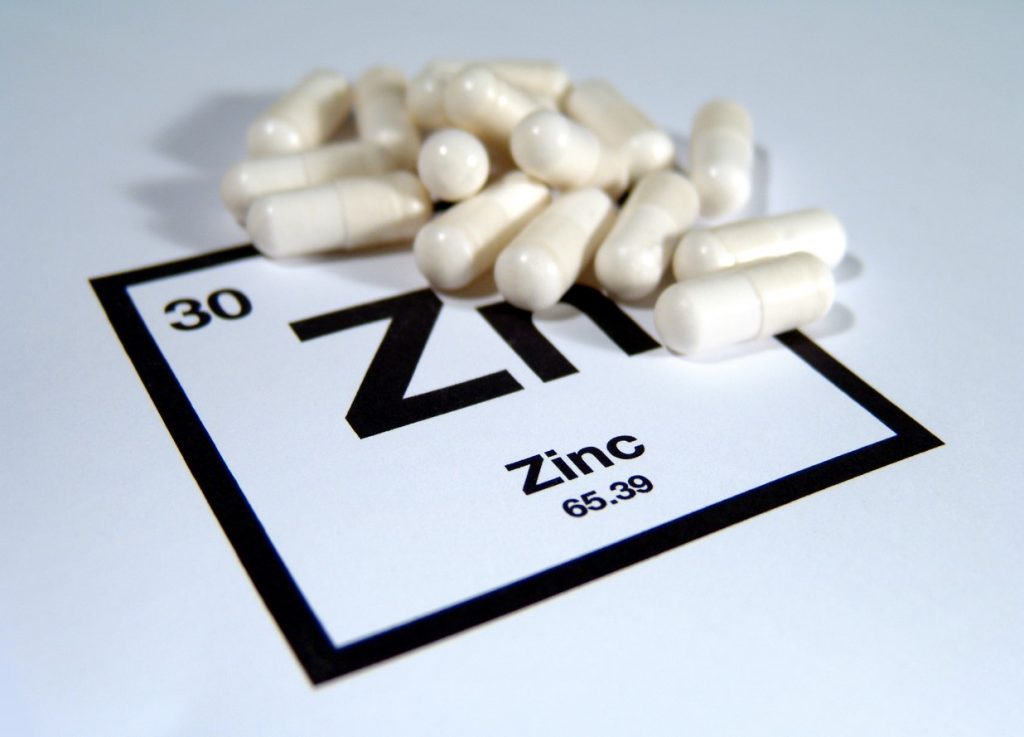
“It’s also used quite heavily in medical applications as well,” Norman adds.
“During the covid-era, it helped save lives all around the world. Teck Resources (TSX:TECK.B) has a huge program in South Africa where they have saved babies all around the African nations from dehydration using their zinc.”
Renegade Exploration (ASX:RNX) Chairman Robert Kirtlan explains the zinc market as “interesting” due to its principally used in galvanising.
“However, it too is now leveraged to the electrical revolution along with health and agricultural use,” Kirtlan tells Mining.com.au.
“We don’t see massive supply side issues here but remain positive on the outlook as we have our own deposit at our Yukon Project.”
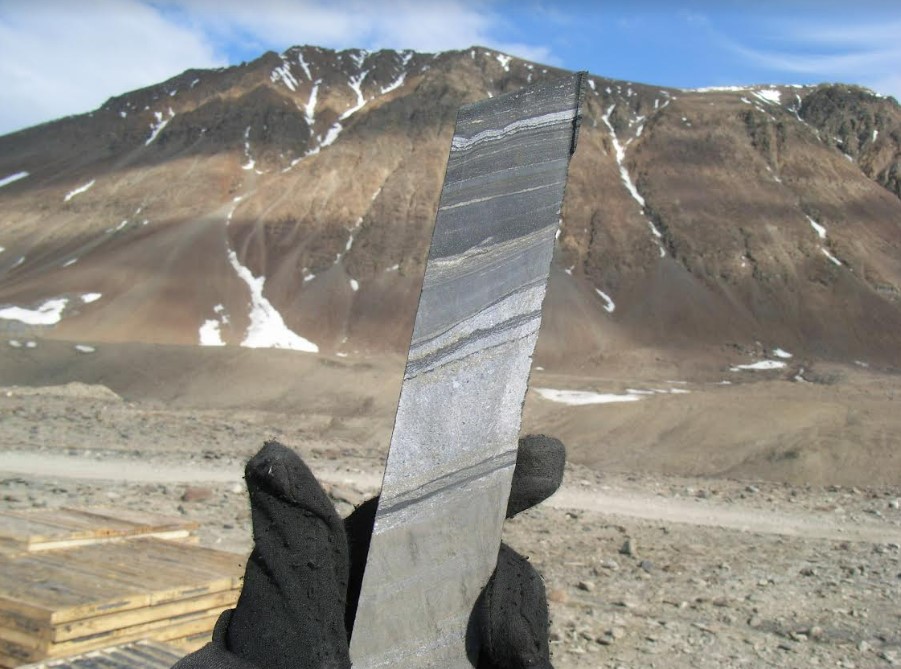
In terms of production, China is the number one producer accounting for 4,000 tonnes as of 2024. Peru and Australia are just behind, accounting for 1,300 and 1,100 tonnes respectively, as reported by the US Geological Survey.
The estimated value of zinc mined in 2024 was US$2.4 billion.
According to Trading Economics, refined zinc production fell over 2% this year, despite the 6.3% jump in mined output, consistent with output curbs among smelters in Kazakhstan and Japan.
A miracle under the tree
Few metals deserve the ‘enhancing’ label more than scandium. The light-weight, high-strength alloy producer has a transformative effect on aluminium.
Added in small quantities, it creates alloys that are lighter, stronger, more durable, and far easier to weld. Scandium is used in the aerospace, transportation, and defence industries.
Scandium Canada (TSX-V:SCD) CEO Guy Bourassa says the scandium market remains small in size, but is rapidly evolving.

“Interest from high-value sectors – such as aerospace, aviation, defense, and energy technologies – continues to grow, while global supply remains very limited and concentrated,” Bourassa says.
“Every new development in aluminium-scandium alloy applications is expected to quickly multiply demand to the point where new sources of supply will be required in the short and medium term. It is this structural imbalance that creates a major opportunity.”
According to Straits Research, the scandium market was valued at US$591.95 million in 2024. The market is projected to reach from US$643.45 million by 2025 to US$1.254 billion by 2033, growing at a CAGR of 8.7%.
Scandium resources have been identified in Australia, Canada, China, Finland, Guinea, Kazakhstan, Madagascar, Norway, the Philippines, Russia, South Africa, Ukraine and the US.
Historically, scandium was produced as a by-product material in China (iron ore, rare earths, titanium, and zirconium), Kazakhstan (uranium), the Philippines (nickel), Russia (apatite and uranium) and Ukraine (uranium), as reported by the NSW Government.
Bourassa notes that the scarcity and lack of stable supply has long hindered adoption.
Scandium Canada’s mission is to solve this problem by developing a reliable and transparent North American source, enabling manufacturers to integrate scandium into their materials on a long-term basis.
The company’s Crater Lake Project, located in Québec, is considered the largest primary source of scandium in North America. Crater Lake has a resource of 20.9 million tonnes in the indicated category and 16.3 million tonnes in the inferred category.
Decked in platinum
Rounding out the final enhancing groups for the ninth day of Christmas is the family of platinum group metals (PGMs) – iridium, palladium, platinum, osmium, rhodium, and ruthenium.
Exceptionally rare, PGMs (sometimes referred to as PGEs) have similar physical and chemical properties and tend to occur, in varying proportions, together in the same geological deposit.
Of all six metals in the PGMs group, palladium and platinum are most important due to their economic values and higher quantities. The other four are mined as byproducts.

As reported by Mining.com.au, PGMs have many useful properties and therefore a wide array of applications. These include as auto-catalysts, electronics, medical tools, hydrogen production and hydrogen fuel cells, as well as in jewellery, among many others.
The International Market Analysis Research and Consulting Group expects the market to top US$55 billion ($85 million) by 2032, exhibiting a growth rate (CAGR) of 3.5% during 2024-2032.
South Africa accounts for 58% of PGMs production and Russia accounts for 26%, mostly derived as a co-product of nickel mining, according to the International Platinum Group Metals Association.
In terms of demand, Terra Metals (ASX:TM1) CEO Thomas Line previously said it is driven by rising adoption of hybrid vehicles which use more palladium and platinum than normal combustion engines.
“People always thought that because EVs came in, palladium and platinum were going to be obsolete, but actually the demand has increased. I think the outlook’s very good,” Terra’s CEO told this news service.
“There is a desire for supply to come online in a safe jurisdiction, Western suppliers in allied nations like Australia. You’ve got South African and Russian dominance of supply of those metals. South Africa has major issues with labour shortages, Russia has power outages, and other socio-political challenges which make production difficult.”
Terra Metals’ Dante Project contains almost half a million ounces of gold, 880,000 ounces of platinum, and 330,000 ounces of palladium. It also has 22 million tonnes of titanium, 270,000 tonnes of copper, and 800,000 tonnes of vanadium.
The maiden resource estimate is 21 million ounces of palladium equivalent. If Terra Metals converts the resource into a platinum equivalent, it nears 30 million ounces.
They may not always light up the market like gold, but these enhancers prove their worth giving.
From strengthening infrastructure and serving the aerospace and defence industries, these metals are the kind of presents that keep working long after the Christmas tree comes down.
Write to Aaliyah Rogan at Mining.com.au
Images: McLaren Minerals, Zeotech, Unsplash, ZincHand, Scandium Canada & Mining.com.au


