


Tungsten prices have retreated nearly 70% from the March peaks as weaker end-use demand challenges the market’s supply shortage narrative.
According to Shanghai Metals Market (SMM), the average price of 65% wolframite concentrate fell to ¥337,000 ($45,119) per standard tonne on 12 October. This is down 67.92% from a record of ¥1.05 million per standard tonne on 12 March 2026.
Prices across the processing chain have followed a similar trajectory. Ammonium paratungstate (APT) — which is an intermediate tungsten product — fell 67% from its March peak to ¥500,000 per tonne, while tungsten powder declined 66.46% to ¥805 per kilogram.
The adjustment comes after a period of price strength, driven in part by supply constraints and China’s tightening control over tungsten exports.
But while restrictions and concerns over the security of global supply chains have helped elevate tungsten’s strategic profile, SMM’s latest commentary suggests weaker end-use demand is becoming an important force in determining prices.
For companies developing tungsten projects, the change matters. A metal can still be strategically critical without commanding record prices indefinitely.

Demand becomes part of a bigger picture
Looking ahead, SMM says multiple factors, including the supply-demand pattern, cost support, and the macro environment, will continue to shape the direction of tungsten prices.
On the supply side, maintenance shutdowns at some smelters have led to a buildup of raw material inventory. Smelting-side inventory remains high, and with relatively ample Q4 mining quotas, some enterprises need to reduce inventory and free up funds.
“These intertwined factors are collectively exerting pressure on tungsten prices,” SMM says.
SMM has highlighted three development areas that warrant attention.
First is whether demand can turn around. As tungsten prices continue to trend downward, whether the pullback encourages downstream buyers to restock and drives a recovery in demand will be a key factor influencing price direction.
The second is the strength of Q4 demand for cemented carbide. Q4 has traditionally been a smaller seasonal peak for the cemented carbide industry, and actual order volumes can be a key indicator of downstream demand and help determine when tungsten prices may stabilise.
The third is the direction of export demand. As tungsten prices in China pull back, the price gap between Chinese and overseas markets widens, making Chinese tungsten products more price-competitive.
SMM reports the market is expected to see export activity in Q4, particularly as pre-Christmas stockpiling by overseas tungsten companies could become a channel for absorbing domestic inventory.
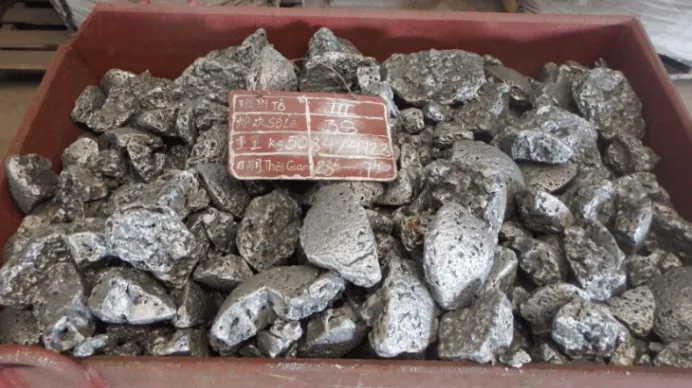
Importance of tungsten
Tungsten is critical for defence and industrial applications, yet global supply is dominated by China.
China currently accounts for 80–85% of global tungsten production and continues to restrict exports. This creates critical supply chain risks for Western nations.
As nations modernise energy infrastructure and expand advanced manufacturing, demand is rising, prompting companies worldwide to explore and develop prospective tungsten projects to reduce reliance on Chinese products.
In Australia, EQ Resources (ASX:EQR) owns the Mt Carbine operation in Far North Queensland, which is historically one of the world’s major tungsten mines.
Mt Carbine combines open-pit mining, historical stockpile retreatment, TOMRA XRT ore sorting, and gravity processing to produce tungsten concentrate.
The company recently reported a 38% month-on-month increase in production at Mt Carbine to 6,349 metric tonne units (mtu).
Meanwhile, EQ’s Barruecopardo operation in Spain produced a record 12,719mtu, representing a 32% increase from July.
As a result, the company booked a record revenue of $55.1 million for August 2026.
In addition to its Australian and Spanish assets, EQ is taking a 10% stake in a planned US tungsten processing joint venture for the Springer Tungsten Complex in Nevada. The company will supply 4,000 tonnes of contained tungsten trioxide (WO₃) in concentrate over an eight-year period.
“Partnering with Blue Moon and The Elmet Group, with the sponsorship of the US Department of War, cements EQR’s position as an important supplier of this critical mineral and opens a strategic new market for our Australian and Spanish production,” Managing Director Craig Bradshaw says.

Further west
In the US, American Tungsten (TSX-V:TUNG) is helping build the domestic tungsten supply through the historical past-producing IMA Mine Project in Idaho.
IMA contains a resource of 316,000 tonnes @ 0.55% WO3 in the indicated category, 2.178 million tonnes @ 0.55% WO3 in the inferred category, and 267,000 tonnes @ 0.15% WO3 in the indicated tailings category.
In mid-September, the company received drill results from underground and surface drilling, extending the IMA Mine vein system.
Vice President of Exploration Austin Zinsser says the results extend known veins and identify tungsten-bearing zones beyond previously mined areas.
“Together, these intersections continue to reinforce our view that IMA hosts a significantly larger mineralised system than previously recognised, while highlighting the considerable exploration potential that remains both adjacent to and beyond the historic mine workings,” Zinsser says.
Also in the US is Western Star Resources (CSE:WSR), with its White Star Tungsten Project in Nevada. The company has identified two tungsten-in-soil anomalies, providing targets for infill sampling and drill planning.
The company collected 253 soil samples at 50m spacing, with sample B206 returning the highest value of 2,203 parts per million tungsten, equivalent to 0.28% WO3.
Western Star also owns the Eagle Point Tungsten Project in New Mexico, where the first modern exploration was recently undertaken.
An upcoming drilling program will test the continuity and geometry of the scheelite-bearing skarn, with the company saying positive drilling and assay results could provide data to support a future maiden mineral resource estimate.
“We detected tungsten in every sample we collected, and the strongest results cluster in trenches 4, 5, and 6 near the granite contact,” CEO Blake Morgan says.
“That gives us clear targets for our 17-hole drill program, which we believe will be the first drilling at Eagle Point in more than 70 years.”
For companies with tungsten projects, such as EQ Resources, American Tungsten, and Western Star, the challenge is to distinguish a temporary price correction from a more persistent decline in demand and ensure their projects can withstand either scenario.
The next phase of the market will be shaped by how much tungsten can be mined, how much manufacturers are willing to buy, what they are prepared to pay, and which producers can supply it.
Write to Aaliyah Rogan at Mining.com.au
Main image: iStock