

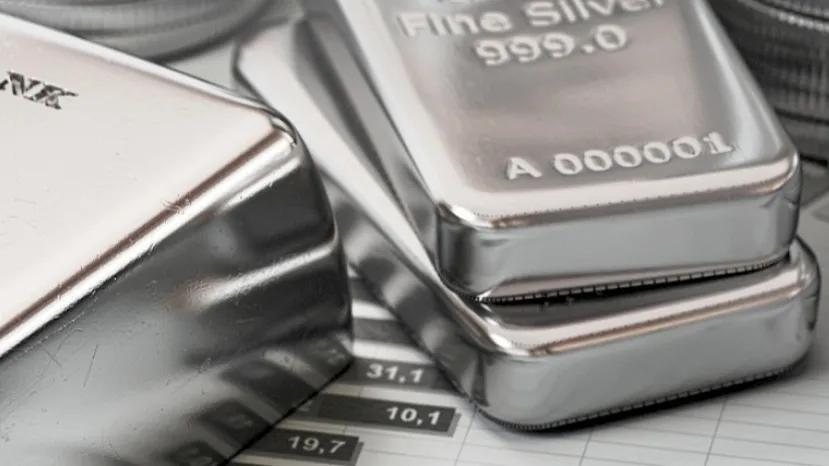
Silver developers are in focus following a 5.03% month-on-month decline in production, with 16,000 metric tonnes produced in October.
According to Shanghai Metals Market (SMM), October’s decline in silver ingot production was driven by two factors.
These included non-ore silver, as recycled silver production was halted during the National Day holiday, and by-product silver from copper concentrates, as some copper smelting regions underwent maintenance shutdowns. These shutdowns left some plants without silver output in October, reducing shipments.
Some copper smelters are expected to remain under maintenance between November and December, meaning silver production may fluctuate slightly over the period.
Meanwhile, silver ingot production at lead-zinc smelters has been gradually recovering since September.
Declining PV sector
In the photovoltaic (PV) sector, silver nitrate production fell 13.48% month-on-month in October, bringing cumulative 2026 production to 6,000 metric tonnes, down 17.59% year-on-year.
The decline was attributed to pre-holiday stockpiling in late September, which brought forward about one week of demand. For the full year, silver consumption in the PV sector is expected to remain on a downward trend.
SMM says if the PV sector continues to weaken and seasonal demand gradually fades, market activity is likely to return to subdued levels.
The continued decline in silver production is affecting the global market.
According to GoldSilver, the global silver market is running a structural supply deficit of 46.3 million ounces (Moz). This marks the sixth consecutive year in which silver demand has exceeded supply.
Silver demand is primarily driven by industrial fabrication, including PV applications. Industrial fabrication remains the largest source of consumption, supported by growing use in artificial intelligence infrastructure, power grids, automotive manufacturing, and electronics.
Despite silver production decreasing in October, Broken Hill Mines (ASX:BHM) achieved record quarterly ore throughput and silver production, producing more than 100,000 ounces of silver for the first time.
Broken Hill Mines owns the Rasp and Pinnacles mines in New South Wales.
The Rasp mine is an operating silver-lead-zinc mine located in Broken Hill, with a resource estimate of 10.1 million tonnes (Mt) at 9.4% zinc equivalent.
Also located in Broken Hill, Pinnacles has a resource estimate of 6Mt at 10.9% zinc equivalent and an exploration target of 6–15Mt at 2–4% zinc. The deposit is considered one of the highest-grade and shallowest in the region.
Pinnacles remains relatively undeveloped, with only small-scale historical mining targeting the rich Galena lodes.
Alongside Broken Hill’s development of Pinnacles, other silver developers are advancing their projects to help strengthen future supply as existing mines mature and smelters undergo maintenance.
Herberton: Iltani Resources
One company advancing a silver-indium project in Queensland is Iltani Resources (ASX:ILT).
The company owns the Herberton Project, which comprises multiple tenements across 367km² of the Herberton Mineral Field.
Iltani has been advancing exploration and development activities, with a focus on the Orient Silver-Indium-Zinc Project. An updated resource estimate for the deposit is expected this quarter, ahead of a Scoping Study in early 2027.
Orient is described as Australia’s largest known silver-zinc-indium deposit, with a maiden resource of 62.5Mt at 81.5 grams per tonne silver equivalent, including a ‘higher-grade’ core of 34.2Mt at 110.4g/t silver equivalent.
Iltani recently intersected 106m of mineralisation at the Orient East deposit, with the intercept returning 142.7g/t silver equivalent from 8m.
Other intercepts returned grades above 1,000g/t silver equivalent, led by 1m at 1,774.69g/t from 83m.
Managing Director Donald Garner says Iltani plans to drill additional holes in the area to better understand the potential to extend mineralisation at Orient East.
Ayawilca: Tinka Resources
Meanwhile, in central Peru, Tinka Resources (TSX-V:TK) is advancing the Ayawilca Zinc-Silver-Tin Project.
Ayawilca has an indicated resource of 28.3Mt at 5.82% zinc, 16.4g/t silver, and 91g/t indium, alongside an inferred resource of 31.2Mt at 4.21% zinc and 14.5g/t silver.
In October, Tinka launched an updated preliminary economic assessment (PEA) to evaluate a silver-first development strategy. The study will assess an open-pit silver operation at Colquipucro, followed by underground zinc-silver-lead mining at Ayawilca.
Colquipucro’s 2016 mineral resource estimate comprises 7.4Mt of indicated resources at 60g/t silver, containing 14.3Moz, and 8.5Mt of inferred resources at 48g/t silver, containing 13.2Moz.
CEO Graham Carman says the study could reshape the development pathway for Ayawilca.
“The PEA update will evaluate whether a Colquipucro-first development scenario could reduce initial capital requirements for the Ayawilca zinc-silver sulphide operation,” Carman says.
As developers such as Iltani and Tinka advance their projects, they could help strengthen future silver supply and meet ongoing demand.
Write to Aaliyah Rogan at Mining.com.au
Main image: iStock