

This article is a sponsored feature from Mining.com.au partner Pioneer Minerals. It is not financial advice. Talk to a registered financial expert before making investment decisions.
Born at the tail-end of the lithium boom several years ago, Pioneer Lithium originally listed on the ASX with several lithium projects in Ontario, Canada.
While the market recovers, the company has pivoted to where demand is strongest, and where their shareholders see the best markets at the moment. With a recent rebrand into Pioneer Minerals (ASX:PMM), the company has transitioned away from being a pure lithium explorer and moved into the broader North American critical minerals space.
While lithium still plays a large role, and the company has retained its Ontario lithium assets, they see metals like tungsten and uranium really coming front-and-centre in both the near- and long-term.
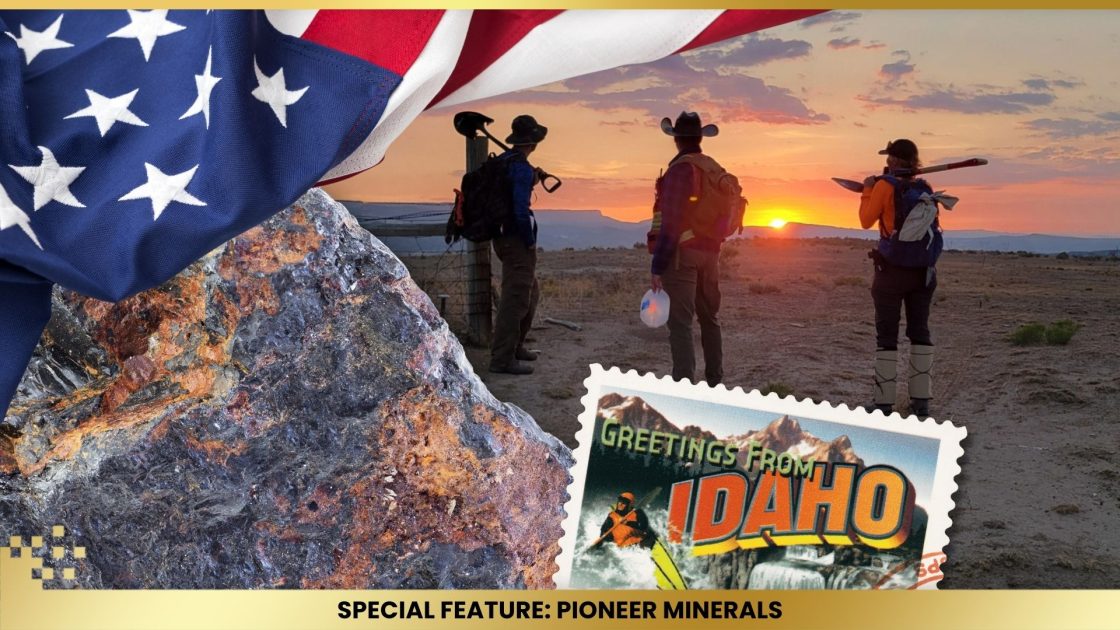
Alongside this transition, Pioneer has acquired several projects across the US, including the flagship North Pine Project in Idaho, which is positioning the company at the heart of a key critical mineral region in the US.
With CEO Michael Beven leading the transition, Pioneer is establishing itself as a serious player in the US critical minerals space, with a portfolio of high-potential projects in the US and Canada across tungsten, uranium, and lithium.
Unlocking tungsten potential in Idaho
North Pine is a tungsten, gold and antimony project, covering 18.8km2 in Idaho, US, a tier-one district for tungsten and antimony. Beven explains how North Pine is proximal to both Perpetua Resources’ (TSX:PPTA) Stibnite Gold-Antimony Project and Resolution Minerals’ (ASX:RML) Horse Heaven Antimony Project.
The company has three prospects at the North Pine Project, including Springfield, Silver Cliffs, and Northman, though the Springfield Prospect is the main focus at the moment.
The results of an independent geophysical interpretation have been integrated with the historical geological information, recent rock chip sampling, and independent petrographic studies conducted at Springfield.
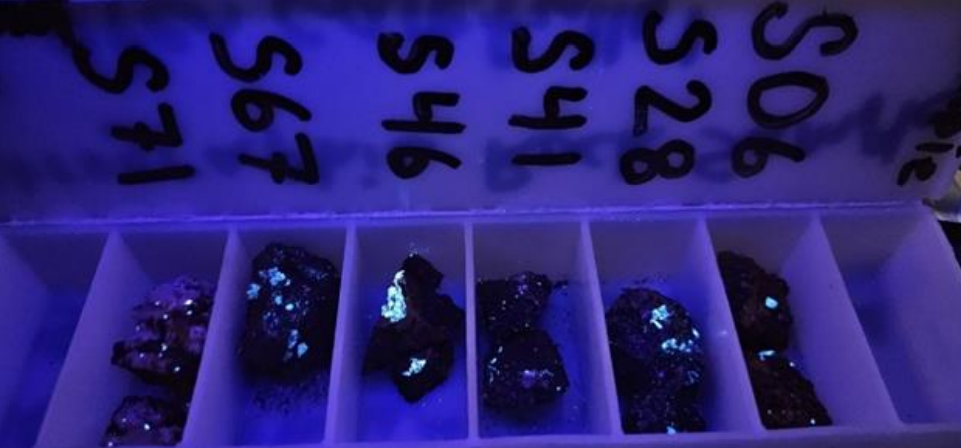
Beven explains how these results have confirmed that a district-scale magnetic anomaly potentially reflects the Springfield tungsten system, linked to scheelite mineralization, pyrrhotite-rich sulphides, and skarn alteration.
Recent sampling has confirmed ‘standout’ grades, with up to 2.98% tungsten trioxide and up to 7.75 grams per tonne gold at Springfield, and up to 3.89g/t gold and 34.8g/t silver with minor antimony at Silver Cliffs.
Springfield was mined in the 1950s, with approximately 1,800 feet worth of drilling and exploration done. Beven notes that while he was identifying this project, he went through the historic work, the adjacent mine data, and noting what was available, he pegged the ground that he thought had the best potential to deliver a significant discovery.
“When I looked at the region and the work that had been done there, my interpretation was that there’s no way that this is the only mineralisation that’s there,” Beven says.
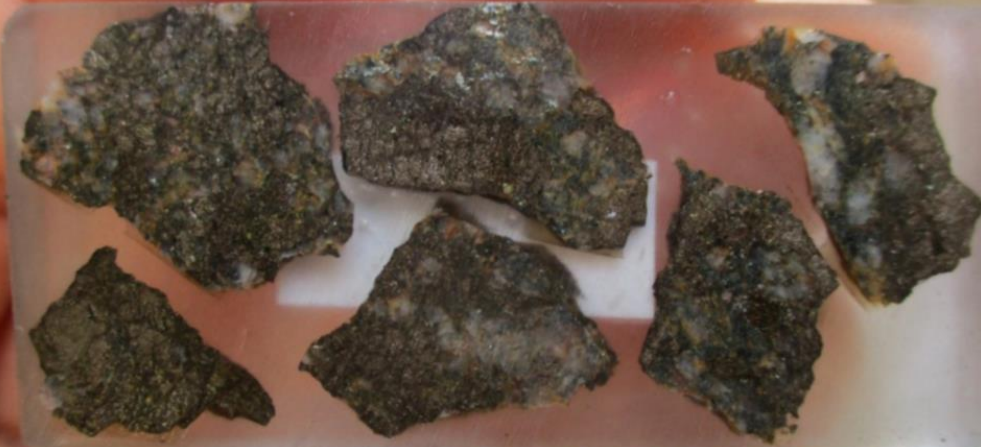
Beven and his team have identified ‘high-grade’ scheelite mineralisation at Springfield already, reinforcing their confidence in the historic grades that were reported there. He explains how it has been historically thought that there was just one small “roof pendant” sticking out of the ground and included in the granite, which is what hosted the mineralisation, but there hasn’t been any exploration done to confirm or deny what was there.
The consensus has been that a magnetic survey was needed at the mine site because it has a lot of a mineral called ‘pyrrhotite’, which is a magnetic sulphite associated with the scheelite mineralisation itself.
The team has already conducted sampling that confirmed that there is ‘high-grade’ tungsten mineralisation at the site and that there is a genetic association between the pyrrhotite, which is magnetic, and the scheelite, which is the tungsten mineralisation.
Beven notes that Pioneer originally went into the site thinking that they would have a magnetic anomaly associated with the Springfield mine because of this pyrrhotite.
“What we found is actually an enormous magnetic anomaly which the Springfield mine sits directly on top of that is about 2.9km long and 600m wide. We found that it runs throughout the area and so the prospectivity and potential for further mineralisation just exponentially increased.”
The results are better than the Pioneer team imagined. Beven describes how “it’s very exciting because it means that there’s two potential interpretations”.
“One is that the roof pendant which hosts the mineralisation, which was thought to be just this tiny little thing, is actually 2.9km long and can potentially host mineralisation along the strike.
“The other interpretation is that the whole magnetic anomaly is pyrrhotite mineralisation – iron sulphide that is magnetic. Both of those interpretations are extremely exciting.”
Pioneer remains mostly focused on the Springfield Prospect at the moment, and plans to aggressively explore once the snow melts and the whole team can get back on the ground.
Preparing for maiden drilling
Pioneer is currently working with the US State Forestry department to get the historic mine road open again, which will allow for easier access to the project.
The company has also engaged Larry Meinert, as reported, the world’s leading skarn expert to assist with our geological interpretations at the project.
Beven explains that “once the snow has melted, we’re going to be back in the field, walking the hills and mountains of Idaho and ground-truthing the magnetic anomaly and figuring out if there is more mineralisation accessible at the site”.
Pioneer is planning quite an intensive field reconnaissance program to really hone in where they need to put the drill holes. The ultimate goal will be to plan for the maiden drill program at Springfield.
Global forces driving tungsten’s strategic importance
“There’s not a lot of risk at the moment, but a lot of opportunity, especially for tungsten,” Beven says while assessing the key dynamics for the industry.
With the company’s rebranding, in mid-2025 Pioneer identified tungsten as a key space that they wanted to be working in.
Beven explains the global forces shaping the industry today.
“In early 2025, China banned the export of tungsten to the west. To really understand global tungsten supply, you need to understand that China controls 83% of the world’s supply,” Beven says.
“On top of that, they’re the world’s largest importer of tungsten as well. So, there’s an absolutely massive supply gap there.”
Tungsten has come to the forefront of critical minerals discussions, particularly within the US due to its defence applications. With the current geopolitical instability, brought on by the war in the Ukraine, we’re seeing massive supply gaps in tungsten.
Beven notes that “the Ukraine war just revealed to everyone that we don’t have the stockpiles of munitions and we don’t have the capacity to replace those stockpiles or ramp up production either”.
The US has had a major wakeup call that they need to re-industrialise and they need to source and stockpile their own supplies of critical minerals. This renewed interest has had a material impact on the industry.
“If you look at the price of tungsten, in early 2025, it was in the high 300s per metric tonne unit (MTU), which is around 10kg of tungsten. Now, it’s around $1,400 per MTU. So, the price of tungsten has more than tripled within a year,” Beven says.
Policy shifts and shareholder demand
Beven explains that while the US is currently incredibly pro-industry, they are way behind in terms of exploration and development for its mining assets, and they have many outdated systems.
“What that means is that there’s untold potential that’s just sitting there waiting to be explored,” Beven says.
“What we see now with the Trump administration is that projects are now being allocated to priority status. You’ve got not only the administration which is incredibly supportive, but also all of the bureaucracies are involved as well and are putting these projects at the top of their priority lists.”
Beven also notes that Pioneer’s shareholders are encouraging this shift toward the US. “We have seen the demand from shareholders to invest in the US space. That’s where they see the future. It just reinforces the confidence that people have in the US’ demand for critical minerals.”
Reflecting on the surge of demand coming out of the US, Beven points to the current focus on de-globalisation as a key driver.
“We’ve seen globalisation for the past 20+ years, with people outsourcing manufacturing, energy, and also the supply of their commodities overseas.
“Now, that dynamic has definitely shifted and most countries have realised that it’s not sustainable to operate that way. Whether it’s Europe or the US, we’ve realised that we need to take control of our critical minerals and our energy supply.
“This change is quite dramatic and quite pivotal.”
Advancing Springfield toward discovery
Moving forward, Pioneer is focused on unlocking the potential at Springfield. The company has tailings samples from Springfield that is currently off with Mineral Technologies for recovery test work.
The results of that work are expected in the near future and will determine the grades, beneficiation work, processing, and if it’s a saleable product.
Beven notes that these samples can also provide insights into the magnetic nature of the anomaly as well through the magnetic material that’s left in the tailings.
By aligning its portfolio with US policy priorities and shareholder demand, Pioneer Minerals is building a growth pathway designed to capture the upside of the critical minerals cycle.
Write to Amy Rotman at Mining.com.au
Images: Pioneer Minerals & Mining.com.au