


This week’s Tech Tuesday is looking into a new integrated database helping track production data, how modular plant solutions are fast-tracking gold production, and huge amounts of funding up for grabs to advance uranium enrichment technology.
Tech Tuesday also delves into Australia emerging as a regional hub for data centres, and which states are the new hubs for green data centres in the Asia-Pacific region.
Global Laser Enrichment (GLE) has been invited to bid for up to US$900 million ($1.38 billion) in competitive funding under Task Order 2 (TO2) of the US Department of Energy’s Low-Enriched Uranium (LEU) Enrichment Acquisition program.
GLE is the exclusive licensee of the SILEX uranium enrichment technology, and is a joint venture owned by Silex (ASX:SLX) (51%) and uranium giant Cameco (NYSE:CCJ) (49%). It is the commercialisation vehicle for the ‘SILEX’ technology and is based in Wilmington, North Carolina.
The aim of the funding is to incentivise the establishment of new LEU enrichment capacity in the US by the end of 2031.
GLE was one of six awardees selected by the DOE under its US$3.4 billion LEU request for proposals (LEU RFP) program in December 2024.
Any meaningful funding awarded to GLE under the LEU RFP could help offset the significant contributions that the JV owners will need to expend towards establishing a new US-based LEU capacity at the planned Paducah Laser Enrichment Facility (PLEF), in Western Kentucky, US.
GLE has until 25 August 2025 to submit its bid, with awards made sometime thereafter.
The invitation to bid for up to US$900 million in funding under TO2 comes after GLE’s award of an initial US$500,00 in April 2025 under TO1, which laid the foundation for access to large-scale funding.
Silex says GLE’s potential deployment of the SILEX uranium enrichment technology could provide a significant contribution to nuclear fuel production for the world’s current and future nuclear reactor fleet.
This will be through the production of uranium in several different forms, including natural grade uranium as UF6, LEU, and LEU+, and high-assay LEU for next-generation advanced reactors, including small modular reactors.
Silex invented and developed the SILEX laser isotope separation technology in Sydney during the 1990s. The uranium enrichment application of the technology was licensed exclusively in 2006 to Global Laser Enrichment.
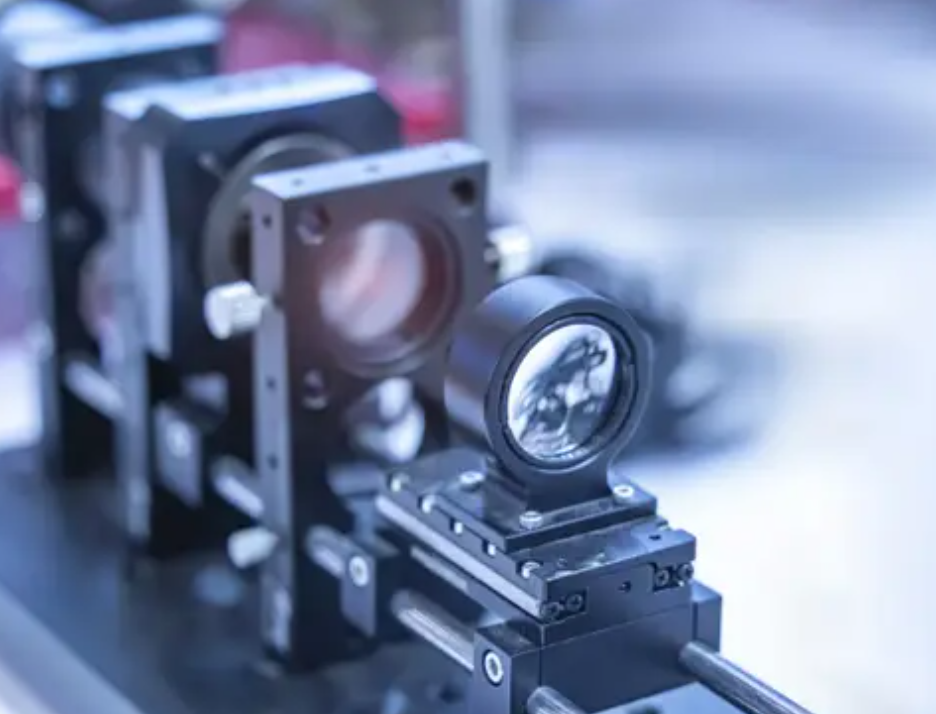
Silex and GLE has accelerated construction of full-scale laser and separator equipment being deployed in GLE’s Test Loop facility in Wilmington, with the aim of completing a commercial-scale pilot demonstration around mid-2025.
Tech’s effect on transactions
Technological advancement, evolving regulation, and macroeconomic conditions are expected to influence the number and type of M&A transactions in Australia and News Zealand.
Dealmakers may have entered 2025 with greater optimism, however unexpected policy shifts, a changing regulatory environment and protracted geopolitical uncertainty have altered the trajectory of global dealmaking in some areas.
Nonetheless, PwC believes many of the themes driving deals examined in 2025 are expected to endure, such as the trend towards larger deals and the AI capital expenditure ‘supercycle’.
The race to build AI-driven computing power and capacity continues to drive semiconductor deals. The evolution of AI technologies more broadly has shifted deals from companies developing large language models to those building AI infrastructure.
The mining sector is critical to solving the upstream challenges facing the rollout of digital infrastructure, which requires substantial amounts of raw materials amid supply chain challenges, geopolitical competition, and environmental concerns.
Deal indicators from the Ansarada Deals Platform are showing signs of recovery across Australia and New Zealand with a 43% rise in the number of open buy-side deals in the June quarter alone.
While this growth is a departure from the lower-than-average transaction numbers that characterised previous years, the path has not been smooth.
Ansarada Managing Director Justin Smith says looking ahead, several factors could continue shaping M&A activity in ANZ.
“The intersection of technological advancement, regulatory evolution, and economic conditions will determine the pace and scale of future transactions”
“The intersection of technological advancement, regulatory evolution, and economic conditions will determine the pace and scale of future transactions,” Smith says.
“While market optimism has returned and the growth trajectory remains positive, the quarterly fluctuations we’ve observed throughout FY25 demonstrates that the volatile global backdrop necessitates prudent approaches to capitalise on opportunities when favourable conditions arise.”
Ansarada data points to strong growth when comparing FY25 to FY24 but quarterly fluctuations in deal volume within the financial year reflect the market’s ongoing adjustment to changing conditions.
Publicly available data sources estimate deals involving Australian companies have reached $74.4 billion in H1 2025 from 575 deals, representing a 46% increase in value from the same period last year.
Despite value increasing, the data indicates the volume of deals has decreased by 4.6%, with 603 deals.
The current environment suggests that dealmakers in Australia and New Zealand are well-positioned to leverage the momentum building across both countries, with strong pipeline activity indicating more transactions may emerge in the coming months.
The combination of available capital, sectoral diversification, and renewed investor confidence creates a foundation for sustained M&A growth throughout 2025.
“By understanding these shifts and maintaining agile strategies, dealmakers can better position themselves to capture opportunities to help succeed in the ANZ M&A market,” Ansarada notes.
Data centre of the world
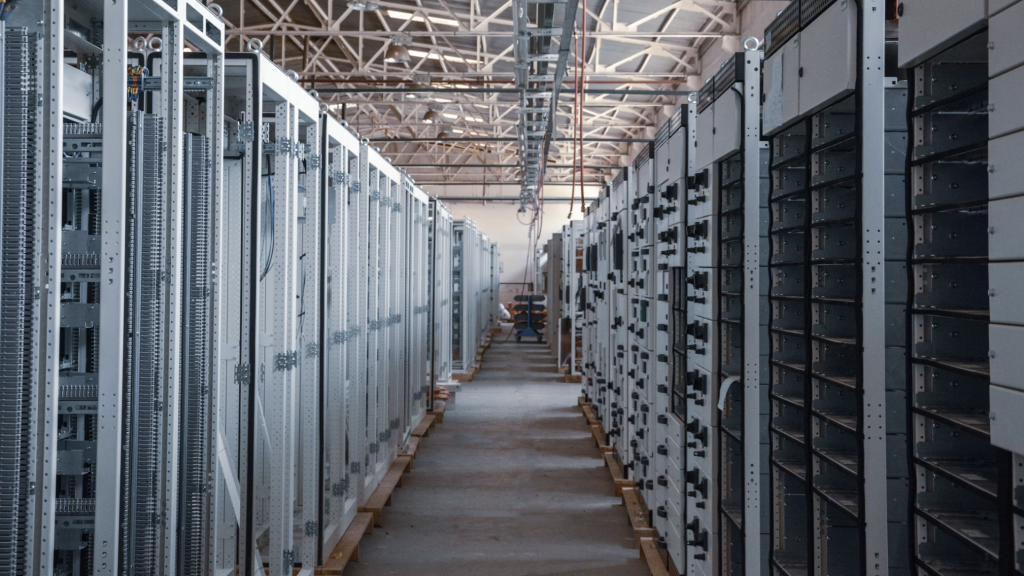
Canadian consulting firm Structure Research identified Perth in Western Australia as one of the world’s top AI infrastructure locations. It comes as Australia is emerging as a regional hub for data centres.
Sydney is the third largest data centre market in Asia-Pacific and Melbourne is the eighth. It is cheaper to build and operate data centres in Australia than in competing Asian locations. Both Melbourne and Sydney are cheaper than Singapore, Jakarta, and Kuala Lumpur.
Western Australia and the Northern Territory are emerging as the new hubs for green data centres in the Asia-Pacific region due to their direct subsea connections, proximity to Asian markets, large supplies of renewable energy and competitive power costs.
The Australian Government has two funding programs to offset the cost of building green data centres.
The Industrial Energy Transformation Studies program provides funding for engineering and feasibility studies, so organisations can identify ways to lower energy costs and reduce emissions at their facilities.
The Clean Building Management Investment Trust reduces the withholding tax concessions for managed investment trusts from 15% to 10%.
Austrade says Australia is a healthy market for data centre services, but Asia is the “golden ticket”. The region’s demand for data storage and cloud computing is skyrocketing.
Southeast Asia’s digital economy alone is expected to be worth US$1 trillion by 2030.
Thanks to proximity and a shared time zone, Western Australia and the Northern Territory can easily service data centre customers in Asia.
Integrated insights
SC Insights has launched a new service that offers a single, integrated database that delivers complete visibility from resource to cell, tracking more than 3,500 assets across battery minerals extraction, refining, pCAM, AAM, CAM, and cell production.
With forward-looking capacity and production data stretching out to 2045, the platform enables users to model long-term supply-demand balances, map and assess global asset positions, and track project development and offtake partnerships, among others.
From cobalt to graphite, lithium, nickel, manganese, or midstream materials like pCAM, AAM, and CAM, SC Insights’ asset-level data and Excel models offer tools to make informed, strategic decisions in an evolving market.

Modular plant solutions
Vertex Minerals (ASX:VTX) and Gekko Systems have combined to breathe new life into the historical Hill End gold field in New South Wales by implementing technology that sets a benchmark for sustainable, high-efficiency gold recovery in Australia’s mining sector.
The collaboration has revived a second-hand Gekko modular processing plant and at the heart of the Hill End Reward plant is a ‘cutting-edge’ pre-concentration circuit, combining sensor-based ore sorting with Gekko’s InLine Pressure Jig (IPJ) to boost ore grades and reject waste.
Gekko Systems has refurbished, installed, and commissioned the plant. Its modular plant solutions are engineered to fast-track gold production while optimising capital efficiency.
Gekko says these pre-engineered, pre-assembled systems offer a cost-effective and scalable alternative to conventional processing infrastructure, enabling quicker deployment, and earlier revenue realisation.
Key investment advantages include faster return on investment through rapid installation and commissioning; lower capex with compact, off-site fabrication; flexible deployment for remote, small-scale, or interim operations; and customised metallurgy based on ore characteristics.
Gekko is exhibiting at this year’s Diggers and Dealers Mining Forum, which is running from 4-6 August, held in Kalgoorlie, Western Australia. Mining.com.au is again attending the event.
Write to Adam Orlando at Mining.com.au
Images: Unsplash, Silex & Gekko