


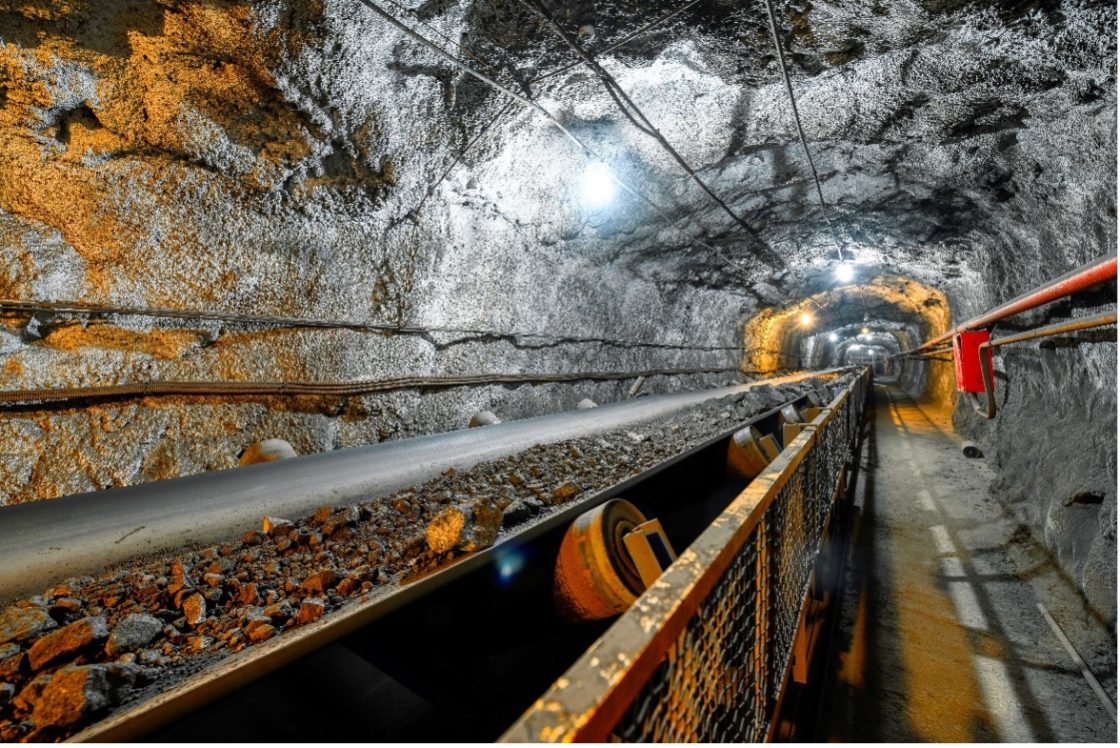
ContiTech has launched Shield Survivor, a flame-resistant conveyor built for underground hard-rock mining, now available in Australia.
Conveyor belts are among the hardest-working assets in underground mining, where continuous operation and stringent safety requirements create constant challenges for equipment performance.
While flame resistance is essential, operators have faced a trade-off between meeting fire safety requirements and achieving the durability needed to minimise maintenance and maximise conveyor availability. ContiTech has developed Shield Survivor to address this challenge.
Head of material conveyance IAPAC Ben Wood says underground mining operations require conveyor solutions that improve safety and operational efficiency.
“Mining operators are under constant pressure to maximise equipment availability while maintaining the highest safety standards underground,” Wood says.
“Conveyor belts are critical production assets, so extending belt life while maintaining fire performance can deliver significant operational value.
“Shield Survivor gives mine operators a way to protect their people and their output at the same time, and that balance is increasingly what the industry is asking of its suppliers.”
For Australian underground miners, where unplanned conveyor downtime can disrupt ore movement and production, the combination of wear resistance and fire protection is becoming increasingly important.
Shield Survivor features a premium flame-resistant cover compound certified to ASTM D378-13.2 while achieving a maximum DIN rotating abrasion value of 70mm3.
ContiTech says this combination enables the belt to withstand highly abrasive ore without compromising the fire performance required for underground hard-rock mining. Compared with ContiTech’s previous FR Tuff 2G cover compound developed for similar applications, Shield Survivor delivers improved wear resistance while maintaining flame-resistant performance.

An opportunity for Reward
The technology could be relevant across Australia’s underground mining sector, including operations run by Vertex Minerals (ASX:VTX).
Vertex owns the Reward Gold Mine in New South Wales, which recently received approval to operate and conduct underground blasting around the clock.
The company says the approval removes an operational constraint as it advances underground development and works towards commercial production.
Executive Director of Operations Jim Simpson says the consent modification represents a step in the transition towards full-scale operations.
“Securing this approval marks an essential operational milestone as the company moves directly toward commercial production,” Simpson says.
Reward hosts a mineral resource estimate (MRE) of 419,000 tonnes @ 16.72 grams per tonne gold (Au) for 225,200 ounces. The MRE comprises 141,000 tonnes @ 15.54g/t Au for 70,500 indicated ounces and 278,000 tonnes @ 17.28g/t Au for 154,700 inferred ounces.
In June 2026, Vertex sold a record 113 ounces of gold via the Reward Mine, generating $670,000 in gross revenue. Nearly 85 ounces were produced during the month, while progressing multiple underground fronts across three decline areas.
Helping bring antimony to market
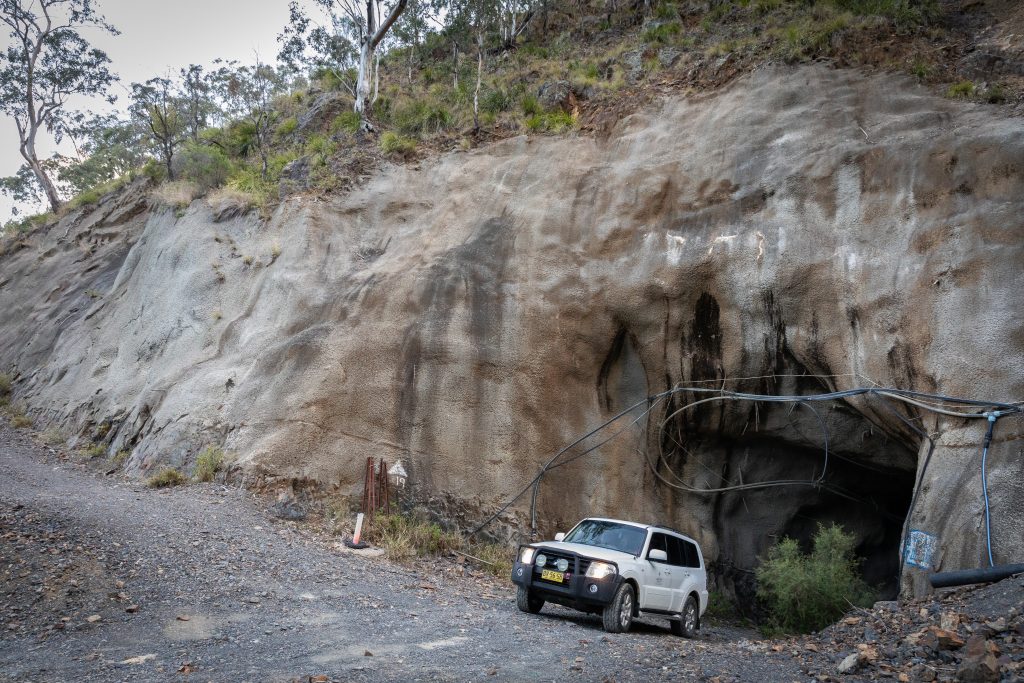
Another potential underground mining operation that could benefit from this technology is Larvotto Resources (ASX:LRV) through its Hillgrove Antimony-Gold Project in New South Wales.
Over an eight-year mine life, the project has an underground mining inventory of 3.5 million tonnes, with annual mining rates of 320,000–520,000 tonnes per annum. The life-of-mine production average is forecast to total 85,000 ounces gold-equivalent annually.
Larvotto recently began staged commissioning of its mineral processing facility at the Hillgrove Mine, with the first ore crushed and placed into the fine ore bin to feed the grinding circuit.
Ore from the Metz underground mine is currently being used for commissioning activities across the crushing circuit, with primary jaw crushing, closed circuit secondary crushing, and fine ore storage underway.
“To reach this point is a tremendous achievement by our operations team and Interquip, the build contractors, and demonstrates the quality of execution, especially given the unique challenges that were, and continue to be, created by the Hormuz conflict on equipment deliveries,” Managing Director Ron Heeks says.
According to Larvotto, Hillgrove is poised to become Australia’s largest producer of antimony, expecting to produce 7% of global antimony demand when global supply is tightening and Western governments are prioritising strategic supply chains.
For Australian underground miners and developers such as Vertex and Larvotto, where reliable ore movement is critical to maintaining production, advances in conveyor durability and fire safety could offer a critical operational advantage.
As underground mining continues to expand, solutions that reduce maintenance demands while protecting workers and keeping production moving are likely to become valuable.
Write to Aaliyah Rogan at Mining.com.au
Images: ContiTech, Vertex, & Larvotto


