

Peregrine Gold (ASX: PGD) has identified a ‘promising’ 450m x 150m gold-in-soil anomaly during a rock and soil sampling program at its 636km² Pilbara Gold Project in Western Australia.
The prospect, dubbed ‘Birdsnest’, delivered grades ranging from 11,192 ppm Au to 32,584 ppm Au, along with 1,954 ppm Ag to 12,551 ppm Ag. The company reports that visible gold was sighted at a number of locations along a quartz-ironstone/sediment outcrop, which is approximately 30 to 70cm in thickness and can be traced discontinuously for ~140m.
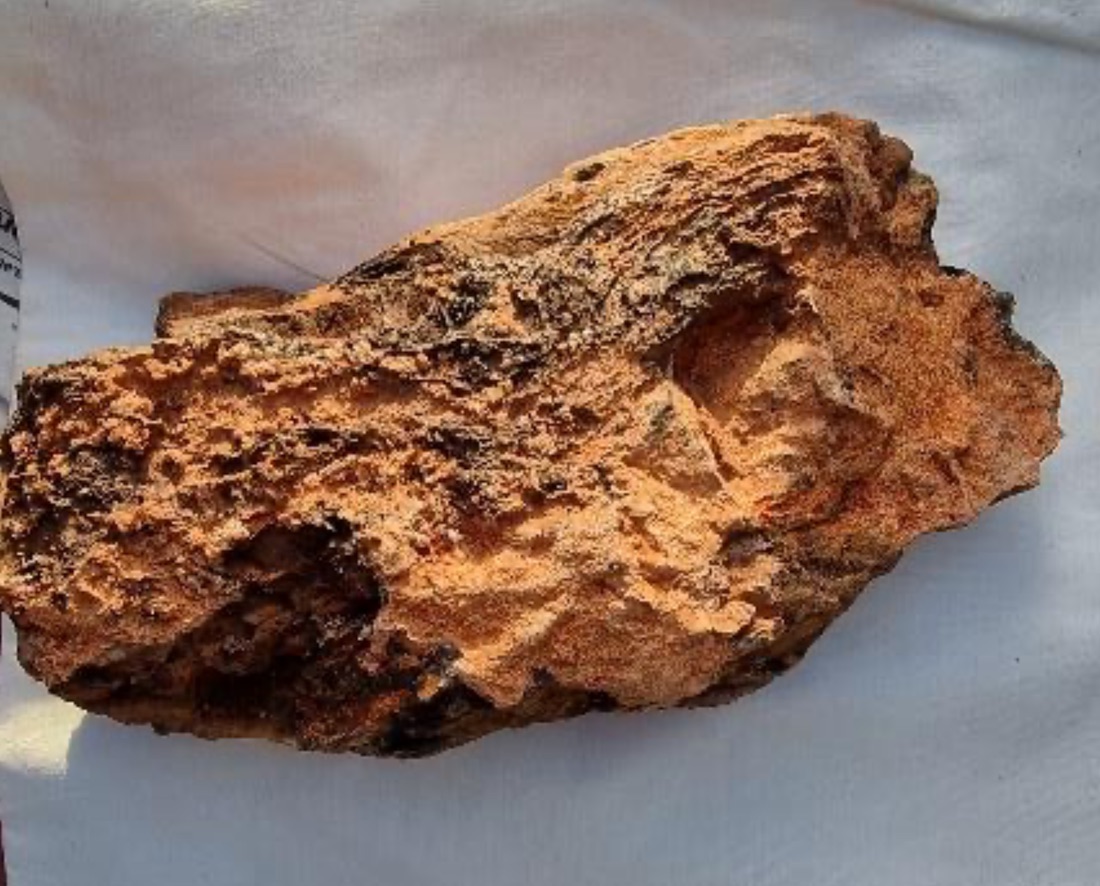
The company reports that visible gold was sighted at a number of locations along a quartz-ironstone/sediment outcrop
The program included the recovery of five rock chip samples, with each displaying evidence of fine gold as disseminations or in vein form.
Peregrine notes that the area south of the gold system houses abundant quartz float from a number of other veins, measuring up to 2m in thickness and up to 100m in length, though none have been noted as containing visible gold.
 Map displaying rock chip locations + gold anomalies from soil sampling at Birdsnest
A detailed soil sampling program was also carried out across 13 soil lines, 100m and 50m apart, with samples collected every 25m. A total of 542 samples were collected from 271 individual sites, defining a coherent gold-in-soil trend extending for ~450m and ~150m wide. A 150m x 50m zone in the centre of the trend delivered ‘exceptional’ elevated gold results, with panning of a 10kg fine fraction sample returning over 100 pieces of gold.
The company reports that further assay results are pending, with further RC drilling planned at Birdsnest subject to completion of Program of Works and heritage surveys.
Images: Peregrine Gold Limited