

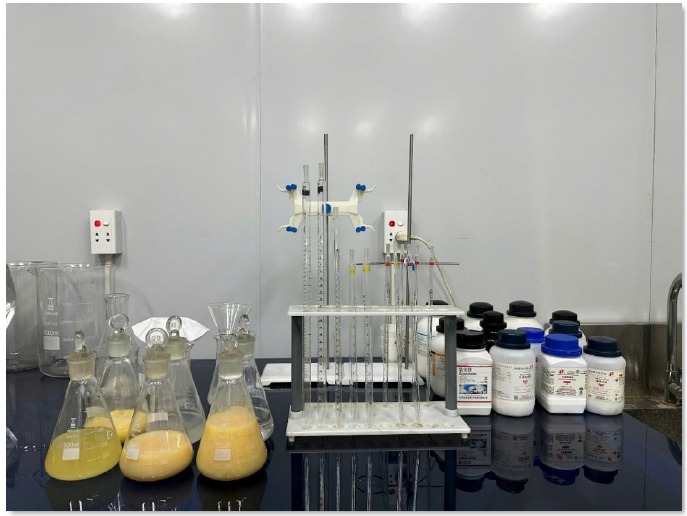
Critica (ASX:CRI) has achieved a second magnet rare earth product (MREP), delivering 86% total rare earth oxide (TREO), from the Jupiter Project in Western Australia.
The company says the new mixed rare earth oxide confirms “substantial, repeatable” upgrades of magnet rare earths and strategic heavy rare earth yttrium through Critica’s beneficiation-first flowsheet.
CEO Jacob Deysel says the company is seeing exactly what a scalable project should demonstrate – consistent, repeatable upgrade of the four magnet rare earths and yttrium from the global resource.
“The strong upgrade of yttrium is notable given China’s overwhelming control of supply and its export controls on rare-earth processing technologies,” Deysel says.
“Combined with previously reported by-product potential from the same flowsheet, Jupiter’s global relevance is becoming increasingly clear.
“Together with the commissioning of our 3,000kg beneficiation pilot plant and ongoing extraction programs at GAVAQ, ANSTO and Minutech, these results are steadily de-risking the flowsheet and building a clear pathway to a Western-aligned rare earths operation.”
Following Critica commissioning and operating the 3,000kg closed-circuit pilot plant, expected between Q4 2025 and H1 2026, the company will optimise extraction and precipitation conditions.
The company will also finalise MREP product specifications, as well as integrate pilot and lab data into the Jupiter Scoping Study. Offtake and strategic partner engagement will also be advanced.
Critica is focused on advancing the Jupiter Project in Western Australia, with a mine-to-magnet plan to meet surging AI, electric vehicles, renewables, and defence demand.
China dominates global production and supply of yttrium. It supplies the US 93% of its yttrium imports, creating acute vulnerability across Western supply chains, as reported by this news service.
The world’s supplies are now running low due to Chinese export restrictions, sparking fears of looming protracted shortages, and rocketing costs that could hit every sector from aerospace, to energy and semiconductor production.
On the back of China restricting yttrium exports (along with six other rare earths in April in retaliation to the US tariffs) yttrium oxide (Y₂O₃) prices have been soaring more than 4,000% in Europe in 2025.
Recently, prices surpassed US$275/kg, as China’s tightening export controls disrupt global supply chains for military and defence, aerospace, semiconductors, and advanced materials.
These shortages are also affecting markets related to high-temperature alloys, laser systems, avionics, and defence components. Magnet rare earth prices also remain high, with Benchmark reporting Dy oxide (DDP China) at over US$200/kg and Tb oxide (DDP China) at almost US$1,000/kg.
Jupiter has a global resource of 1.8 billion tonnes, rich in magnet rare earth with continuous mineralisation across a 40km2 footprint.
Write to Aaliyah Rogan at Mining.com.au
Images: Critica