

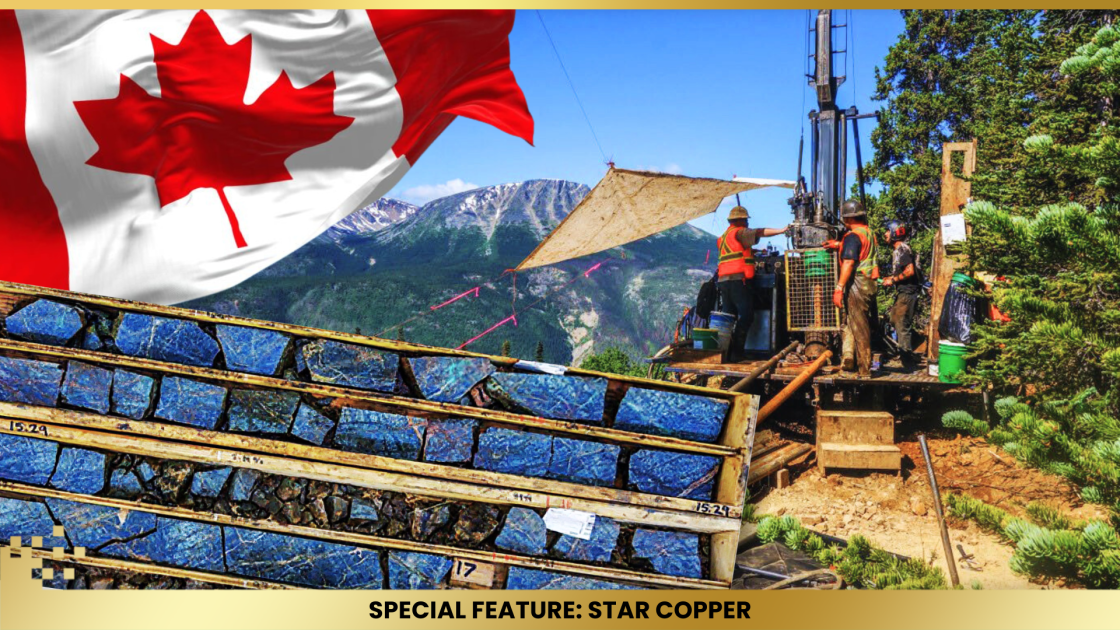
This article is a sponsored feature from Mining.com.au partner Star Copper. It is not financial advice. Talk to a registered financial expert before making investment decisions.
Copper demand is forecast to rise in the years ahead, driven by electrification, data centres, and renewables. But while there is a healthy market for copper scrap recycling, falling production at existing mines and a lack of large-scale, greenfields developments is setting the stage for a potential surge in prices.
“It’s both a demand problem and a discovery problem. There haven’t been any large copper discoveries in the last decade, and at the same time demand has shifted dramatically, first from EVs and renewables, and now from data centres and infrastructure,” says Darryl Jones, CEO of Star Copper Corporation (CSE:STCU).
The challenge is, there aren’t a whole lot of candidates for new large-scale mines, especially if you limit your search to tier one jurisdictions. The last time a ‘supergiant’ new copper mine was opened in a tier one jurisdiction was Olympic Dam in 1988 (Chile and Peru are excluded based on jurisdictional risk, and Mount Milligan, Prominent Hill, and Ernest Henry based on scale). However, that could change in the years ahead. With copper prices up over 40% in 2025, according to Trading Economics, exploration is starting to pick up for the first time in years.
Star Copper and search for scale
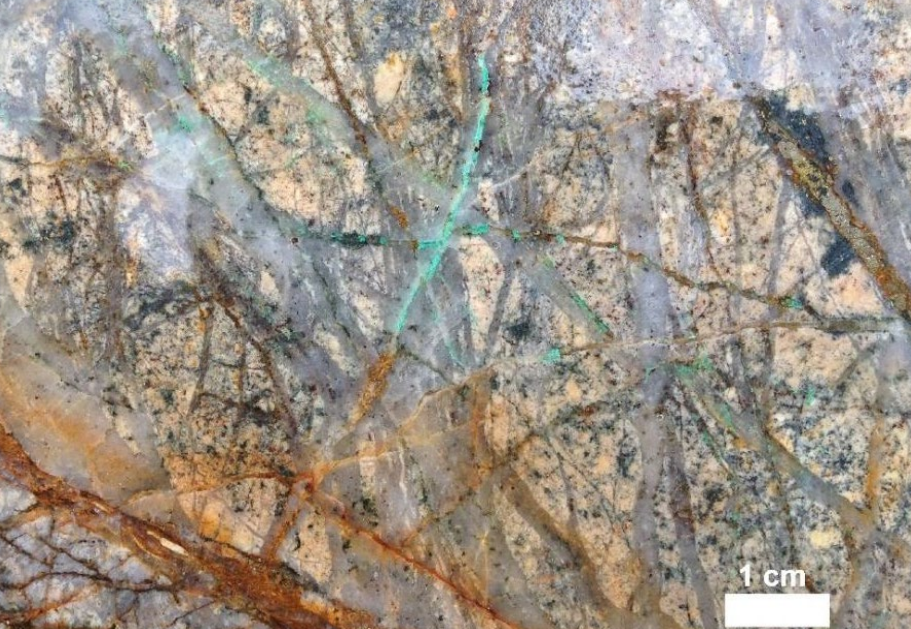
Star Copper is among a very small group of companies with genuine candidates for large-scale copper projects in tier one jurisdictions. Though it’s still early days and the scale is yet to be proven, results so far suggest that the Star Project could be a large porphyry system, with the potential to become a very large-scale deposit.
“Based on volumetrics, and if the grade holds consistent, there could be an immense amount of metal just in the first couple hundred meters,” says Jones.
Star Copper recently completed its phase two drilling program (assay results pending) and released the results from its phase one program in the second half of 2025. The results were impressive, with mineralised hits exceeding 500m width. While positive drill results are always welcome, the real story here is in the architecture of the system.
“The deeper extension is what really excites us. That’s what fits the porphyry deposit model…”
In technical terms, the data shows multiple intrusive phases, a preserved supergene zone near the surface, and persistent mineralisation to depth.
Jones characterised the deposit like “holding an apple”, with the five fingers representing each of the surface deposits — Star Main, Star North, Star East, Pyrrhotite Creek, and Copper Creek. If the fingers connect to a ‘palm’ at depth, the deposit could potentially be a “monster”.
“The deeper extension is what really excites us. That’s what fits the porphyry deposit model… If Star North or Copper Creek come back with mineralised bodies, and you can connect those fingers to the palm, then you’re talking about a world-class deposit in the context of the Golden Triangle,” says Jones.

Why big copper requires a different playbook
Potentially large-scale projects like this one require a distinctly different approach than what’s often seen elsewhere, even at an early stage. Finding and defining large-scale systems is as much about capital allocation as geology, and bad decisions at this stage can kill a project.
While it’s common to see a geology-focused team in the early stages of exploration, Star Copper is taking a deliberate approach to opt for more capital markets experience in the team.
“These projects require so much capital at the early stages that a lot of people miss. Having the right mix early on is important, because once you make bad decisions, they’re very hard to undo,” says Jones.
Jones is not ignoring the technical side of the team, though, and is looking to expand that part of the team in 2026 with specific expertise in the types of geology they’ve uncovered.
Where the drill bit goes next
While most of the capital spending — approximately 70% — will be allocated to resource definition drilling at Star Main, a smaller portion will be dedicated to exploration drilling. Though Jones was careful to stress that this could change “as the project unlocks”.
“Success for us would be something significant on Star North or Copper Creek. On Star Main, the question becomes whether we start moving toward resource definition to establish value… If we get a sniff of success on some of these other targets, I think this season could be transformative,” says Jones.
At a higher level, the team is looking to confirm the expanded footprint of Star Main and extend it at depth. The goal isn’t just to drill more holes, but to prove the scale and continuity of the system. If they can do this, they’ll not only attract more attention from investors, but potentially also from the majors operating in the region around them.
“The complexity of these types of projects is extreme — they’re extremely difficult to ‘pin the tail on the donkey’ ”
Achieving this goal won’t come without its challenges, however.
“The complexity of these types of projects is extreme — they’re extremely difficult to ‘pin the tail on the donkey’”, says Jones.
First, there’s the geological complexity of dealing with a system that potentially has five lodes near the surface, each of which may extend hundreds of metres underground before joining at depth. Drilling, modelling, and understanding a system like this takes time, expertise, and capital.
“We’ve put some stock into Copper Creek and Star North. If we’re unsuccessful on those then we have to pivot on what the plan is. What are we going to do on the main target? Are we going to be able to get the other targets — Star East and Star West — to a point where we can put some more weight to them?”
Then there’s the issue of sequencing. Ignore exploration drilling and you risk losing the attention of early investors. But if you don’t put enough effort into resource definition, you’ll never move the project forward. And while this is happening, you have to start building out the team and ensure you raise capital at the right time. It’s a fine balance.
“If you’re missing on the drills you have to pivot and raise money, while also keeping the momentum on the capital market side.”
And finally, there’s the capital intensity. Remaining well capitalised is a challenge for any early explorer. But drilling multiple holes at depths of more than 600m adds to that challenge.
The ultimate question for Star is not whether there’s sufficient demand for their product, or even whether mineralisation exists — it’s whether they can prove the coherence of the system and move the project from ‘promising hopeful’ to a genuine development candidate.
Write to Patrick Poke at Mining.com.au
Images: Star Copper & Mining.com.au