



Mining companies are forming alliances as they seek exposure across value chains, with new trade architectures requiring a reassessment of growth opportunities in a changing geopolitical landscape.
As the energy transition gains pace and technological development continues disrupting the resources sector, miners are reviewing asset bases and capital allocation strategies to stabilise portfolios, identify expansion opportunities, and lead the pathway to decarbonisation.
As part one of this series reveals, emerging M&A activity will target assets tied to the energy transition – electric vehicles, batteries, renewable-grid electrification. As such, this means critical minerals-led deals will feature commodities like copper, graphite, lithium, nickel, and rare earths – to name a few.
The universe of suitors and buyers is poised to include mining majors, sovereign and strategic investors, private equity, and supply chain players pursuing upstream control.
As Lion Selection Group (ASX:LSX) Managing Director Hedley Widdup has been explaining to Mining.com.au for some time, M&A has been ramping up with the Lion Investment Clock ticking towards ‘cash takeovers’ and then ‘boom’.
Lion’s patented mining clock is central to the firm’s investment strategy. The firm closely monitors the mining cycle via the timepiece and seeks to align investments and exits with busts and booms to take advantage of weak markets to invest in and strong markets to sell.
Timely exits by Lion in 2021 and 2022 helped to move the firm to a high cash holding at the end of the last boom. The prices of micro-capitalisation resources companies then collapsed, and Lion has been investing the proceeds in a heavily discounted market.
Since April 2022, Lion has deployed $41 million (including $20.6 million this financial year) into Australian investments during this ‘once-in-a-cycle’ opportunity. This has grown 89% to $77.7 million (including realised investments) as at 31 July 2025.
Widdup says recent IPO performance and emergence of M&A for development stage companies offer strong encouragement to investors of liquidity, suggesting the mining boom is approaching.
Lion is focused on opportunities in precious, base, and strategic metals in Australia for new investment. The firm has built key positions in three multimillion-ounce gold companies located in Western Australia: Antipa Minerals (ASX:AZY), Brightstar Resources (ASX:BTR), and Saturn Metals (ASX:STN).
Wheeling and dealing
In 2024, deals related to the energy transition were strong with almost $173 billion across nearly 700 transactions. With $42.5 billion in activity, Australia ranked fifth globally for renewable energy M&A, as per BDO’s Annual Renewables Report 2025.
BDO notes this underscores Australia’s strategic position within the global natural resources and energy sector, highlighting the need to align policy, investment, and capability to keep the industry resilient and future-ready.
In its M&A and Capital Raising 2024 Trends and 2025 Outlook, advisory firm EY says in 2024 a large portion of M&A activity was driven either by companies rationalising portfolios and focusing on transition minerals, such as copper and lithium, or those doubling down on metallurgical coal investments.
“In a weaker economy and a tighter financing market, it’s not surprising that completed M&A deal value declined by 15% (year-on-year) to approximately US$70 billion, with the number of completed deals also down 12% (year-on-year) to 441 in 2024,” EY reports.
M&A activity shaped the copper landscape in Q2 2025, headlined by cash deals inked at high premiums, amid growing concerns over future supply deficits.
In May, Bastion Mining handed Xanadu Mines (ASX:XAM) a $160 million, $0.08-per-share, cash offer, valuing the junior at a 57% premium to its share price of $0.051 at the time.
During Q2 2025 Central Asia Metals (LSE:CAML) made a $185 million cash offer for New World Resources (ASX:NWC) – a 95.7% premium to the target’s 30-day volume weighted average price.
At the time Pivotal Metals (ASX:PVT) Managing Director Ivan Fairhall noted all eyes were on the New World Resources bidding war, telling this news service it’s an “exciting development for mid-sized companies with executable projects in great locations”.

Adaptability in acquiring assets
According to EY, 2024 was arguably the year of the ‘deals that didn’t happen’ – major M&A and mega deals were pushed as an agenda but were not necessarily consummated.
“This is in part due to the high complexity of getting major M&A over the line, but also due to the increasingly significant impact that different portfolios are having on relative valuations,” the global consultancy firm reports.
“Gone are the days where commodities ‘rise and fall as one’ with contrasting fortunes seen across the diversified companies, driven by very different commodity portfolios.”
In February, data from the Ansarada Deal Platform found across the Energy, Utilities, Materials and Industrials (EUMI) sector, dealmaking was ticking along with the market expected to be a hive of activity in 2025 and beyond.
Ansarada’s Australia and New Zealand M&A Outlook for 2024-25 at the time showed this year could be one of strategic growth, where adaptability and clear strategic vision could unlock the vast potential in the M&A market.
Deal activity in the metals and mining space strongly favoured gold over base metals in 2024, but as noted, the mega-mergers seen in 2023 were conspicuously absent.

With a total deal value reaching $26.54 billion across 62 deals that fit S&P Global’s criteria for a recent M&A outlook study, 2024 transactions resulted in the turnover of 192.5 million ounces of gold and a combined 29.8 million tonnes of copper, nickel, and zinc in reserves and resources.
S&P Global notes geopolitical uncertainties are driving M&A activity with gold and copper anticipated to remain strong focal points amid rising metal prices.
It’s a trend being illustrated by a spate of recent deals. Gold Fields (NYSE:GFI) this month sold a stake in fellow gold miner Northern Star Resources (ASX:NST) for $1.1 billion.
That deal comes after the Johannesburg-listed miner in May agreed to buy Gold Road Resources (ASX:GOR) in a transaction valuing its joint venture partner at about $3.6 billion.
Northern Star also acquired explorer De Grey Mining in April.
At the smaller end, Platina Resources (ASX:PGM) is acquiring a whole interest in the Mt McKenna Gold Project in the Eastern Goldfields region of Western Australia after agreeing to terms with Jasper Exploration.
In late August, Great Southern Mining (ASX:GSN) received an initial $4 million cash payment from Regis Resources (ASX:RRL) for the sale of a mining licence. There is potential for a further $5 million in contingent payments tied to gold price thresholds and upon the discovery of further economic mineralisation.
Pacgold (ASX:PGO) in mid-August entered into a farm-in agreement with privately held Hardrock Mineral Exploration to acquire the St George Antimony Project in North Queensland. Managing Director Matthew Boyes says the deal gives Pacgold exposure to a highly prospective, historically mined antimony asset in close proximity to the Alice River Gold Project.
“With the price of antimony recently reaching US$60,000 per tonne and the extremely high-grades confirmed from due diligence sampling, there is potential to unlock significant value at this underexplored project through systematic exploration, which we will commence immediately across the multiple high-grade targets already identified,” Boyes says.
“With heritage clearance recently completed by the Hardrock team, we’re looking forward to working with the local stakeholders and traditional owners to create a partnership that benefits all parties as we move into full-scale exploration.”
The St George Project hosts a historical antimony mine that has produced 60 tonnes grading 60% antimony from artisanal open cut and underground workings. No modern drilling has been undertaken on the project.
In early September 2025 Lithium Plus Minerals’ (ASX:LPM) 44.7% owned subsidiary Moonlight Resources entered into an agreement to acquire the Clermont Gold Project in Queensland from Diatreme Resources (ASX:DRX).
As part of the transaction, Moonlight will issue Diatreme $3.25 million worth of shares and performance rights under its initial public offering (IPO) prospectus and will pay $250,000 cash.
Post-IPO, Diatreme will be a substantial shareholder in Moonlight and is expected to hold an initial interest of between 17.1% and 19.9%. The acquisition is subject to due diligence, and needs regulatory approvals. Moonlight lodging its IPO prospectus is a key step in establishing it as a gold and critical minerals explorer.

Meanwhile, Arika Resources (ASX:ARI) is expanding its northeast Goldfields footprint via an acquisition of strategic gold tenements in Western Australia, from Iris Metals (ASX:IR1).
Under the binding agreement to acquire the 108km2 Kookynie Gold Project, Arika will pay $35,000 in reimbursement costs and a non-refundable $100,000 fee to Iris.
QMines (ASX:QML) is hoping to square away more deals in 2025 as it ramps up its M&A drive in Queensland. Fresh off finalising its recent acquisition of the Mount Mackenzie Gold and Silver Project, the company is on the hunt for its next target.
Recently speaking to Mining.com.au, Executive Chairman Andrew Sparke says QMines has been focusing on consolidating several deposits and several historic mines around the Rockhampton region in central Queensland.
Acquiring in Africa
Regionally, Africa is emerging as a dealmaking hotspot. In the fast-paced world of wheeling and dealing, few professionals have witnessed as much transformation as Peter Steward, Head of Financial Sponsor Advisory at Investec Corporate Finance.
With 25 years of experience navigating everything from founder-led exits to complex private equity transactions, Steward has seen Africa’s M&A landscape evolve through regulatory changes, market volatility, and the recent resurgence of international interest.
His insights in Ansarada’s 25 Iconic DealMakers Report reveals the complexities that drive today’s dealmaking environment. South Africa in particular, Steward says, presents significant opportunities, especially among mid-sized, entrepreneur-led businesses.
Many of these companies operate under the radar but are highly successful.
“The ability of private capital to support their growth not only expands business opportunities but also drives employment and economic activity,” the report cites Steward as saying.
Investec is seeing international funds once again considering Africa, with large African funds increasing their interest in South Africa. Additionally, local private equity firms are raising more capital, which Steward says signals renewed confidence in the market.
This gradual return of large private equity buyout funds is reshaping the landscape and creating fresh opportunities for dealmaking. Recent reports indicate that fundraising has reached a 13‑year high.
The return of investment and dealmaking extends beyond just South Africa.
Earlier this month, Dark Star Minerals (CSE:BATT) issued 14 million shares to Critical One Energy (CSE:CRTL) under its definitive agreement to acquire the Cobra North and Khan West projects in the Erongo uranium province of Namibia.
Acquiring Cobra North and Khan West enables the company to gain geological and strategic advantages from the nearby Rössing Uranium Mine. CEO Marc Branson says by issuing shares to Critical One, the company has completed a key milestone in the acquisition of both projects.
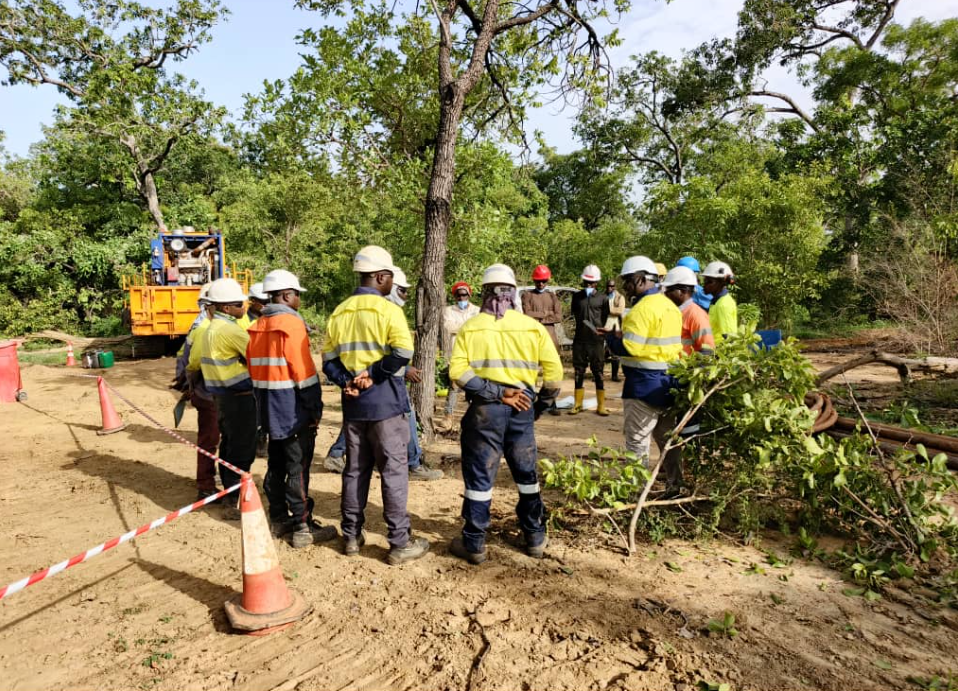
Meanwhile, Many Peaks (ASX:MPK) is embarking on its portfolio growth and diversification strategy with value-accretive transactions driving its long-term strategic approach.
Recently speaking to this news service, Managing Director Travis Schwertfeger says two transactions Many Peaks entered into over the past year is expanding not only its landholdings in Africa, but growth opportunities as well.
In July, Many Peaks executed a binding agreement for expanding the Ferké Gold Project by way of an earn-in joint venture with privately held Ivorian entity Magic Mineral Structure (MMS), as reported by Mining.com.au.
In June 2024, Many Peaks also entered into a binding agreement with Atlantic Resources to secure an exclusive right to acquire a 100% interest in two permits in eastern Cote d’Ivoire.
Staying in Cote d’Ivoire, Castle Minerals (ASX:CDT) recently executed a share purchase agreement with African Resources to acquire the remaining 10% interest the group has in UK-incorporated Mineralis, as part of its strategy to strengthen its commitment to the African nation.
Aurum Resources (ASX:AUE) earlier signed an agreement to acquire an 87% interest in three permit applications in Côte d’Ivoire, expanding its Boundiali and Napié gold projects. Through the group’s subsidiary, Aurum will take a 35% stake in local partner, Major Star Plus Sarl.
Interestingly, African nation Angola is bidding to acquire a minority stake in one of the world’s largest diamond companies, De Beers, which Anglo American has put up for sale.
Angola’s mineral resources ministry confirms the southern African country’s national diamond company Endiama has made an offer. Botswana has a 15% stake in De Beers and is planning to obtain a controlling stake in the company.
North America’s attraction
North America is gaining attraction as an emerging dealmaking destination. As part one of Mining.com.au’s 2030 Outlook series uncovers, the region is becoming one of the most active mining hotspots.
Peak Asset Management Executive Director Niv Dagan believes investor interest in companies with US-centric assets will continue over the outlook period to 2030.
One such company active there is Hi-View Resources (CSE:HVW), which in late August began adding another project to its portfolio close on the heels of an earlier transaction. The Vancouver-based explorer inked a definitive agreement with Coast Copper (TSX-V:COCO) to buy the Borealis Project immediately south of Hi-View’s existing landholding in the Toodoggone District of north-central British Columbia.
Hi-View further signed an option agreement to buy multiple new projects, covering 1,912.46 hectares, in the Toodoggone District.
Also in British Columbia, Star Copper (CSE:STCU) completed its acquisition of the Copperline Project in north-central British Columbia, from Zimtu Capital Corp (TSX-V:ZC).
In July, the Canadian explorer entered into a definitive deal with Zimtu, in which Star Copper agreed to pay C$350,000, issue 500,000 shares, and grant Zimtu a 2% net smelter return royalty payable on all production from the Copperline Project.
Later that month, Haranga Resources (ASX:HAR) finalised the acquisition of the Lincoln Gold Project in California. In March, Haranga entered into a binding share sale agreement with Seduli Holdings, for Haranga to issue 40 million upfront shares to the company.
Canadian explorer Brunswick Exploration (TSX-V:BRW) has completed a purchase and sale agreement with General Partnership Osisko Baie James for the Mirage Lithium Project in Québec.
In January 2023, the company optioned the Mirage Project from Globex Mining Enterprise (TSX:GMX) and completed all payments and work expenditure requirements in November 2023. To acquire full ownership, Brunswick will renounce its option to acquire a 90% undivided interest in Plex.
Fellow Canadian uranium explorer Skyharbour Resources (TSX-V:SYH) is already seeing increased interest in its portfolio in the Athabasca Basin of Saskatchewan.
Speaking to Mining.com.au in August, CEO Jordan Trimble says Skyharbour has been in active discussions with undisclosed third parties regarding potential joint ventures and option agreements for some of its remaining projects.
With the uranium market gaining momentum, the CEO expects this interest to continue growing.
“And we’re well-equipped to structure deals that are accretive for our shareholders and beneficial for our partners”
“And we’re well-equipped to structure deals that are accretive for our shareholders and beneficial for our partners,” Trimble says.
“With over twenty 100% owned projects, we actively pursue opportunities to option, joint venture, or sell assets to the right partners.”
In early August, Silver47 Exploration (TSX-V:AGA) completed its merger with Summa Silver (TSX-V:SSVR). Shareholder Eric Sprott boosted his total Silver47 holdings to 11.5% amid Summa Silver delisting, further illustrating the attractiveness of the precious metals space and North America.
That same month Element79 Gold (CSE:ELEM) signed an asset purchase agreement with vendor Donald James McDowell for the Gold Mountain Project in Nevada, US. The project comprises 34 unpatented mining claims and lies in Nevada’s Battle Mountain trend in Lander County.

Smarter transactions
To meet future metal demand, the mining industry will be required to build new projects at an unprecedented scale and pace.
Benchmark Mineral Intelligence research finds that more than 300 new mines might be required by 2035 to meet demand for EVs and energy storage technologies.
As such, miners are working to address immediate pressures created by the depletion of deposits, rising operating costs, and skilled labour shortages, alongside better sustainability practices
Deloitte Australia partner, Strategy, Risk & Transactions Steve Dyson notes increasingly, companies are looking to smart operations as a solution to manage complex priorities and demands.
Injecting advanced technologies such as AI, digital twins, and predictive analytics into mines presents potential to lower costs and heighten resiliency while helping generate quantifiable gains in performance.
“With the number of new mining and metals projects that must be delivered, there’s a need for operational support, especially through the configuration and build process,” Dyson says.
“Smart operations could provide an answer to these challenges and help mining and metals companies stand out from the pack when it comes to decisions surrounding investment, permitting, transactions and more.”
Images: Ansarada, Benchmark, Diatreme, Many Peaks, S&P Global & Mining.com.au


