



This article is a sponsored feature from Mining.com.au partner Legend Mining. It is not financial advice. Talk to a registered financial expert before making investment decisions.
Legend Mining (ASX:LEG) is starting a new chapter. It has pivoted from its nickel roots in Western Australia’s Fraser Range to a gold-focused future, spearheaded by the Pinnacle Well Project in WA’s Northern Goldfields.
Following a few years of nickel market headwinds, a flood of Indonesian supply, the suspension of BHP’s (ASX:BHP) Nickel West facility, a lack of risk capital, and land access challenges, Executive Chair Mark Wilson says the company is now poised to deliver what its investors have been waiting for: drilling and exploration.
Legend is building a pipeline of targets at Pinnacle Well, including the high-priority Pyrophyllite Hill and Alpha North prospects. This marks the company’s return to its core expertise in greenfields exploration.
As Wilson explains, Pinnacle Well ticks all the boxes for Legend in this new phase of its life cycle.
“It’s the right commodity, the right location, and the project had been held in private hands for the last 15 years, and we saw an enormous opportunity because there had been no recent drilling or geophysics,” Wilson says.
With that, Legend is making its way back to the drill rig and ready to announce its comeback and gold-focused revival.
Pinnacle Well: Flagship gold pivot
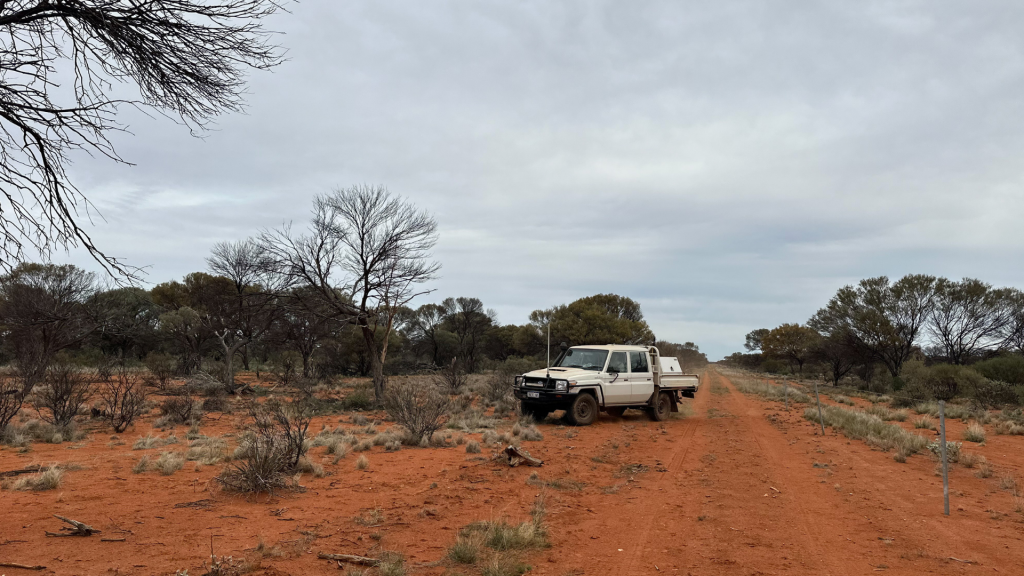
Wilson notes that after acquiring the project in 2025, the first step was to negotiate a heritage protection agreement with the Darlot People. This was signed in October 2025.
Following that, the company also purchased some additional contiguous tenements in November 2025, including the Alpha North prospect.
The Pinnacle Well Project comprises four exploration licences across 128km2 north-northeast of Leonora, a well-known, highly mineralised district that also holds numerous historical and currently producing mines.
From a review of historical data, Legend was able to pinpoint the Pyrophyllite Hill and Alpha North prospects as the first high priority targets.
Wilson explains that the data review and infill soil sampling helped the company develop five new soil anomalies, which led to some non-ground-disturbing geophysical work in December 2025 where the company commissioned induced polarisation (IP) surveys at Pyrophyllite Hill and Alpha North.
When Legend did the initial IP surveys, the company received strong coincident chargeable and resistive responses, starting at just 75m below surface.
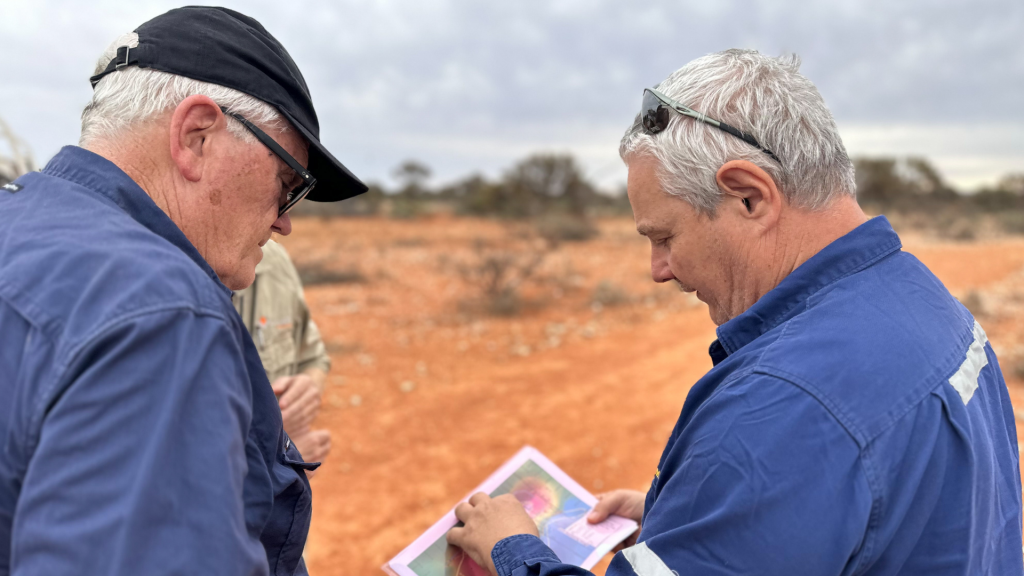
“These surveys showed some really interesting chargeable and resistive features at both prospects, both under cover and never drill tested, so suddenly this project assumed a new life,” Wilson says.

regional geology (GWSA 1:500k)

with peak chargeability responses, UFF soil anomalies and quartz veining on Google Earth image
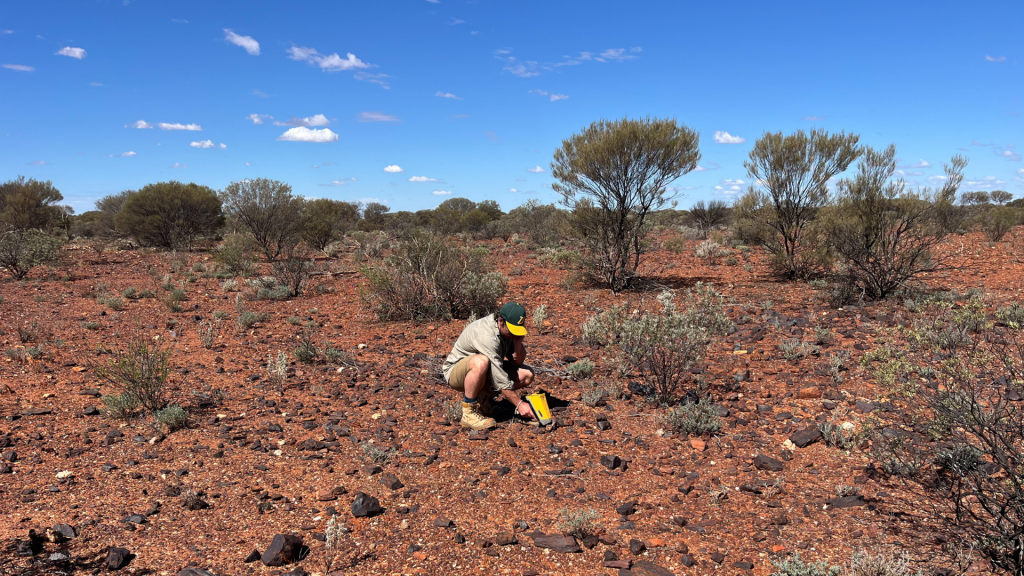
Following the IP survey results, Legend also completed some field reconnaissance through a rock chip sampling program.
At Pyrophillite Hill, Legend collected a total of 18 rock chip samples from identified PDIP chargeable features. Results included anomalous gold values of 0.18 grams per tonne and 0.09 grams per tonne gold (Au) on line 40,800E, which confirms the historical results of 0.13g/t Au and 0.09g/t Au taken from the same area.
These anomalous assays coincide with outcropping geology above the chargeable IP feature, where strongly altered chlorite-siderite-goethite-limonite-magnetite rock was observed, derived from andesitic-dacitic volcanoclastic units.
According to Legend, the results from this work program indicate that Pyrophyllite Hill is prospective for both intrusion-related and structurally-controlled gold mineralisation.
“We always knew we had an extensive surface expression of the pyrophyllite, which meant that there had been significant fluid flow from down below up to the surface to create that. What this now represents to us is a very high-ranking drill target for gold,” Wilson says.
Several key indicators support this: the presence of extensive pyrophyllite alteration across an area 1,300m by 700m, the PDIP survey identification of a 600m strike length chargeable-resistive feature, elevated gold in rockchip samples, and hydrothermal alteration.
Another important indicator is the proximity to northwest-southeast trending structures related to the Keith Kilkenny Fault Zone, a deep-crustal fault system in Western Australia considered a key control for both gold and nickel deposits in the region.
Exploration model and gold potential
Legend’s model assumes that a significantly large hydrothermal event resulted in the pyrophyllite footprint at surface.
The company previously identified some hydrothermal alteration in some of the rocks at the surface; and it’s in those rocks that it has found anomalous gold results already.
“We’ve got the ultra-fine soil anomaly, we’ve got the IP anomaly, and we’ve got regional structures,” Wilson says.
“All of those things feed into a model outlining a 600m-long strike length of highly prospective gold ground which has never before been drilled, and we’re about to drill it.”
With a long-awaited heritage report now imminent, Legend Mining is set to commence its first drill program, with activities planned at both the Pyrophyllite Hill and Alpha North prospects.
The company intends to conduct aircore (AC) drilling at Pyrophyllite Hill in order to gain a better understanding of its structures, geology and geochemistry.
With AC drilling, Legend expects to find a new layer of information sitting below the surface of the pyrophyllite. Following this program, the company then plans to follow up with a reverse circulation (RC) drill campaign at both Pyrophyllite Hill and Alpha North.
Leonora Goldfields: Proven district advantage
While Legend’s exploration model at Pinnacle Well lays out the technical case, the project’s potential is amplified by its position in one of Western Australia’s most productive gold districts.
Located about 25km north-northeast of Leonora, Pinnacle Well lies within ground considered highly prospective for intrusion-related and structurally controlled, vein-hosted gold systems — the hallmark mineralisation style of the Archaean greenstone belts that define the Yilgarn Craton.
The region is host to significant gold deposits, including Vault Minerals’ (ASX:VAU) King of the Hills (KOTH) open pit and underground mines and KOTH processing facility.
Vault achieved its first gold pour in June 2022 at KOTH, with commercial production commencing in December that year.
First drills in sight
Legend is ready to drill.
For a greenfields exploration company who hasn’t put a hole in the ground since September 2023 — and for any corporate executive, for that matter — that’s a pretty exciting milestone. Wilson believes it’s going to be just as exciting for the investment community as well.
The company has been strategic with its move out of nickel and into gold; and with initial IP surveys at both Pyrophyllite Hill and Alpha North showing compelling targets under cover in prospective settings, the team believes it will be worth it in the end.
Write to Amy Rotman at Mining.com.au
Images: Mining.com.au, Legend Mining


