

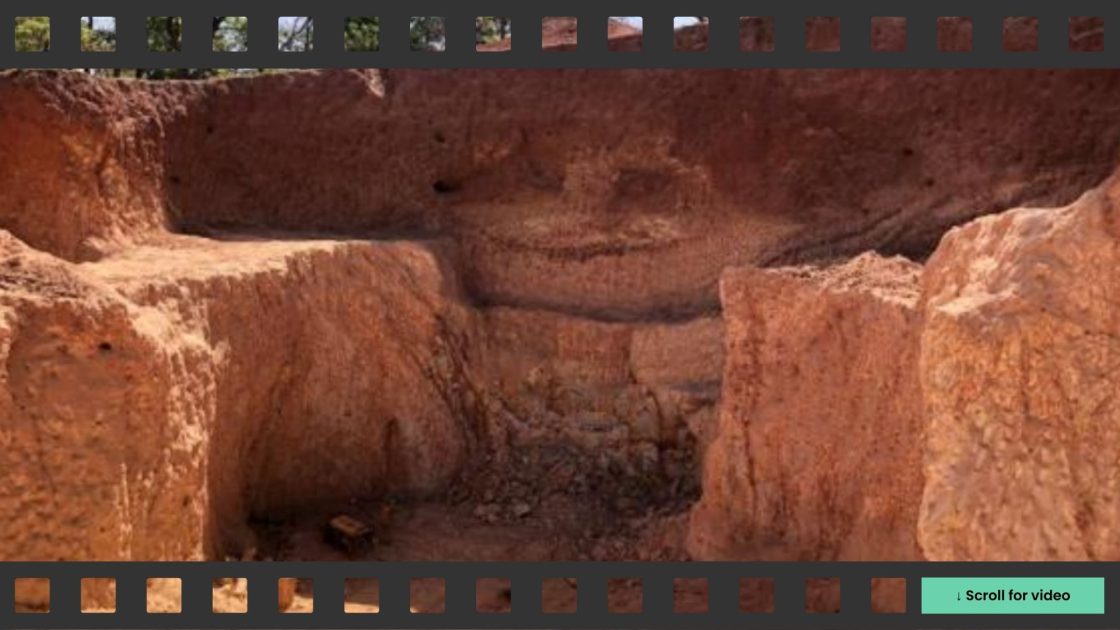
Toubani Resources (ASX:TRE) is “full steam ahead” in targeting completion of a Definitive Feasibility Study update at the Kobada Gold Project in Mali for the end of Q3 2024, CEO Phil Russo says.
Speaking to Mining.com.au, the CEO confirms shallow, free dig oxide resources classified as indicated have increased 44% to 1.4 million ounces of contained gold (49Mt at 0.88g/t gold).
Russo explains the 44% increase in Kobada’s oxide indicated ounces – and total indicated ounces increasing to 2Moz also in the indicated category – cannot be understated. Such is its importance, that he believes Kobada could be on track to be the next open-pit gold mine of significance.
“We’re on this journey to put Kobada to be able to produce at a low cost, and you need a strong resource number to deliver that. That’s why this milestone (yesterday) morning is so important, and it puts it firmly on the development pathway,” the CEO tells this news service.
Oxide ore is mineralised rock in which some of the original minerals – in Toubani’s case the precious metal gold – have been oxidised. Oxide ores consist of compounds in which the metal is combined with oxygen. These ores tend to be found closer to the surface, which makes them more amenable to the cost-effective open pit mining method.
Open pit (or open cut) is the most common method for mining minerals globally as it’s simpler and cheaper for deposits near the surface. Most of Australia’s gold comes from open pit mines such as the Super Pit in Kalgoorlie Boulder.
Oxidation makes the ore more amenable to cyanide solutions to refine these ores. A sodium cyanide solution is commonly used to leach gold from ore of which there are two types – heap leaching and vat (or tank) leaching. The process extracts gold (or silver) from their ores by dissolving them in a dilute solution of sodium or potassium cyanide.
Refractory gold ore, on the other hand, has ultra-fine gold particles disseminated throughout its gold occluded minerals. These ores are naturally resistant to recovery by standard cyanidation and carbon adsorption processes. That’s because refractory ore generally contains sulphide minerals, organic carbon, or both, which generally leads to a complex and much more costly processing option to extract the gold.
Although refractory ores offer a higher grade, they can only be processed using specific pre-treatment methods such as ultrafine grinding, bio oxidation, pressure oxidation, roasting. This special treatment and additional processing steps incur additional costs compared with conventional plants; however, the refractory ores reserve grade is higher than nonrefractory-type deposits. This is the trade-off.
The CSIRO has developed a cost-effective and environmentally friendly gold recovery process called ‘Going for Gold’. The solution replaces cyanide with a safe, alternative reagent known as thiosulphate.

Toubani’s vision is to reposition Kobada as a reduced technical risk, low strip, bulk-tonnage, oxide-dominant open pit development project of scale. Having converted more than 80% of its oxide inferred ounces, as mentioned Toubani now has 1.4 million ounces of oxide material in indicated resources on which to base the DFS update – 44% more than in the previous mineral resource estimate (MRE).
With almost 50Mt of such material, as well as a 10% increase in estimated grade in the new MRE, the improved tonnage and grade profile is anticipated to improve the results of the forthcoming DFS update.
Toubani has been releasing some compelling intercepts as part of its resource definition drill program this year, and Russo says that culminates in the resource update released (yesterday) 2 July 2024.
“In combination, we’ve also increased the grade of our indicated ounces by 10% and it’s those two numbers here – 2 million ounces and a great increase here of 10%, almost 0.9 grams per tonne indicated. For a free dig, shallow oxide project, that’s a really strong result to underpin reserves for the DFS that’s upcoming,” Russo tells this news service.
He says there remains significant upside at Kobada Main, especially at depth below the current MRE, as well as across the 50km-plus regional-scale shear zones known to host mineralisation within the Kobada Gold Project.
The MRE for the Kobada Gold Project stands at 78Mt @ 0.88g/t for 2.2 million ounces of gold. It is an open pittable resource reported within a conceptual pit shell generated using appropriate cost and pricing parameters to satisfy the Reasonable Prospects for Eventual Economic Extraction (RPEEE) criteria under the JORC Code (RPEEE shell), (save for the Kobada South East prospect).
Write to Adam Orlando at Mining.com.au
Images: Toubani