


This article is a sponsored feature from Mining.com.au partner Basin Energy. It is not financial advice. Talk to a registered financial expert before making investment decisions.
Nuclear power uptake continues to rise which is driving increased demand for uranium at the same time as Western countries are looking to shore up supply outside Chinese and Russian sources.
One of the key moves in the space recently was the temporary ban on the import of Russian uranium products into the US. The ban is aimed at reducing, and ultimately eliminating, the US’ dependence on Russian uranium for civil nuclear power reactors.
The problem the US faces though with the introduction of this ban is that currently almost all of the uranium required to power US nuclear reactors is imported, with domestic supply only accounting for about 5%, according to the World Nuclear Association.
The US has the largest nuclear fleet of any country with over 90 operable reactors. Meanwhile, China has mapped out plans to build 150 new nuclear reactors through to 2035, adding to the 55 the Asian powerhouse already has in operation, under construction or planned.
This significant increase in planned nuclear power capacity is going to require a substantial increase in uranium supply following a lengthy period of underinvestment in new discoveries and existing operations during the extended low price environment.
But the uranium landscape is changing, with increasing supply constraints and rapidly rising demand driving prices higher.
New era for uranium
Sprott Asset Management ETF Product Manager Jacob White says physical uranium gained ground in October.
“At the start of October, uranium had appreciated significantly by the end of September, posting its most impressive month since September 2021,” he says.
“The uranium spot price rose to its highest level before the Fukushima Daiichi power plant disaster in 2011, when it was US$73 ($114) per pound. October saw yet another high, despite intra-month volatility, with the spot price reaching US$74.48.
“We believe the U3O8 spot price is well supported in holding to higher price levels not seen in over a decade.”
The World Nuclear Association says nuclear reactor requirements are forecast to nearly double by 2040, from 171 to 338 million pounds of uranium annually.
“Understanding of a future demand-supply imbalance is gaining acceptance and is fueling improved sentiment toward uranium,” White says.
“Looking ahead to 2040, utilities have 1.5 billion pounds of cumulative uncovered uranium requirements. As a result, we believe we are still in the early innings of the contracting cycle.”
White notes that with global uranium mine production well short of the world’s reactor requirements, the supply deficit building over the next decade, a decade of underinvestment in supply, and future supply inhibited by long lead times and capital intensity, restarts and new developments are critical.
“The uranium price target as an incentive level for further restarts and greenfield development is a moving target, and we believe that we will need higher uranium prices to incentivise enough production to meet forecasted deficits,” he explains.
“Over the long term, increased demand in the face of an uncertain uranium supply is likely to continue to support a sustained bull market.”
Pete Moorhouse, Managing Director of uranium and green energy metals explorer Basin Energy (ASX:BSN), says the biggest challenges lie in scaling production quickly enough to meet accelerated demand while navigating geopolitical and environmental considerations.
“Filling the supply-demand gap will require a large increase in uranium exploration drilling,” he tells Mining.com.au.
Diversifying into Scandinavia
Basin Energy was initially founded as a pureplay uranium explorer with a focus on three projects in Canada’s uranium prolific Athabasca Basin, where the company has been very active over the past two years.
However, with the growing demand for clean energy solutions, the company sought opportunities to expand its portfolio to other countries.
This has led to Basin Energy inking a deal to buy a portfolio of projects considered prospective for base metals, precious metals, uranium, and rare earths in Sweden and Finland.
The Sweden-based projects comprise the Virka, Björkberget, Rävaberget, Prästrun, and Håkantorp assets. While the Puokio, Löttö, Temo, Eronlampi, and Palmottu projects are located in Finland.
“The new portfolio in Scandinavia offers technically credible and highly explorable green energy metals opportunities in what we believe are overlooked jurisdictions,” Moorhouse says.
“These countries are well-regarded for their stable political environments and commitment to the clean energy transition, making them ideal locations for the development of future-facing commodities integral to the growth of a low carbon economy.”
Earlier this year, the European Union (EU) introduced the Critical Raw Materials Act, which is aimed at ensuring EU countries have access to a secure and sustainable supply of critical raw materials to enable Europe to meet its 2030 climate and digital objectives.
“Sweden and Finland are major mining jurisdictions where exploration activities have been bolstered by the recent entry into force of the European Critical Raw Materials Act,” Moorhouse notes.
Basin Energy’s newly acquired projects include areas of historic exploration, primarily conducted by the local geological surveys during the 1970s and 1980s, where multiple mineralisation occurrences were recorded but not followed up with any modern exploration.
Moorhouse says the targets are all shallow, allowing cost effective and rapid exploration.
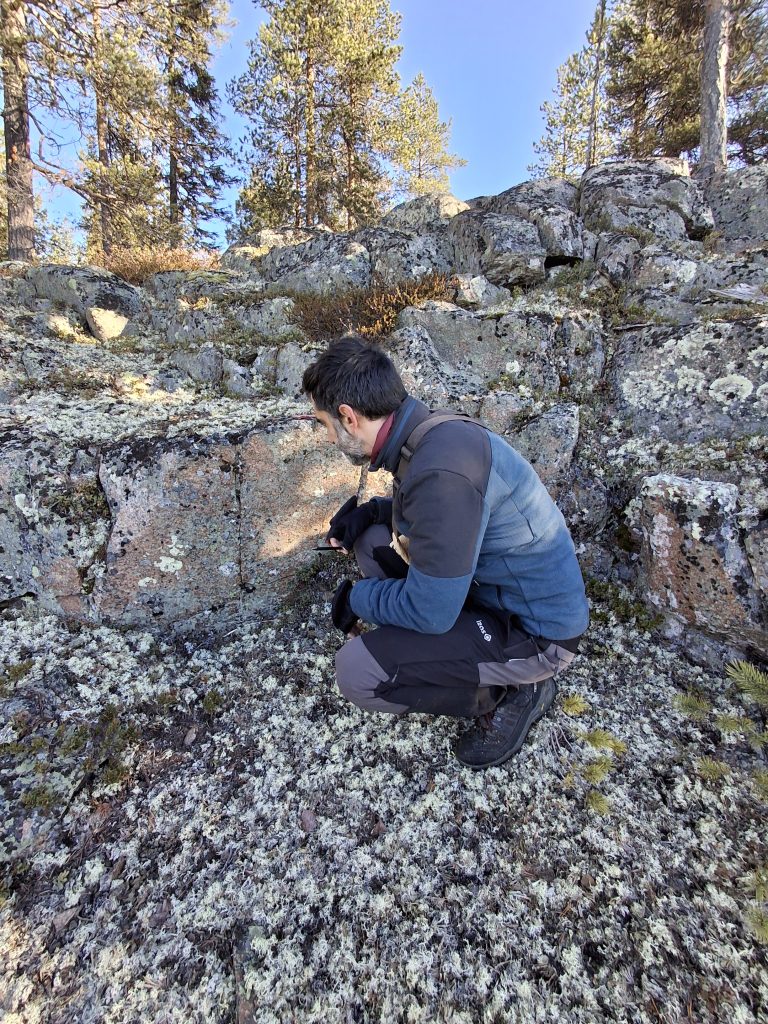
Basin Energy is currently on the ground in Scandinavia, having recently started mapping and reconnaissance sampling over three priority areas that were identified following a review of historic data.
“We currently have ongoing field activities in Sweden and Finland where the team is actively evaluating staking opportunities for the Scandinavian portfolio,” Moorhouse says.
Athabasca Basin: A hotspot for high-grade finds
Meanwhile, the junior explorer – which has a market capitalisation of $2.09 million – is also busy advancing its assets in Canada’s Athabasca Basin, which is one of the world’s most fertile and high-grade uranium hotspots.
Recent early stage drilling at the Geikie Project has identified a significant shallow alteration system showing the hallmarks of an Athabasca basement hosted mineralising system.
Additionally, this winter’s ground electromagnetic survey at Marshall highlighted stacked anomalies typical of unconformity related uranium mineralisation models.
The 339km2 Geikie Project sits adjacent to Atha Energy’s (TSX-V:SASK) Gemini Mineralised Zone discovery, where intersections of 43m @ 0.6% uranium, including 6m @ 2.2% have been reported.
It also sits near Baselode Energy’s (TSX-V:FIND) ACKIO discovery, where drilling has intersected 31m @ 0.9% uranium, including 12.5m @ 1.9%.
The Athabasca Basin is home to several major uranium mines including CanAlaska’s 675-million-pound McArthur River mine and Cameco’s 105-million-pound Millennium Deposit.
The region accounts for around 20% of global uranium supply.
“Canada definitely stands out as a top-tier jurisdiction for uranium exploration and mining,” Moorhouse says.
“Despite challenges such as remote locations and logistical demands, Canada’s advanced mining industry, robust infrastructure, and rising global demand for nuclear energy make it an ideal jurisdiction for uranium projects.
“We have a lot of work ahead of us to continue advancing our Athabasca assets and initiate exploration activities in Scandinavia.”
But Moorhouse is confident of the company’s growth potential in “two of the most important resource sectors for the future of global energy”.
“With strong exploration upside, a clear focus on sustainability, and a proven team, Basin Energy is poised for growth in an increasingly demand-driven market for uranium and green energy metals,” he concludes.
Write to Angela East at Mining.com.au
Images: Basin Energy