


This article is a sponsored feature from Mining.com.au partner Lindian Resources Ltd. It is not financial advice. Talk to a registered financial expert before making investment decisions.
“We believe we are on the cusp of identifying the world’s most significant rare earths project.
Kangankunde looks to be a giant and potentially capable to articulate staged production capacity expansions that could genuinely unhitch the world from the reliance of the Chinese-controlled rare earths market.”
With that arguably bold declaration, Lindian Resources (ASX:LIN) Chief Executive Officer Alistair Stephens is as bullish as he is determined when assessing the opportunity in front of the emerging rare earths miner.
And rightly so.
Lindian Resources has come off a momentous year, emerging as the fourth-best performer of the top 100 Australian Securities Exchange (ASX) listed stocks in 2022, gaining a whopping 353%.
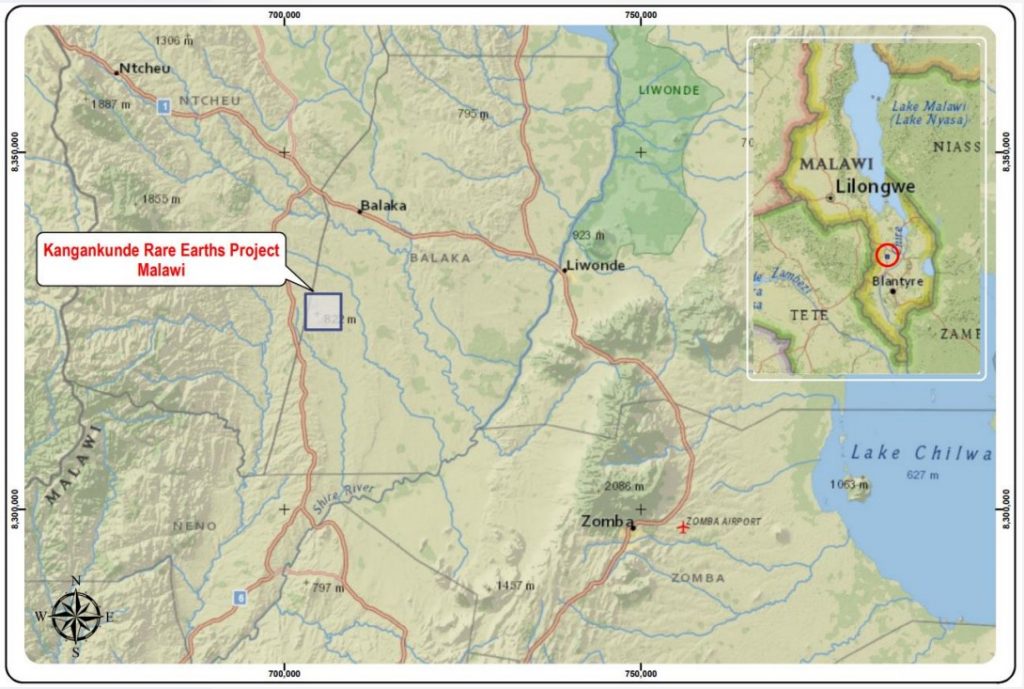
With a market capitalisation of about $245 million and trading at $0.225 per share, the market has reacted positively to its strategic acquisition of the Kangankunde Rare Earths Project in Malawi last year.
“We believe we are on the cusp of identifying the world’s most significant rare earths project”
“It was a great performance by the company in 2022 but I guess we’ve got our work cut out for us to ensure we stay at number 4 this year,” the CEO jokes.
He says from about July when consent was formalised to acquire the Kangankunde project, the company’s valuation has been moving in an upward trajectory.
“When I came on board in August, the market must have liked what we were announcing and the share price started to climb on the back of this acquisition. By the end of September, shareholders approved the acquisition, and the share price climbed supporting market sentiment for the rare earths project. And we vowed to consolidate that by getting into it real hard, real quick, and start development programs – drilling first.”

Like a kid in a candy store, Lindian could not wait to start unwrapping the Kangankunde REE Project, which the company refers to as “The King”. As Stephens notes earlier, it’s a global Tier 1 rare earths project in the making.
“Our plan for Kangankunde is to have the best environmental footprint of any rare earths mine in the world. And the first part of that is that we have a nonradioactive product, and we are working on site to have a zero-carbon footprint operation.”
Maintaining momentum
The CEO says that while Lindian was chuffed with its performance on the ASX last year, it has a lot more work ahead in 2023. In H1 2023, Lindian will work to deliver key drill results, undertake metallurgical testwork, and deliver a mineral resource statement at its flagship project.
He says it’s important to continue the momentum from its resounding success last year.
“What we have been saying is precipitating into actual data so that a yard rule can be placed against us and people can assess the company’s value? And of course, what does the project actually look like and how does it compare?
That’s where we are at the moment. It’s been an interesting transition to say the least.”
Interesting is possibly an understatement.
Lindian has now completed 25% of the mine development drilling at its globally significant Kangankunde Rare Earths Project in Malawi.

The company’s view is that the project has an underestimated position and visual mapping of the carbonatite host, combined with research on historic drill results, and visible monazite mineralisation suggests a major resource capability.
Lindian is also well-capitalised, securing $16 million in December to aid development via a placement. The capital raised is being used to make the second US$7.5 million acquisition payment to Rift Valley Resource Developments that will see Lindian progressively acquire 100% of the Kangankunde Project.
It is now aggressively ramping up mine development drilling and project development engineering works at the project.
League of its own
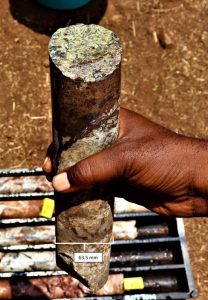
In January, the company received the first assays from the phase one drilling program at Kangankunde. The reported assays for the first two reverse circulation (RC) holes which both contain mineralisation with ‘very high’ rare earths grades, broad intersections of non-radioactive material over the entire lengths of the holes, a large percentage of critical battery metal elements of NdPr.
Assays from these 2 drillholes demonstrate outstanding grades of up to 11.8% TREO
and show continuous rare earths mineralisation over the entire length of holes from surface. The next 4 drill holes in lengths from 97m to 300m had rare earths grade of 2.06% to 2.84% – again consistent mineralisation throughout and demonstrate a large area of consistent high-grade mineralisation.
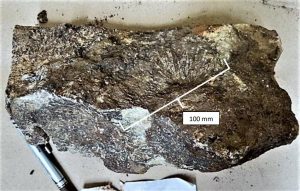
All holes started and ended in mineralisation and some will be extended further with core drilling later in the program.
The mineralisation is dominated by light rare earths cerium (Ce), lanthanum (La), neodymium (Nd) and praseodymium (Pr). The total of Nd and Pr content in oxide form constitutes 21% of the TREO in KGKRC001 and KGRC0002.
Stephens calls these first assay results “absolutely outstanding in terms of grade, distribution and continuity”. And with a steady stream of assays to follow, he remains confident of delivering more of the same and building the case that in 2023 Kangankunde will rapidly emerge as a standout, globally significant rare earths project in terms of grade, scale, non-radioactivity, and environmental footprint.
“I am not aware of another deposit anywhere in the world demonstrating such high grades of rare earths mineralisation over these continuous lengths to such depth”
“(These) results should be regarded as a leading indicator of this. I am not aware of another deposit anywhere in the world demonstrating such high grades of rare earths mineralisation over these continuous lengths to such depth.”
Added to this is the non-radioactivity of the Kangankunde REE mineralisation, which Stephens describes as a highly unique and extremely commercially advantageous characteristic. For one, it has the potential for concentrates to be shipped anywhere in the world, free of Class 7 restrictions or limitations of the communities’ fear of radiation waste from processing plant operations.
The environmental and commercial significance of this cannot be understated.
Commercially advantageous characteristics
The CEO explains that with global supply dominated by China and more countries increasingly seeking to secure REEs elsewhere, the non-radioactivity of the Kangankunde mineralisation is a boon for Lindian.
This underlying supply-demand dynamics of the global market is also part of the growth story of rare elements. Countries seeking net-zero emissions and pursuing carbon abatement strategies is another.
Stephens adds: “This sector is a consolidation of control and supply, with most downstream manufacturing in China, versus the world’s reliance for REE products that are controlled by China.
“There’s now a great push for diversification of supply, which is just the normal supply metrics of any commodity – you want diversity in your supply to minimise your market risk”
There’s now a great push for diversification of supply, which is just the normal supply metrics of any commodity – you want diversity in your supply to minimise your market risk. There’s been a massive push for diversification of supply and downstream processing, outside China. Of course, the other market dynamics are disruptive technologies lowering our carbon footprint and government “disruptive policies” that regulate greener technology.
Magnets were once all ferric magnets. Now they’re becoming rare earth magnets because you get the same magnetic intensity from a product that is substantially smaller. A rare earths magnet is permanent while ferric is not.”
The CEO adds that in carbon abatement strategies, rare earths are also a disruptive environmental push for a lower carbon footprint.
The average hybrid or electric vehicle (EV) uses between 2-5 kilograms of rare earth magnets. Rare earth magnets feature in aspects such as heating, ventilation, and air conditioning (HVAC) systems; steering, transmission, and brakes; hybrid engine or electric motor compartment; entertainment system (speakers, radio); EV batteries; and fuel and exhaust systems for hybrids.
Stephens notes that the high content of NdPr reported in the company’s latest assays is in line with historical work and indicates that the concentrates from Kangankunde will be in high demand with NdPr being used to produce strong permanent magnets critical to global decarbonisation technologies including EVs and wind turbines.
Growth options aplenty
Not all markets for rare earths are created equal, however. For example, LREE such as cerium and lanthanum are ironically mostly used in oil refining – the antithesis of the green technology and decarbonisation movement.
The CEO adds: “These are the types of things that neodymium-praseodymium (NdPr) and others are trying to displace out of the market. While there are other uses for cerium and lanthanum, proportionately the volume of these that are produced far outweigh their market demand.
Neodymium and praseodymium are mostly magnets. And just a little bit of terbium and dysprosium in the NdPR-iron-boron magnet has a multiplier effect in terms of the effectiveness of that magnet.
But terbium and dysprosium are not likely to end up in a rare earth magnet that’s going into an electric vehicle; it’s not that critical. But the pointy end of high-end technology will use them for their extremely small, extremely lightweight, and extremely efficient application. That’s where dysprosium and terbium have their day.”
Moving ahead, Lindian will initially sell a basket of REEs in a monazite mineral concentrate.
Stephens says that as Lindian is a junior (despite its more than 350% growth in 2022), the company will start mineral concentrate production before looking into advance processing downstream later when the Company has the balance sheet.
At the concentrate level, it’s low capital and low risk, easy technology, he says.
“Once a company moves beyond that it’s more of a chemical processing facility than a mining operation. Once you get to refining, you’re then at that stage of really finessed product quality control. When you get to that downstream processing, that’s when you start getting into higher-risk high-end technology.”
At the appropriate point in time, Lindian will actively assess options to enter the downstream side, however that is a long way off for now.
“There’s no structured timeline about any of that at this point in time.”
What looks to be definitive is the Kangankunde Rare Earths Project in Malawi is looking to take the throne as The King.
Long live The King!
Write to Adam Orlando at Mining.com.au
Images: Lindian Resources Ltd & iStock