


Robert Friedland-led Ivanhoe Mines (TSX:IVN) has brought an historic mine in the Democratic Republic of the Congo back into production 100 years after it first came into operation.
Following earlier-than-expected completion of construction of the concentrator at the “ultra-high-grade” Kipushi zinc-copper-lead-germanium mine, first concentrate was produced on 14 June.
The mine, which was mothballed 31 years ago, is expected to produce between 100,000 and 140,000 tonnes of zinc in concentrate this year based on Ivanhoe’s production guidance.
Ivanhoe, which has a market capitalisation of around C$24 billion ($26.2 billion), says Kipushi’s zinc production is forecast to average 278,000 tonnes per annum over the first five years, making Kipushi the fourth-largest zinc mine globally.
Since February 2024 the zinc price has advanced over 30% to US$2,992 ($4,456) per tonne. This has been largely driven by an increase in demand from China and continued supply concerns on the back of declining production.
Offtake agreements for Kipushi’s zinc concentrate have been signed with Hong Kong’s CITIC Metal and Singapore’s Trafigura Asia Trading.
Both companies, along with the First Bank DRC of Kinshasa, have also provided financing facilities of up to C$170 million, with C$50 million drawn down so far.
Ivanhoe expects to ink further supply agreements in the coming months.
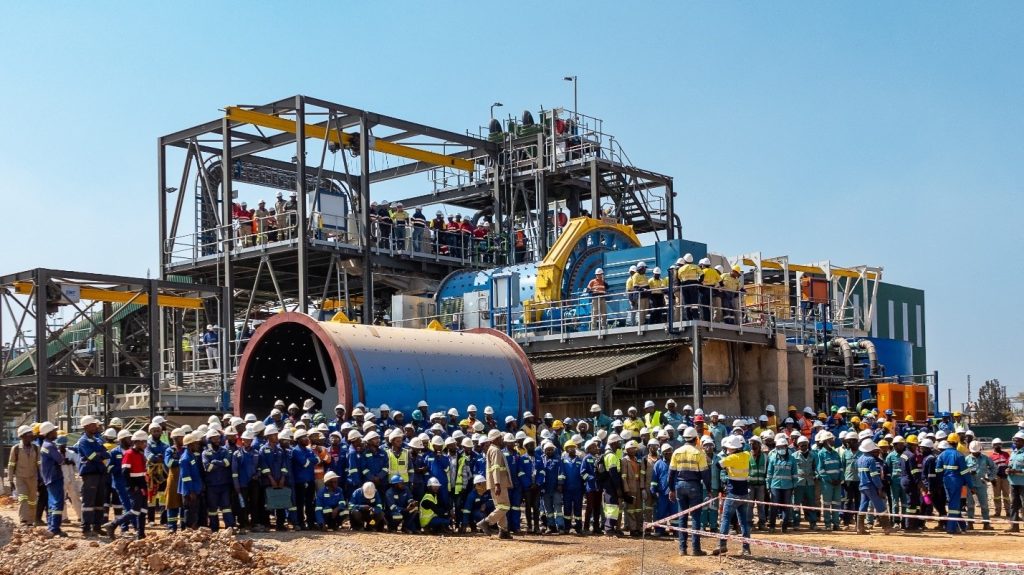
Basic engineering is now underway to increase the annual processing capacity of the Kipushi concentrator by 20% to 960,000 tonnes.
The Kipushi concentrate is expected to contain about 55% zinc, with low levels of impurities. To date, offtake agreements for approximately two-thirds of Kipushi’s zinc concentrates over a five-year term have been agreed.
Ivanhoe says a an updated greenhouse gas emissions assessment recently completed by Skarn Associates confirms that Kipushi will be the “lowest carbon emitter per unit of zinc production in the world”.
This is due to the “ultra-high-grade” Big Zinc orebody, which has an average head grade of over 36% zinc during the first five years of operation.
Ivanhoe says the Kipushi head grade is more than 6.5 times higher than the average head grade of the top 20 zinc mining operations in 2023.
A high head grade means significantly less rock is mined, hauled and milled for the same tonne of zinc produced.

On a scope one and two basis (reported from ore to mine gate), Kipushi’s greenhouse gas emissions intensity for 2025 is expected to be 0.019 equivalent tonnes of carbon dioxide per tonne of contained zinc produced.
Ivanhoe says this comfortably ranks Kipushi near the bottom of the scope one and two greenhouse gas emissions curve.
The Kipushi Mine is owned and operated by Kipushi Corporation SA, which is a joint venture company owned 68% by Ivanhoe subsidiary Kipushi Holding and 32% owned by DRC-controlled trading and mining house Gécamines.
Write to Angela East at Mining.com.au
Images: Ivanhoe Mines