



Copper mining is among one of the most carbon-intensive activities in the resources sector, generating an estimated 80 million tonnes of carbon dioxide (CO2) annually.
Yet as copper becomes increasingly critical to electrification and the global energy transition, producers face mounting pressure to reduce the environmental impact of extracting the metal.
The challenge is significant. McKinsey & Company reports that mining accounts for 4–7% of global greenhouse gas (GHG) emissions.
In response, major mining jurisdictions and companies are implementing their own ambitious climate targets, as well as investing in technologies and operating models designed to improve efficiency and lower emissions.
In part two of this three-part copper series, this new service examines how mining companies and technology providers are responding to the carbon challenge of copper extraction.
According to Ausenco, countries such as Australia, Brazil, Canada, Chile, Mexico, and Peru have committed to reduce GHG emissions by 35–45% by 2030.
Ausenco digital solutions and decarbonisation lead Gerson Bastos says every mining project has potential to move towards more efficient design and operation, with a lower carbon footprint.
“Our goal is to support our partners in the mining sector with consulting and engineering solutions that enable them to convert that potential into measurable results,” Bastos says.
However, not everyone believes carbon reduction should be viewed in isolation. As Meridian Mining (LSE:MNO) CEO Gilbert Clark says, environmental performance should be assessed more broadly.
“There are three fundamental investment rules: clean air, clean soil, and clean water,” Clark tells Mining.com.au.
“Everything else will flourish around it. I’d like to say we’re going to be carbon neutral, but we cannot. We’ll be running trucks, the diggers will be using diesel — all we can do is limit our impact.”
What drives lower emissions production?
One of the most effective pathways to reducing mining emissions is access to renewable energy.
According to S&P Global, mines in the first decile of the 2024 emissions curve produced less than 800kg of CO2 per tonne of copper. More than half of these mines are located in Africa and Latin America, connected to grids with large shares of renewable sources.
The International Energy Forum (IEF) reports that shifting to renewable energy sources is significant when it comes to cutting emissions at mine sites. Globally, 1 gigawatt (GW) of renewables is already operational at mining sites, with another 1GW in development.
Chile, the world’s largest copper producer, exemplifies this trend. Wind and solar accounted for nearly one-third of the total electricity generated in 2024, as reported by S&P Global.
Of these mines in the first decile, 80% have head grades above the 2024 average of 0.55%, which highlights how ore quality can influence overall carbon intensity.
Similar advantages are evident elsewhere across the world.
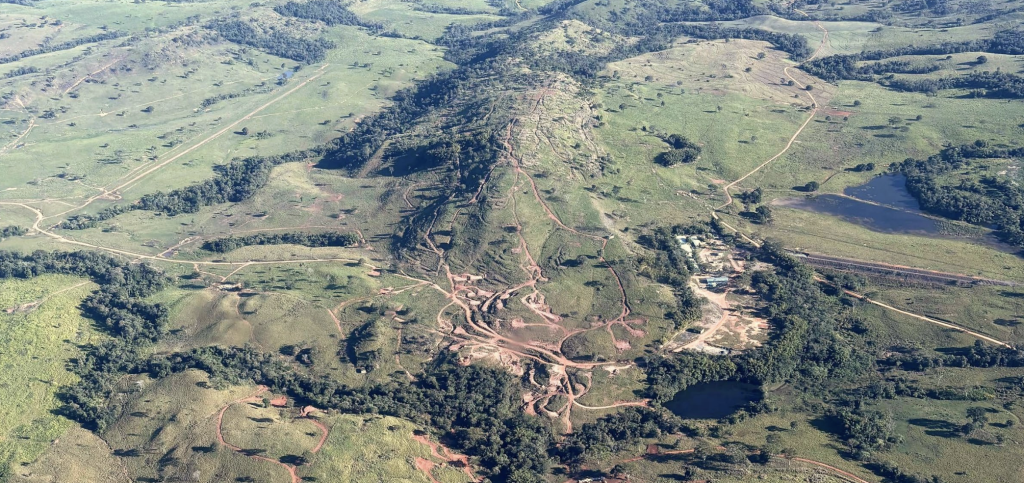
In Brazil, where Meridian Mining is advancing its Cabaçal Gold-Copper-Silver Project towards a final investment decision, Clark says abundant hydroelectric power delivers environmental and economic benefits.
“We benefit from the fact that Brazil is about 90% hydroelectricity,” he explains.
“That is a strong grid for wind and because there is so much of it, our power costs are incredibly low,” he tells this news service.
“I think you’re looking at around US$0.05 ($0.07) per kilowatt, while in Western Australia, you’re probably looking at circa US$0.40 per kilowatt for any of the gold mines in the Eastern Goldfields.”
A lower carbon alternative
Alongside renewable energy, miners are increasingly turning to alternative extraction methods that avoid some of the most energy-intensive stages of primary mining.
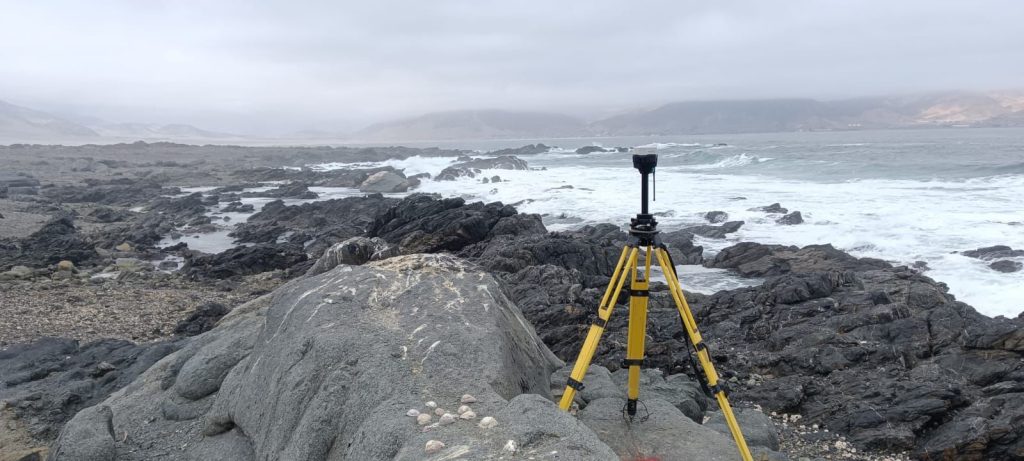
Halo Minerals (AIM:HALO), which owns the Playa Verde Project in Chile, is among a growing number of companies focusing on reprocessing historical mine tailings rather than developing traditional open-pit or underground operations.
As previously reported, the company is nearing the completion of an optimised Definitive Feasibility Study for Playa Verde.
Playa Verde’s initial mineable resources and reserves total 34.2 million tonnes to produce 60,329 tonnes of refined copper. The mine plan is based on dredging and processing 5 million tonnes annually, with an overall metallurgical recovery of 72%.
Speaking to Mining.com.au, CEO Andrew Dennan explains that Halo’s strategy is anchored around environmental, social, and governance (ESG), focusing on tailings reprocessing.
“There are a number of benefits for us to focus on tailings as opposed to primary mining,” Dennan says.
“The ESG benefits for that are the fact that we get to reduce the expanding footprint of mining because we’re doing it within a contained site that has already had these types of activities done.
“We’re dealing with a resource that has already been blasted, extracted, crushed, and processed. So, we get to get away with a lot of the energy-intensive processes that the primary mines need to go through and we’re mostly dealing therefore in processing technologies.”
Halo is also evaluating solar power to supplement operational energy requirements.
“So we can use the opportunity of the sun to fuel the operations and reduce our burden on the electricity grid,” he tells this news service.
“We’re not having to put as much stress on the grid at the same time as well, and we get to lower the carbon footprint per tonne of copper mined as a result of all this because we’re doing it with lower greenhouse gases to basically produce the same amount of metals as what a primary mine would do.”

Efficiency gains
Other copper operations are achieving low emissions through a combination of innovative mining methods and cleaner energy sources.
In Chile, Amerigo Resources’ (TSX:ARG) Minera Valle Central tailings retreatment operation reports an emissions intensity of 275kg CO2 equivalent per tonne of payable copper, despite extracting material of a lower grade.
The company’s hydraulic mining operations are remotely operated, with some ore only needing to undergo grinding before being fed into the flotation circuit. The mine is connected to Chile’s national grid and sources almost all its electricity from renewable power under a long-term supply agreement, as reported by S&P Global.
Beyond Chile, Ivanhoe Mines’ (TSX:IVN) and Zijin Mining Group’s (SHA:601899) Kamoa-Kakula operations in the Democratic Republic of the Congo (DRC) boast low emissions intensity.
The underground mine uses drift-and-fill methods, and the ore is transported by a system of conveyor belts toward its processing plant. The mine sources all its power from hydropower in the DRC.
As copper demand continues to grow alongside the energy transition, reducing the emissions associated with its production is becoming more important.
While the industry remains inherently energy intensive, miners are demonstrating that reductions can be achieved through renewable energy adoption, operational efficiencies, and innovative approaches such as tailings reprocessing.
As these strategies continue to evolve, they are likely to play an even greater role in shaping the future of copper.
In the third part of this copper series, Mining.com.au will turn its attention to copper as a whole and what the critical mineral’s market looks like now and in the future.
Write to Aaliyah Rogan at Mining.com.au
Images: Mining.com.au, Meridian Mining, Halo Minerals, & Ivanhoe Mines


