


Analysis of the International Council on Mining & Metals (ICMM) members’ 2025 disclosures shows that implementing the Global Industry Standard on Tailings Management (GISTM) is taking more time than initially anticipated.
While significant progress has been made, achieving full alignment with GISTM remains a work in progress. ICMM recently published its Tailings Progress Report, which sets out the progress its members have made in implementing GISTM.
The report aggregates data from members’ individual disclosures made in 2025, offering a transparent snapshot of collective progress towards full conformance. It also includes case studies of members’ implementation efforts and their wider work to reduce or eliminate tailings.
When the GISTM was first published in 2020, the council’s members committed to all applicable tailings facilities with an ‘extreme’ or ‘very high’ consequence classification conforming with the GISTM by August 2023 – and all other applicable facilities by August 2025.
This commitment galvanised immediate and sustained action by ICMM members. Out of the total of 836 ICMM member facilities, 67% are in full conformance with GISTM, while 33% remain in partial conformance.
“Having made the decision to prioritise implementing the GISTM at tailings facilities that would have the highest consequences downstream in the event of a failure, ICMM members have made the greatest progress with the facilities classified as ‘extreme’ and ‘very high’ consequence, with over 80% of ICMM member ‘extreme’ and ‘very high’ consequence classification facilities in full conformance,” ICMM reports.
‘High’, ‘significant’, and ‘low’ consequence classification facility conformance ranges from 53-65%.
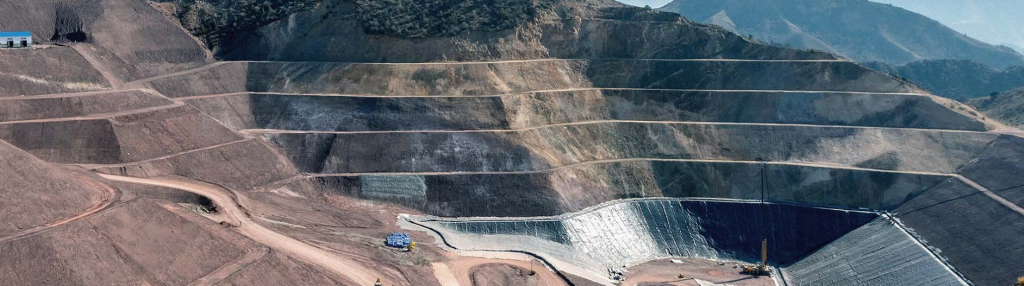
Thousands of tailings dams
Used to store waste rock and other materials left over after processing, there are thought to be thousands of tailings dams at mine sites globally. They may consist of solid or liquid waste, and some contain elements that are toxic, such as arsenic and mercury.
A study published in Engineering Geology in 2022 shows almost 260 tailings dam failures have been recorded since 1915, accounting for 2,650 fatalities and the release of 250 million cubic metres of contaminated waste into the environment.
Notably, almost half of that waste — roughly 115 million cubic metres — has been released since 2000. The study shows heavy rainfall is estimated to have triggered 25% of tailings dam failures globally, and 35% of collapses across Europe.
ICMM says it remains committed to driving collective progress in the safer management of tailings through fostering collaboration and facilitating shared learning across the industry.
The council’s Director Emma Gagen says the system level change within companies that it has driven is unprecedented – fundamentally reshaping how tailings facilities are managed, and requiring significant resource and time.
“However, the criticality of the issue means we need to set a high bar and embrace challenges as an opportunity to share knowledge across the whole industry,” Gagen says.
“The journey to safer tailings facilities and conformance with the GISTM doesn’t have an end point. Tailings management is inherently a process of continuous improvement, and we are encouraged by the significant progress each company has made so far.
“Successful outcomes will be built not only on unwavering long-term commitment by companies, but also from close collaboration between the industry, financiers, government, civil society and local communities.”
The report does not provide company-level information or the conformance status of individual facilities – this data is available through each company’s individual disclosures.
In late 2019, ICMM, the UN Environment Program (UNEP), and the Principles for Responsible Investment (PRI) convened a panel of experts and tasked them with conducting a global tailings review.
The result was the Global Industry Standard on Tailings Management, which, above all, “makes clear that extreme consequences to people and the environment from catastrophic tailings facility failures are unacceptable”.
Following the convening of that panel, Bruno Oberle, Chair of the Global Tailings Review, in 2020 said the “catastrophic dam collapse” at Vale’s (NYSE:VALE) Corrego de Feijao mine in Brumadinho was a human and environmental tragedy that “demanded decisive and appropriate action” to enhance the safety and strengthen the governance of tailings facilities around the world.
Oberle had hoped the standard would be supported by an independent body, which could maintain its quality and further strengthen it over time. One of the challenges faced by the GISTM is the fact that not all tailings facilities are equal.
According to Oberle, the catastrophic dam collapse at Vale’s Corrego de Feijao mine “was a human and environmental tragedy that demanded decisive and appropriate action to enhance the safety and strengthen the governance of tailings facilities across the globe”.
A key feature of both the Samarco and Brumadinho incidents was that they occurred in mountainous regions, where space for tailings facilities is limited.
In the aftermath of the tragedy, in October 2024 the Brazilian Government signed a 170 billion reais ($45 billion) compensation agreement with mining giants BHP (ASX:BHP), Vale, and Samarco for the 2015 Mariana dam collapse – one of Brazil’s worst environmental disasters.
The agreement includes payment of 132 billion reais, in which 100 billion reais represent “new resources” to be paid to public authorities within 20 years by each company involved in the disaster.
The dam’s collapse at the Samarco-owned iron ore mine near the city of Mariana, unleashed a massive wave of tailings in a disaster that killed 19 people, left hundreds homeless, flooded the area, and polluted much of the Doce River.
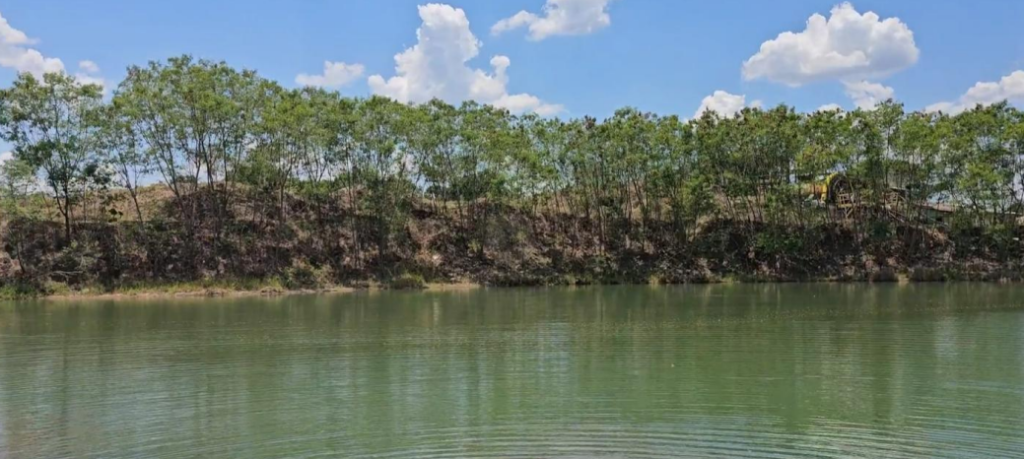
From failings to tailored tailings
If the Samarco disaster didn’t adequately raise the risks associated with tailings dams into the public consciousness, then the collapse at Brumadinho in early 2019, which killed 270 people certainly did.
In the years that followed mining companies have increasingly become aware of the dangers of the risks associated with tailings dams, and many are incorporating best practices when addressing these issues.
As a recent example, on 20 November Raiden Resources (ASX:RDN) executed a binding agreement that grants it the right to acquire an 85% commercial interest in the Crixás Gold Tailings Project in Goiás State, Brazil.
The Crixás Gold Tailings Project is located 5km from the town of Crixás and 450km north-west of Brasília, the capital of Brazil. The project lies within an established mining district that hosts the Serra Grande operation, a major hard-rock gold mine by AngloGold Ashanti (NYSE:AU) (sale to Aura Minerals recently agreed), which has a long history of gold production.
Raiden Managing Director Dusko Ljubojevic says Crixás represents one of the most compelling near-term production opportunities Raiden has assessed to date.
“The tailings are the result of decades of inefficient artisanal processing, leaving a large volume of material that has not been systematically evaluated,” Ljubojevic says.
“Combined with the existing infrastructure on site, Raiden believes there is strong potential to rapidly advance the project towards a low-capex, gravity-dominant reprocessing operation.”
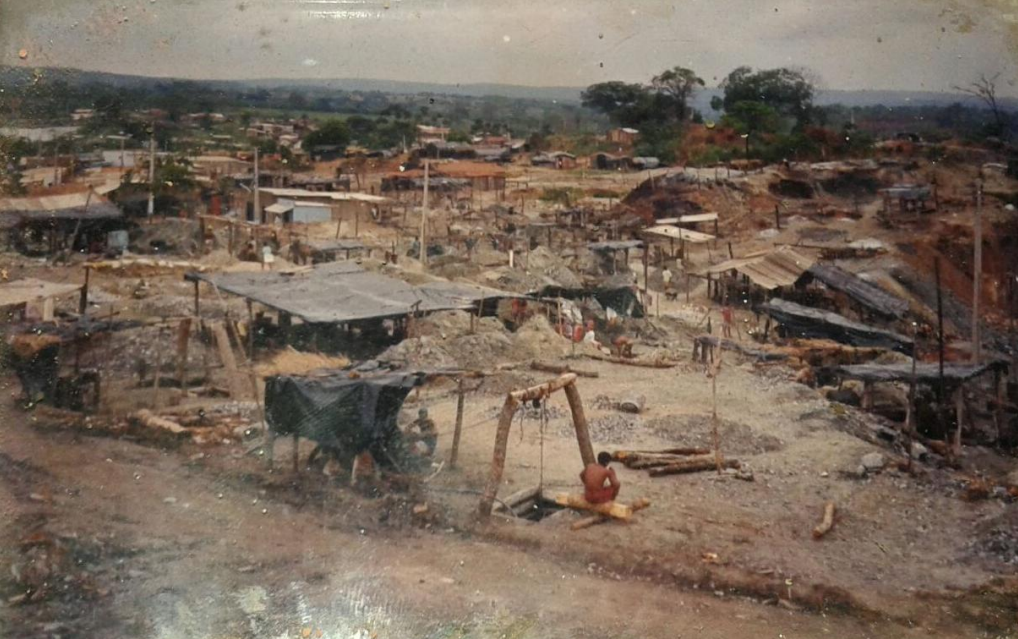
Intense artisanal mining
The project encompasses an area of 28.79 hectares. The tailings are the result of intense artisanal mining (garimpeiro mining, pictured above), which took place from the 1980s through to around 2007, where an estimated 10,000-12,000 miners converged on an area known as the “Lavra”.
Upwards of 380 shafts descending up to 100m were developed. Hammer mills were used to crush the ore into coarse sands to extract the gold. Raiden says this processing methodology is considered to be highly inefficient by today’s standards.
Historical data and records indicate that over 9 tons of gold was produced. However, actual production is suspected to be significantly higher, on the basis of existing volumes of tailings.
“The resultant tailings have been deposited as a broad valley-fill in a local creek system and extend over a substantial surface area”
At its height, Raiden Managing Director Dusko Ljubojevic notes there were believed to be over 1,000 hammer mills working day and night. The artisanal miners were focused on exploiting narrow, but high-grade gold bearing veins, which is supported by more recent drilling in the district which was targeting source mineralisation.
This indicates that even with modest recoveries, only a fraction of the gold would have been recovered by available technology and would likely be the coarse gold fraction size.
“It is estimated that the recovery rates by the artisanal miners were very poor, due to the technology that was utilised. The resultant tailings have been deposited as a broad valley-fill in a local creek system and extend over a substantial surface area,” Raiden reports.
It should be noted that there is no tailings dam and the tailings are concentrated by the topographical relief only. Raiden says the tailings are considered the residue of roughly 25 years of artisanal mining and form a series of sand-dominated deposits, with the true thickness and volume estimations still to be accurately determined.
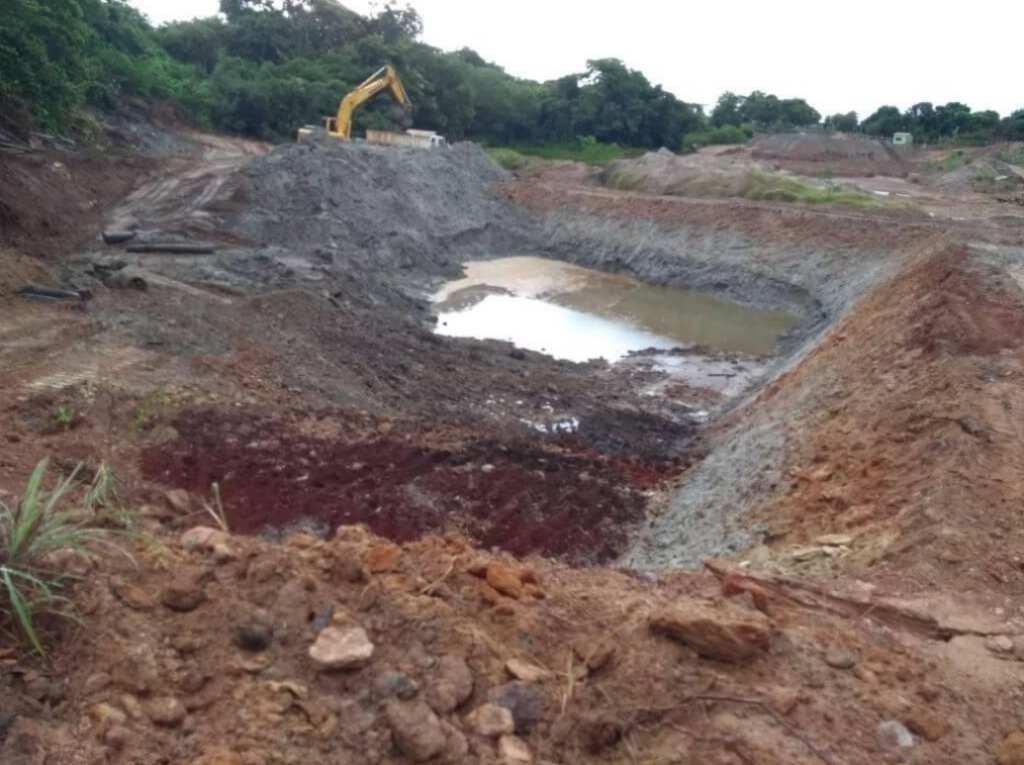
Deeper trenches and previously executed drillholes indicate that tailings may be present to depths of at least 10-15m in places, with one drillhole reportedly being over 18m without having reached the bottom of the deposit.
On the basis of the evaluation of project area, available historical information and information conveyed by the vendor’s representative, the projects can be categorised into three categories.
The first being ‘recent tailings’, which were reprocessed by the previous owner/operator of the 30tph ball mill and plant (minor in quantity in relation to overall deposit);
Secondly, ‘upper tailings’ – estimated at upper 5-8m of the deposit, were reprocessed by the artisanal miners. Raiden says this would have been done through similar methods as original processing; and not efficient at recovering the finer gold fractions.
Thirdly, ‘primary tailings’ were subject to only a single round of historical stamp mill processing and anticipated to be coarser in nature and to contain the highest grades (which needs further verification).
During the site visit, Raiden undertook very limited technical verification, in the form of ‘panning’ of a small quantity of tailings from several locations. This involves manually water washing a small volume of material using artisanal pans.
The panned material sampled was from the ‘recent tailings’ and from the ‘upper tailings’, both of which underwent multiple reprocessing cycles. Of note is that in all samples, visible, fine gold was noted, suggesting that previous reprocessing of the primary tailings failed to recover a significant amount of free, fine grained gold
Raiden says its focus now is to finalise the technical work required as part of an evaluation process, to optimise the flowsheet and to determine whether a 100tph processing solution could support robust operating margins on a capital efficient basis.
“The commercial structure of the transaction is highly favourable for Raiden, aligning the vendor with project performance while preserving our balance sheet through minimal upfront cash commitments and minimal dilution to shareholders in terms of equity,” the company says.
“We believe Crixás fits squarely within our strategy of securing opportunities capable of delivering meaningful per-share value uplift for shareholders. It complements our review of further gold and copper opportunities, which remain underway as part of our corporate strategy.”
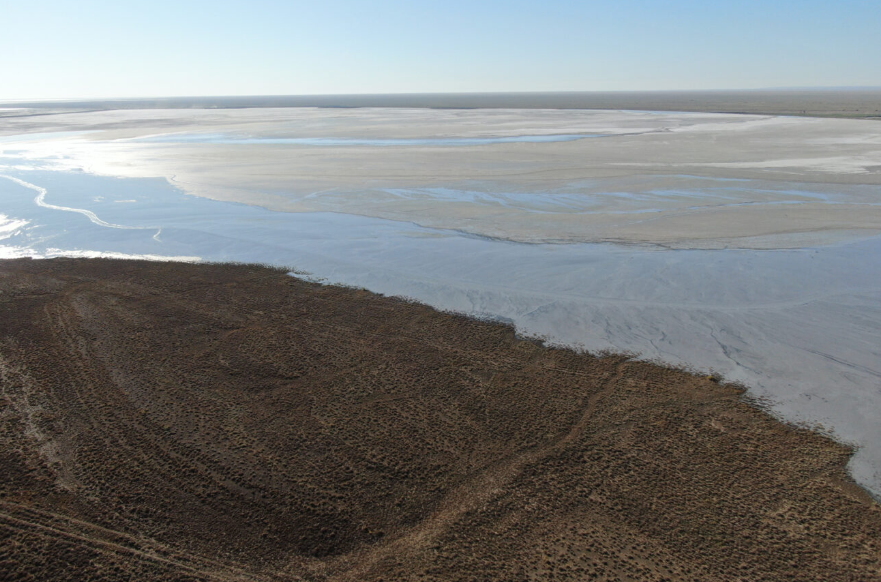
ABC of tailings storage: ATC Williams
The Aktogay copper mine located in the eastern region of Kazakhstan is KAZ Minerals’ largest operation and in 2024 continued with the two sulphide concentrators processing a combined 58.3Mt of ore, 17% higher than the combined design capacity of 50Mtpa.
KAZ has engaged tailings, waters, and waste management specialists ATC Williams to handle Aktogay’s tailings and waste (picture above).
Tailings production is 50Mtpa, which is poised to increase to 60Mtpa in 2025 from two tailings plants. An Option Study, Life of Mine Study, and Basic Design of the tailings storage facility (TSF) was undertaken in 2012 followed by Detailed Design of stage one.
A Central Thickened Discharge (CTD) scheme was proposed for the tailings deposition into the TSF to be used over the life of mine.
Since commissioning of the TSF in 2017, ATC Williams has provided technical support during operation and construction, including water balance model and updates; operation manual and updates; monthly tailings deposition updates; and supplementary geotechnical investigation.
Life of Mine studies of the TSF were recently updated following the expansion and increase in tailings throughput of the tailings storage facility. ATC Williams is preparing a new annual construction plan for the purpose of long-term planning.
Taking a Doubleview
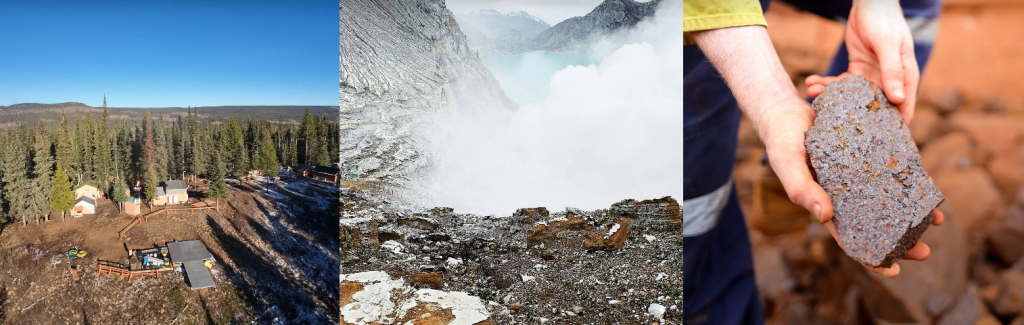
Meanwhile, Doubleview Gold (TSX-V:DBG) has received positive first-phase pre-optimisation results from its two-year, novel scandium-focused metallurgical test program.
The results confirm the technical viability of recovering high-purity scandium oxide alongside copper, gold, cobalt, and other metals from the company’s 100% owned flagship HAT polymetallic deposit in northern British Columbia.
Doubleview says this “breakthrough development” marks a global first – the recovery of scandium from copper porphyry flotation tailings to a scandium oxide product.
The primary objective of this extensive test program, conducted at SGS Canada, was to establish a viable proprietary flowsheet enabling scandium to be included in the upcoming, updated mineral resource estimate and preliminary economic assessment, potentially as measured, indicated, or inferred resources.
The maiden resource estimate in July 2024 highlights a scandium potential of 300-500 million tonnes grading 40ppm Sc2O3.
Early metallurgical test work demonstrated that scandium could be extracted from copper flotation tailings. Subsequently, through an innovative robust testwork program at SGS Canada, it has been demonstrated that scandium in flotation tailings can be recovered to a high purity di-scandium tri-oxide product (Sc2O3).
Future work to advance the Hat project will focus on continuous pilot plant testing and further optimisation to improve primary extraction and enhance final product purity.
Doubleview Gold CEO Farshad Shirvani says these results are a game-changer for the HAT project and potentially for the entire scandium industry on the world stage.
World scandium supply is severely limited although there are several scandium projects currently being considered for development.
“Our metallurgy program shows that at HAT, we can recover high-value scandium directly from the tailings of a standard copper flotation circuit, using acid produced from internally generated pyrite,” Shirvani says.
“If the HAT project advances to production, scandium could become a high-margin bonus on top of a potential world-class copper-gold-cobalt operation.”
Now the company has established the technical viability of scandium recovery, the next steps will focus on pushing extraction and overall recovery as high as possible through continued optimisation and pilot-scale testing.
Doubleview plans to continue its metallurgical optimisation program to enhance the recovery of scandium and other metals, including copper, cobalt, gold, and silver, which are critical for the upcoming Prefeasibility Study.
Write to Adam Orlando at Mining.com.au
Images: Doubleview, ICMM & Raiden