


This article is a sponsored feature from Mining.com.au partner Gunnison Copper. It is not financial advice. Talk to a registered financial expert before making investment decisions.
Gunnison Copper (TSX:GCU) has emerged as America’s newest copper producer, marking its entry into the US copper market with a bold, focused strategy.
Gunnison is a pure-play copper company, with a ‘Made in America’ focus, and that clarity of purpose resonates with investors seeking exposure to domestic copper opportunities.
The Gunnison story is also attracting attention with the US government. The company was recently awarded a US$13.9 million tax credit (a 48C tax credit) for producing copper cathode on US soil. With the current drive to reshore critical minerals and strategic metals for supply chain security, Gunnison’s US focus is set to accelerate its strategic importance, positioning the company as a cornerstone in America’s push for domestic copper production and supply chain resilience.
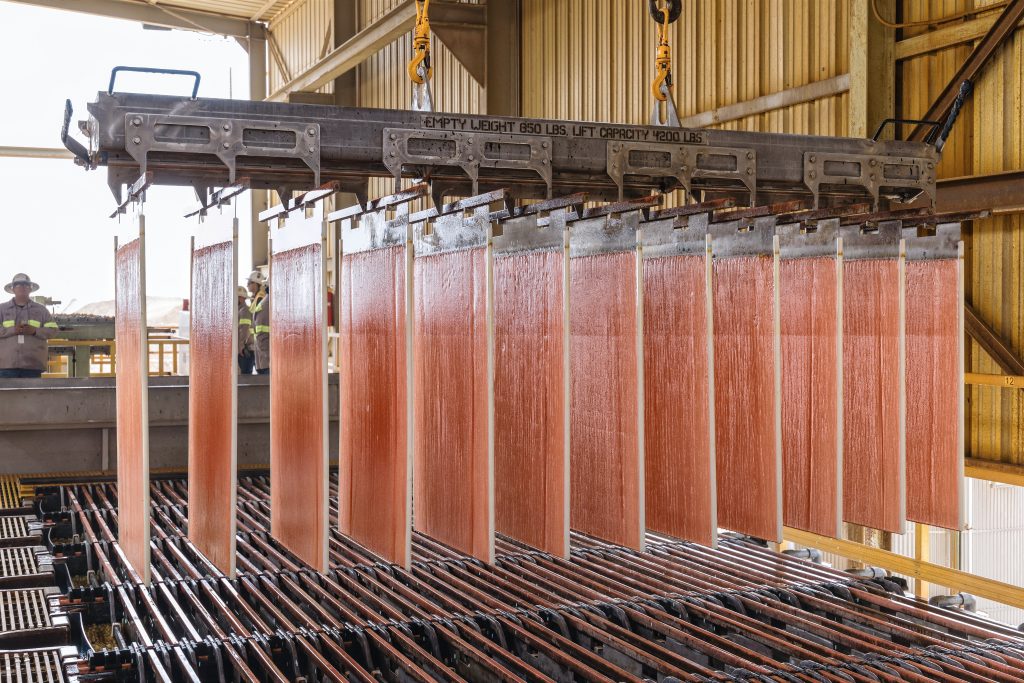
The company began producing copper at its Johnson Camp mine in August 2025 from run-of-mine ore, before transitioning to Nuton’s bioleaching technology in December 2025.
Nuton, a Rio Tinto (ASX:RIO) venture, invested approximately $167 million to prove out its bioleaching technology with the Johnson Camp mine restart. Repayment to Nuton will be structured through Johnson Camp’s cash flows through mid-2030, at which point the project will be wholly owned by Gunnison.
Melissa Mackie, Director, Investor Relations and Communications for Gunnison notes that the company has been receiving a lot of attention for the Johnson Camp project on the back of the recent news of the strategic collaboration between Nuton and Amazon Web Services (AWS).
Under this agreement, AWS will be utilising Nuton’s copper for their US data centers, while also providing cloud-based data and analytics to help accelerate the optimisation of Nuton’s proprietary bioleaching technology for Johnson Camp.
“This announcement sparked a lot of interest, not only at Johnson Camp, but for Gunnison as a whole,” Mackie says.
“What we’re trying to do now is pivot the attention from Johnson Camp to our flagship Gunnison Project, because that’s where we see a lot of the value for the company.”
The Gunnison Project is a larger-scale development project, at preliminary economic assessment (PEA) level. Mackie notes that this project is about eight times the size of the Johnson Camp mine.
While Johnson Camp is producing approximately 25 million pounds per year of copper, Gunnison, while at PEA, is projected to produce approximately 174 million pounds of copper per year, for the first 15 years of its 21 year mine life.
“Gunnison has the ability to produce over 11% of America’s current domestic copper demand,” Mackie says.
“It’s a large-scale project that will really bring more interest and opportunities for us now.”
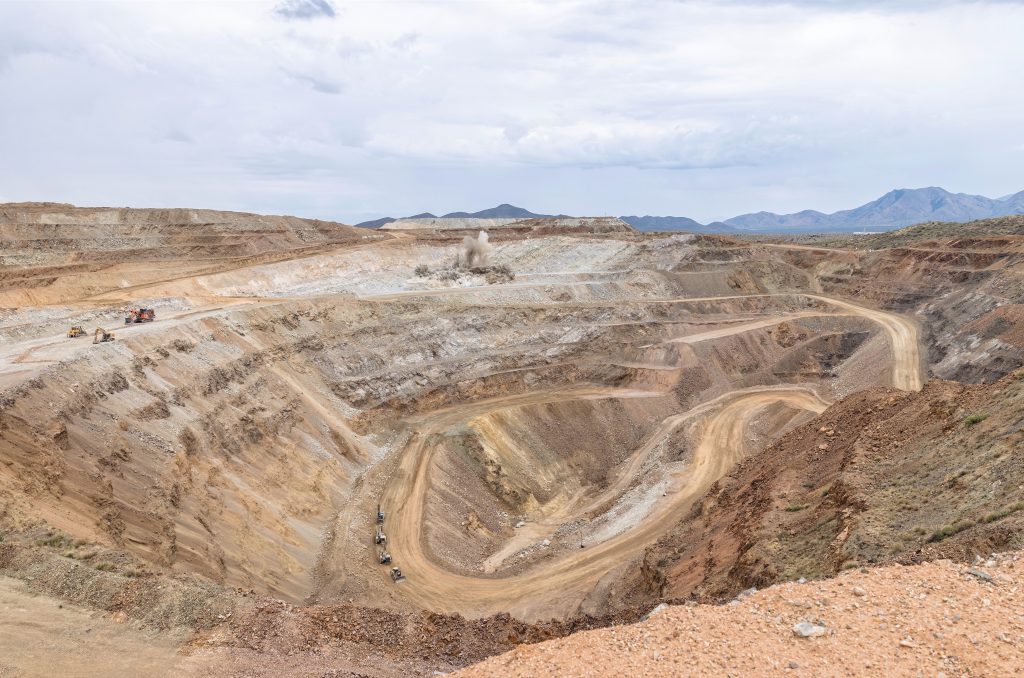
Gunnison: Arizona’s next large-scale copper development
Both Gunnison and Johnson Camp are based in Arizona, the copper state, in the Cochise Mining District, a significant copper jurisdiction. Mackie explains that approximately 70% of US copper supply comes out of Arizona.
The region is incredibly supportive of the mining industry, with communities that rely on the mines for jobs and economic growth, and key infrastructure in place.
The Gunnison project was previously being pursued as an in-situ recovery (ISR) program with its former owner, Excelsior Mining. With Gunnison Copper now, they plan to pivot the project to open pit.
Gunnison released headlines for an updated open pit PEA on the project in February 2026. Mackie explains that this PEA shows great economics, with a net present value at an 8% discount rate of $2 billion, a 2% IRR, and just under a four-year payback period.
The project is outlined as open-pit, heap leach and solvent extraction-electrowinning, which is a more cost effective and efficient method for extracting copper.
The company has also outlined a straightforward mine plan consisting primarily of oxide copper mineralised material with a life of mine material placed on the leach pad of 541 million tonnes at 0.43% total copper grade, including 25 million tonnes at 0.85% total copper grade from the Strong & Harris satellite deposit.
Mackie notes that when the company released the initial PEA in December of 2024, they knew that they could improve on the economics.
“Throughout 2025, we executed on what we called our high-value optimisation program — focused on improving grade, reducing costs, and unlocking additional revenue streams,” Mackie says.
In the updated PEA announcement on 25 February 2026, CEO Stephen Twyerould comments, “the updated PEA underscores the scale and compelling economics of the Gunnison Copper Project, positioning it as a significant future supplier to the American copper market and a key contributor to the domestic supply shortfall”.
“At a consensus copper price of $4.60 per pound, the project delivers an after-tax NPV8 of approximately US$2 billion, a 23% IRR, and an attractive 3.9 year payback, positioning Gunnison as one of the most financially compelling copper development projects in the United States.
“Importantly, 83% of the $692 million increase in NPV8% versus our 2024 preliminary economic assessment study is driven by operational enhancements within our control, including the addition of the high-grade Strong & Harris satellite deposit, material sorting, cement and limestone co-products, and optimisation initiatives.
“With average annual production of 174 million pounds of 99.999% pure copper cathode in the first 15 years, lower-half-of-the-cost-curve operating metrics, and significant leverage to copper prices, we believe Gunnison offers shareholders meaningful exposure to a large-scale, long-life US copper asset as we advance toward Prefeasibility, permitting, and project financing.”
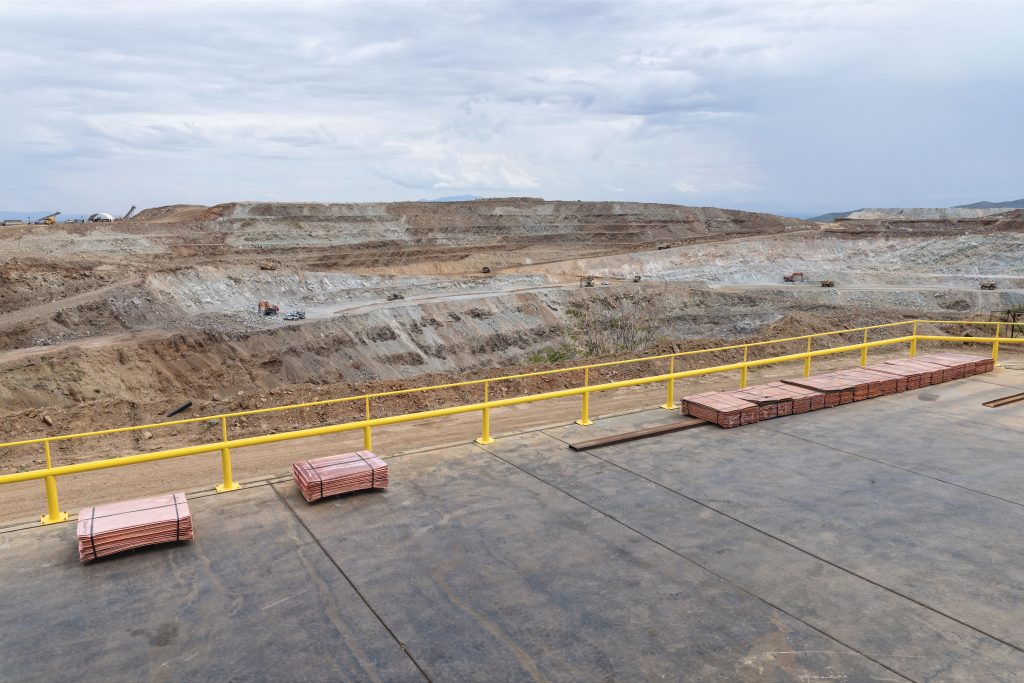
Permitting and Prefeasibility targets
The company has begun the process of amending the permit for Gunnison, giving themselves between 18-24 months to complete these in full, as well as the Prefeasibility Study (PFS), which is the next big step.
Mackie explains the coming workflow. “We have some metallurgical work that we need to do on Gunnison, additional in-fill drilling that will begin once the updated PEA is out.”
“Conservatively, we believe that we can get that all completed within a 24-month timeframe, derisk the project to that PFS permitting level, and then ultimately transact the company at the end of the 24 months to either a mid-tier or a private equity company, and capture that M&A multiple.”
Economic impact and regional engagement
The University of Arizona conducted an economic impact study projecting multi-billion-dollar benefits from Gunnison, highlighting job creation, tax revenues, and broader state and national benefits.
Mackie notes how positive this was for the project. It is also instrumental in the company’s pursuit of government funding.
“That study has really highlighted the economic benefits that this project will have, not only on the communities in Cochise County, including Benzon and Willcox, who stand to gain from employment and infrastructure development.”
In terms of funding, Mackie notes that the company is in a very healthy financial position, having eliminated US$15 million in secured debt with Nebari.
Greenstone, was Gunnison Copper’s largest shareholder at 34%, privately placed its block as its 10-year fund was winding down, as reported. This transaction brought several new institutional investors into the story, broadening Gunnison Copper’s institutional shareholder base.

Surging demand backed by government initiatives
Copper demand is surging, Mackie says, driven by electric vehicles, renewable energy, and perhaps most importantly, data centers, with a widening gap between supply and demand.
“The defense demand is also huge right now,” Mackie explains how the US Department of War is putting a lot of money into key metals used for defense applications.
Gunnison Copper’s ability to produce copper cathode on US soil, without reliance on overseas refining, positions it favourably in this strategic landscape.
“From a macro perspective, we can only see copper demand increasing at this point. Gold’s had a huge run, silver’s had a huge run, and we’re looking at copper as the next metal in line,” Mackie says.
The Trump administration is also incredibly supportive of the industry at the moment, with new funding opportunities and smoother permitting processes.
2026: Growth, production, and PFS milestones
Gunnison Copper is planning for a busy year ahead, starting with the updated PEA released this week.
The company will be ramping up production at Johnson Camp, looking to hit commercial production by mid-year.
Mackie notes that once the private placement of the Greenstone block is wrapped, the company will be starting on the PFS and updating the market as that progresses.
Company management is committed to marketing and investor engagement will ensure that there’s visibility on the projects and their progress as they develop clear paths forward at both Gunnison and Johnson Camp.
Write to Amy Rotman at Mining.com.au
Images: Gunnison Copper and Mining.com.au