Mining operations are something we discuss a lot on Mining.com.au, whether companies are extracting gold, copper, or lithium.
Regular readers may be across BHP Group’s (ASX:BHP) Olympic Dam in South Australia or even Vertex Minerals’ (ASX:VTX) Reward Gold Mine in New South Wales, but recently, we have been diving into a different kind of mineral exploration: gemstones.
Gemstones and traditional commodities are not often grouped together, as they serve very different purposes in the modern world.
However, when it comes to mining, exploration and extraction often require similar methods, whether it’s open-pit mining for topaz or gold, or even underground mining for lapis lazuli.
Like many gemstones covered by this news service, lapis lazuli has longstanding ties to ancient civilisations, including Mesopotamia, Egypt, China, Greece, and Rome.
The lapis lazuli mines of Sar-e-Sang (sometimes referred to as Sar-i-Sang or Sary-Sang), in the far northeast of Afghanistan, are among the oldest deposits on Earth, according to the International Union of Geological Sciences (IUGS).
Located in Afghanistan’s Hindu Kush Mountains, Sar-e-Sang has been mined for lapis lazuli for more than 6,500 years.
The deposit is part of a mining district that has been worked by humans for more than 10,000 years and features what the IUGS describes as “spectacular” outcrops of lazurite.
Lazurite is a mineral of the sodalite group and the primary component responsible for the blue colour of lapis lazuli.
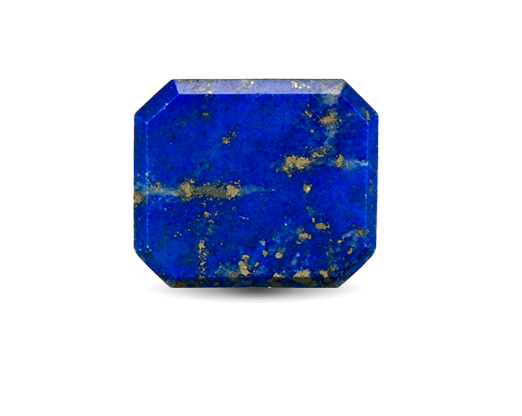
Lapis lazuli also commonly contains calcite and pyrite. Lazurite gives the stone its royal-blue colour, while white calcite creates marbled veining and golden pyrite produces tiny, star-like flecks.
6,000 years and counting
Sourcing lapis lazuli on Earth isn’t quite as common as finding it deep underground in Minecraft.
Historically, much of the world’s lapis lazuli can be traced back to the Sar-e-Sang mines in the Kokcha River valley of Afghanistan’s Badakhshan province.
Ancient civilisations such as Persia, Egypt, and Mesopotamia, followed by Greece and Rome, sourced much of their lapis lazuli from the Sar-e-Sang mines, highlighting the region’s importance as a major source of the gemstone.
With mining operations dating back around 6,500 years, Sar-e-Sang is considered the world’s oldest known commercial gemstone source, making it older than the Egyptian pyramids.
Badakhshan province is best known for its lapis lazuli deposits. The Gemological Institute of America (GIA) describes the surrounding landscape as a “wasteland” of mountains rising as high as 5,181m, with little vegetation.
A deep blue worth more than yellow gold
Lapis lazuli, like gemstones more broadly, is rarely considered a commodity because it lacks fungibility.
Each gemstone has unique characteristics, including its colour, clarity, size, and mineral composition, meaning one stone is not necessarily interchangeable with another of the same type.
That doesn’t make gemstones any less valuable, and lapis lazuli is a testament to that.
When ground into a powder, lapis lazuli produces ultramarine, an historically expensive blue pigment.
The National Gallery attributes ultramarine’s high price to the difficulty of sourcing the raw material.
Because lapis lazuli was difficult to obtain, high-grade ultramarine pigment was historically valued at more than gold by weight.
Today, lapis lazuli is sourced from several regions around the world, including Coquimbo in Chile, Lyadzhvardara in Tajikistan, the Lake Baikal region of Siberia, and the Mogok region of Myanmar.
Production statistics for lapis lazuli are not as straightforward as those for traditional commodities. However, a 2000 GIA report estimated that Chile produced around 150 tonnes of lapis lazuli annually.
Meanwhile, the Sar-e-Sang deposit in Afghanistan was recognised by the Guinness World Records in 2015 as the world’s largest lapis lazuli mine, with an estimated 9,000kg recovered each year.
Although lapis lazuli is sourced from several regions around the world, the Sar-e-Sang mines retain their historical significance, having supplied the gemstone for more than 6,500 years.
Write to Maddison Elliott at Mining.com.au
Main image: Mining.com.au, The National Gallery & Minecraft