



Grid batteries, military equipment, and rising demand.
Context and background
The previous articles in this series explored what antimony is and where it comes from. This instalment examines what is driving demand, and how defence rearmament, solar energy growth, and next-generation battery development are converging to increase the metal’s importance.
Understanding the demand side of the antimony equation matters as much as understanding the supply concentration risk. A metal sitting on a critical minerals list because governments are worried about access is a different investment proposition from one where underlying industrial and defence demand is also structurally growing. Antimony is both.
Defence: the demand that won’t wait
Antimony’s defence applications are both specific and difficult to substitute. Primers in roughly 30% of US military ammunition depend on antimony sulphide — the compound that provides the sensitive, reliable ignition required in percussion primers and stab detonators. Tracer rounds use antimony trisulfide as the combustible compound that makes the round visible in flight. Armour-piercing projectiles use antimony to harden the lead alloys in the penetrating slug. Night-vision goggles and infrared missile seekers use indium antimonide as the semiconductor material in their detector arrays. Military electronics, tritium production, and hardened alloys for warhead and tank plating all route back to the same metalloid.
The US Department of Defense uses antimony in more than 200 types of ammunition. What makes this demand profile strategically significant is not its size — ammunition accounts for only around 2% of measured antimony consumption — but its combination of absolute necessity and price insensitivity. Militaries will pay whatever is required rather than have ammunition that fails to function, which gives defence buyers outsized influence over which mines and smelters get financed. When China’s export controls landed in August 2024, the military-use restriction was explicit and has not been lifted even during the partial trade truce that suspended broader restrictions through to November 2026.
The Pentagon is moving to strengthen the US antimony supply chain through funding and stockpile procurement. In September 2025, the Defense Logistics Agency awarded United States Antimony Corporation a five-year contract worth up to US$245 million ($349.24 million) to replenish the National Defense Stockpile with antimony ingots. In March 2026, the US Department of War announced a further US$27 million in Defense Production Act funding to expand domestic antimony extraction, processing, and refining.
NATO members’ military spending reached US$1.506 trillion in 2024, an increase of 8.9% from 2023. As countries replenish ammunition stocks and expand defence production, antimony remains an important material for certain munitions and other military applications.
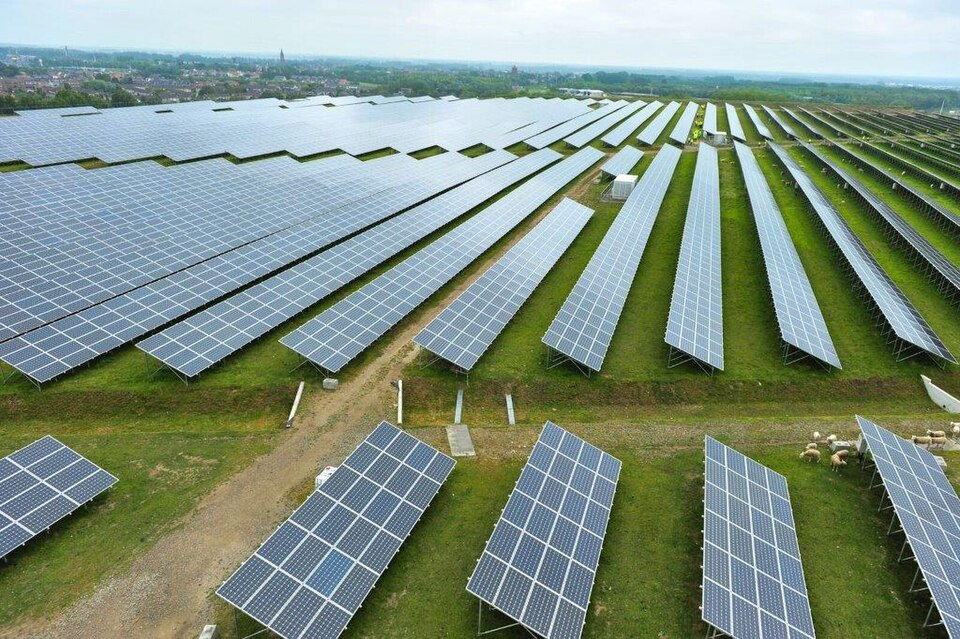
Solar glass: the demand driver most investors miss
The single largest shift in the antimony demand picture over the past five years has come not from batteries or defence but from solar energy, specifically from the glass used in solar panels.
Antimony trioxide is used as a fining and refining agent in the production of solar panel glass, where it removes bubbles and improves optical clarity. Consumption from the solar sector alone has quadrupled from approximately 16,000 tonnes in 2021 to an estimated 68,000 tonnes in 2026, and solar now accounts for around 39% of global antimony demand. This is the largest single end-use category, ahead of flame retardants and well ahead of defence.
The scale of global solar panel deployment over the past decade, and the projected growth in installations through 2030, has permanently changed the demand profile of a metal historically viewed by most analysts as an input for flame retardants and ammunition.
Solar demand is relatively price-sensitive compared with defence procurement, with high prices prompting some solar glass manufacturers to reduce antimony content or seek alternatives. However, baseline demand is substantial enough that solar has become a structural component of antimony demand rather than a marginal one.
Ready to stay ahead of the market?
Get stories like this, delivered direct to your inbox.
Grid-scale energy storage: the emerging driver
Sodium-ion batteries have moved from laboratory research toward commercial deployment at a pace that has surprised many observers. In December 2025, CATL confirmed large-scale deployment of its sodium-ion Naxtra battery across energy storage, battery swapping, passenger vehicles, and commercial vehicles in 2026.
The first grid-scale sodium-ion storage project in the United States, developed by Peak Energy, came online during the same period. Meanwhile, the world’s largest sodium-ion storage project — a 500-megawatt, 2-gigawatt-hour installation in China’s Anhui province — came online in November 2025.
Antimony’s connection to sodium-ion batteries lies in its potential as an anode material. Antimony-based anodes, including tin-antimony alloys and antimony-hard carbon composites, offer substantially higher theoretical sodium storage capacity than hard carbon, which is the dominant commercial anode in production today.
The challenge is volumetric expansion: antimony-based anodes can swell by more than 400% during charge-discharge cycling, which degrades cycle life unless the material is engineered at a nanoscale to buffer the stress. Commercial sodium-ion batteries currently in production use hard carbon rather than antimony for this reason.
The honest framing is therefore that antimony is a next-generation anode candidate rather than a current commercial input. Research activity is substantial and accelerating, and the demand case is real if the engineering challenges are resolved. For investors, this represents a potential additional source of demand beyond antimony’s existing uses in flame retardants, solar glass, and defence, rather than a contribution to model as current consumption.
The demand picture in total
Stepping back, antimony demand is driven by a set of applications that are structurally distinct from one another. Solar glass demand scales with global solar deployment, which has years of growth ahead of it regardless of price fluctuations. Defence demand is driven by geopolitical conditions and military procurement cycles, is price-insensitive, and is growing as Western governments rebuild depleted stockpiles. Flame retardants, the historically dominant end use, are moderately price-sensitive and respond to high prices by thrifting or substituting at the margins. Battery demand is emerging and uncertain but represents a genuine option on additional volume if the materials science continues to advance.
Global antimony demand reached approximately 179,000 tonnes in 2025. Modest growth to around 186,000 tonnes by 2030 is the base case, but this assumes flame retardant demand moderates to offset solar and defence growth. Faster-than-expected growth in battery applications or an acceleration in defence procurement beyond current projections could push demand meaningfully higher.
Against this demand trajectory is a supply picture, explored in detail in the previous article in this series, in which non-Chinese smelting capacity is projected to meet only around 73% of non-Chinese demand by 2030, even under optimistic assumptions about project development timelines.
Why the demand mix matters for investors
The combination of defence, solar, and battery demand creates a demand profile that is unusually resilient to any single economic variable. A commodity whose buyers include governments procuring ammunition at any price, solar glass manufacturers scaling with energy policy, and battery developers working with government funding across multiple jurisdictions is not dependent on a single economic cycle. Each of these demand pillars has its own drivers and they don’t all move in the same direction at the same time.
This helps explain the level of government attention and capital commitment antimony has attracted over the past two years. Demand is growing, supply is constrained, and China’s dominance has demonstrated how the metal can be used as geopolitical leverage. Meanwhile, the applications that depend on antimony are often essential rather than discretionary.
Conclusion
Antimony demand is being driven by three distinct forces: defence rearmament and ammunition stockpiling across Western nations, expanding solar panel production and the demand for solar glass, and the emerging potential of antimony-based anodes in next-generation sodium-ion batteries. Each operates on its own timeline and responds to different economic and geopolitical conditions.
With non-Chinese supply projected to remain structurally insufficient, these demand drivers reinforce the investment case for projects capable of increasing antimony supply outside China.
Write to Tyler Jefferson at Mining.com.au
Main image: Wikimedia Commons


