



A practical framework: grade, size, metallurgy, and jurisdiction.
Context and background
Copper explorers are among the most closely watched stocks on the ASX, and the reasons are easy to see. The supply constraints covered earlier in this series, from falling ore grades to 17-year development timelines, have given the sector a compelling investment case. But a promising narrative is not the same as a viable project, and most explorers will never become mines. Sorting those that might from those that won’t is the main job of an investor in this part of the market.
A simple framework helps. Four questions cover much of what matters: how good is the grade, how large is the deposit, can the copper be recovered economically, and can the project realistically be built where it sits? None of these factors is enough on its own, and a weakness in one can often outweigh a strength in another. This article examines each in turn.
Start with the deposit type
Expectations for grade and size depend on the deposit type. Porphyry deposits supply around 60% of the world’s copper, according to the US Geological Survey. However, they are typically low grade, averaging about 0.44% copper in 2008, and very large, commonly containing hundreds of millions to billions of tonnes of material. They are generally mined using large open pits. Other deposit types, including sediment-hosted, iron oxide copper-gold (IOCG), and volcanogenic massive sulphide (VMS) deposits, tend to be smaller and higher grade.
The same grade can mean very different things depending on the deposit type. A grade of 0.5% copper may be attractive in a large porphyry deposit but weak in a narrow underground deposit. A grade of 2% in a smaller deposit may be exactly what is needed to make a project viable. An explorer’s announcements should identify the deposit type it is targeting, and comparisons between companies make the most sense within the same deposit type.
Evaluating copper grades
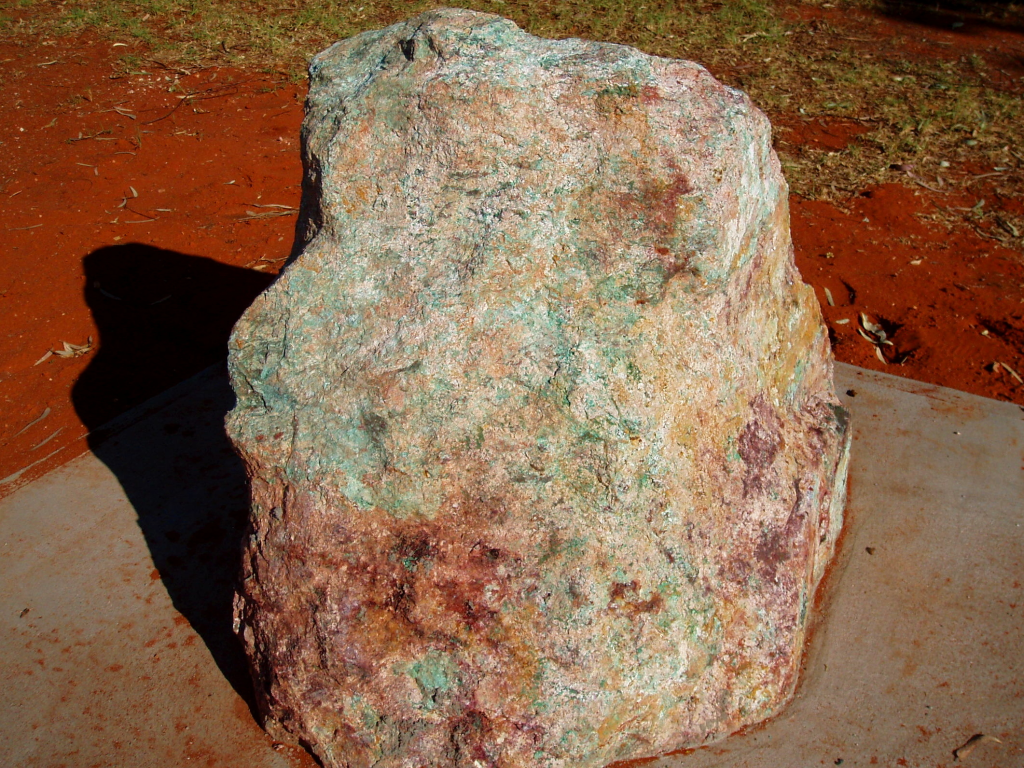
The grade quoted in a headline is usually the best intersection from the latest drilling. However, the figure that matters most for the project is the average grade of the mineral resource at an appropriate cut-off grade, and the gap between the two can be wide. The ASX has said it would be concerned if an announcement headline highlighted only the highest-grade assays when they were not representative of the full set of results. The drill table in the body of the announcement can help investors assess what a typical hole looks like. Downhole width is also not the same as true width, a point covered in an earlier article on reading announcements.
Many ASX copper explorers also have gold, silver, or molybdenum credits and report results as copper equivalent. This is legitimate, but JORC Clause 50 requires disclosure of the individual grades of each metal and the commodity prices used in the calculation, along with a statement that all metals included have reasonable potential to be recovered and sold. The practical question is how much of the project’s value comes from copper and how much from by-products. A project that relies on a high gold price to be viable is a different proposition from one that stands on copper alone.
Visual estimates also deserve caution. The ASX does not encourage companies to report estimates of mineralisation based solely on visual inspection of drill core and expects an appropriate cautionary statement alongside any such estimates. Laboratory assays provide a reliable measure of grade.
Grades must also be considered in the context of the mining method. Open-pit operations can tolerate lower grades because of their scale and typically lower mining costs per tonne. Underground mines generally have higher costs per tonne and need higher-grade ore to be economically viable.
Assessing deposit size
Contained copper is calculated by multiplying tonnes by grade, providing a useful way to compare deposits of different sizes and shapes. However, the resource category also matters. A resource dominated by inferred material carries much greater uncertainty than one supported by indicated and measured resources. An exploration target is different again. It represents a conceptual range, not a mineral resource, and the ASX requires a proximate cautionary statement whenever one is reported.
In terms of scale, one consultancy’s rough guide for a tier-one open-pit discovery is around 1 billion tonnes at 1% copper, or 10 billion tonnes at 0.5% copper, with higher grades generally needed for underground operations. This is a rule of thumb, not a formal standard, and most ASX explorers will not reach that scale. Nor do they necessarily need to. A smaller deposit can still support a standalone mine or provide feed for an existing processing plant. Size also influences the likely buyer or financier, as large mining companies generally need deposits big enough to justify the capital investment and meet their return requirements.
Depth, geometry, and growth potential round out the picture. Mineralisation that remains open in several directions, or sits within a district containing other prospects, gives a resource room to grow. A resource that has expanded steadily across successive updates is generally a more encouraging sign than one that has stalled.
The role of metallurgy
Metallurgy is one of the most commonly overlooked parts of the framework at the exploration stage, yet it can make or break a project later. The first question is the ore type. Sulphide ores are typically treated by flotation to produce a concentrate, while oxide ores can be leached and processed through solvent extraction and electrowinning (SX-EW), as covered in the earlier article on how copper is mined and refined. Recovery refers to the proportion of copper in the ore that is recovered into a saleable product, making it a key driver of how much metal a mine can sell. A recovery assumption in a Scoping Study means little without test work on representative samples. Many early-stage explorers have not yet completed this work, which is understandable, provided their announcements do not present recovery rates as established.
Concentrate quality is the next consideration. Arsenic, antimony, bismuth, mercury, lead, zinc, and other elements can attract penalties from smelters. Concentrates containing high levels of these impurities can be difficult to sell. This matters, particularly in the current market.
Benchmark treatment charges fell from US$80 ($120) per dry metric tonne in 2024 to US$21.25 in 2025, before reaching zero for 2026. Spot treatment charges have also been negative since 2024, reflecting intense competition among smelters for available concentrate. This has strengthened miners’ negotiating position, but smelters are increasingly differentiating between clean and impure material, meaning penalties can erode the benefit. Treatment charges also move with market conditions, so any study that assumes current terms will last indefinitely deserves scrutiny.
By-product credits from gold, silver, and molybdenum belong in this assessment too, as their value depends on those metals being recovered into saleable products.
Why jurisdiction matters
A project’s location influences how long it takes to develop and how much risk it carries. Stable legal systems, clear tenure, and predictable royalty regimes provide the foundation, while an earlier article on location and infrastructure covers jurisdiction risk in more detail. Permitting timelines are a major consideration for copper projects specifically. S&P Global’s study put the average discovery-to-production time at around 20 years in Australia and nearly 29 years in the United States.
Projects overseas are not automatically less attractive, but they can carry additional risks that investors expect to be compensated for through higher returns. Peru has experienced recurring community protests that have disrupted mine sites and transport corridors, while the Democratic Republic of the Congo carries political and operational risks that investors assess carefully.
Within Australia, state-level differences in approvals, native title, and cultural heritage processes can affect development timelines. Infrastructure is another consideration, as access to power, water, roads, and a skilled workforce can make the difference between a viable project and an expensive one.
Beyond the four questions
The framework covers the asset, but the company holding it matters too. Cash runway determines how much drilling and test work a company can afford before it needs to raise more capital, while the earlier articles on balance sheets and capital raisings explain how to assess its financial position. Management’s track record is another consideration: has the team discovered and developed deposits before? The quality of news flow also matters. Do announcements provide a complete picture of exploration results, or highlight only the best intersections?
A hypothetical comparison
Consider two fictional explorers. Explorer A has 800 million tonnes at 0.4% copper in a shallow, open-pit sulphide deposit. Early flotation test work indicates recoveries of around 88% and a clean concentrate. That represents 3.2 million tonnes of contained copper, but the project is in a remote region without grid power.
Explorer B has 20 million tonnes at 2.0% copper in an underground deposit, representing 0.4 million tonnes of contained copper. Its concentrate has elevated arsenic levels, and test work is limited to a handful of samples.
Explorer B has five times the grade, while Explorer A has eight times the contained copper. Neither is obviously better. Explorer A’s challenges centre on infrastructure and capital costs, while Explorer B’s relate to whether its metallurgy and impurity penalties are manageable. The framework does not pick a winner. It shows investors where to focus their questions.
Conclusion
Evaluating a copper explorer comes down to four linked questions about grade, size, metallurgy and jurisdiction, asked in the context of the deposit style. The answers rarely line up neatly, and most projects are strong in some areas and unproven in others.
Reading past the headline intercept, checking how copper equivalents are built, asking what metallurgical work exists and where the project sits all give a clearer view of how far an explorer has to go. Strong copper market conditions help the sector, though they do not turn a weak project into a good one.
This article is for educational purposes only and does not constitute financial advice. Investors should seek independent professional advice before making investment decisions.
Write to Tyler Jefferson at Mining.com.au
Main image: Wikimedia Commons


