


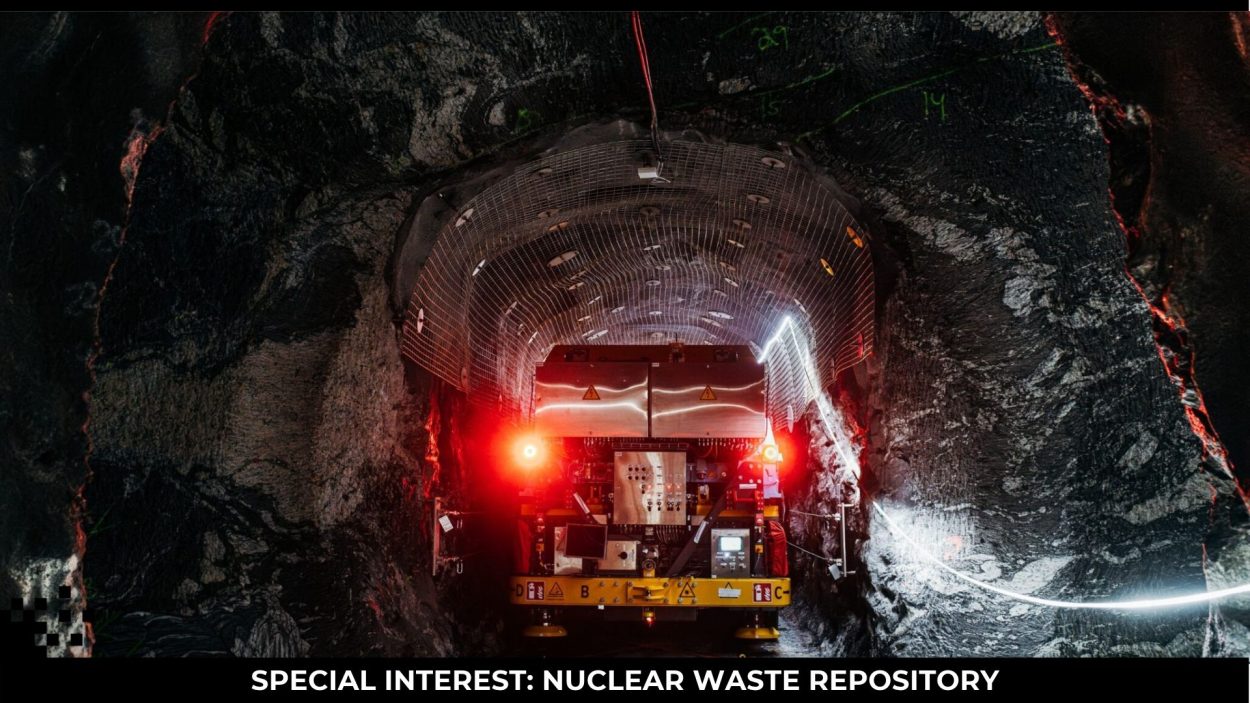
Finland’s approval of an operating licence for Onkalo, the world’s first permanent repository for spent nuclear fuel, marks a milestone in the global nuclear industry.
But it also raises questions about Australia’s preparedness for a challenge it will eventually have to confront.
After four decades of geological investigation, engineering, and planning, Finland has developed a facility designed to isolate nuclear waste deep beneath the Earth’s surface, with a safety assessment for up to one million years.
Meanwhile, Australia has committed to taking on a similar responsibility under the Australia-UK-US (AUKUS) agreement. AUKUS is a trilateral security partnership to support Indo-Pacific security and defence capabilities.
Under the agreement, radioactive material from Australia’s future nuclear-powered submarine fleet, including spent fuel, will need to be stored and disposed of domestically.
However, while the strategic ambitions of AUKUS continue to take shape, the geological foundations of Australia’s long-term nuclear waste management strategy remain an unresolved challenge.
Finland’s experience highlights the scale of the work involved, with the country’s successful application relying on decades of geological characterisation to identify stable bedrock capable of safely containing radioactive material.
As Australia considers how and where it may eventually establish its own disposal infrastructure, the Finnish experience offers an important lesson — finding a suitable site begins long before construction.
AUKUS nuclear waste disposal strategy
For Dr Thomas D Krom, director for the environment at Seequent, the most immediate lesson Australia can take from Finland’s 40-year journey is straightforward.
“Start now,” he tells Mining.com.au.
While Finland began developing its permanent repository decades ago, Krom says advances in technology mean Australia does not necessarily need to follow the same timeline.
“How you can get information from raw data has changed dramatically,” Krom explains.
“Forty years ago, if you drilled a core to get samples of the rock mass where you were going to put a repository, you had to have someone with a huge amount of knowledge sit and minutely examine these cores physically.
“And today, there is technology that just scans these cores and uses computer technology to provide much more information than previously.”
Krom, who spent 20 years working as a groundwater consultant before joining Seequent, says this shift towards data-driven modelling is important when dealing with radioactive waste.
With software such as Seequent’s Leapfrog Geo, geological models are built using data and defined rules, with the modelling process recorded so that other users can understand, review, and reproduce the analysis.
The ability to trace how conclusions have been reached can also help improve transparency and public confidence in decisions surrounding nuclear waste disposal.
“Australia can, pun intended, leapfrog upon the gains of the Finns,” Krom says.
He adds that Finland has benefited from being an early adopter of modern technology, with the country’s experience demonstrating how digital tools can improve the efficiency of complex geological programs.
Geological stability for nuclear waste storage
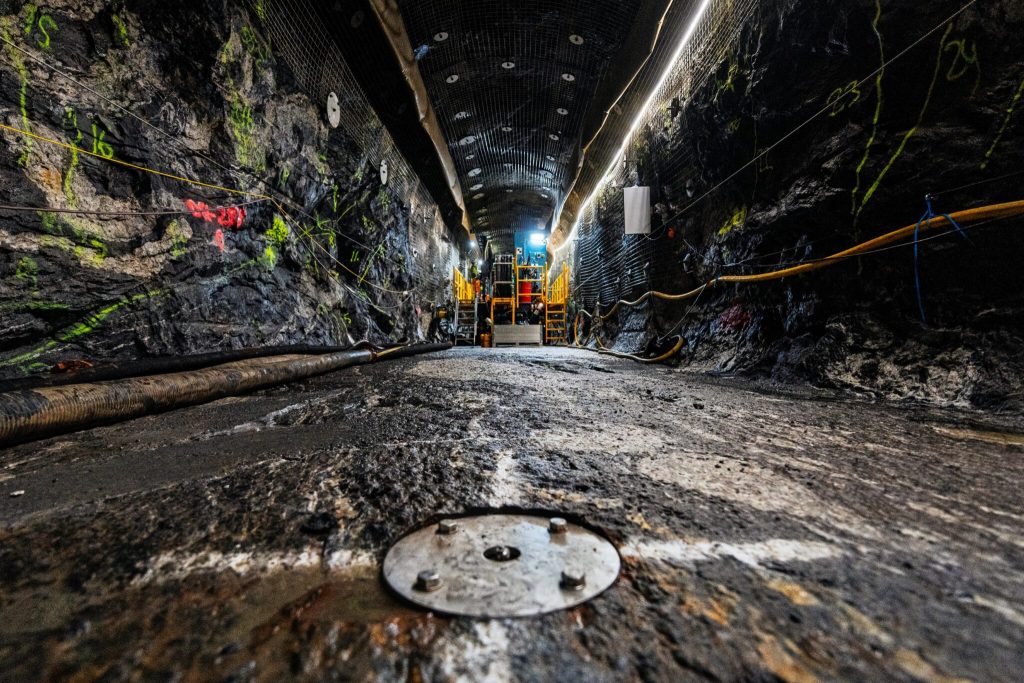
At Finland’s Onkalo repository, spent nuclear fuel will be placed 430m underground in ancient bedrock.
According to Seequent, the Onkalo repository — located on Olkiluoto Island — will comprise around 50km of tunnels when fully developed, extending across an underground area of 2km².
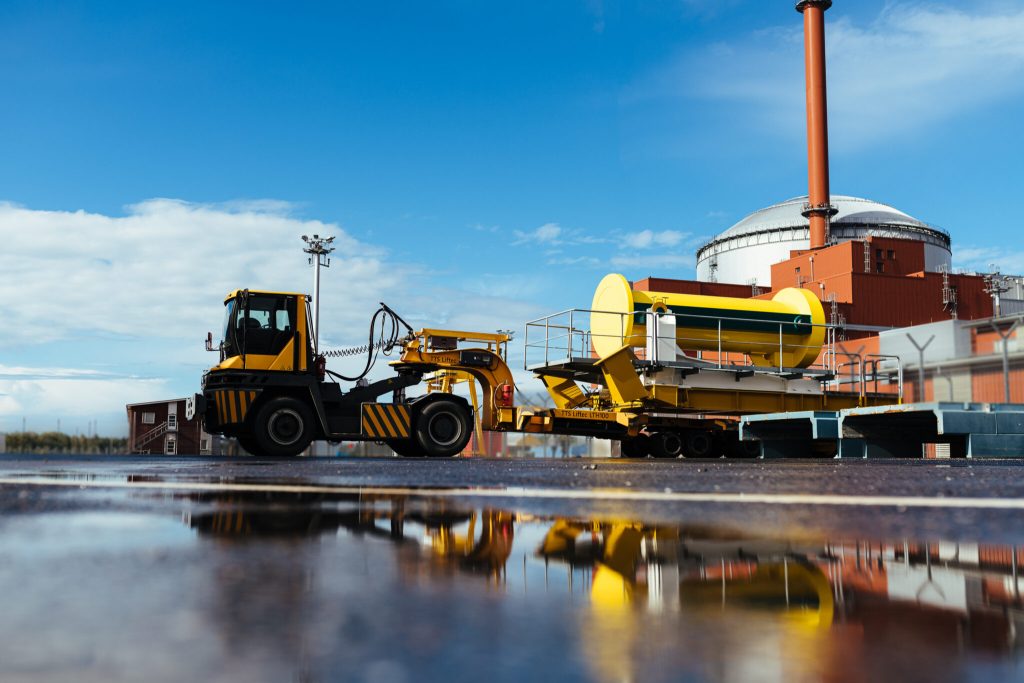
The facility is designed to accommodate around 6,500 tonnes of uranium in spent nuclear fuel over its 100-year operating life, corresponding to about 3,300 disposal canisters.
Uranium and spent nuclear fuel need to be stored safely to manage heat, radiation, and other hazardous materials throughout the nuclear fuel cycle.
Identifying suitable geology was one of the most significant challenges facing the Finnish project.
Krom says geological conditions are inherently uncertain because, unlike a conventional construction project, engineers cannot know exactly what lies beneath the ground before investigations begin.
Every new drill hole, rock sample, or geophysical survey can change the understanding of the formation. As such, it’s essential that new information is incorporated into geological models as quickly as possible.
For a permanent nuclear waste repository, geological stability is critical.
Potential sites need to be assessed for seismic activity and the likelihood of geological disturbances. The movement of groundwater is another important consideration.
Krom describes water as one of the central risks in long-term radioactive waste containment, as it can provide a pathway for contaminants to migrate through surrounding rock if a storage canister is compromised.
“Water is the villain we are protecting against, more or less,” he says.
Consequently, formations with low groundwater mobility and limited pathways for water movement are important factors to consider when assessing potential sites.
However, Australia should not replicate Finland’s geological approach.
Krom explains that different types of rock formations could potentially provide suitable conditions for permanent nuclear waste storage. This means Australia would need to assess its own geological characteristics.
He says the priority should be developing a comprehensive understanding of Australia’s geology before narrowing down potential locations.
This could involve reviewing existing geological information, mapping formations against the criteria established for a repository, and identifying areas that warrant more detailed investigation.
Modelling costs for permanent nuclear repositories
Beyond the engineering challenges, Finland’s experience also demonstrates how technological advances can influence the cost and timing of major infrastructure projects.
For a program that can span decades, delays in geological investigation and modelling can have financial consequences.
Krom says Seequent’s technology helped Posiva, the Finnish firm responsible for the repository, reduce geological model update times by as much as 90%.
“So they’re only using 10% as much time as they would have before,” he explains.
“That’s a cost saving. If you’re only spending 10% of the amount of engineering time as you would have otherwise, that’s like a real number.
“It also means that you compress timelines, and the faster you can do something, that also saves money.”
For Australia, where the development of a permanent nuclear waste disposal solution could involve substantial geological investigations and infrastructure investment, these efficiencies could become important.
The broader lesson is that investment in geological understanding at an early stage could help reduce uncertainty, avoid inefficient spending, and support more informed decisions as projects progress.
Australia plans AUKUS nuclear infrastructure
Australia’s commitment to developing a nuclear-powered submarine capability under AUKUS brings with it responsibilities that will extend beyond the construction and operation of the fleet.
The eventual management and disposal of radioactive material will require a long-term approach to geological assessment, engineering, and infrastructure planning.
While Finland’s experience offers a valuable example, Australia’s starting point will depend on its own geological conditions and the criteria established for a suitable repository.
For Krom, the priority is ensuring that all available geological information is used to support the strongest possible decisions, with investigations beginning well before a final location is chosen.
Seequent’s work extends beyond nuclear waste, with its geoscience software also used across mining, groundwater, geothermal energy, and other industries where understanding the subsurface is critical.
For Australia, the Finnish milestone is a reminder that solving those challenges requires more than a future infrastructure commitment.
It requires a detailed understanding of the ground beneath Australia — and the work to build that knowledge can start now.
Write to Aaliyah Rogan at Mining.com.au
Main image: Seequent


