



Europe wants to lead the world into a low-carbon future. But there is a contradiction buried under that ambition.
The technologies powering the transition may be green, yet the minerals required to build them are not conjured from thin air.
From Australia to South America, Canada, and Africa, the global race for copper, lithium, nickel, rare earths, and other critical minerals has exposed a fundamental reality.
Decarbonisation requires mining.
Yet in Europe, where demand for these materials is immense, opening new mines can be met with fierce social opposition, political resistance, and lengthy permitting battles.
Can Europe build a low-carbon economy without building enough of the mines required to supply it?
As the final stop in this five-part global tour of the mining industry, Europe presents perhaps the most difficult contradiction of all.
A continent determined to reduce its dependence on fossil fuels is also deeply dependent on mineral resources that it is often reluctant to extract at home.
Closing the demand and supply gap
The EU consumes a significant share of the world’s mineral resources, but its domestic production of many critical raw materials remains limited. The bloc consumes roughly 25% of global raw materials, while only producing 3%.
This means the continent is heavily dependent on imports to support its manufacturing base, energy transition, and defence industries.
That imbalance exposes Europe to supply chain disruptions, geopolitical tensions, and the risks associated with concentrated production in a handful of countries.
Speaking to Mining.com.au, Dalaroo Metals (ASX:DAL) CEO John Morgan says the real issue is not that Europe lacks minerals or cannot develop mines.
“It is whether governments, industry, investors, and communities can agree on how strategically important resources should be developed responsibly,” Morgan says.
As competition for critical minerals intensifies, securing reliable access to these materials has become an important economic and strategic priority.
The EU’s Critical Raw Materials Act (CRMA) seeks to address this vulnerability by strengthening domestic extraction, processing, and recycling. By 2030, the CRMA aims for the EU to extract at least 10%, process 40%, and recycle 25% of its annual needs.
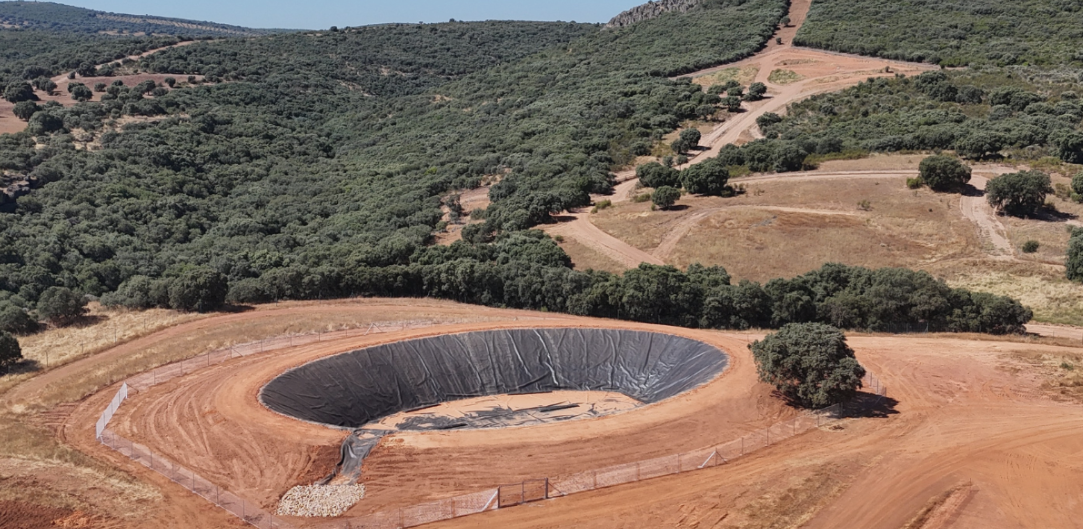
For the mining industry, these targets represent an opportunity to develop new projects closer to the markets that need their output.
“Mining more of these materials within the EU provides greater security of supply, transparency, and traceability, while allowing Europe to retain more of the economic value from the supply chain,” Latitude 66 (ASX:LAT) Managing Director Grant Coyle tells Mining.com.au.
Abenojar Tungsten CEO Gonzalo García San Miguel shares a similar view, as he says there is a clear and strong demand in Europe and the Western world to secure reliable access to critical raw materials.
“Developing new sources within Europe can therefore help strengthen security of supply and diversify global supply chains,” San Miguel says.
However, translating these strategic ambitions into actual mineral production will require more than setting targets.
Expanding exploration, financing projects, securing approvals, and establishing the infrastructure needed to process raw materials all present challenges.
Meeting the CRMA targets is estimated to require a tenfold increase in investment in mineral exploration over the next five years to €2 billion ($3.19 billion) per year.
Various other hurdles must also be overcome to bring those resources to market.
Dalaroo CEO Morgan explains these include permitting uncertainty, access to development capital, limited downstream processing capacity, and insufficient alignment between miners and end users.
“Europe has geological potential, but projects often face long development timelines and high upfront costs,” Morgan says.
Those delays can have substantial financial consequences. Research by ERM found that 74% of the projects it analysed in Europe experience delays, compared with 65% in North America and 56% in the Asia-Pacific region.
The financial implications can be significant, particularly for capital-intensive developments.
ERM estimated that a mining project with capital expenditures of between US$3 billion ($4.26 billion) and US$5 billion loses roughly US$20 million in net present value for every week of delay.

For developers, prolonged permitting and uncertain timelines can erode project economics, increase financing requirements, and make it harder to secure investment.
For Europe, the consequences extend beyond individual projects. Delays in domestic production can prolong reliance on imported materials and leave the bloc more exposed to external supply disruptions.
Latitude 66 Managing Director Coyle says project delays remain one of the biggest gaps between Europe’s geological potential and delivering resources to market.
“Europe needs to prioritise projects that are economically robust, can attract private investment, and can make a meaningful long-term contribution through employment, investment, taxation, and regional economic growth,” he says.
From dependence to autonomy
The push to expand domestic production reflects a broader shift in how the EU views critical minerals.
Once largely treated as an issue of industrial supply, access to these materials is now increasingly tied to economic resilience, energy security, and geopolitical independence.
Recent disruptions and growing concerns over concentrated global supply chains have reinforced the risks of relying too heavily on imported raw materials. This is particularly evident where mining, refining, and processing capacity is concentrated in a small number of jurisdictions.
For Europe, reducing that exposure will require more than opening new mines. It also means developing the smelting, refining, and processing capacity needed to turn extracted resources into materials that manufacturers can use.
Elementos (ASX:ELT) Managing Director Joe David says establishing new mines, smelters, and refineries within the EU could provide the continent with a level of mineral security that it has not experienced in many decades.
Morgan similarly states that Europe cannot rely on entirely imported production and processing, as the continent seeks to secure access to critical minerals.
“Developing European and European-aligned resources would diversify global supply, reduce exposure to concentrated supply chains, and create an important benchmark for transparent and responsibly managed production,” Morgan adds.
“It could also shorten supply routes and connect mineral production more directly with major European manufacturing markets.”
Extracting minerals domestically is only one part of building a resilient supply chain. Without sufficient processing capacity and established links between producers and end users, Europe could continue to depend on overseas facilities.
The EU has begun taking steps to address these gaps.
Recently, the European Commission selected 46 strategic raw material projects to benefit from faster permitting and support in securing public and private funding. The initiative aims to diversify supply chains and reduce reliance on China.
Spanning 16 EU countries, the projects cover 15 of the EU’s 17 listed strategic raw materials. These include copper, lithium, nickel, cobalt, manganese, graphite, rare earths, and tungsten.
The initiative signals a more active approach to developing Europe’s domestic mineral industry, with the policy support intended to help projects progress through the development pipeline.
For mining companies operating across Europe, the EU’s push to strengthen domestic mineral supply presents both an opportunity and a challenge.
While policy support and growing demand could help unlock new projects, the industry must still navigate permitting hurdles, financing requirements, and the need to demonstrate that domestic production can compete in global markets.
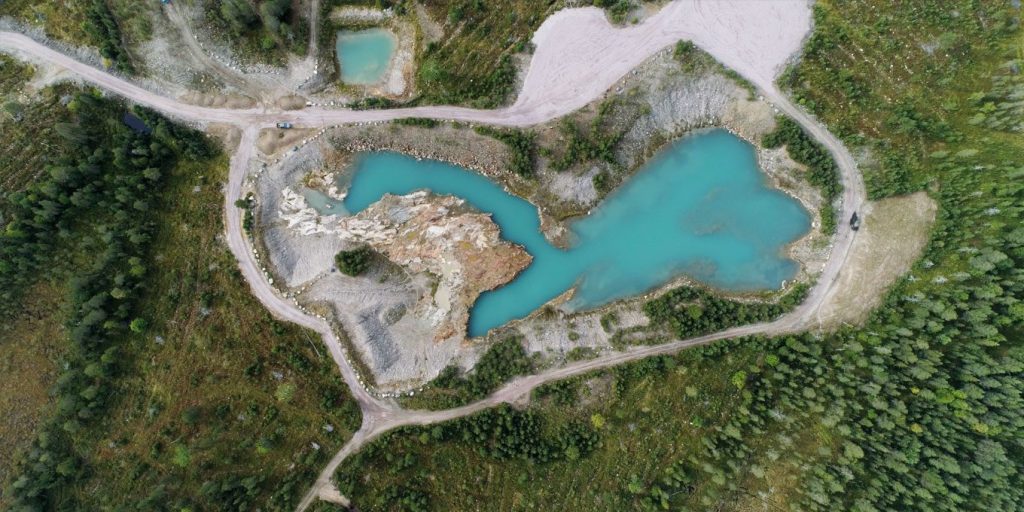
Contributing to supply security: Latitude 66
For Latitude 66, the opportunity lies in developing European mineral resources that can contribute to supply security.
Coyle says the Kuusamo Schist Belt (KSB) Project in Finland is a “great example” of that opportunity.
“Finland is already the EU’s largest producer of cobalt and has significant downstream refining capability,” he explains.
“The potential to mine cobalt at KSB, refine it in Finland, and supply it directly into European industry demonstrates what an integrated European critical minerals supply chain can look like.”
Over a 7.5-year mine life, KSB is expected to produce an average of 65,000 ounces of gold and 475 tonnes of cobalt in concentrate annually.
A previously reported Scoping Study outlines plans to process 5.7 million tonnes (Mt) of ore at a rate of 750,000 tonnes per year, yielding a total of 484,000 ounces of gold and 3,471 tonnes of cobalt over the mine life.
The combination of gold and cobalt could make KSB a commercially attractive operation and a key contributor to Europe’s critical minerals objectives.
Building domestic supply: Elementos
Elementos highlights the importance of building a more complete domestic supply chain.
“We work with many committed government employees and community stakeholders who are very supportive of groups like us who want to build responsible mines which benefit local society and communities,” Joe David tells this news service.
Elementos’ Oropesa Tin Project, located within Spain’s Andalucía autonomous region, is at an advanced development stage.
The company has made strategic steps to vertically integrate a mine-to-metal supply chain of tin metal ingots.

Oropesa is expected to produce 1.36Mt of ore annually over a 12-year mine life, with projected life-of-mine earnings before interest, taxes, depreciation, and amortisation (EBITDA) of $996 million.
Earlier this year, Elementos secured approval for 8.1km of access road infrastructure at the project. The works will include upgrades to the existing public road network and construction of a new section connecting to the project’s main administration area.
The route is expected to provide primary access needed during construction and future operations.
Elementos also acquired 50% of Iberian Smelting, which owns a tin smelting and refining facility. The deal provides a pathway to convert tin concentrate into refined tin metal.
Developing European resources: Abenojar
Abenojar Tungsten offers another perspective on the opportunity to develop resources within Europe.
The company owns the El Moto Tungsten Project in Spain, which is one of Europe’s largest and highest-grade undeveloped tungsten projects.
CEO Gonzalo García San Miguel says the project demonstrates the scale of Europe’s opportunity to strengthen security of supply and diversify global supply chains.
“At planned production rates, the project could supply the equivalent of up to approximately 20% of European tungsten demand,” San Miguel says.
“El Moto is already well advanced on that pathway: the key construction phase and operating permits have been secured, the Definitive Feasibility Study has been completed, and construction activities commenced in June this year.”
Abenojar Tungsten is focused on construction and commissioning as it works towards production, while managing project schedules and costs.
El Moto is expected to support 400 direct jobs and a further 500 indirect jobs, making it a ‘significant’ contributor to employment and economic activity in the Castilla-La Mancha region.
“We see El Moto as having the potential to be a long-term catalyst for regional economic development, generating investment and employment and supporting the local economy, while at the same time making an important contribution to Europe’s security of tungsten supply,” San Miguel adds.
Turning potential into production: Dalaroo
Meanwhile, for Dalaroo Metals, the focus is on the practical conditions required to turn geological potential into production.
Dalaroo owns the Blue Lagoon Project in southern Greenland. While the nation is not part of the EU, it is an associated Overseas Country and Territory with a strategic materials partnership with the bloc.
CEO John Morgan explains that relationship gives Greenland the potential to become an important contributor to a secure and responsibly managed EU critical minerals supply chain.
The EU has committed €200 million to a strategic partnership with Greenland. The investment will fund critical minerals, digital connectivity, infrastructure, and housing through 2026 and 2027.
Greenland hosts 25 of the 34 raw materials designated as critical by the EU, making the nation a core part of the continent’s plan to diversify supply chains away from China.
Dalaroo’s Blue Lagoon Project contains rare earths, zirconium, niobium, and hafnium.
Recent fieldwork has involved the collection of more than 200 samples. Selected samples are undergoing mineralogical and preliminary metallurgical test work.
The results will be integrated with broader exploration datasets to help prioritise targets for follow-up mapping, geochemistry, and future drilling.
Europe wants to lead the world’s low-carbon transition. But ambition alone will not build the mines needed to power it.
From Latitude 66 to Elementos, Abenojar Tungsten, and Dalaroo Metals, the opportunity to strengthen Europe’s mineral supply is clear.
However, so too are the barriers posed by lengthy permitting, investment uncertainty, and the challenge of balancing resource development with environmental and community expectations.
Can Europe build a low-carbon economy without building more mines?
The reality is that it cannot escape the need for mining, but can decide where that mining takes place, who supplies its minerals, and how much control it has over its own future.
Write to Aaliyah Rogan at Mining.com.au
Main image: Mining.com.au


