Dalaroo Metals (ASX:DAL) has identified structural controls and potential extensions to rare earth element (REE) mineralisation following structural mapping at its Blue Lagoon Rare Earth Project in Greenland.
The company completed 354 structural measurements across the project to define the principal architecture controlling the intrusive complex, hydrothermal alteration, and sediment transport pathways.
According to Dalaroo, mapping identified a dominant fault set broadly aligned with the Blue Lagoon intrusive complex, alongside a conjugate fault set forming a structural network.
CEO John Morgan says the 2026 mapping program delivered a step change in the company’s understanding of Blue Lagoon.
“The collection of structural measurements has allowed us to move beyond simply identifying prospective rocks and begin defining the structural architecture that may have controlled the emplacement of REE-bearing pegmatites, felsic intrusions, and hydrothermal fluids,” Morgan says.
“The similarities we are seeing between the orientation of quartz veins and pegmatites at Blue Lagoon and the structural setting of the nearby Ilua discovery are particularly encouraging from a regional exploration perspective.”
A closer look at the mapping results
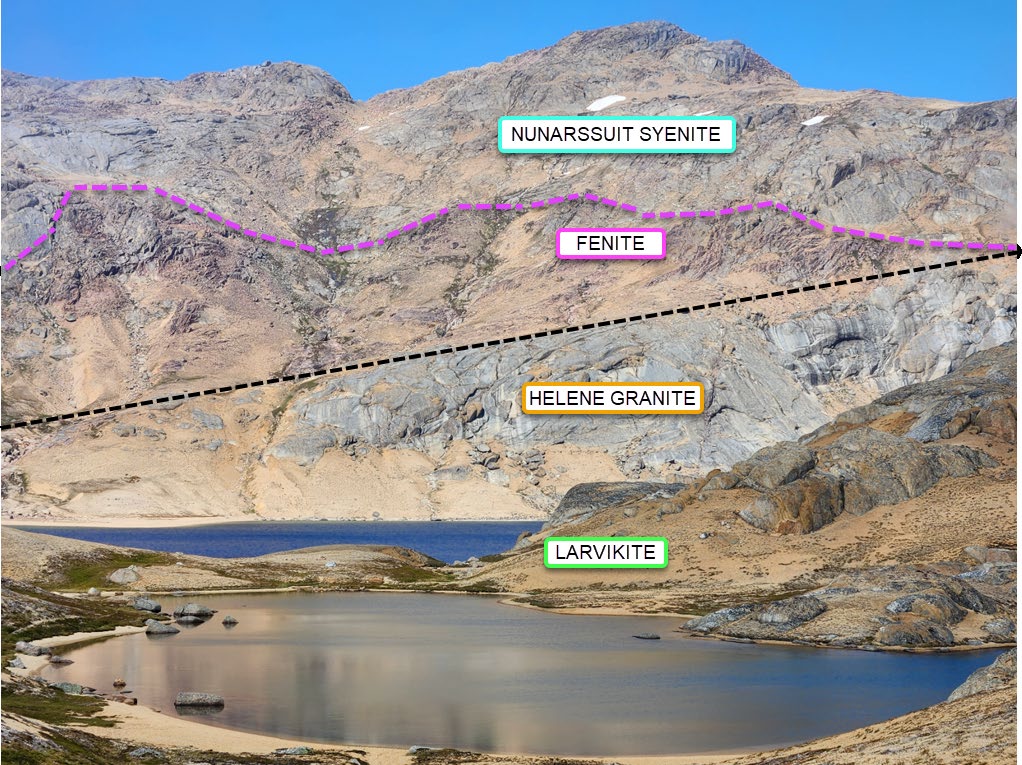
Blue Lagoon features a ‘distinctive’ elliptical architecture. The heavily weathered Larvikite unit of the Kitsigut Syenite is interpreted to form the weathered core of the complex, while the Helene Granite makes up much of the surrounding undulating foothills at low to intermediate elevations.
At higher elevations, the Nunarssuit Syenite forms the highest and most prominent ridges surrounding the lagoon.
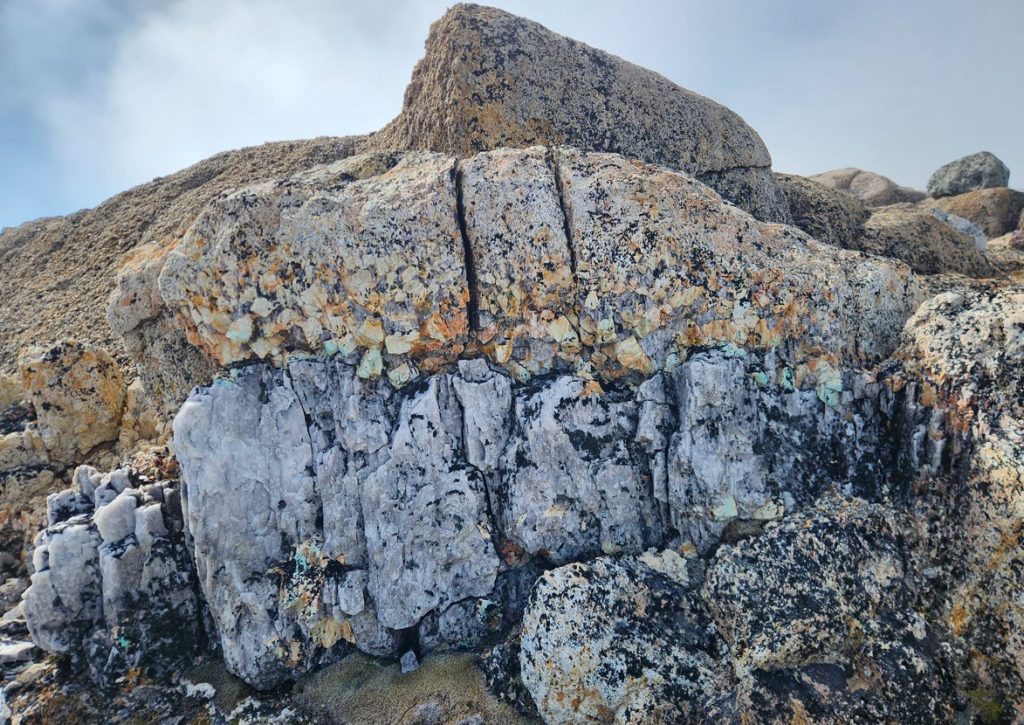
Dalaroo says the orientations of quartz veins and pegmatites mapped across the area show similarities to the structural setting of Amaroq’s (LSE:AMRQ) nearby Ilua REE pegmatite discovery. Quartz veins more than 0.5m thick occur within intensely fenitised zones, providing priority areas for integration with assay results.
The company also notes that late-stage fenitisation is interpreted to reflect alkali-rich hydrothermal fluids exploiting pre-existing structural pathways. It adds that the most extensive felsic phase comprises shallow-dipping, approximately east-west-trending aphanitic aplite sills.
Exploration Manager Trystan Hughes says the detailed mapping program provided a significant amount of new geological information.
“The widespread fenitisation and late-stage felsic activity identified during mapping demonstrate the scale of the hydrothermal and intrusive system and provide multiple vectors towards potentially more fertile parts of the system,” Hughes says.
“We are also developing a clearer understanding of the relationship between the older dolerite dyke network and the younger felsic and alkaline intrusive phases.
“This provides an important framework for interpreting the geological evolution of the Blue Lagoon system.”
Advancing Blue Lagoon: Next steps
More than 200 samples comprising geological, rock-chip, stream sediment, and surface sediment samples were collected during the program and are being analysed for multi-element geochemistry. Selected samples are also undergoing mineralogical and preliminary metallurgical test work.
Dalaroo expects to receive laboratory assays from rock, stream sediment, surface, lagoon, and offshore sediment samples, as well as mineralogical confirmation of interpreted REE-bearing minerals, in the coming weeks.
The results will then be integrated with broader 2026 exploration datasets, including surface rock-chip and sediment geochemistry, lagoon and offshore sediment sampling, and ground-penetrating radar and bathymetric surveys. The company says this will assist in prioritising targets for follow-up mapping, geochemistry, and future drilling.
Dalaroo Metals is an explorer focused on the discovery and development of gold and critical mineral projects across Australia and international jurisdictions.
Write to Paula Fabe at Mining.com.au
Main image: Dalaroo Metals