



Africa has long supplied the world with the raw materials that fuel its industries, power its economies, and shape its technological ambitions.
From the cobalt-rich deposits of the Democratic Republic of the Congo (DRC) and the copper belts of Zambia to South Africa’s platinum group metals and the goldfields of West Africa, the continent holds resources central to the global economy.
The scale of that endowment is considerable. The African Development Bank estimates that the continent holds around 30% of the world’s critical mineral reserves.
Yet for many African nations, the challenge has never simply been finding minerals. It is capturing more of the value they generate.
As demand for critical minerals accelerates, countries race to secure supply chains for the energy transition. But beneath the growing international interest lies a longstanding economic question: How much of the wealth generated by extraction stays in the countries where those resources are found?
Much of the continent’s mining industry remains concentrated in the early stages of the value chain — exploration, extraction, and exporting.
Refining, advanced processing, and manufacturing often take place elsewhere, meaning that some of the higher-value economic activity associated with mineral production is captured outside the countries of origin.
Developing domestic processing, refining, and manufacturing can create more jobs, strengthen local industries, and expand the economic benefits of mining.
However, capturing that value requires more than a mineral deposit and an investor willing to develop it. Reliable electricity, transport infrastructure, access to capital, regulatory certainty, and sufficient processing capacity all influence whether downstream industries can operate competitively.
For African governments, the task is to attract the investment needed to develop their resources while ensuring that mining contributes to a broader economic base.
For companies, the challenge is navigating different fiscal regimes, infrastructure constraints, and expectations around local participation across a continent with vastly different mining jurisdictions.
Against that backdrop, established producers, developers, and explorers are pursuing opportunities across Africa, from gold projects in West Africa to critical mineral operations in southern Africa.
These companies’ experiences offer insight into the opportunities and obstacles shaping the continent’s mining future — and whether its vast underground wealth can translate into lasting economic value for producing countries.
The value gap
The gap between possessing mineral wealth and capturing its full economic value lies at the heart of Africa’s mining challenge.
According to AfriCapital Review, the share of value Africa captures from its own mineral exports totals 6%, with the remaining 94% of the final product value added and captured elsewhere.
AfriCapital Review links this imbalance to a global economic structure shaped by colonial-era trading patterns, under which raw materials were exported from Africa to industrial economies for processing, finishing, branding, and sale.
While the historical roots of this model remain relevant, its contemporary effects are also shaped by investment decisions, infrastructure gaps, industrial capacity, and the concentration of processing facilities in established manufacturing centres.
The DRC illustrates the contrast between geological potential and broader economic development. The US Government’s International Trade Administration estimates the DRC’s largely untapped mineral resources to be worth US$24 trillion ($34.5 trillion).
Yet the country remains among the world’s least developed economies, demonstrating that the value of resources underground does not automatically translate into widespread wealth. Its gross domestic product (GDP) is US$91 billion, while GDP per capita is US$567.
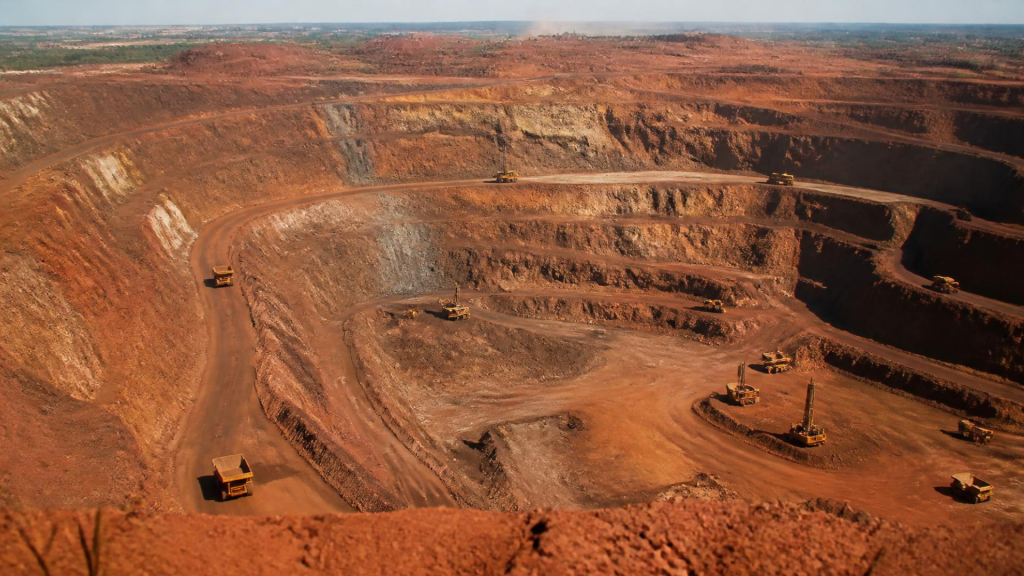
Many African countries currently operate in the upstream segment, extracting minerals and exporting raw materials without substantial value addition.
When minerals leave the country before substantial processing, opportunities to develop associated industries, technical skills, and higher-value employment may also leave with them.
Zero Carbon Analytics reports that this reinforces Africa’s position at the lower end of global value chains, limiting the economic benefits countries can capture and their ability to negotiate favourable trade terms.
“By engaging in processes that add value to mineral resources and increasing processing capacity within Africa, countries could export immediate goods or final products and shift their positions in value chains to the midstream or downstream segments,” Zero Carbon Analytics says.
The potential economic benefits include more employment opportunities in processing, higher export earnings, and increased government revenue. However, these gains depend on whether projects can operate economically, attract sustained investment, and compete with established processing hubs elsewhere.
There is a substantial opportunity if those conditions can be met. According to McKinsey & Company, Africa has the potential to generate between US$200 million and US$2 billion of additional annual revenue by 2030 and create up to 3.8 million jobs by building a competitive, low-carbon manufacturing sector.
For African producing nations, the question isn’t about how much mineral wealth can be extracted, but how effectively that activity can support the industries, infrastructure, and workforce needed to retain more value domestically.
Balancing ambitions with investment
Efforts to capture more value from mineral resources are also changing the relationship between governments and mining companies.
Resource nationalism — the drive by governments to exercise greater control over natural resources and secure a larger share of the economic benefits — is not unique to Africa.
Across the world, governments are reassessing how mineral projects contribute to national priorities, including domestic processing, employment, tax revenue, and supply chain security.

For mining companies, however, policies designed to increase local value addition must be balanced against the cost, scale, and commercial viability of development projects.
“The geology is spectacular — it’s just the politics that is useless,” Andrada Mining (OTCQB:ATMTF) CEO Anthony Viljoen tells Mining.com.au.
Viljoen argues that concerns around government policy and foreign investment are not exclusive to Africa, while noting differences between emerging mining jurisdictions and established markets.
“But I do think that there is that reluctance to be accepting of foreign investors, whereas Canada and Australia are obviously mature markets and they’ve got mature stock exchanges,” he says.
“But that tide is changing quite substantially and quite rapidly.”
Skylark Minerals (ASX:SKM) Managing Director Michael Jardine echoes this sentiment, saying the push for local processing and refining reflects a broader shift in the global mining industry.

“There will inevitably be a landing place that works for both the mining industry and host governments,” Jardine tells Mining.com.au.
“The industry operates on decades-long timelines and for projects to succeed and contribute through the inevitable price cycles a common sense approach from both sides is required.
“In a place as vast and varied as Africa, different operating models have and will continue to emerge and we see that as a normal part of doing business there.”
That balance is important to the broader economic question. Governments may seek to increase domestic processing, but building a refinery or manufacturing facility requires capital, reliable power, transport links, technical expertise, and a sufficient supply of material to operate efficiently.
Policies that overlook these requirements risk making projects less competitive or discouraging investment before the anticipated benefits materialise.
Conversely, predictable regulations, appropriate fiscal arrangements, and investment in shared infrastructure can help create conditions in which mining companies and host economies benefit over the long term.
The African Development Bank and many other institutions have emphasised the need to connect mineral extraction with regional value chains and industrial development.
The aim is not simply to mine more, but to strengthen the economic links between mines, local suppliers, processing facilities, and manufacturers.
For investors, the implications can differ substantially from one country to another.
Nothing but positive: Côte d’Ivoire
Africa is the world’s second-largest continent, and its mining jurisdictions vary widely in infrastructure, security, fiscal settings, energy availability, and industrial capacity.
Jardine says these differences are particularly important when assessing individual projects.
In some jurisdictions, inadequate infrastructure can increase capital expenditure and operating costs. Elsewhere, fiscal stability or security may be the more significant consideration.
“Skylark is focused on West Africa, in particular Côte d’Ivoire, and our experience to date has been nothing but positive,” Jardine explains.
“It’s infrastructure rich, has a deep service sector, fantastic geology, a supportive government, and one of the fastest-growing economies on the continent.”
Côte d’Ivoire provides an example of how country-specific conditions can influence the development of Africa’s mineral resources. The nation’s mining sector contributes roughly 5% of GDP and 13% of total annual exports.
Its gold sector has attracted exploration and development activity, offering companies opportunities to advance deposits within an established and growing industry.
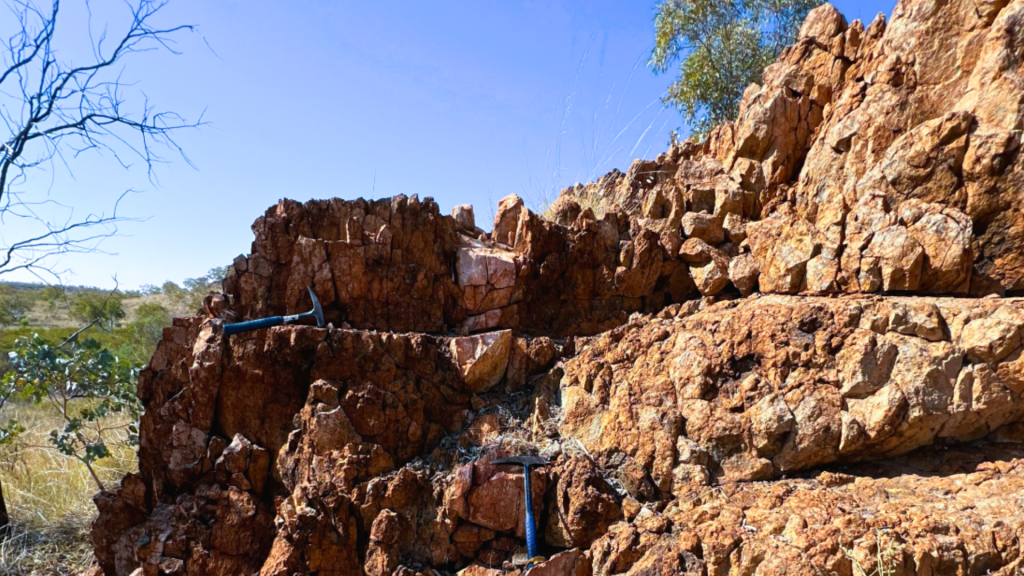
Skylark Minerals holds a portfolio of gold-focused projects in the country, including its flagship Zaranou Project, which the company has the option to fully acquire.
Zaranou has a current inferred resource estimate of 364,000 ounces of gold at 1.8 grams per tonne.
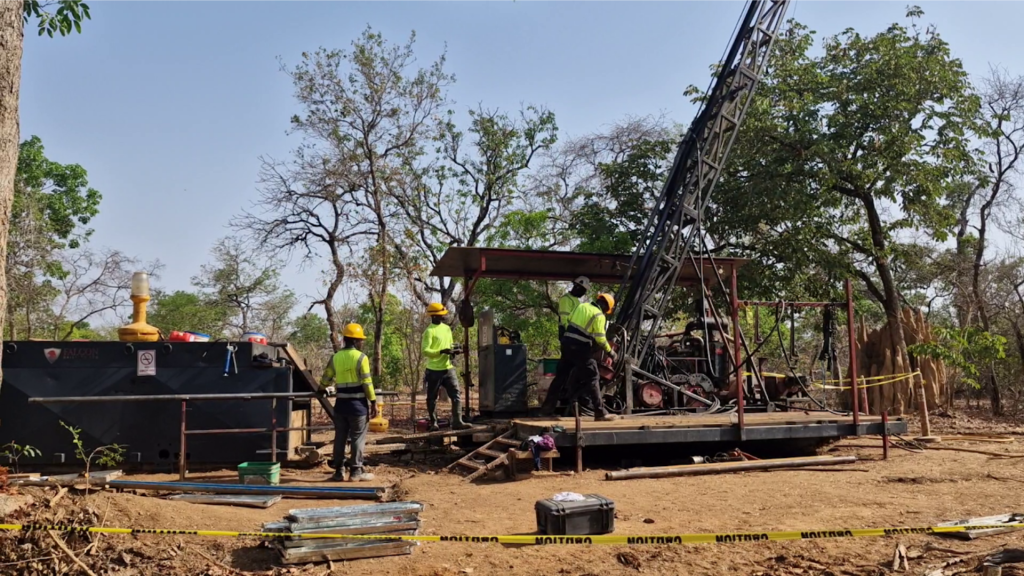
In late September, the company received final results from a drilling program at the M’Basso prospect. The findings confirmed mineralisation across a previous gap between the phase one and phase two drilling areas, extending the mineralised footprint across the entire 2km of strike.
Meanwhile, Many Peaks Minerals (ASX:MPK) is advancing gold and copper projects in Côte d’Ivoire, with a primary focus on the Ferke Project.
The company recently received drill results from the Ouarigue prospect, supporting the decision to progress a Scoping Study to assess the viability of underground mining methods at Ferke.
Many Peaks intends to conduct an integrated technical and economic assessment of potential open-pit developments and underground development pathways. An open-pit scenario will include Prefeasibility Study technical work, while potential underground development options will initially be evaluated at a Scoping Study level.
While exploration results and development studies do not guarantee that a project will become a mine, they demonstrate the pipeline of opportunities that can underpin future production, investment, and employment.
Whether that activity translates into broader economic value will depend on what happens beyond the discovery and extraction stages.
Metallogenic jewel: Namibia
Côte d’Ivoire is one example of the opportunities emerging in West Africa. Further south, Namibia offers a different perspective on the relationship between established mining industries, new discoveries, and economic development.
Mining is a major contributor to Namibia’s economy, accounting for roughly 10% of the country’s GDP and driving a substantial share of national export earnings and foreign direct investment.
Andrada Mining’s Anthony Viljoen says where the company is positioned in Namibia is often likened to Western Australia — “its wide open expanse, lots of good geology, and there’s links into really good infrastructure”.
“There are some gems out there and if you take a different view of the world and don’t follow the mining perceptions, you can find some absolute cracking deposits out there,” Viljoen says.
Andrada Mining’s assets lie in the Erongo region, which the company describes as a metallogenic jewel of northwest Namibia.
The company’s flagship Uis mine, covering 19,700 hectares, hosts numerous pegmatites with mineralisation including lithium, tin, tantalum, and rubidium. The operation illustrates how a single mining district can hold potential across multiple commodities, some of which are important to advanced manufacturing and energy-related technologies.
At Uis, Andrada increased tin production by 13% to 576 tonnes in H1 FY2027, compared with 511 tonnes in H1 FY2026. At the same time, tin concentrate production increased 11% to 955 tonnes, compared with 858 tonnes a year earlier.
“This performance demonstrates the benefit of the operational improvements we have made at Uis and provides a stronger base from which to deliver the next phase of growth,” Viljoen says.
“The higher feed grades and processing rate supported the increased tin production and the recently secured NAD$98 million [$8.6 million] bank funding package from Bank Windhoek and Development Bank of Namibia will enable us to implement the installation of the ore sorting circuit.”
The planned ore sorting circuit represents a practical example of value creation at the operational level. By separating ore more effectively before further processing, the technology can potentially improve processing efficiency and increase the proportion of mined material that can be used.
Its ultimate contribution will depend on the circuit’s performance and the economics of implementation.
The experiences of companies operating across Africa illustrate why there is no single model for the continent’s mining future. Some jurisdictions may be better placed to expand existing processing capacity, while others may first need to address infrastructure gaps, develop technical expertise, or build sufficient production capacity.
Ultimately, Africa’s mineral wealth is an asset, not a guarantee of economic transformation. Whether it delivers lasting value will depend on choices made by governments, investors, and mining companies.
Write to Aaliyah Rogan at Mining.com.au
Main image: Mining.com.au


