



If Australia is considered a mining powerhouse, South America is more than that. From the copper-rich Andes to the vast mineral deposits stretching into the Amazon, it is one of the places shaping the future of the global resources sector.
Besides the continent’s mountains, deserts, and rainforests, it also sits on some of the world’s most important deposits. Yet its importance to global mining is not a question of how much rock it produces.
“South America is essential; a majority of copper comes from Chile and Peru, with Argentina and Brazil also quickly emerging as large producers of lithium,” Solis Minerals (ASX:SLM) CEO Mitch Thomas tells Mining.com.au.
“The continent has the geology and scale needed to supply much of the world’s future copper and lithium demand.”
South America produces about 4.7% of the world’s minerals by total volume, according to data by Visual Capitalist. But the relatively modest share masks the continent’s outsized influence over several commodities that are becoming more strategic.
Chile and Peru together produce around 40–45% of the world’s copper, while Chile, Argentina, and Bolivia sit at the centre of the lithium triangle, collectively accounting for around 50% of the world’s lithium production.
That concentration gives South America enormous leverage over the minerals the world needs. But getting those minerals out of the ground is becoming a more complicated proposition.

A continent of opportunity
Across the continent, geological potential collides with ageing mines, declining grades, infrastructure constraints, changing political priorities, environmental pressures, and the challenge of attracting the capital needed to build the next generation of mines.
And while South America may share a geological backbone in the Andes, its mining jurisdictions are far from identical.
Each country brings its own combination of mineral wealth, investment conditions, and regulatory frameworks, as well as political dynamics and social expectations. These factors shape not only what can be mined, but how quickly new supply can reach the market.
As the global demand for critical minerals intensifies, South America’s mining jurisdictions are facing a defining moment. Can the region supply the minerals needed to electrify without repeating environmental and social problems?
Speaking to Mining.com.au, Stockworks Gold (TSX-V:STW) CEO Nasim Tyab says a mineral project has to make sense geologically, economically, environmentally, and socially.
“That starts well before a mine is contemplated,” Tyab explains.
“Companies need to understand who owns and uses the land, communicate what work is being proposed, minimise disturbance wherever possible, and build relationships with local landowners and communities.”
This leg of the global mining tour heads into the heart of that question, travelling through the continent’s major mining jurisdictions to examine the commodities driving their economies and the companies seeking to unlock the next generation of resources.
Chile’s copper crossroads
The first stop is Chile — a country whose economy, landscape, and global influence have been shaped by one commodity above all others: copper.
Stretching along the western edge of the Andes, Chile is the world’s leading producer of copper, iodine, rhenium, and molybdenum. Mining contributes more than 10% of the nation’s gross domestic product (GDP) and accounts for more than half of its total export value.
Chile’s mineral wealth has attracted some of the biggest names in global mining, from state-owned giant and the world’s largest copper producer Codelco to BHP Group (ASX:BHP), Glencore (LSE:GLEN), and Anglo American (LSE:AAL).
But the country’s position at the top of the copper supply chain is facing a familiar mining problem. Its best deposits are maturing.
Speaking to Mining.com.au, Merlin Marr-Johnson, CEO of Fitzroy Minerals (TSX-V:FTZ), says Chile is a pro-mining country, explaining it as the “lifeblood of the economy”.
“It’s 60% of exports and depending on how you measure it, it’s between 14% of direct GDP, up to 22% when you include the associated industries with the mining industry,” Marr-Johnson says.
Yet maintaining that contribution is becoming increasingly difficult as grades decline and some of the country’s major operations mature.
Marr-Johnson points to Codelco’s falling production and the pressure on the state-owned miner to reinvest. BHP’s Escondida — the world’s largest copper mine — provides another illustration of the challenge facing Chile’s established producers.
“Last year, BHP’s Escondida mine produced 1.3 million tonnes (Mt) and is forecast to produce 1.1Mt this year, and then over the next four to five years fall to 800,000 tonnes,” Marr-Johnson says.
“And they’re spending US$5 billion [$7.2 billion] to replace the concentrator and expand throughput to get back up to 1.1Mt. So they talk about growth, but actually it’s just replacement, because they don’t talk about the decline of their existing production.”
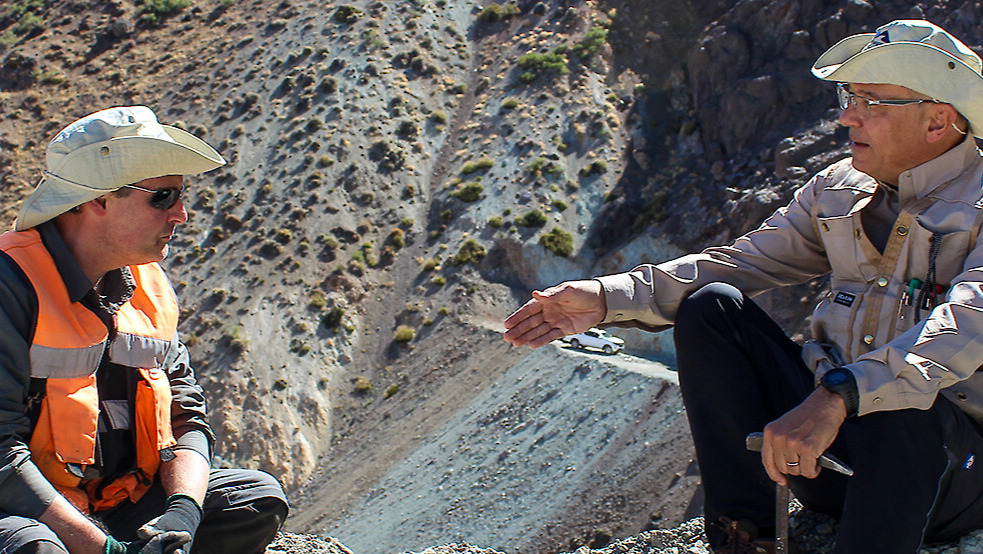
The challenge, then, is not necessarily a lack of copper beneath Chile’s surface. It is finding and developing the next generation of deposits capable of replacing what ageing operations are losing.
That is where the country’s exploration sector comes into focus.
“We’re seeing a whole bunch of Aussie juniors coming over looking for and picking up ground,” Marr-Johnson says.
Fitzroy is among the Australian juniors, with the company targeting production at the Buen Retiro Project in early 2028, as previously reported. Metallurgical test work is also being carried out, ahead of delivering a Prefeasibility Study.
As an iron-oxide copper–gold (IOCG) project, Buen Retiro is located 60km south of Copiapó in north-central Chile. The properties are clustered around and include a historical open pit mine called Manto Negro that was previously operated by Sociedad Punta del Cobre (BCS:PUCOBRE).
“The exploration tempo is increasing — we are commissioning drill rigs at the moment for new drill programs and we’re seeing a little bit of cost inflation coming through,” Fitzroy’s CEO notes.
But Chile is only one side of South America’s copper story.
Peru’s untapped potential
If Chile represents the challenge of maintaining production from a mature copper powerhouse, Peru offers a different lens on the continent’s enormous copper potential — and the hurdles standing between geological endowment and new supply.
Peru’s mining sector is considered a fundamental pillar of its economy, contributing over 9% of its GDP and representing 62% of its export revenues.
The country ranks as the second-largest producer of copper, silver, and zinc globally, and is a leading producer of gold, tin, and molybdenum. According to the US Geological Survey, Peru holds 12% of global copper reserves, 3.9% of gold, 15.3% of silver, 9.5% of zinc, 5.3% of lead, and 2.8% of tin.
Although Peru has an immense mineral endowment, less than 1% of the country’s land has been explored and only just over 1% of the reserves are under development.
This leaves plenty of exploration potential and opportunities for mining companies to get involved.
One of those companies is Solis Minerals, which began a diamond drilling program at its Cinto Copper Project in early September.
Drilling initially tested coincident geochemical and geophysical targets identified through an induced polarisation survey.
CEO Mitch Thomas says the project area features ‘excellent’ copper porphyry potential, with “abundant outcropping breccia-style copper mineralisation, geophysical targets, proximity to globally significant copper mines, and regional infrastructure”.
Despite Peruvian projects being prospective or showing strong potential, Thomas says the challenge is turning discoveries into mines quickly and responsibly.
“That requires investment, infrastructure, sensible regulation, and community support,” he tells this news service.

EY’s latest investment guide on Peru’s mining and metals highlights this exact fundamental tension. Peru’s mineral potential is considerably greater than its ability to develop it quickly and smoothly.
“One of the most practical lessons is that having mineral rights does not by itself mean that exploration can proceed effectively,” Stockworks Gold CEO Nasim Tyab adds.
The nation continues to face weaknesses in its institutional environment, transport infrastructure, and education. Its reliance on mining also leaves the broader economy exposed to swings in global commodity prices.
For the mining sector, permitting remains one of the most significant bottlenecks. Peru is attempting to address this through a digital ‘single window’ platform, bringing agencies together to streamline approvals for exploration and mining projects.
At the same time, miners must navigate a more difficult social landscape. EY points to persistent income and regional inequalities as a source of social conflict, with disputes having already affected mining projects.
The challenge, therefore, is not simply gaining community acceptance at the beginning of a project, but maintaining that relationship throughout its life. This requires demonstrating tangible shared economic and social value.
For Peru, both the opportunity and challenge are apparent. Converting one of the world’s richest mineral endowments into a reliable source of future supply will depend not only on exploration and investment, but on infrastructure, community relationships, and stronger institutional capacity.
Argentina opens the door
If Peru’s challenge is turning an established mining powerhouse into a faster and more reliable source of future supply, Argentina presents a different proposition.
Argentina has emerged as an increasingly important piece of South America’s critical minerals puzzle.
The Argentinian Government has been moving to simplify mining procedures and strengthen investment certainty. The country’s Large Investment Incentive Scheme (RIGI) is already attracting major projects across the lithium, copper, gold, and silver sectors.
RIGI is a national framework offering a 30-year guarantee of tax, customs, and foreign exchange stability for strategic projects exceeding US$200 million.
In late September, the US Export-Import Bank announced its plans to provide up to US$7 billion in financing for Argentinian critical minerals and energy projects, according to a document reviewed by Reuters.
In these cases, copper and lithium are particularly significant. Argentina currently holds the third-largest lithium reserves in the world, and is the fourth-largest producer globally. The nation has not produced any copper since 2018, but holds massive undeveloped porphyry deposits projected to yield millions of tonnes of copper annually.
That emerging significance of Argentina’s minerals sector is already reflected in exploration and development, with companies advancing projects aimed at tapping Argentina’s potential.
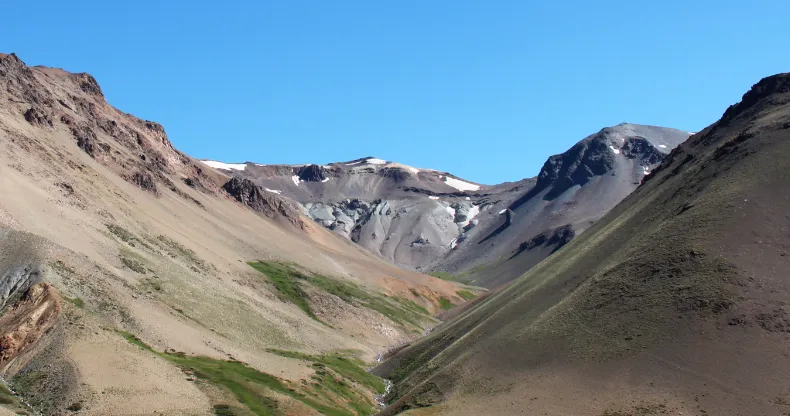
Kobrea Exploration (CSE:KBX), for example, entered into an alliance agreement with BHP’s subsidiary BHP Metals Exploration earlier this year. The alliance involves both companies advancing exploration across the Western Malargüe Copper Projects.
BHP Metals will make a one-time advance cash payment of US$3 million to Kobrea upon starting the agreement. BHP Metals will also fund a minimum of US$5 million in exploration expenditure over an initial two-year period, as part of the project generation phase.
As mentioned, major mining companies are becoming more embedded into the South American mining landscape.
BHP, in particular, has built its global copper business around long-life, tier-one assets. As previously reported, for Kobrea CEO James Hedalen, that explains why BHP approached the company.
“In general, major miners are looking for tier-one deposits with district-scale potential, not small, standalone discoveries,” Hedalen says.
“We believe our land package has the geological potential to host the kind of tier-one deposits major mining companies are seeking.”
Covering a 733km2 area, the Western Malargüe Copper Project sits in the southern Neogene Porphyry Belt of western Mendoza Province. The Neogene Porphyry Belt contains the largest and third-largest copper inventories in the world — Los Bronces (204.3Mt) and El Teniente (128.5Mt).
Copper mineralisation encountered on Western Malargüe to date includes hydrothermal breccias of varying compositions, skarn-type or replacement-type, quartz stockwork, and disseminated mineralisation.
But unlocking that potential requires more than favourable geology and investment incentives. Infrastructure, regulatory consistency, and coordination between national and provincial governments, companies, and communities remain important factors in determining how quickly projects can move from resource to production.
And that brings the South American story to another level.
Brazil’s diversification play
While Argentina is working to build a larger mining industry, Brazil enters the picture from an entirely different starting point.
Already one of the world’s major mining economies, Brazil produces more than 90 commodities and has built a dominant position in iron ore, gold, copper, nickel, bauxite, manganese, graphite, and niobium.
The opportunity now is diversification.
Brazil is the world’s second-largest iron ore exporter and holds roughly 98% of global niobium reserves. As such, its mining industry generates approximately US$60 billion in revenue, according to Austrade.
Investment in the nation’s mining sector is projected to reach more than US$76 billion from 2026 through to 2030, including over US$21 billion directed towards critical minerals.
Stockworks Gold CEO Nasim Tyab explains that Brazil has an unusually broad mineral endowment, an established mining industry, and substantial areas that remain under-explored.
“Goiás itself demonstrates that diversity — in addition to gold, the state hosts significant copper-gold, nickel, niobium, and phosphate operations,” Tyab says.
“Those are part of a much broader Brazilian mining sector that can contribute to the materials required by a growing and increasingly electrified global economy.”
Stockworks Gold’s Pirenópolis Project lies in a historical gold district where placer mining dates back to the 1700s. However, there is little evidence of modern, systematic exploration for the primary bedrock source of that gold.
Tyab says that the company’s exploration to date has uncovered numerous targets that will continue to be evaluated.
“Our objective is straightforward: apply modern exploration techniques to a historically productive but relatively under-explored district and determine whether a significant primary gold system can be identified,” the CEO says.

Although gold is not principally an energy-transition mineral, Tyab explains that the Goiás state illustrates some of the reasons Brazil can become more important to the global mineral supply.
“Prospective geology, an established mining culture, access to skilled labour, existing road and rail infrastructure, and significant hydroelectric power generation,” he notes.
“The larger opportunity is not simply in increasing production from existing deposits. It is continuing to explore and identify the next generation of deposits across a country that still has considerable geological potential.”
For companies exploring in Brazil, the scale of opportunity is significant. But so too are the challenges. These range from developing geological knowledge and raising exploration capital to building processing capacity, skilled workforces, and infrastructure capable of supporting a more sophisticated mineral supply chain.
Together, all these nations illustrate the breadth and complexity of South America’s mining opportunity.
South America has the geology to play a defining role in the global critical minerals race. But turning that potential into reliable supply will depend on investment, infrastructure, regulation, and strong relationships with communities.
As demand for critical minerals accelerates, the question remains: can South America supply the minerals needed to electrify without repeating environmental and social problems?
Write to Aaliyah Rogan at Mining.com.au
Main image: Mining.com.au


