


When Environment Minister Tanya Plibersek put the brakes on a billion-dollar New South Wales gold mine a couple of weeks ago, Australia’s mining industry appeared to suffer a kind of meltdown.
Warren Pearce, CEO of the Association of Mining and Exploration Companies (AMEC), said the decision was “incredibly disappointing” and “sets a truly terrible precedent for investment risk in Australia”.
The Minerals Council of Australia was similarly discontented, saying the project was a “significant opportunity for economic development” and that the ruling set a “dangerous precedent”.
Rebecca Tomkinson, CEO of Western Australia’s Chamber of Minerals and Energy, said the “uncertainty adds to the risk” faced by those seeking to get mining projects off the ground.
Even Nationals MP Barnaby Joyce warned Australians are “going to be poor” if the Albanese Government continued to put pressure on mining projects, while Indigenous activist Warren Mundine said Plibersek’s decision was “disgraceful”.
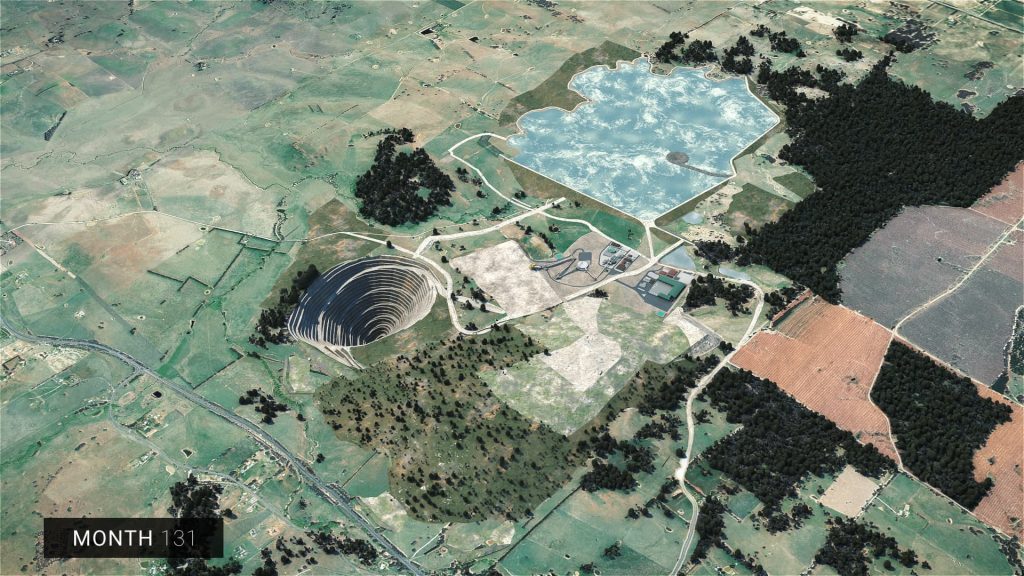
Indeed, it was a blow to Regis Resources (ASX:RRL), which had spent years pinning down approvals for its wholly owned McPhillamys Gold Project, located 250km west of Sydney.
What is particularly noteworthy, however, is the way the conversation evolved. It didn’t take long before terms like ‘sovereign risk’ were being thrown around as cause célèbre, while some industry players wondered whether Australia is at risk of losing its standing as a premier mining jurisdiction.
“There used to be parts of the world that we would not consider because of the sovereign risk and where things could be flipped for no reason. We did not think it could happen here,” Regis CEO Jim Beyer said after Plibersek’s decision.
“We will still consider Australia, but it has certainly affected the attractiveness, and we have to now consider sovereign risk in some parts of the country.”
The mighty hand of Plibersek
According to its website, Regis purchased the McPhillamys Project in 2012, and has since poured more than $150 million into exploration, scientific studies, and design reviews.
In March 2023, the project was approved by the Independent Planning Commission (IPC) of NSW, subject to a number of conditions that were factored into a Definitive Feasibility Study published in July this year. An assessment under the Environmental Protection and Biodiversity Conservation Act also cleared the project in May 2023.
Regis says the IPC process included “significant engagement” with local communities, including the Orange Local Aboriginal Land Council (OLALC), which said the development of McPhillamys would not impact any known sites or artefacts of great importance.
What tripped things up, however, was the submission in 2021 of a Section 10 application to Plibersek’s office, the Federal Department of Climate Change, Energy, the Environment, and Water. Under the Aboriginal and Torres Strait Islander Heritage Protection Act, a Section 10 declaration prohibits any activities that will, or are likely to, damage or desecrate a specific area.
The Section 10 application was filed on behalf of another group of traditional owners, the Wiradyuri Traditional Owners Central West Aboriginal Corporation, with support of conservationists from the Belubula Headwaters Protection Group. Both groups were represented by the Environmental Defenders Office.
After considering advice from her department, Plibersek elected to make a declaration over part of the Belubula River, its headwaters, and its springs, which fall within the footprint of Regis’ proposed tailings storage facility for McPhillamys.
Wastewater from gold mining operations is notoriously toxic, and tailings dams are famously accident-prone. Regis’ proposed dam would sit directly on the headwaters of the Belubula River, which flows into the Lachlan and on to the vast Murray-Darling Basin.
In November 2015, the Fundão tailings dam at the Samarco Mariana Mining Complex in Brazil suffered a catastrophic failure, flooding the villages of Bento Rodrigues and Paracatu de Baixo roughly 40km away, killing 19 people, and spreading pollutants throughout 668km of waterways.
In January 2019, some 270 people were killed when a dam collapsed at the Córrego do Feijão iron ore mine, also in Brazil, while a breach at the Mount Polley mine in Canada in 2014 spilled 25 billion litres of contaminated water into Polley Lake, Hazeltine Creek, Quesnel Lake, and Cariboo River — a source of drinking water and major spawning grounds for salmon.
“The Wiradjuri/Wiradyuri people, who traditionally lived around the Bathurst area, have significant spiritual and cultural connections to the headwaters of the Belubula River,” Plibersek said in a statement in mid-August.
“The headwaters are of particular significance to Wiradjuri/Wiradyuri people and are linked to ongoing cultural practices of the area. They have featured in many traditions practiced for generations including by Aboriginal people transitioning from youth to young adulthood.
“Some of these traditions have been disclosed to me privately and must remain confidential due to their cultural sensitivity. If this site were to be desecrated, it would be a threat to the continuance of Wiradjuri/Wiradyuri culture.”
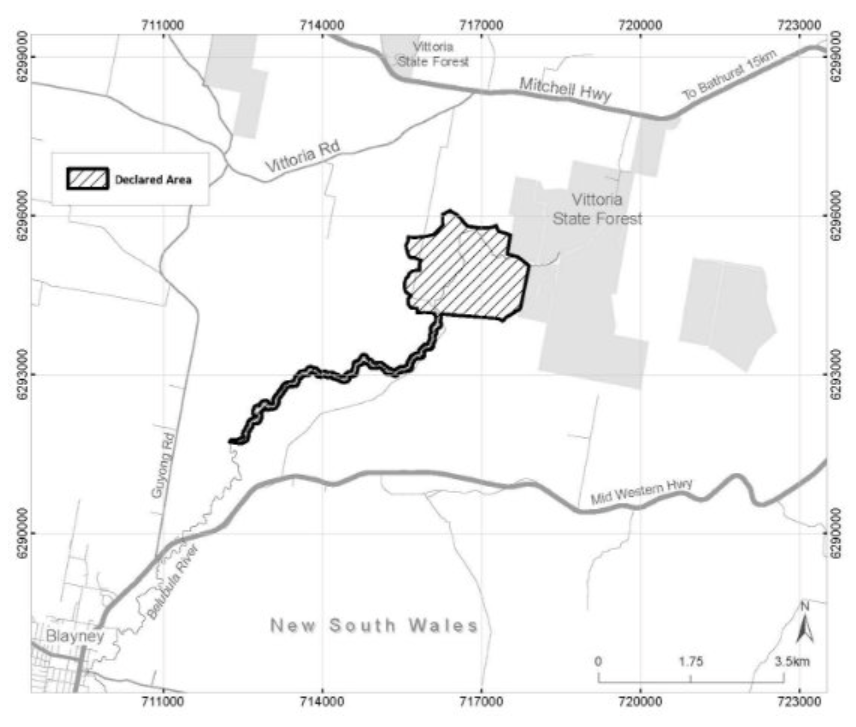
Still, it was only a partial win for the Section 10 applicants, who had sought to have the entire 2,500-hectare site protected.
Plibersek, however, granted protection for just 400 hectares.
“There’s actually nothing to stop the mine going ahead,” Plibersek said in an interview with The Saturday Paper.
“They just need to find a new location for the tailings dump that is not on a culturally significant site for Wiradjuri people. . . . They’re free to use the other 2,100 hectares.”
The minister added that Regis had indicated there are around four sites and 30 potential other options for the tailings dam.
Beyer, however, says finding an alternative “will require further extensive investigations and studies along with the restart of the state and federal approvals process, which could take between five and 10 years.” He also noted that Regis would be forced to take a non-cash impairment of $192 million, “due to the project no longer being viable”.
What is ‘sovereign risk’?
The whole McPhillamys debate owes much of its complexity to the fact that sovereign risk, as a term, is open to a good deal of interpretation.
“In its broadest context, sovereign risk is usually defined as the level of risk of government default,” Marcus Ohm, a Partner at advisory firm HLB Mann Judd, tells Mining.com.au.
“However, in the mining context this term is almost always being used in a different sense — specifically, how is decision-making by governments likely to affect a project, how stable is the framework and decision-making process for approvals, and what is the risk of decisions being inconsistent with those which have been made before.”
A particular sticking point seems to be that Plibersek had based her decision, at least partly, on privately disclosed information. In an interview with The Daily Telegraph, the minister stood by her conclusion, noting that she had been through 2,500 pages of submissions prior to the ruling.
“No, it’s not traditional to release all of the advice publicly. That is absolutely standard with any of these decisions,” Plibersek said.
“Some of that advice is provided confidentially, and that includes information that is commercial in confidence from project proponents.”
In Ohm’s opinion, the key question for Regis is not the overall framework of the approval process, but the visibility of the decision-making and whether or not approval for the tailings dam was going to be given.
“An issue with the Plibersek decision is that it was not entirely clear at the time on what basis the tailings dam was blocked, in that the decision appears to have been based upon a confidential process with a local group,” he says.
“The confidentiality in the decision-making process means that in the absence of information, interested parties will find it difficult to understand why a decision was taken. That increases the risk of future decisions also having the potential of being difficult to predict by the mining community and therefore harder to plan for.”
Presumably with that in mind, Plibersek told The Saturday Paper that the government is proposing reforms that would expedite approvals, with better data and better guidelines on what, exactly, is necessary to get a project online.
“Quite often we’re asking proponents to provide environmental impact statements that have been done by other proponents in the same area, just a couple of years earlier,” she said.
“We’re investing substantially in collecting information so that proponents don’t have to do these EISs themselves again and again, often on the very same patch of land, or often for the same species on the same patch of land.”
What’s this all about then?
Even given the absence of information, the alleged ‘secrecy’, Ohm says it would be a stretch to say Australia has a sovereign risk problem.
“We would generally be considered a low-risk jurisdiction. We have due process and a strong legal, fiscal and regulatory framework for companies to operate within,” he explains.
“It is the nature of an approval process that there is always a risk that it won’t go the way that was expected, even at a financial cost to the investor and the local and wider economy.
“As long as we have clarity on the reason for the refusal, and strong consistent communication at all stages in the approval process, Australia remains a low sovereign risk jurisdiction for mining.”
In fact, the whole McPhillamys debacle could be about something else entirely.
“Regis Resources may well be bluffing,” wrote Mike Seccombe for The Saturday Paper.
“It is hard to imagine it abandoning such a potentially lucrative development” — the mine had previously been estimated to generate $5.2 billion in revenue — “and some observers suggest the real intent is to make a political point.”
That might be tricky to prove, but the upshot is that — broadly speaking — Australia remains a very good place indeed to be a mining company, with little actual sovereign risk. And with a range of new reforms due for implementation, such as a new national standard for First Nations consultation, perhaps this was a debate we needed to have.
Write to Oliver Gray at Mining.com.au
Images: iStock, Regis Resources, Federal Register of Legislation