

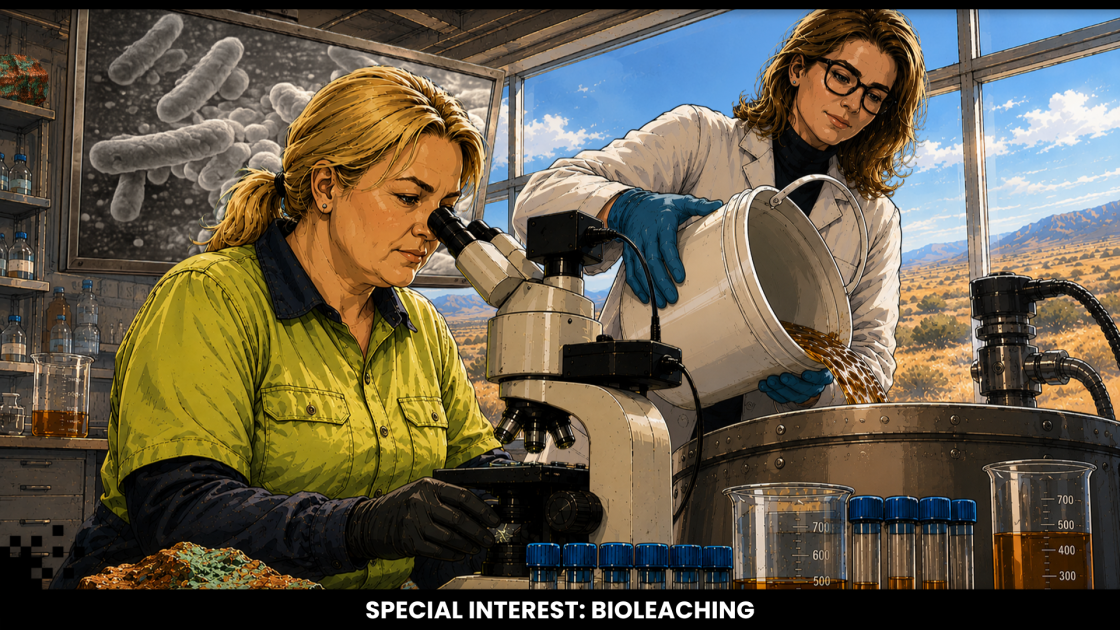
Demand for critical raw materials is growing, alongside recognition that sustainable recovery methods must also scale to ensure metals and minerals for the green transition are extracted with minimal environmental impact.
Bioleaching is increasingly being adopted across the mining industry as a low-impact, scalable, and economic process for extracting metals. The method employs microorganisms, such as bacteria or archaea, to mobilise metals out of solid mineral matrices.
Effectively, bioleaching uses these naturally occurring microbes as a separation technique. The microorganisms produce acids and can trigger reactions like oxidation or complexation, which break down the mineral and release the target metal into a liquid solution.
It is most often used for copper, however metals that can be extracted through bioleaching include gold, silver, uranium, nickel, cobalt, and zinc as well.
Rio Tinto’s (ASX:RIO) Nuton is an example of bioleaching run by one of the biggest players in the industry.
Named as one of the Top 100 Most Influential Sustainability Companies in 2026, Nuton is leading the way with bioleaching technology as it seeks to unlock copper resources, but in a responsible way.
Nuton says its technology, operated under favourable conditions, can accelerate the copper leaching process, and enable recoveries from primary sulphides up to 85%, well beyond the current industry standard.
Nuton has forged industry partnerships since its launch, with its collaboration with Amazon Web Services (AWS) gaining attention from the broader market.
Under a two-year agreement, AWS will use Nuton copper in components of its data centres in the US, while also providing cloud-based data and analytics support in order to optimise the bioleaching technology at Gunnison Copper’s (TSX:GCU) Johnson Camp Mine, located 105km east of Tucson, Arizona, US.
Amazon’s Chief Sustainability Officer Kara Hurst says the collaboration sits in line with Amazon’s pledge to reach net zero carbon by 2040, with a focus on material sourcing.
“This collaboration with Nuton Technology represents exactly the kind of breakthrough we need — a fundamentally different approach to copper production that helps reduce carbon emissions and water use,” Hurst says.
“As we continue to invest in next-generation carbon-free energy technologies and expand our data centre operations, securing access to lower-carbon materials produced close to home strengthens both our supply chain resilience and our ability to decarbonise at scale.”
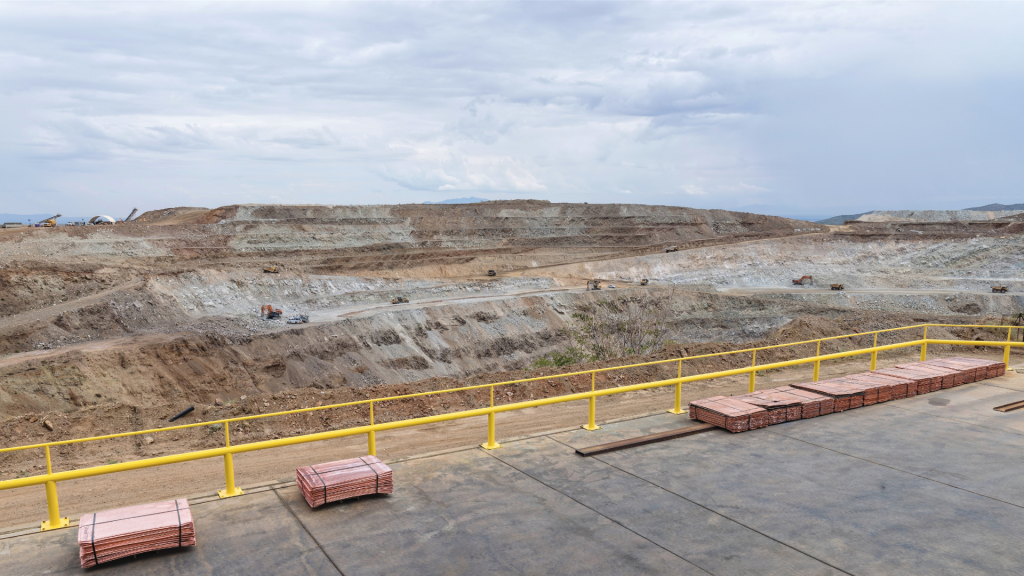
Gunnison Copper proves Nuton technology at Johnson Camp
Gunnison Copper began using Nuton’s bioleaching technology in December 2025. As previously reported, Nuton invested around US$167 million ($238 million) to demonstrate its bioleaching technology through the restart of Gunnison’s Johnson Camp Mine.
Nuton notes that the Johnson Camp Mine in Arizona is now the “lowest carbon” primary copper producer in the US, on both a mined and refined metal basis.
The Johnson Camp Mine is a live test for Nuton technology to prove its design, performance, and delivery at scale.
Alongside Johnson Camp, Gunnison also has its namesake Gunnison Copper Project, located in the Southern Arizona Copper Belt, with a main pit of measured and indicated mineral resources of over 846 million tonnes @ 0.33% copper.
The project is expected to deliver up to 11% of current US domestic refined metal production, producing 174 million pounds from mineralised material over the first 15 years of its mine life.
Over the coming months, Gunnison is focused on commencing work on the Prefeasibility Study (PFS) and permit amendments for the Gunnison Project, while ramping up to commercial production at Johnson Camp.
Within the next two years as well, the company expects to have the Johnson Camp Mine up to full nameplate production capacity, while also focusing on completing the PFS, permitting, engineering, and metallurgical test work on the Gunnison Copper Project.
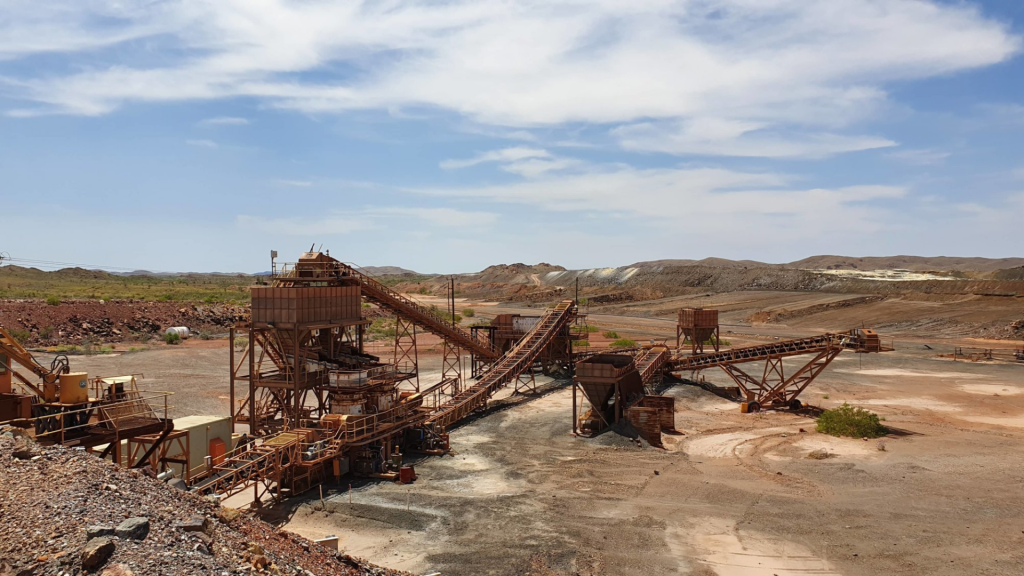
Anax advances Whim Creek with bioleaching upside
Looking at Australia, Anax Metals (ASX:ANX) has also adopted bioleaching technology as a key part of the company strategy as it advances the Whim Creek Copper Project in Western Australia toward near-term production.
Managing Director Geoff Laing notes that the company is focused on building a processing hub in Western Australia, encompassing both the Whim Creek Project and its processing hub, and expanding use for the broader region.
Anax has also strongly committed to using bioleaching as a key technology and using it to drive better outcomes for the company and the broader community.
As previously reported, Anax has worked closely with the Commonwealth Scientific and Industrial Research Organisation (CSIRO) on its bioleaching.
Laing says the company’s adoption of bioleaching provides it with “fantastic upside opportunities for the project, which is being developed in parallel to the main focus, which is industry-standard sulphide flotation of primary ores in our project reserves”.
Anax’s Whim Creek mine was initially set up as a heap leach operation, and since acquiring the project, Anax has remediated most of the heap leach infrastructure in order to get the site permitted for the planned sulphide flotation operation.
Laing says permitting is in place for the processing of sulphides through a concentrator along with heap leaching using existing infrastructure.
“It was a simple decision that we should put the heap leach infrastructure to good use and bioleaching of low-grade sulphide the obvious target,” Laing says.
Laing notes that he’s been involved in a number of leaching projects since the 1990s, including the Kasese Cobalt Bioleach Project.
“Bioleaching has always been of considerable interest to me and the stars all lined up at Whim Creek where we’ve had the opportunity to develop proprietary chalcopyrite leaching technology to complement our preconcentration and sulphide flotation flowsheet.”
Laing notes the considerable advantages that bioleaching provides, including the sustainable recovery of copper and zinc from low-grade ores, the opportunity to generate cash flow from ores that are sub-economic with conventional flotation, and the production of refined products that do not require downstream smelting.
For other juniors considering adopting bioleaching technology, Laing stresses the need for specialised professionals that can adapt the technology to each specific ore body, either done with an in-house team or contracted to technology providers.
Anax notes that it will be updating its bioleaching study over the coming months to include new innovations as well as updates on current cost and metals prices.
“We look forward to updating the market on the revised study in addition to other company newsflow regarding funding and exploration.”
As bioleaching moves from concept to commercial reality, projects like Rio Tinto’s Nuton, Gunnison’s Johnson Camp, and Anax Metals’ Whim Creek highlight how innovation is reshaping copper recovery for a low-carbon future.
With major partnerships, proven test sites, and juniors embracing the technology, bioleaching is becoming a scalable pathway to meet the surging demand for copper and other critical minerals.
Write to Amy Rotman at Mining.com.au
Images: Mining.com.au, Gunnison Copper, Anax Metals