


This article is a sponsored feature from Mining.com.au partner Aguia Resources. It is not financial advice. Talk to a registered financial expert before making investment decisions.
ASX-listed Aguia (ASX:AGR) is shaping up as one of the more pragmatic phosphate stories in global mining, with a strategy centred on low-cost production, market positioning in Brazil’s agricultural heartland, and a fast-tracked development path that points toward first production in early 2026.
The company’s focus on the Três Estradas Phosphate Project in southern Brazil, coupled with opportunistic processing arrangements and structured financing, is illustrative of its aspirations to grow from early exploration into near-term cashflow generation without relying on traditional greenfield capex models.
The seeds for success have been planted. Monitoring and steering measures in place. Regenerative systems and processes implemented. It’s a form of phytostimulation but in the corporate realm – embedding and enhancing the roots of its low-risk, high-reward strategy.
As non-Executive Chairman Warwick Grigor explains to Mining.com.au in a wide-ranging interview, while Aguia retains exposure to gold with its projects in Colombia, following years of being undervalued, the company is refining its focus and is pivoting back to phosphate.
Grigor brings more than 40 years of experience in Australian equity capital markets and the resources sector globally. He says since joining the company Aguia’s been sowing the seeds of change through a “work smarter, not harder” mentality.
“We’re lucky as a company that we have the phosphate. If you get back in history, when I came on a bit over two years ago, the company had zero money, and they had a phosphate project that was held up in the courts,” Grigor tells this news service.
“We’re lucky as a company that we have the phosphate …”
“The share price had been sliding for three years. We were offered the opportunity to take over the gold, and that cost seven million in a paper bid. But that gave us the ability to raise money where I couldn’t raise it on the phosphate.
“Now, a bit over a year ago, we won the court case. So suddenly the phosphate was a go. But we’d already done the gold acquisition. Now, to be quite fair, the progress of the gold has been disappointing last year.
“Our priority for the last few months and for the next six months, we’ll be the phosphate because that can be producing by April with first sales happening in the middle of the year.”
The court case the non-Executive Chairman speaks of started in June 2021 when a Federal Public Prosecutor in Southern Brazil, with the support of five civil associations, filed a public civil action before the 1st Federal Trial Court of the City of Bagé, State of Rio Grande do Sul, seeking an emergency injunction to put a stay on the preliminary licence for the Três Estradas Phosphate Project granted on 15 October 2019.
Aguia ended up winning the longstanding court battle in October 2024, clearing the path to first production and cashflows at its promising organic phosphate project.
Fast-forward to today and Aguia has CEO Tim Hosking on the board, appointing him Managing Director, effective 7 January 2026. Hosking’s appointment aligns with its progress in Brazil, as the company enters its final development stages before beginning mining operations.
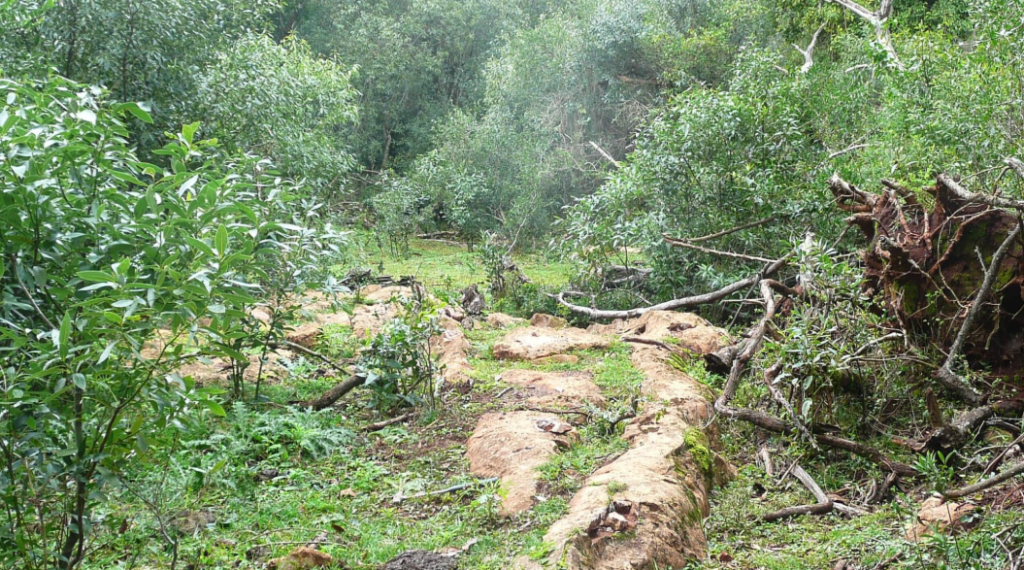
Also the company’s Brazil Country Manager, Hosking’s appointment is a shift that reflects both strategy and geography. He has been central to securing key agreements and advancing project development in Brazil.
“Shareholders should recognise that we’re building a strong mining and processing business for an in-demand product,” Hosking says, noting that global phosphate demand and higher prices underpin the company’s long-term outlook.
Looking ahead to early 2027 – three years after winning the legal stoush – Aguia expects the Três Estradas to be operating at full capacity with sales of its Pampafos product, and plans to then double production with the installation of a second processing circuit at the leased site, costing in the order of $5 million.
By this point, Aguia’s cashflow could also double to $40 million a year with the additional $20 million being generated by the investment to double production by installing a second processing circuit – a return on investment value multiple of 5x the cost.
Rapid generation advancement
As Grigor tells Mining.com.au, Aguia’s most significant strategic move in recent years has been the 10-year lease agreement for an existing fertiliser processing plant near Caçapava do Sul, executed in February 2025.
The deal gives the company direct access to capacity while avoiding the multi-million-dollar cost and time associated with building a fresh processing facility.
Currently, the facility has capacity to process around 150,000 tonnes per annum of phosphate, with upgrades and additional equipment allowing the company to target up to 300,000tpa in the medium term.
He says the lease is “a major step forward” in positioning Aguia to sell phosphate into a market that remains heavily dependent on imports.
Progress across all workstreams is advancing to plan, budget, and timelines in order to start mining operations at Três Estradas in March 2026 and processing at the DB plant in April.
Grigor’s been encouraged by the growing base of offtake volumes of Pampafos, which is held under letters of intent with Vettore as local demand continues expanding. Aguia has signed seven LOIs to sell 54,000 tons of Pampafos in Rio Grande do Sul and Uruguay.
The Ministry of Agriculture (MAPA) has approved the Pampafos product but before the registration certificate is issued, MAPA technicians must inspect and approve the processing facility once the final upgrades are finished and the mining license is granted.
After these steps, MAPA will visit the plant prior to granting the certificate.
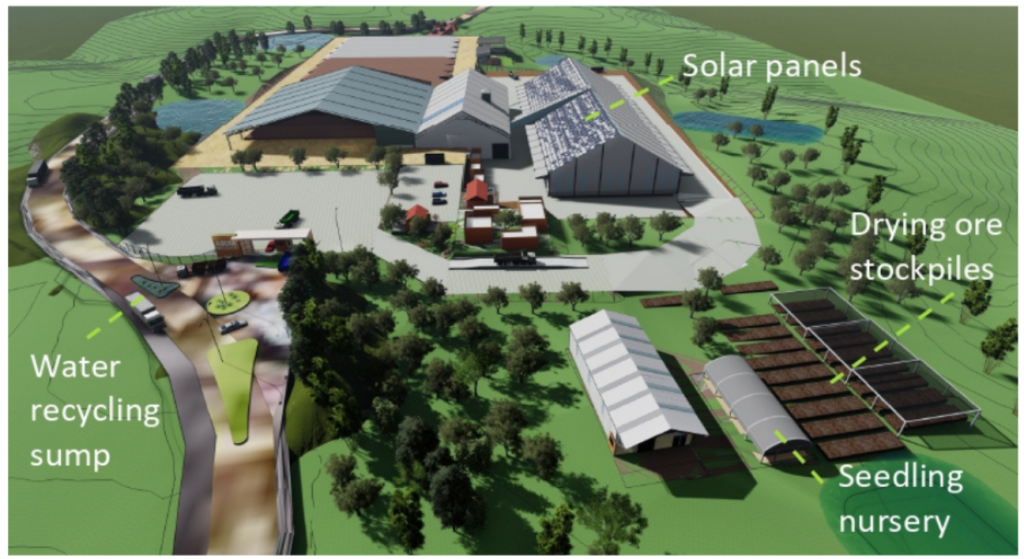
Environmental consulting firm ABG is providing environmental monitoring services in accordance with the environmental license. These services include air quality data collection, surface and groundwater quality assessment, vegetation suppression oversight, and the monitoring and health evaluation of local fauna.
Environmental monitoring will continue for the duration of the project. The initial data required for reports to be submitted to Fundação Estadual de Proteção Ambiental (FEPAM) will be finalised alongside the aforementioned civil works, with final data submission scheduled for January 2026.
This will conclude the application process for the operating license. Given the timeframe required for FEPAM’s analysis of the report, Grigor anticipates that the operating license will be issued in March.
Upon issuance, mining operations will begin to establish the initial stock required for launching the Pampafos production facility. The commissioning and formation of this initial stock are anticipated to occur during March and April, with the first product being available to customers May 2026.
“It has a very short capital payback time. It’s one of the most simple operations you could imagine, technically simple. One of the lowest risk operations and the lowest capital cost,” Grigor says.
“It has a very short capital payback time. It’s one of the most simple operations you could imagine, technically simple. One of the lowest risk operations and the lowest capital cost”
“The master stroke for us was instead of spending 25 million bucks on a brand new plant, we spent $4 or $5 million on a repurposed second-hand plant.
“That’s great. It’s just so much more profitable. But then if you extend the life to two, three, four, and five years ahead, we’ll be on a continual path of expansion. That expansion is being financed by internal cash flow.”
In three year’s time, peer comparisons and price analysis shows that Aguia could ultimately be generating up to $60 million or even $80 million a year cash profit.
Phosphate prices in late 2025 and early 2026 have been showing volatility but remain high, with an annual average of around US$685 per tonne for rock phosphate, marking a 17% gain over 2024 levels. Prices remain below the 2022 peaks, yet elevated due to supply chain factors, with Q4 2025 prices averaging around US$696.
With a current market capitalisation of $33.27 million and share price of $0.019, it seems the market is yet to recognise the full value of the phosphate asset.
“It’s (Três Estradas) very cheap,” Grigor says,“we just want the market to recognise that”.
“This isn’t a project that has got a long lead time ahead of it. It’ll be starting production in April. That’s the start of the cashflow. With the gold, we can keep that running at a low scale for the next six months. We could, once the phosphate cashflow starts coming through, we can start to commit more money to the gold.”
This is all possible through Aguia’s lease approach, which neatly sidesteps one of the classic hurdles for juniors – high upfront capital investment. By leveraging existing infrastructure, the company retains flexibility while preserving capital for exploration and future expansion.
Bank support bolsters project credibility
In one of the more concrete financing milestones for junior mining, Aguia in October 2025 secured a credit line of R$7.2 million (around $2 million) from the Regional Development Bank of the Far South. Most of that – R$6 million – is earmarked for refurbishment and ramp-up of the processing plant to support its Brazilian phosphate strategy.
The loan is being issued to Aguia’s subsidiary, Aguia Fertilizantes, across three tranches over a 10-year term.
Grigor says the arrangement marks a key step toward project funding without excessive dilution, and secures 85% of capital expenditure ahead of ripple effects from working capital needs.
The non-Executive Chairman notes that favourable phosphate pricing at the moment suggests “a gross cash profit margin in the order of 200%”, framing the project’s financial future as both robust and resilient.
A significant part of Aguia’s bullish outlook comes from the improvement in long-term phosphate pricing assumptions. A revised economic study released in September 2025 revised modelled phosphate pricing to US$200 per tonne, up from around US$153/t in earlier models – a change that lifts the project’s earnings before interest, taxes, depreciation and amortisation (EBITDA) substantially.
The update shows life of mine EBITDA moving from previously guided figures of around US$158 million to US$171 million to between US$440 million and US$444 million — a nearly 73% uplift.
Productivity gains after growing pains
As Grigor reiterates to Mining.com.au, Aguia’s early phase strategy is deliberately modular. Phase one targets 150,000tpa from open pit mining, before stepping up capacity through plant upgrades and potential expansion circuits – a trajectory that could see output reach 300,000tpa in the coming years.
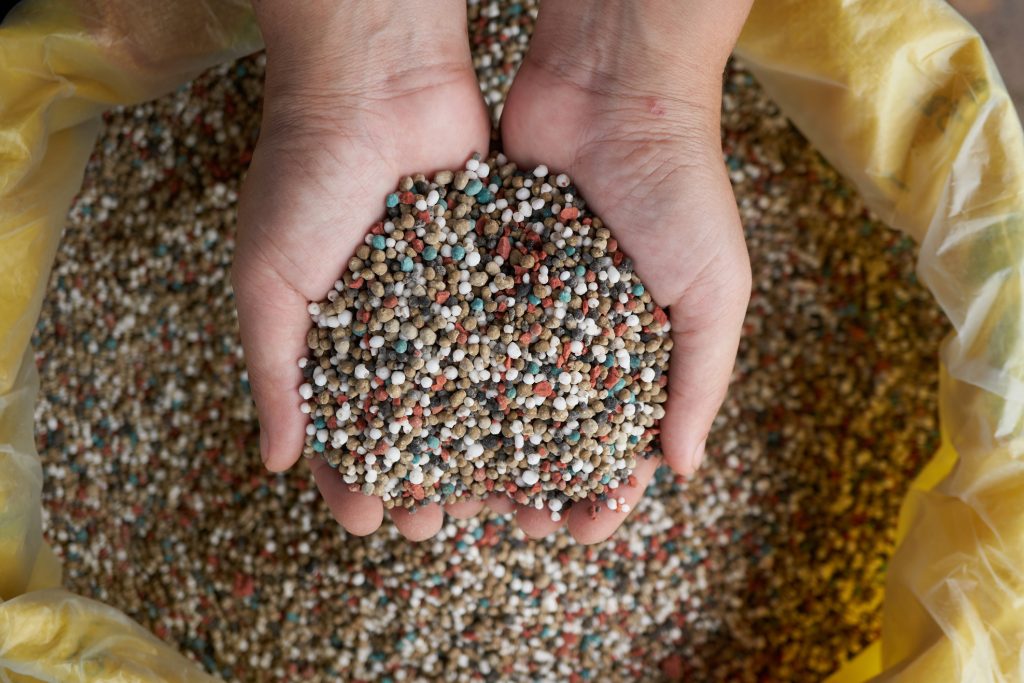
Aguia’s phosphate products and particularly its organic Pampafos phosphate have already been field tested in Brazil’s southern agricultural regions, where the non-Executive Chairman says early agronomic trials show strong performance and cost competitiveness relative to imported fertilisers.
As mentioned, those tests suggest that, at price points between US$200 to US$230 per tonne, Aguia’s products may offer farmers a significant cost advantage over imported phosphate, potentially accelerating market uptake once production begins.
Market position and broader portfolio
Aguia is not a pure phosphate play. It operates as a multi-commodity company with assets in both Brazil and Colombia, including gold and other metals projects that provide optionality beyond its Brazilian phosphate strategy.
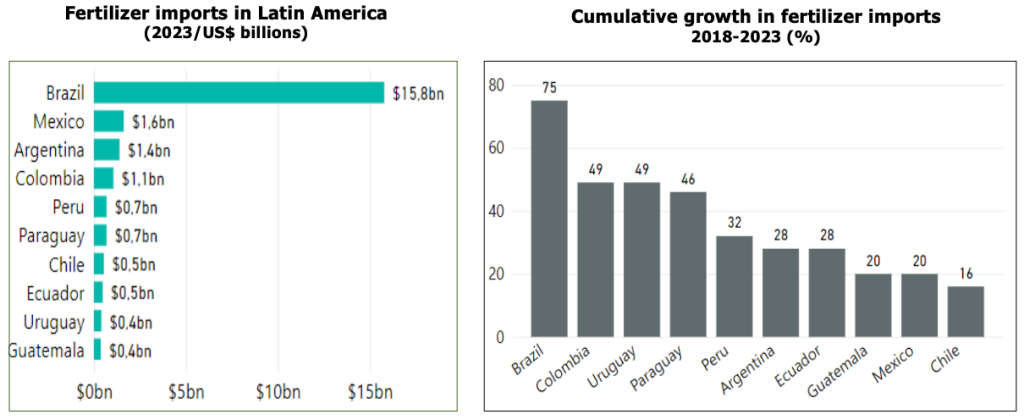
However, phosphate is the near-term catalyst for value creation as the company transitions from explorer to producer. The timing is favourable: global fertiliser markets remain tight, local Brazilian supply is import-dependent, and standard phosphate benchmarks have risen sharply in recent years — a backdrop that supports robust pricing and margin prospects.
Looking ahead, part two of this special feature series unveils further insights into how Aguia’s success will pivot on several key catalysts. It’s already advanced regarding operating licence approvals from the Brazilian environmental authority (FEPAM), now in late-stage preparation.
Financing and working capital progression to fully fund early mining and processing operations is well underway, as are offtake agreements with agricultural and fertiliser distributors, a crucial step toward securing future revenue streams.
Then there is phosphate price stability or upside, which fundamentally impacts projected economics and investor sentiment.
If these align as anticipated, Aguia stands to become one of the few ASX-listed phosphate producers delivering into a grounded, low-capex model and generating material cashflow in a region where local supply has historically been lacking.
“What we want to do is go for the easy money first. The low risk, easy money. We’re lucky that we’ve got two projects. One’s high risk, high reward and very exciting. The other one is low risk, high reward and boring,” Grigor continues.
“But it’s a multi-decade of my life we’re talking about. Basically, we’ve become a bit more conservative, and we’ve made the decision to take what’s more tangible, which is the phosphate.”
As phosphate markets tighten and agricultural demand climbs toward the end of the decade, part two of this feature reveals how the coming 18-24 months could redefine Aguia’s position not just as a developer, but as a supplier with strategic relevance to Brazil’s farm belt and broader global fertiliser markets.
Write to Adam Orlando at Mining.com.au
Images: Aguia, iStock & Mining.com.au