

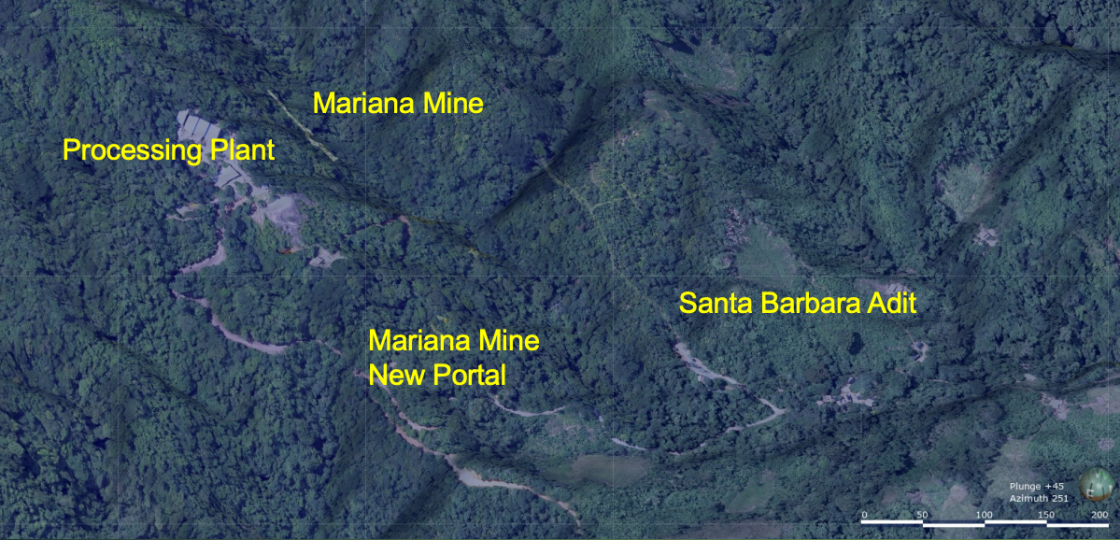
Aguia Resources (ASX:AGR) expects to see a substantial improvement in mine and mill productivity at its Santa Barbara operations in Colombia with the key milestone being “some significant gold production”.
While Executive Chairman Warwick Grigor won’t overpromise and underdeliver nor forecast expected numbers, he tells Mining.com.au the next six months “should show an improving trend as we ramp up throughput”.
The message from the mine manager is Aguia should start seeing the benefits of the work done over recent months to upgrade the management and workforce as early as November 2025.
“That means the treatment plant is working much more efficiently. We have been building up the ROM stockpiles while we have been optimising the plant,” Grigor tells this news service.
Aguia transformed its mine management team and mining and processing operational staff during Q3 2025, which started with a detailed evaluation of the operating parameters and performance in both the underground and processing operations.
Mining and processing operational staff have been replaced with personnel with in-country experience in narrow vein mining and gold processing, in place of local unskilled labour.
Reconfiguration of the plant flowsheet and underground mining methods and evaluation of the changes made through batch treatment of material to assess the effectiveness of the changes was undertaken throughout the quarter.
Continuing optimisation of the operations is expected to demonstrate improving production performance during the latter part of Q2 2026.
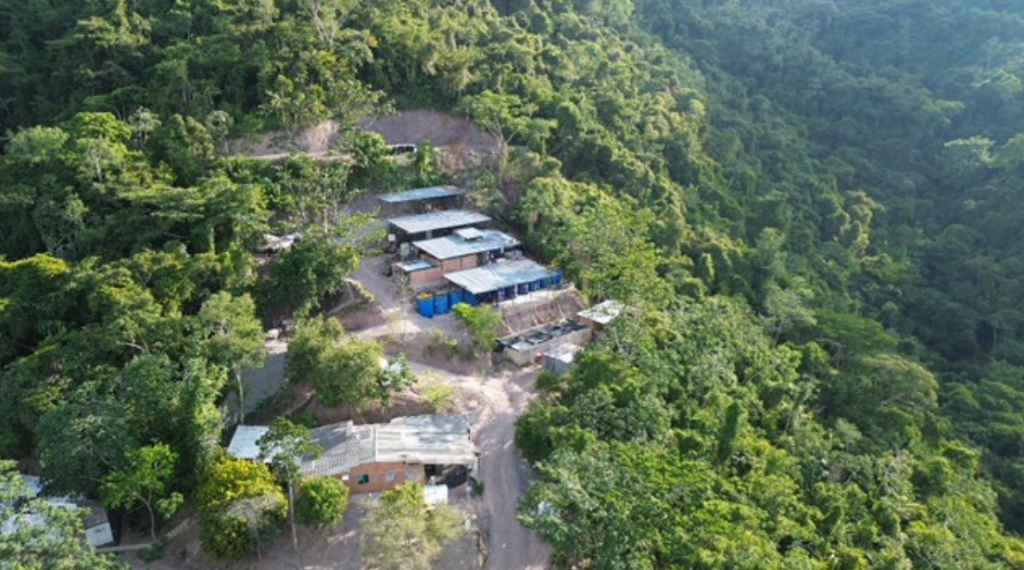
All three of Aguia’s Colombian projects were recently acquired and exhibit high grades of gold; silver and gold copper respectively. Its primary gold project Santa Barbara has already produced and sold the precious metal.
Grigor says it is now in the ramp up phase as it accelerates underground development. Amid this backdrop, the company is chasing profitability not scalability with its gold assets.
As the Executive Chairman explains, ideally the company would have been sourcing capital for its Brazil assets from the gold operation, but the gold is taking longer to establish than was wanted.
“I suppose that is quite normal for a gold mine, judging by the experience of other companies in a similar position. However, we do not intend to make Brazil dependent upon gold success,” Grigor tells Mining.com.au.
“We look at each commodity as a separate division. Each should stand on its own legs. Eventually, the cash flow to come from the phosphate will be very strong at very low technical risk, but by then we expect the gold to be doing well.”
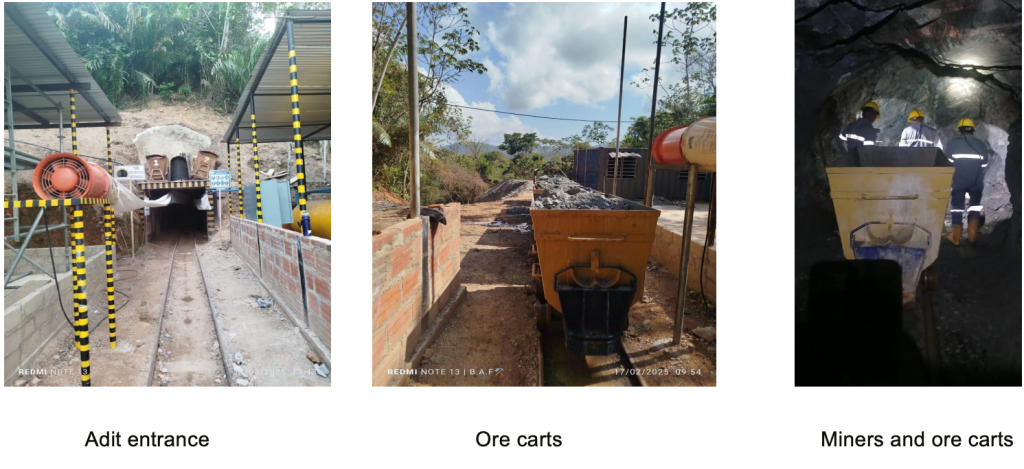
New discovery and gold to a doré
During Q3 2025, a ‘significant’ new discovery was announced at Santa Barbara indicating that the mineralised vein system could be far more extensive than previously thought and may potentially be part of a much larger stockwork system.
Cross cutting vein sets were discovered in previously developed artisanal underground workings close to the existing Santa Barbara development and in drilling, suggesting the development of vein sets connecting the Mariana and Santa Barbara vein sets.
The vein has a strike direction N350 and steep SW dip, indicating connectivity between the Santa Barbara and Mariana vein systems.
During the past quarter, metres developed increased by 33% to 201m from the previous quarter while mineralised tonnes extracted increased 23% to 609 tonnes. Total material extracted from underground operations increased by 44% to 2,149 tonnes reflecting the increase in meters developed and mineralised tonnes extracted.
Gold production for the quarter was negligible due to the total transformation of the mine management team and operational staff and re-evaluation of the operating parameters and performance in both the underground and processing operations.
Mining dilution mitigated
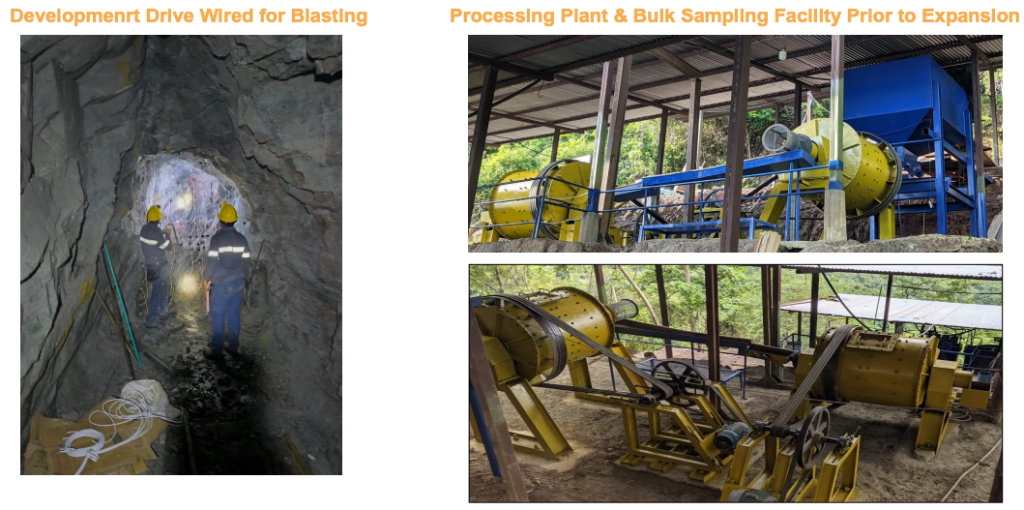
Reconfiguration of the plant flowsheet and underground mining methods and evaluation of the changes made through batch treatment of material through the plant to assess the effectiveness of the changes was undertaken, which affected gold production.
Mining dilution has been mitigated, resulting in feed grades to the processing plant consistently exceeding 10g/t gold, which Aguia says aligns with the implementation of selective mining practices.
Changes in the milling circuit have seen grind size reduced, “which has had a significant positive effect on gold recovery, achieving a particle size distribution better suited for cyanidation of this mineralisation type”.
After these changes, the mine has started to produce doré, which is sent to a gold refining facility in Medellin, Colombia for processing and analysis.
Meanwhile, Aguia is finalising field work at the Tres Estradas Phosphate Mine in Brazil in preparation for the lodgement and granting of an operational licence, as reported.
This work will be done by the end of December 2025 and involves setting up of a site office, sanitation, power, and access roads and some planning scheduled.
Grigor says this typically takes one to two months to be processed and the operation licence will then be granted, in time to start delivering ore to the processing plant by March-April 2026.
Write to Adam Orlando at Mining.com.au
Images: Aguia