

Aguia Resources (ASX:AGR) says its phosphate products are suitable for the Brazilian agricultural market following field testing of Organic Phosphate Project materials over winter and summer.
Field testing included 12 tests conducted over two seasons at the Integrar/Agrinova Technological Centre in Capivari do Sul, led by agricultural engineer, Dr Felipe de Campos Carmona.
The first trial aimed to evaluate different phosphate sources, focusing on its agronomic performance when applied to ryegrass pasture during winter, to be followed by soybean cultivation in the summer months.
The second trial applied different phosphate sources to black oil pasture in winter, followed by corn cultivation in the summer months to assess the agronomic performance of sources.
The company believes the results indicate that its phosphate products is suitable for the local agricultural market, with ryegrass exceeding 8 tons per hectare of dry matter when applied by 200kg per hectare phosphorus pentoxide from pampafos, along with lower-grade Mato Grande, higher-grade Morocco, and 100kg per hectare phosphorus pentoxide from monoammonium phosphate.
Black oats returned its highest production following the application of monoammonium phosphate at 100kg per hectare of phosphorus pentoxide.
Applying mato grande natural phosphate at 200kg per hectare of phosphorus pentoxide returned its highest soybean yield, showing higher tendency compared to monoammonium phosphate application at the dose of 100kg per hectare. Ryegrass returned this same result.
In comparison to the price of monoammonium phosphate at $1,050 per tonne, Aguia intends on selling high-grade phosphate between $200 to $230 per tonne, offering a “significant” discount to imported products and suitable for the local market.
Executive Chairman Warwick Grigor says that the company’s decision to lease a processing facility will work well for shareholders, as the Brazilian phosphate project is scheduled to commence in late 2025.
“Aguia is making steady progress for this, the second project in the pipeline with low operational risk and strong potential cashflow. The quality of the phosphate products has been confirmed by this recent testwork,” Grigor says.
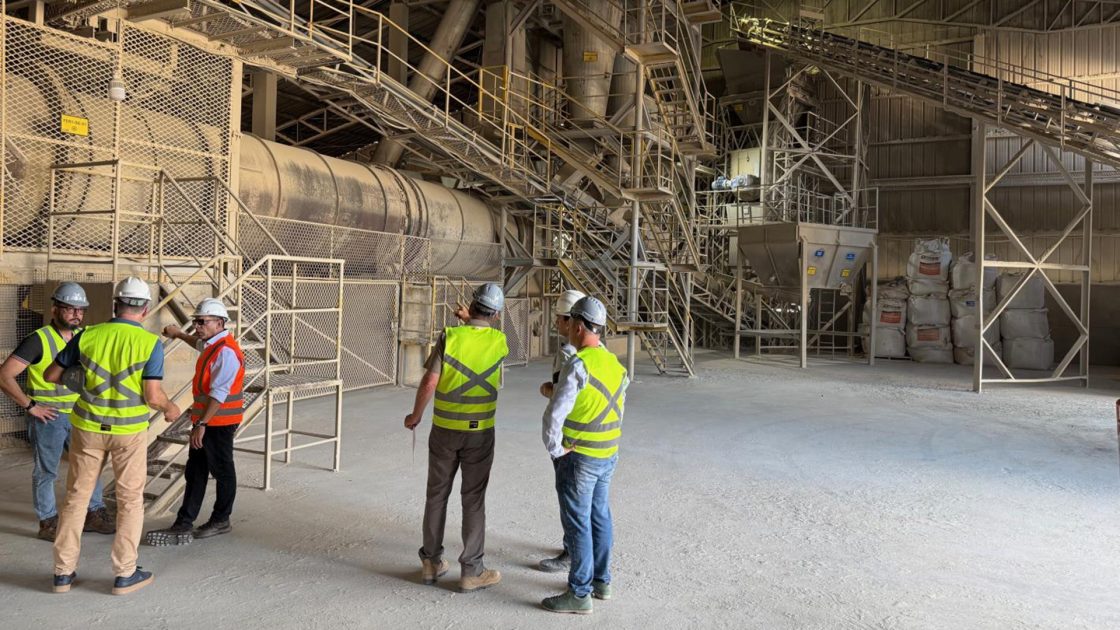
The company signed a 10-year agreement with Dagoberto Barcelos to lease its existing fertiliser plant in Caçapava do Sul, Brazil, as reported by Mining.com.au.
Phosphate is the natural source of phosphorus, which acts as a nutrient for plants by aiding necessary growth and development and an essential ingredient in all fertilisers.
Aguia Resources is an exploration company focused on the development of its five wholly owned projects in Colombia and Brazil.
Write to Maddison Elliott at Mining.com.au
Images: Aguia Resources