


Activist investing is no novelty concept. It has, however, evolved over the years, just as markets and investor attitudes have evolved.
Whether a result of the increasing emphasis in boardrooms on environment, social, and governance concerns, or a natural extension of the mining sector’s M&A fever, it’s hard to say. Indeed, the new age of activist investing has likely sprung from a range of launch pads.
This is the game. Activist investors — often investment firms — buy stocks they view as undervalued and then implore (compel, pressure, squeeze, etc) management to undertake initiatives they believe will raise the value of those stocks.
These initiatives can take a variety of forms. They might include giving more cash back to shareholders, cutting loss-making business divisions, or re-allocating expenses. However, more and more, they’ve focused on matters of governance — reshuffling boards, replacing senior management, or advocating for specific strategies.
Of course, none of this is new. But in the year that is 2024, with all of its market shocks and sliding commodity prices, the practice could be worth paying attention to.
The ‘golden age’ of Wall Street
It was in the 1980s — an era some view as the Gordon Gekko-ish ‘golden age’ of Wall Street — that activist investors first started making a name for themselves.
One of the most prolific investors (to the point of being labelled a ‘corporate raider’ rather than an activist) is Carl Icahn.
“My investment philosophy, generally, with exceptions, is to buy something when no one wants it,” he once said.
Though it was not his first attempt at a takeover, Icahn’s 50% buyout of Trans World Airlines (TWA) in 1985, followed by his full purchase of the company in 1988, established him as an activist investor not to be trifled with.
Having used — in addition to his own money — investor funds and bank loans to finance the purchase, Icahn took to systematically selling TWA’s assets in order to clear his debts, a process known as ‘asset stripping’.
But where activist investing perhaps began with corporate raiders of somewhat predatory dispositions, the approach these days has come to be more socially responsible.
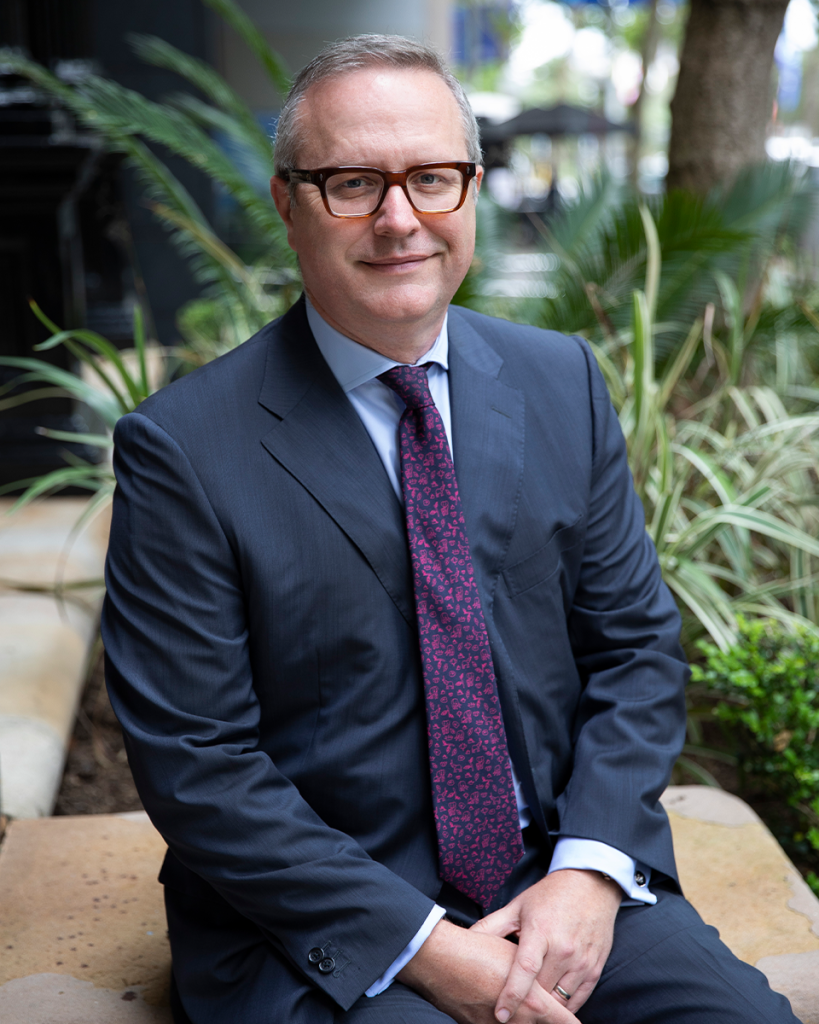
“If you look at the evolution of activism in the US, particularly people like Carl Icahn and T. Boone Pickens, they evolved from being raiders to being activists. It’s almost like the activism evolved into a kinder, more gentle approach,” Gabriel Radzyminski, Managing Director and Chief Investment Officer of Sydney-based Sandon Capital (ASX:SNC), tells Mining.com.au.
“There are similar aspects in the sense that you’re trying to identify an undervalued opportunity. I think what I would distinguish, though, is with activism, what we’re doing is we’re trying to find solutions that should be appealing to all shareholders, or certainly to a majority of shareholders. Whereas I think corporate raiders, historically, were trying to get something for themselves, often at the expense of everyone else.”
Juniors weather boardroom shakedowns
Indeed, the last few months have seen several instances of investor activism at play here in Australia, particularly among junior resource explorers.
Last week, Helix Resources (ASX:HLX) and its shareholders repelled a takeover bid from Acta Investment Group, which sought to acquire 25% of the company — at $0.005 a share, a 39% premium at the time — and install three new board members: Michael Povey, Kevin Lynn, and David Scoggin.
Acta filed an initial off-market takeover bid at the end of August, noting the fact that Helix’s share price had lost almost 90% of its value between May 2021 and May 2024, and that shareholders had little to show for the $12 million that was raised during that period.
“The management team that oversaw the use of these proceeds remains in place at Helix. Whilst exploration has intrinsic risks, Acta believes a fresh approach is required to improve outcomes,” the group wrote.
“Acta intend (sic) to restore shareholder value to Helix, overseeing the appointment of a board and management team, entirely focused on generating returns for shareholders.”
In a mid-October response, however, Helix advised investors to take no action and cited a number of primary concerns. Among them, “control without a premium” — that Acta’s offer to acquire only 25% of Helix’s shares should not mean the majority of board members are Acta appointees, especially without paying an appropriate premium.
Helix also noted the “onerous conditions” of the offer, including that the company make no expenses above $50,000, as well as the lack of information about the backgrounds and expertise of the proposed directors, Povey, Lynn, and Scoggin.
“The existing board believes that the company is potentially ‘one drill away’ from a new discovery, as highlighted by our recent exploration successes at Collerina, Muriel Tank, and Bijoux,” Helix wrote.
“The current board has the necessary expertise and vision to execute the company’s strategy, which we believe will deliver long-term value to shareholders. We are committed to maintaining the course and maximising returns from our copper and gold projects.”
At Helix’s AGM on 19 November, shareholders ultimately voted against giving the three Acta nominees seats at the board.
At roughly the same time, Global Lithium Resources (ASX:GL1) was — still is — embroiled in a similar situation. Earlier in November, the Perth-based critical minerals explorer succeeded in delaying its AGM to give the Foreign Investment Review Board (FIRB) more time to investigate allegations of covert Chinese influence.
In August, the company announced its receipt of an “invalid 249D requisition” from Chinese businessman Liaoliang ‘Leon’ Zhu, whose firm Sincerity Development owns a 6.93% stake in Global Lithium.
The company promptly flagged concerns of a possible breach of foreign ownership rules, specifically that Zhu would use the company’s AGM on 20 September to seize control of Global Lithium’s key assets by reshuffling the board.
Last week, Western Australia’s Supreme Court agreed to defer Global Lithium’s AGM to 14 February to give the FIRB enough time to investigate the claims.
A force for good or bad?
It can be tricky to know what to think of activist investors; much of it depends on the reason they get involved in the first place.
Critics of the practice say it can promote short-termism and excessive attention to financial metrics. A 2014 article by Bill George and Jay W. Lorsch, published in the Harvard Business Review, identified six methods by which companies can “outsmart” activist investors.
First, companies need to develop a clear strategic focus and stick to it. Analysing your business as an activist investor would won’t hurt, nor would having external advisors lined up in advance. Fostering chemistry among board members might also promote unity and resilience, while performing strongly against short-term targets can promote the image that things are on track. And for God’s sake: don’t dismiss activist ideas out of hand.
Proponents of activist investing, however, argue that concerns around short-termism are nothing but a lazy retort. Sandon Capital’s Radzyminski calls it a “false dichotomy” given the reality for most companies is that the required decisions are actually an ongoing series of short- and medium-term ones.
“The root cause of opportunities that we come across arise from agency conflict,” he explains.
“Shareholders rely on their agents — being directors and management — to run the company for them. The mere fact that they’re paid to do that job creates a conflict. It’s called agency conflict, where agents have slightly different interests to the principals or the owners. It’s a question of making sure that the balance stacks up.”
Radzyminski would know. Activist investing is no hobby within Sandon’s walls, and with a 15-year track record spanning almost 50 campaigns, the firm is one of Australia’s most active. Currently, Sandon is targeting Karoon Energy (ASX:KAR), which holds oil and gas assets in Brazil, the US, and Australia.
“That began earlier this year with a campaign in the lead up to the AGM. AGMs are a time when boards can be quite vulnerable because they have to get shareholders to vote on things,” Radzyminski tells Mining.com.au.
“At the moment, it’s very quiet because there’s not much opportunity or need to say things publicly, but the campaign continues unabated. For us, we’re agnostic about where we invest, provided we see a combination of value, mispricing, and an opportunity with plausible prospects to change and succeed.”
In the end, activist investing is about the healthy contest of ideas, and simply making sure that all stakeholders involved are on the same page. Of course, the practice has evolved and will continue to do so. The precise direction it will head, however, could be interesting to watch.
Write to Oliver Gray at Mining.com.au
Images: iStock & Sandon Capital