

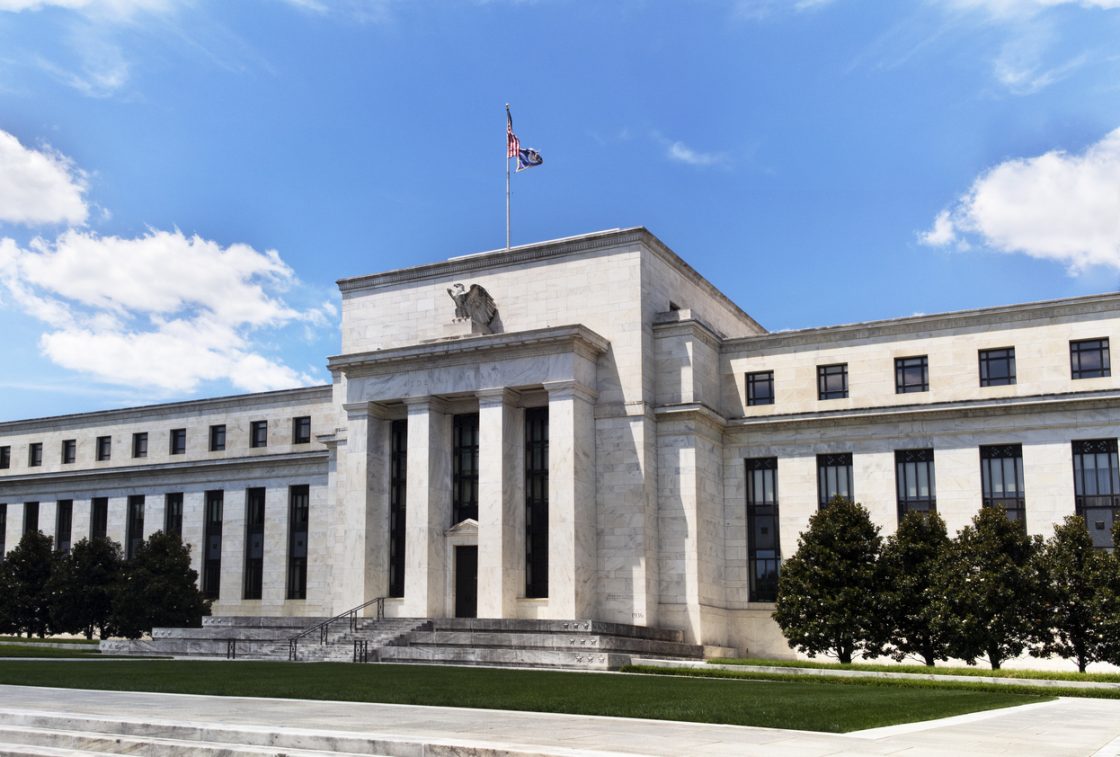
The US Federal Reserve kicked off a series of interest rate cuts on Wednesday, with a 0.5% reduction that Chairman Jerome Powell said shows a commitment to keeping unemployment down now that inflation has eased.
Speaking at a press conference, Powell cited the central bank’s increased confidence that America’s tango with high inflation had come to an end, adding that it had reduced its benchmark policy rate to the 4.75% to 5% range.
“We made a good strong start and I am very pleased that we did,” Powell said.
“The logic of this both from an economic standpoint and from a risk management standpoint was clear.”
In addition to approving the 0.5% cut on Wednesday, Federal Reserve policymakers projected the interest rate would fall by another 0.5% by the end of this year, a full 1% next year, and 0.5% in 2026. However, they warned that the outlook that far into the future is not certain.
The move marks a major pivot in US monetary policy and is a sign of the bank’s growing comfort with inflation continuing to ease to its target. It’s currently around 0.5% above that target figure.
Following the news, utilities stocks fell by 0.8%, the biggest drag on the S&P 500 index. Regional banks, which had been labouring under the pressure of higher interest rates, gained ground with the KBW regional bank index up 0.5%.
Overall, the Dow Jones fell 0.3% after making gains earlier in the day, while the S&P 500 also lost 0.3% after rising as much as 1%. Both indexes had touched record highs before falling back.
Gold futures also hit an all-time high after climbing 0.2% to US$2,598.60 ($3,840.31) an ounce as the interest rate cut pushed the US dollar lower. Spot gold was trading near US$2,558 at the US close.
Prior to the Federal Reserve meeting, copper had been leading the charge in the base metals sector.
“However, with the London Metal Exchange closing before the announcement, markets were left to ponder what lowering borrowing costs will mean for the sector,” ANZ analysts wrote.
“The increase in the medium-term outlook for rates should come as a positive, with metals highly sensitive to factory activity and overall economic growth. US demand is likely to benefit from an improving property sector.”
US housing starts jumped 9.6% to an annualised rate of 1.36 million last month, the fastest since April.
Despite coming only seven weeks before the US presidential election, the Federal Reserve’s decision garnered a fairly muted response from the candidates.
Democratic nominee and current Vice President Kamala Harris called the rate cut “welcome news” for Americans.
“I know prices are still too high for many middle-class and working families,” she said.
Meanwhile, Republican hopeful Donald Trump, who appointed Powell to lead the central bank, said the size of the cut suggested the economy may be in trouble.
“To cut it by that much, assuming they’re not just playing politics, the economy would be very bad,” Trump told reporters.
Powell, however, said the economy remained strong, with many job market indicators — like unemployment claims and even the current 4.2% unemployment rate — not at worrying levels.
Policymakers have said they don’t see the interest rate returning to the sub-2% levels that prevailed for more than a decade before 2022. That era’s low mortgage rates, they said, won’t be back any time soon.
Nevertheless, a low interest rate should trigger cheaper borrowing costs for most types of loans, while paychecks are — on average — likely to rise faster than the growing cost of living.
The overall reaction of the stock market, however, is less predictable. In the short-term, the response will hinge on whether the Federal Reserve’s move is seen as locking in a soft landing, or a sign that the bank is behind the curve and could crash the economy.
In the long-term, lower interest rates have tended to push stock markets higher as investors take on riskier investments while yields on ‘safe’ assets, such as government bonds, drop.
Down Under, the US rate cut is expected to put pressure on the Reserve Bank of Australia to bring forward its own plans for rate relief.
Financial markets have already been pricing in a rate cut when the RBA meets in December, although its governor Michele Bullock sought last month to dampen hopes of an imminent rate cut.
“We have been trying to balance bringing inflation back down over a reasonable timeframe, without inflicting unnecessary damage on the labour market. And the board’s judgement to date has been that policy is currently sufficiently restrictive to do that,” Bullock said before the House of Representatives’ economics committee in August.
“Financial markets are still pricing in a rate cut by the end of the year. The board’s message, though, was that it is premature to be thinking about rate cuts.”
The ASX 200 hit an all-time high in early trading today of 8,186 points. As of midday, however, it was up 0.13% to 8,152.5 points, with the broader All Ordinaries up the same amount to 8,374.5.
Meanwhile, the Australian dollar climbed slightly to 67.72 US cents, up from 67.66 cents at Wednesday’s ASX close.
Write to Oliver Gray at Mining.com.au
Images: iStock