


President Donald Trump has agreed to slash tariffs on Indian goods from 50% to 18% in exchange for India lowering trade barriers, in addition to buying oil from the US and potentially Venezuela instead of from Russia.
Meanwhile, reports suggest South Korea was blindsided by the President claiming Seoul is ‘not living up’ to a bilateral trade deal concluded in October 2025, and retaliated by announcing a new 25% tariff on Korean imports.
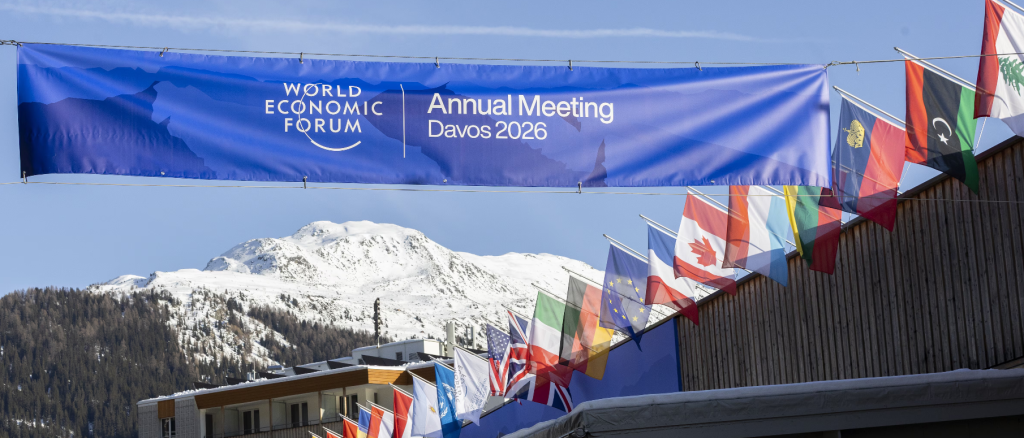
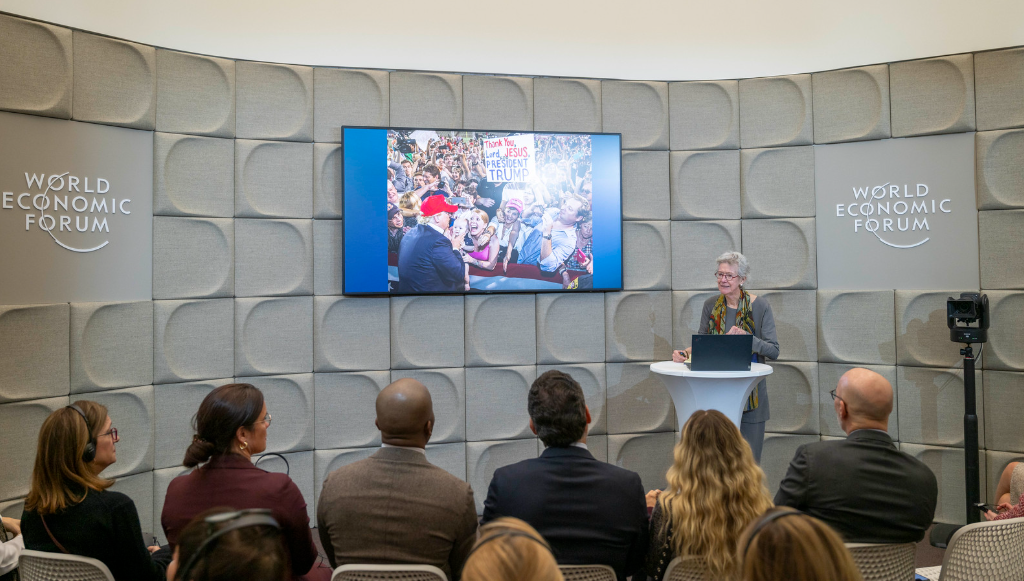
At the January 2026 World Economic Forum in Davos, Trump used the threat of tariffs as leverage to push for “America First” trade deals and geopolitical goals, including negotiating access to ‘buy’ Greenland.
Trump claims tariffs “radically reduced” America’s trade deficit by 77% within a year and forced foreign companies to invest in US factories. While touting tariffs for reducing the trade deficit and increasing domestic manufacturing, he simultaneously backed down from immediate tariff hikes on European allies.
However, his actions and rhetoric at Davos further heightened tensions with European allies, who considered using their own trade measures in response.
This became a central theme at the World Economic Forum when a report found global value chains have entered an era of structural volatility, forcing companies and governments to reevaluate how and where they invest and produce. The report finds that nearly three in four business leaders now prioritise resilience investments, with 74% viewing resilience as a driver of growth.
Set against a backdrop of geopolitical fragmentation, accelerating technological change and mounting resource constraints, the new report examines how companies and governments can remain competitive as disruption becomes a permanent feature rather than a cyclical shock.
“Volatility is no longer a temporary disruption; it is a structural condition leaders must plan for,” says Kiva Allgood, Managing Director, World Economic Forum.
“Competitive advantage now comes from foresight, optionality and ecosystem coordination. Companies and countries that build these capabilities together will be best positioned to attract investment, secure supply and sustain growth in an increasingly fragmented global economy.”
The scale of the shift is already evident. In 2025 alone, tariff escalations between major economies reshuffled more than $400 billion in global trade flows, while disruptions across major shipping routes pushed container shipping costs up 40% year-on-year, signalling a decisive move away from short-term shocks towards enduring uncertainty.
At the same time, manufacturing output across advanced economies is growing at its weakest pace since 2009, while more than 3,000 new trade and industrial policy measures were introduced globally in 2025 alone – more than three times the annual level recorded a decade ago.
Together, Allgood adds, these forces underscore why supply chain resilience has become a central determinant of national competitiveness and corporate strategy.
Tariffs and mining: Shaping global resources markets
Tariffs, which are taxes imposed on imported goods, are more than trade technicalities. They are policy levers that reshape global supply chains, influence commodity demand, and affect investment decisions across the mining and resources sectors.
Understanding how tariffs work and how they interact with broader trade policy is essential for mining companies operating in an increasingly complex international environment.
According to Professor Shahar Hameiri – a political economist with a particular interest in the evolving nature of statehood and political agency – at a basic level, a tariff increases the cost of an imported good.
It is a tax on goods or services coming into a country. The cost is generally passed on to the consumer – meaning the imported goods or service become more expensive.
“Trump, however, repeatedly refers to tariffs, erroneously, as a tax on foreigners,” he says in an opinion piece published by The University of Queensland.
When a government imposes a tariff on imports of steel, for example, the foreign product becomes more expensive relative to domestic alternatives. This can protect local producers, but also raises costs for industries that use those imports as inputs.
In mining, the implications can be direct or indirect, depending on where in the value chain a company sits. Knowledge of tariffs and related trade barriers is critical because protectionism and export controls have resurged as tools of economic policy.
Hameiri notes tariffs can be useful to build up particular industries and shield them from imports, as part of a wider economic strategy in the service of economic or national security objectives. But such a strategy is hard to discern in Trump’s crude and sweeping measures.
Tariffs in the global context
Tariffs aim to protect domestic industries and can form part of broader protectionist policies. They raise the price of imported goods at the border, which can reduce demand for those goods and help domestic competitors.
“Trump has justified the tariffs both as offsetting the revenue gap created by his tax cuts and as pushing companies to set up factories in the US. The two things operate at cross-purposes. If the latter succeeds, then tax revenue from tariffs will decline,” Hameiri writes.
“Furthermore, after decades of globalisation, most goods are often made via long and complex global value chains. Even if the final product can be made in the US, sometimes the intermediate goods or the capital goods – the components that go into the making of the final product and the machines used in the process – often come from other countries.
“Trump has justified the tariffs both as offsetting the revenue gap created by his tax cuts and as pushing companies to set up factories in the US”
“Therefore, US prices will likely rise, causing inflation, which is exactly the opposite of what Trump promised the American people.”
Historically, global average tariff rates have declined over the past 15 years, partly due to the expansion of free trade agreements (FTAs). There are now about 365 comprehensive FTAs in place, up from 22 in 1990, and many involve mining-intensive countries such as Australia, Canada and Chile.
However, punitive tariffs targeting specific products and inputs are rising again. For example, tariffs on steel and aluminium inputs can reverberate through mining supply chains, because miners rely on imported machinery and materials that use these metals. Higher costs for these inputs can reduce project margins and delay development.
Tariffs work alongside non-tariff barriers (NTBs), such as quotas, licensing requirements and technical regulations, which now affect about 70% of global trade. NTBs can raise the landed cost of imported goods by around 7.5 per cent, increasing complexity for miners that depend on cross-border supply chains for parts, equipment and processed materials.

Australia: Navigating tariff exposure and trade risk
Hameiri highlights that the US exports more goods to Australia than it imports from us. Australia is one of the few countries in the world that America runs a trade surplus with.
“We are not the kind of country that Trump would have issues with. Furthermore, the overall size of our bilateral trade with the US is relatively small, so it’s unlikely the 10% tariffs will have a major impact on Australia’s economy directly,” he adds.
“On the other hand, some of the biggest tariffs were imposed on countries in East and Southeast Asia – notably China, Japan, South Korea, Malaysia, and Vietnam – that are very significant buyers of our commodities and services. The tariffs could therefore have a very serious indirect impact on Australia’s economy.”
Australian mining and resources businesses export large volumes of iron ore, liquefied natural gas (LNG), and other commodities under mostly tariff-free arrangements.
The country has FTAs with many major markets, including China, Japan, South Korea, ASEAN states, and the Comprehensive and Progressive Agreement for Trans-Pacific Partnership (CPTPP), which reduce or eliminate tariffs on many resources.
These agreements underpin Australia’s competitiveness in raw commodities, where tariffs directly on ore exports are rare.
Nevertheless, tariff policy elsewhere can indirectly affect Australian mining. Tariffs on steel and aluminium in large economies raise input costs for mining companies, increasing the cost of beams, pipes and processing equipment. Higher costs for downstream industries can slow demand for raw materials such as copper and iron ore.
Recent trade tensions illustrate the broader risks. In 2025, Prime Minister Anthony Albanese publicly urged China to resume iron ore imports after reports that a state-run purchaser halted purchases from a major miner amid pricing disputes.
Australia’s top export faced “hindrance” in trade despite iron ore’s central role in bilateral commerce, underscoring how political factors can influence trade flows even without formal tariffs.
“But Trump’s actions raise issues for Australia that extend beyond their economic impact,” says Hameiri.
“The erratic behaviour of the US administration means we must also think carefully about the security implications of our relationship, especially as geopolitical rivalry between the US and China is intensifying into what some have called a new or second Cold War.
“Is AUKUS still the best means of securing Australia? For now, there are many more questions than answers.”
Asia: Export controls and trade leverage
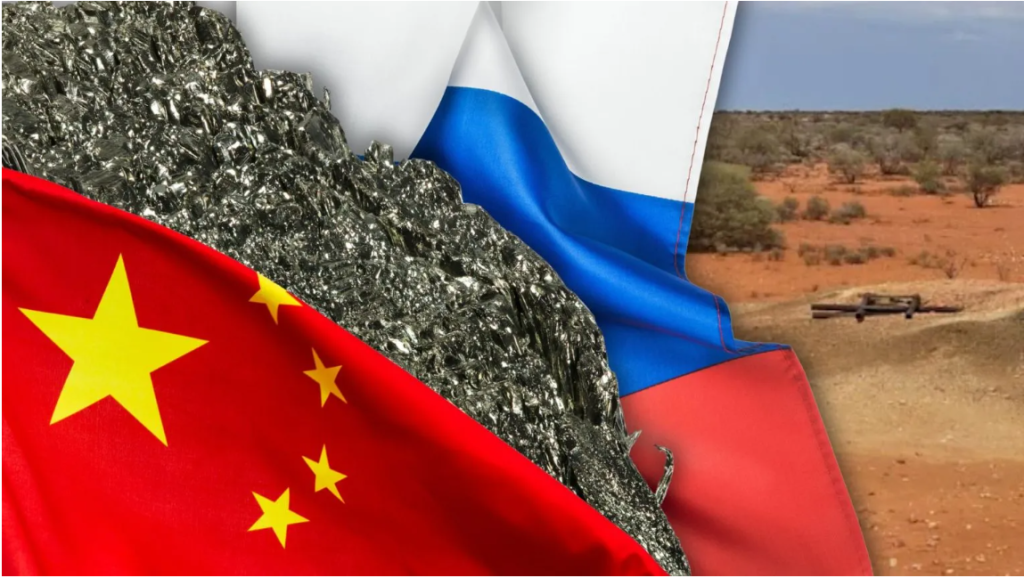
In Asia, particularly China, export controls often function like reverse tariffs — restricting outbound flow rather than taxing inbound goods.
China controls a dominant share of global rare earth processing and has, at times, imposed licensing requirements on exports of medium and heavy rare earth elements, effectively limiting supply to sensitive industries in the US and elsewhere.
China’s position in rare earths illustrates how trade policy can restrict supply without formal tariffs, creating pricing power and supply insecurity for global buyers. Australian and other miners exporting rare earths or critical minerals must navigate such export controls as part of broader trade risk management.

North America: Tariffs and strategic policy
In North America, the US has used tariffs to protect domestic production. Recent levies on imported steel and aluminium aim to support local industries but ripple into mining.
Higher costs for imported metals can benefit domestic iron ore and metallurgical coal producers but increase costs for sectors that consume these materials, such as automotive and construction, with flow-on effects for base metal demand.
Tariffs also intersect with broader strategic policies. The US and Australia in 2025 agreed an US$8.5 billion critical minerals cooperation deal, reflecting how trade measures blend with industrial policy to secure supply chains for strategic minerals used in batteries, defence and clean energy. Such arrangements often reduce tariff barriers for specific materials to incentivise investment in targeted supply chains.

Europe: Defensive trade policy and border adjustments
Europe’s trade policy increasingly combines tariff enforcement with environmental and strategic objectives. The European Union’s Carbon Border Adjustment Mechanism (CBAM), coming into effect in January 2026, applies a carbon price equivalent to emissions from imported commodities, including iron, steel, aluminium and cement.
While not a traditional tariff, CBAM acts like a border tax on high-emission imports, affecting mining exports indirectly by altering the cost of materials used in processing.
Such measures are designed to protect EU producers while pricing carbon emissions into imported goods. For miners exporting into Europe or supplying companies affected by CBAM, this creates new commercial calculus: products from sources with lower carbon intensity may gain competitive advantage, while emissions-intensive imports face higher effective costs.
Europe has also introduced mechanisms such as the ‘Battery Passport’, requiring traceability of carbon footprints for batteries, including those in electric vehicles. These rules influence how raw materials like lithium and cobalt enter supply chains and add compliance layers that interact with tariff policy and trade barriers.

Strategic implications for miners
Tariffs remain a blunt tool with mixed effects for mining and resources. They can protect domestic industries, but also distort markets, increase costs and invite retaliatory barriers.
For miners and resources exporters, understanding tariff risk requires analysing both direct duties and the broader geopolitical context shaping trade policy.
In a world where critical minerals underpin energy transitions and defence technologies, tariff policy is likely to stay central to how resource economies align themselves with strategic partners and manage competition.
Whether through formal tariff barriers, export controls, or trade agreements that remove tariffs, the interplay between trade policy and resource sectors will continue to shape investment and production decisions well into the 2030s.
For mining businesses, tariffs and related trade barriers have several implications. One is tariffs on imported inputs raise capital and operating costs, affecting project economics.
Protectionist measures can also slow industrial demand for metals, influencing commodity prices and investment decisions. In turn, tariff and non-tariff barriers require robust compliance systems to manage sourcing, shipping and duty exposure.
Tariffs are evolving from blunt barriers into components of strategic trade policy in an era of geopolitics rupturing, supply-chain competition, and environmental regulation.
Hameiri says the bigger story, beyond the more immediate issues, is the impact of Trump’s tariffs on the world trade system and the global economy more generally.
“Economic globalisation, enabled by trade liberalisation, has completely reshaped how goods and services are produced and consumed globally. Trump seems to attempt to reverse processes that have played out over decades almost overnight. Whether Australia can still thrive in the new world order is unclear at this point,” he says.
Mining companies that integrate trade risk management into their broader strategy – rather than treating tariffs as an afterthought – will be better positioned to navigate this complex landscape.
Write to Adam Orlando at Mining.com.au
Images: World Economic Forum, Auric, iStock, Unsplash & Mining.com.au