

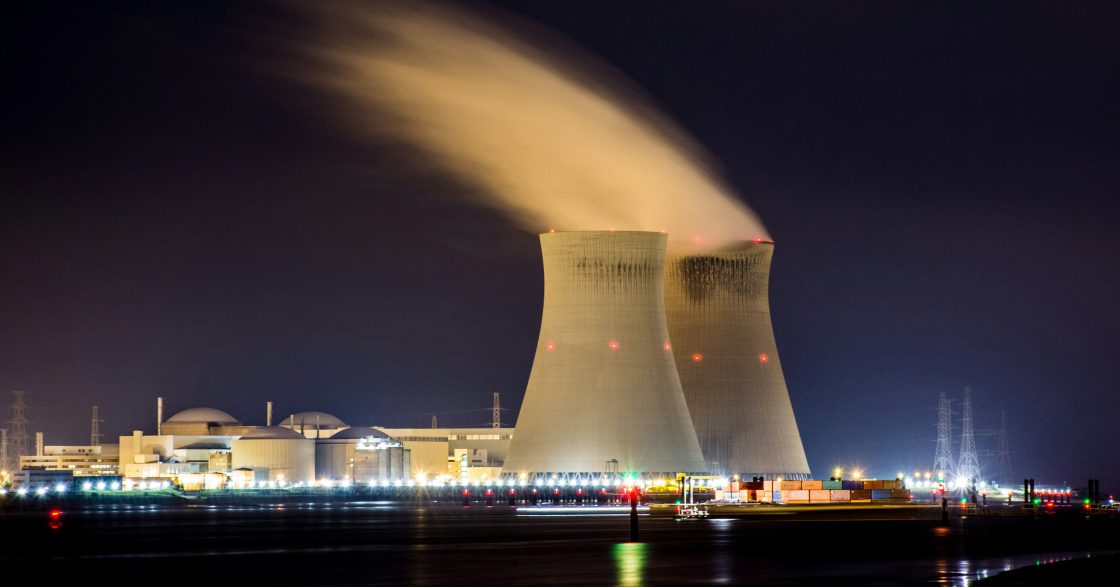
US President Donald Trump wants to speed up the production and operation of nuclear energy, last Friday (23 May) signing an executive order to ignite the push.
Trump is leveraging the full suite of federal financial resources to support the restart, completion, uprate, and construction of nuclear plants.
The US has 94 nuclear reactors operating currently.
A priority for the Department of Energy will be the facilitation of 5 gigawatts of power uprates to existing nuclear reactors and the construction of 10 new large reactors by 2030.
To support the ramp up in nuclear energy, the Trump administration will provide federal loans and loan guarantees, with funding to be prioritised for companies with potential for near-term deployment of advanced nuclear technologies.
The US is also considering policies that will expand its domestic nuclear fuel supply chain.
The White House says the nation’s nuclear fuel cycle infrastructure has severely atrophied, with domestic fuel sources supplying only about 5% of the fuel used in US reactors.
This is largely due to permitting challenges around mining uranium and a policy that was introduced in 1977 that did not allow reprocessing of used fuel for commercial reactors.
This left the US heavily dependent on foreign sources of uranium as well as uranium enrichment and conversion services.
According to the White House, the US has sufficient deposits of uranium and thorium that can power advanced nuclear reactors.
Trump previously signed an executive order to take “immediate measures to increase domestic mineral production”, which includes uranium.
Other steps covered by this latest executive order include expanding the American nuclear workforce, with around 60% of workers aged between 30 and 60.
The US is moving to increase participation in nuclear energy-related registered apprenticeships and career and technical education programs, with nuclear engineering and nuclear energy-related careers considered a priority.
The government will also increase access to research and development infrastructure, workforce and expertise at the Department of Energy National Laboratories for college and university nuclear engineering students.
This development comes as the price of uranium futures climbs back above US$70 ($107) a pound, marking an over 12% lift since mid-March 2025.
Uranium does not trade on an open market like other commodities. Buyers and sellers negotiate contracts privately.
Following the news that the US is fast tracking the growth of its nuclear energy industry, ASX-listed uranium players got a kick to their share prices.
GTI Energy (ASX:GTR), which is nearing the completion of a Scoping Study for its Lo Herma In-Situ Recovery Uranium Project in the US, jumped 25% to $0.005 on Monday (26 May).
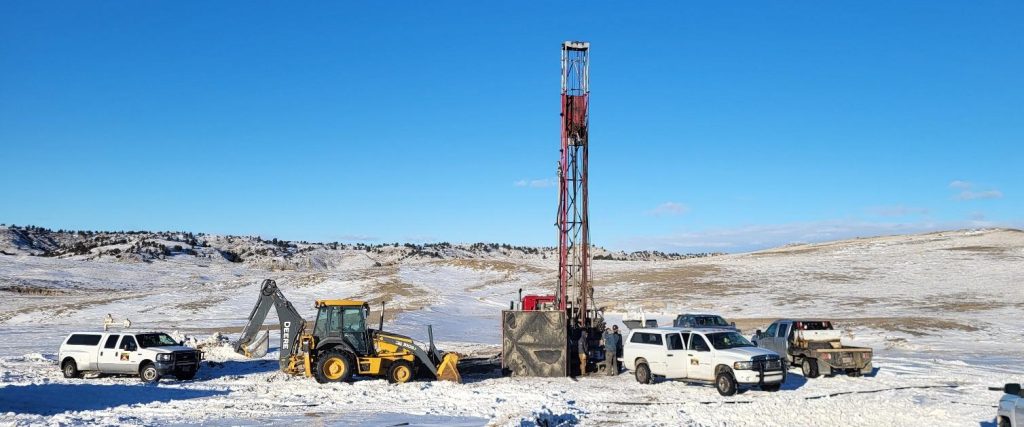
With all of the key input studies now completed, the Scoping Study remains on track to be delivered in the current quarter.
The Lo Herma Project, located in Wyoming’s Southern Powder River Basin, hosts a resource of 6.21 million tonnes @ 630 parts per million uranium-equivalent for 8.57 million pounds of contained metal.
Lotus Resources (ASX:LOT), which is on track to restart its Kayelekera Uranium Mine in Malawi in the third quarter of this year, closed 10.81% higher at $0.21 yesterday.
Kayelekera produced 11 million pounds of uranium oxide equivalent between 2009 and 2014, before being mothballed due to a sustained low uranium price.
Lotus and the Government of Malawi signed a Mine Development Agreement in July 2024 that guarantees a ‘stability period’ of 10 years during which the project will not be subject to any detrimental changes to the fiscal regime.
The Kayelekera operation is expected to deliver 19.3 million pounds of uranium over a 10-year mine life, producing at an annual rate of 2.4 million pounds in the first seven years.
The bigger uranium players also advanced on Monday, with Deep Yellow (ASX:DYL) surging 13.65% to $1.42, Paladin Energy (ASX:PDN) climbing 8.84% to $6.28 and Boss Energy (ASX:BOE) rising 7.29% to $4.27.
Write to Angela East at Mining.com.au
Images: Unsplash & GTI Energy